A bedroom armchair UK homeowners can live with should support a real habit, such as reading, dressing or taking a quiet pause, without blocking storage and circulation. Start with the bed, wardrobe, drawers and door. Once those routes work, add a chair where it can be used and lit properly. A decorative seat that becomes a clothes pile is usually a sign that the corner has no clear purpose.
Bedrooms vary from generous master rooms to narrow loft spaces, so the best armchair may be a compact upright shape rather than a deep lounge chair. Measure the chair in relation to the bed and the opening arc of drawers. Leave enough space to clean behind it and to reach a window, radiator or wardrobe.
Choose the corner from the routine
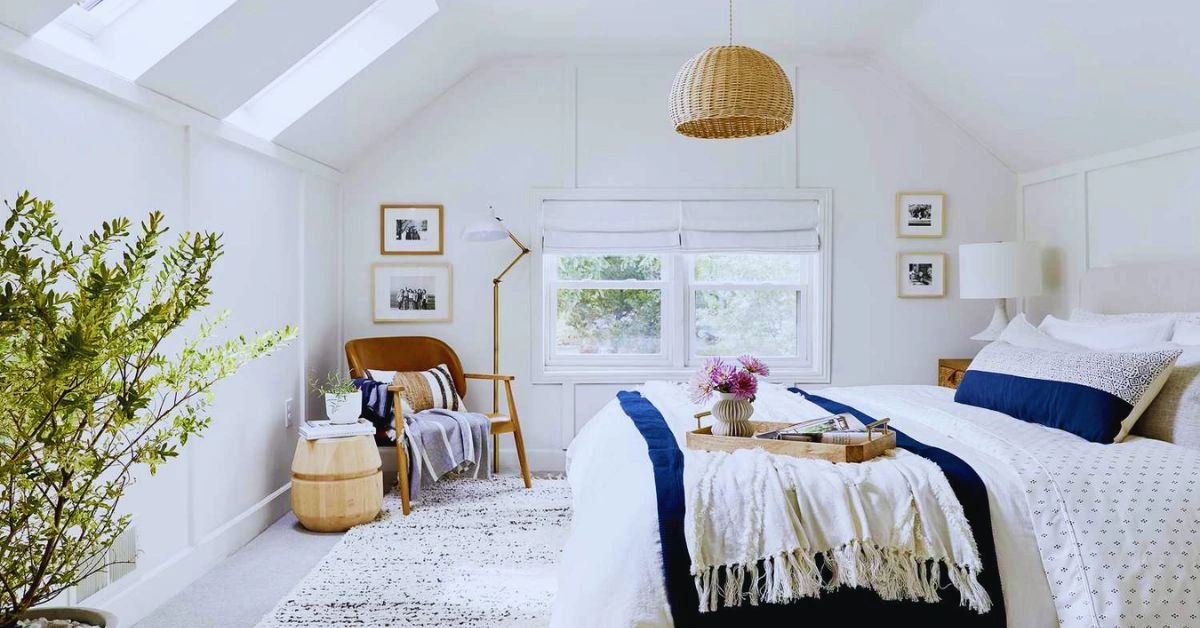
Place a reading chair near a window or bookcase, then reserve space for a directional lamp and a small landing surface. A chair at the foot of a larger bed can help with dressing, but check that it does not narrow the route between the bed and door. A corner beside a dressing table may work if the chair can slide away without blocking drawers. Do not place it where curtains catch on the arms or where a door opens into the back.
Measure the full movement zone
Mark the chair’s outside footprint with tape and add the space needed to sit down, stand up and pull a table close. Include a footstool only if it can be moved aside easily. In a small bedroom, the back of the chair may sit near an external wall; leave a modest ventilation gap and watch for condensation or damp. Keep fabric clear of radiators and do not use a chair to hide a heating control or socket.
Select a comfortable bedroom shape
An upright armchair is useful for putting on shoes and reading, while a deeper chair can suit a larger room and a slower evening routine. Check the seat height, back support and width of the arms. A high back can feel enclosing and comfortable, but it may dominate a low-ceilinged room. Visible legs and a lighter frame can keep a compact bedroom visually open.
Do not judge a bedroom chair only by softness. Sit with your feet on the floor and check whether the back supports you without forcing your shoulders forwards. If the chair will be shared, choose a shape that is easy to get out of. A small cushion can add support, but too many cushions turn a useful seat into storage for bedding.
Pair seating with the right light
- Use a floor lamp with a stable base if there is safe space beside the chair.
- Choose a wall light where floor area is tight and the wiring can be installed safely.
- Aim the light at a book or task rather than directly at the sleeper’s eyes.
- Keep switches reachable from the chair and do not run a lead across the main route.
- Use a softer ambient light elsewhere so the corner feels connected to the bedroom.
Coordinate without making a matching set
The chair does not need to match the bed or bedside tables. Repeat a colour from the curtains, bedding or rug, or connect the pieces with a similar timber tone. In a calm bedroom, a textured neutral chair can add depth. In a plain room, a muted colour can make the corner a gentle focal point. Keep the pattern scale in proportion to the room and test fabric samples against morning and evening light.
Choose upholstery that can cope with the way the chair will be used. A washable throw is useful, but do not cover the seat so completely that it becomes hard to sit on. Follow the care label, vacuum beneath the cushion and leave enough air behind the chair. Our guide to making a small bedroom look bigger can help if the new seat makes the room feel crowded.
When an armchair is not the best fit
If a chair blocks drawers or creates a difficult cleaning gap, consider a narrow bench, folding seat or stool. The purpose is a useful pause in the bedroom, not another large object. Before ordering, measure delivery access and check whether the legs or back can be removed. A well-planned bedroom with an armchair feels calmer because the seating, light and storage each have a clear job.
Choose the smallest comfortable seat that supports the routine, then style it with light, texture and one useful surface. Comfort should make the corner inviting; clear circulation should make it last.