
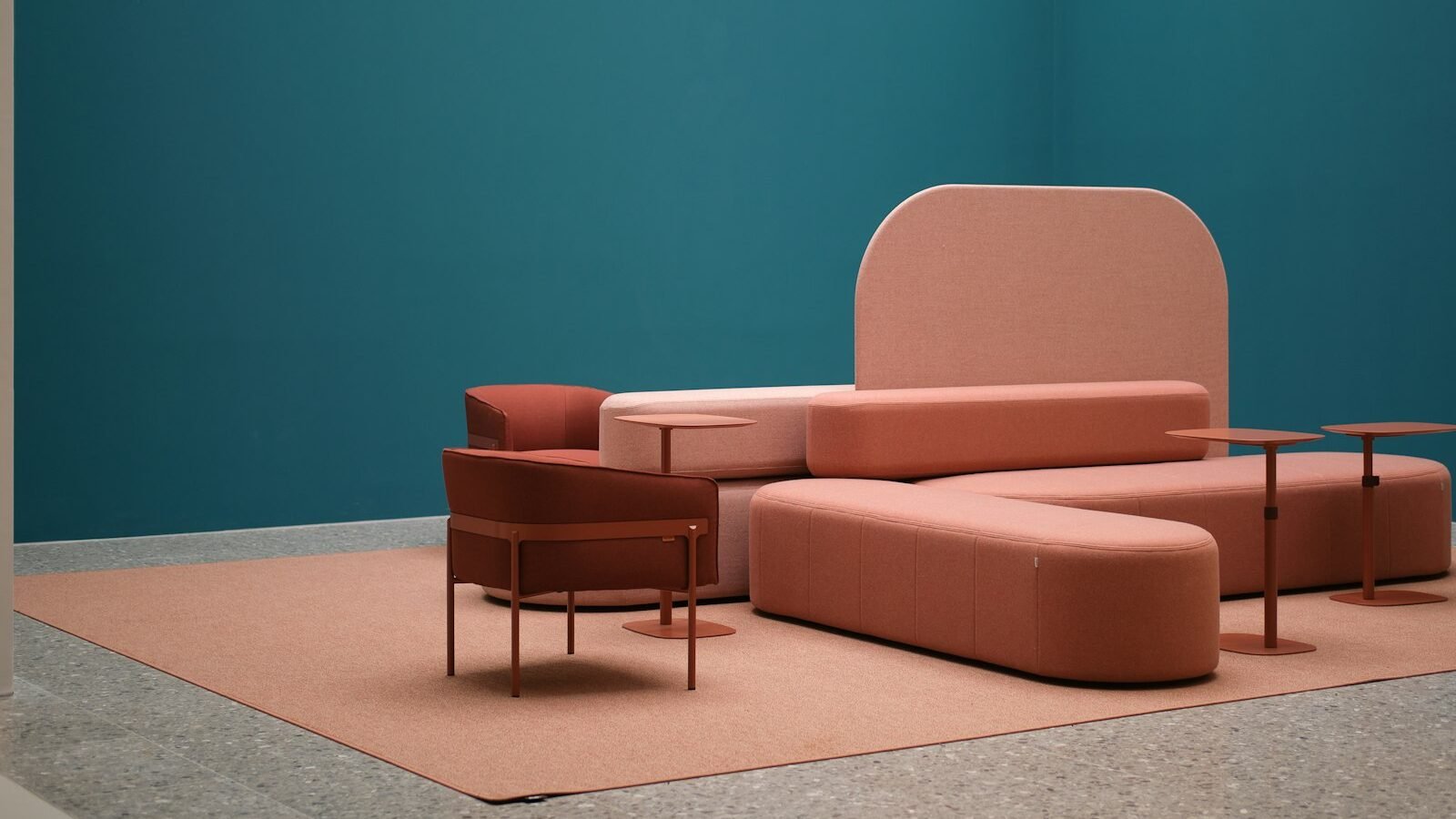
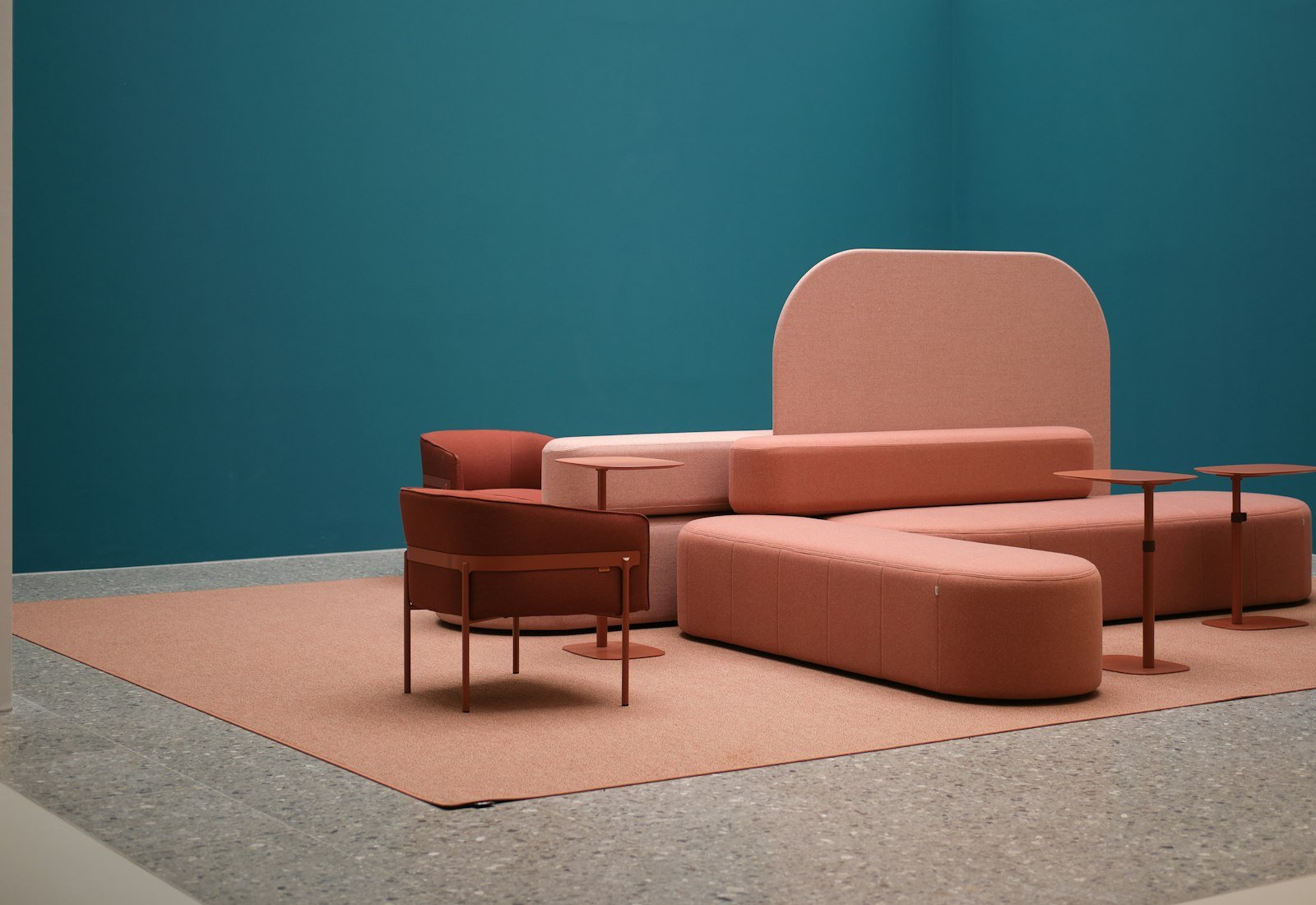
Modular furniture used to mean a sad 1990s corner sofa in bonded leather. In 2026 it is one of the most useful ideas in British home furnishing — and one of the most over-marketed. This guide is built around the practical question: which modular systems genuinely earn their keep in a UK home, and which are simply expensive ways to recreate what a free-standing piece would do for half the price.
Use our multifunctional furniture guide when space is tight, then compare the home office furniture guide, small armchair ideas and oak furniture guide for adjacent buying decisions. For current modular ranges, see IKEA UK, Loaf and BoConcept UK.
Table of contents
- What “modular” actually means in 2026
- Why UK buyers are choosing modular now
- The four main types, and where each one works
- Modular sofas: the UK deep-dive
- Modular shelving: cube, bay, and the long wall
- Modular storage vs fitted wardrobes: the honest comparison
- Modular kitchen and modular outdoor furniture
- The UK brands worth shortlisting, and which to skip
- Five pitfalls to plan around
- How to configure a modular room without regret
- Modular furniture FAQs
- Final thoughts
What “modular” actually means in 2026
A piece of furniture is modular when it is built from standardised, self-contained units that connect to each other in repeatable ways. Each unit is normally a complete sub-assembly: a sofa seat, a shelf cube, a wardrobe bay, a desk leg. You can add, remove, re-arrange or replace individual units without disturbing the rest.
Two things that get called “modular” but aren’t really:
- Sofa beds. Not modular — usually a single fixed frame with a folding mechanism.
- Standard bookcases joined together. Also not modular — once joined, you usually can’t replace one bay without dismantling the rest.
The test is simple: can you change one unit in five minutes with a single tool? If yes, it’s properly modular. If no, it’s a fitted or assembled piece.
Why UK buyers are choosing modular now
Four reasons, in rough order of importance:
- Move-friendly. The average UK renter moves every 2–3 years; the average owner every 7–10. A modular sofa can be reconfigured for the next room, a modular wardrobe can lose a bay or add one. Free-standing modular beats a fitted piece at every move.
- Repairable. When a single seat on a modular sofa goes flat, you replace the seat — not the whole sofa. Most modular systems sell replacement covers, foams and frames as spares.
- Room-shape adaptation. UK homes are full of awkward layouts: chimney breasts, alcoves, bay windows, narrow landings. A modular system can be built around the obstacle rather than the other way round.
- Cost-spreading. Buy two units this year, three next year. The configuration changes but the system stays consistent.
The four main types, and where each one works
- Soft modular — modular sofas, modular armchairs, modular corner units. The largest single category. UK market dominated by IKEA, Loaf, Swoon, Heal’s, BoConcept, and the direct-to-consumer brands (Swyft, Snug, Snuz, Modular Sofa).
- Hard modular — cube shelving (IKEA KALLAX, Tylko), open-bay systems (USM Haller, Vitsoe 606), and configurable bookcases (String, Vitsoe).
- Soft/hybrid storage — modular wardrobes, modular sideboards, modular kitchens. The most “fitted-looking” of the four.
- Outdoor modular — modular garden sofas, modular outdoor lounge sets. Aluminium frames with quick-dry foam. Mainly from KETTLER, Bramblecrest, La Redoute, Made.com, IKEA ÄPPLARÖ/HÅLLÖ.
Modular sofas: the UK deep-dive
Modular sofas are where the UK market is most crowded and most over-promised. Three honest categories of system:
1. Clamp-and-click systems (cheapest)
IKEA KIVIK, IKEA LANDSKRONA, IKEA FÄRLÖV. Each seat is a complete unit that clicks into the next via a metal clamp at the base. Covers zip on and off (machine-washable). Foam cores are replaceable. The 3-seat + chaise configuration that costs £1,200–£1,800 from IKEA will look and feel £500 cheaper than a Loaf or Swoon equivalent, but it is genuinely modular: a 2021 seat can be replaced with a 2027 seat if IKEA continues the line.
2. Bolt-together systems (mid-range)
Loaf, Swoon, Heal’s, John Lewis & Partners’ “Sofa Workshop” range. Seats are joined with concealed bolts through the base. Covers are usually loose-fit and washable. The frame is typically FSC-certified beech with serpentine springs, and the foam is high-resilience. This is the sweet spot for most UK buyers — feel matters more than absolute modular purity, and the covers last 7–10 years before they need replacing.
3. Italian-designed soft modular (premium)
B&B Italia, Poltrona Frau, Cassina, and the BoConcept “Floyd” or “Osaka” lines. The deepest seats, the most considered leather, and a 15–25 year service life. Replacement covers are orderable forever. Real modular in the strictest sense: every sub-component is replaceable. A modular B&B sectional starts at £6,000 and reaches £14,000+ fully dressed.
Honest 2026 price brackets for a new 3-seat-and-chaise modular sofa in a UK living room, in a hard-wearing fabric:
- IKEA KIVIK/LANDSKRONA: £900–£1,500.
- IKEA FÄRLÖV: £1,600–£2,200.
- Loaf “Loafy” or “Squishy”: £2,400–£3,800.
- Swoon “Jemini” or “Vallance”: £2,000–£3,400.
- Heal’s “Atelier” or “Marlow”: £3,200–£5,000.
- BoConcept “Floyd”: £4,500–£6,800.
- B&B Italia “Bend”: £7,500–£14,000.
Modular shelving: cube, bay, and the long wall
Modular shelving is the most consistently useful type, because almost every UK home has at least one wall that is the wrong length for anything else. Three systems worth knowing.
- IKEA KALLAX. The cube format (33 × 33 × 33 cm) is the workhorse. 2×2, 4×4 and 5×5 are the most useful in a UK home. 2×2 fits under most stairs; 4×4 fills a 1.8 m wall; 5×5 makes a useful room divider. Real modular: a 2014 KALLAX unit will accept a 2026 KALLAX insert. £45–£220 per unit.
- String Pocket. The classic 1950s Swedish design. 60 × 30 × 15 cm shelves slot into a wall rail. Excellent on a chimney wall, in a small home office, or in a nursery. £60–£120 for a 3-shelf starter pack.
- USM Haller. The glass-and-chrome modular system. Architectural, expensive (a 4-bay unit is £2,500+ in 2026), and lasts 40+ years. A real investment piece if you want something that will outlast three house moves.
One under-rated option: a USM Haller sideboard as a TV stand. 1.5 m wide, four bays, two drop-down doors, glass shelves, and the cables route through the back. £1,800–£2,500 in 2026. Will outlive every TV you own.
Modular storage vs fitted wardrobes: the honest comparison
For a UK bedroom, the choice between a fitted wardrobe and a modular system is genuinely hard. The honest comparison:
- Fitted wardrobe. Made-to-measure, maximises every mm of wall, no visible gaps. Typical UK price for a 3-door run in a 3 m wall: £1,800–£4,500 fitted (Sharps, Hammonds, Slide & Robes, local joiner). Downside: a fitted wardrobe is essentially a building fixture. It belongs to the room, not to you. Moving it costs as much as buying a new one.
- Modular wardrobe. IKEA PAX, John Lewis “Marrakesh”, or BoConcept “Faro” all offer near-fitted capacity with full movability. PAX is the most flexible: a 3 m run of PAX with sliding doors is £900–£1,800 and comes apart in two hours with an Allen key.
My honest take: if you own the house and have no plans to move within 10 years, a fitted wardrobe in a 3 m alcove is still the right call. If you rent, or move frequently, or live in a non-alcove bedroom, modular wins.
Modular kitchen and modular outdoor furniture
Modular kitchen is a separate guide’s worth of content. Briefly:
- Howdens, IKEA, Wren and Magnet all sell modular kitchen units in standard widths (300/400/500/600/800/1000 mm). The “modular” part is the carcass and door — drawers, hinges and runners are interchangeable.
- Benchmarx and DIY Kitchens sell to the trade and self-builders at 20–30% less than Howdens for the same specification.
- For a single-wall or galley refit, the modular route saves £2,000–£5,000 against a Howdens fitted service.
For outdoor modular, three UK-friendly brands:
- KETTLER “Palma” or “Sintra” — aluminium frame, quick-dry foam, weatherproof rattan weave. A 5-piece corner set is £1,400–£2,200.
- Bramblecrest “Chedworth” — heavier, rattan over a steel frame, deeper seats. £1,800–£3,200 for a 5-piece set.
- IKEA HÅLLÖ / SOLLERÖN / ÄPPLARÖ — modular at the budget end, plastic-and-aluminium, store indoors over winter. £400–£900 for a 4-piece set.
The UK brands worth shortlisting, and which to skip
Shortlist (2026):
- Soft modular sofa — Loaf, Swoon, IKEA, Heal’s, BoConcept.
- Hard modular shelving — String, USM Haller, Tylko, IKEA KALLAX, Vitsoe 606.
- Modular wardrobe — IKEA PAX, John Lewis (Marrakesh), BoConcept Faro.
- Modular outdoor — KETTLER, Bramblecrest, IKEA HÅLLÖ.
- Modular kitchen — IKEA, Howdens, Benchmarx, DIY Kitchens, Magnet.
Skip:
- Any “modular” furniture from a marketplace seller (Amazon, Wayfair, eBay) without a UK service team and a clear replacement-parts policy. The fit between modules drifts over time and you’ll need spares.
- Bonded-leather modular sofas from any brand. Bonded leather peels within 3–5 years and cannot be re-upholstered cheaply.
- Modular sofas under £600. The cost of decent foam (≥30 kg/m³ density), a beech frame, and a washable cover doesn’t fit below that number for a 3-seater in 2026.
Five pitfalls to plan around
- The corner always faces the wrong way. Plan the chaise and corner module on paper before you order. The configuration you imagine in your head is rarely the one that fits the room.
- The depth is 20 cm more than you expect. Modular sofas are deep by UK standards (100–115 cm) because the seats are deep. Measure the room, then subtract 80 cm for circulation around the sofa.
- Doorways matter. The biggest single UK failure with modular sofas: the modules don’t fit through the door. Measure every doorway, hall turn, and stair turn before you order.
- Spare covers are not always available forever. IKEA is best; Swoon is OK; smaller DTC brands often discontinue fabric lines after 3–5 years. Order a spare cover set if you’re investing.
- Mixing generations of modules. Most brands will tell you that a 2018 seat will click into a 2024 base. Most do, but the foam density, cover fit, and seam position have usually changed. Buy a matching set if possible.
How to configure a modular room without regret
Three rules that save a UK room.
- Draw it on paper first. 1:50 scale on graph paper. Mark doors, windows, radiators, plug sockets, the TV position. The configuration that works on the page is the one that works in the room.
- Walk the room. Use masking tape on the floor to mark the footprint. Live with it for a day. Modular sofas in particular have a 2D footprint that understates the 3D impact.
- Buy the configuration you need, not the maximum. An extra module costs £250–£500 to add later. Removing an extra module later is a £100+ collection. Start small, expand when the room tells you to.
Frequently Asked Questions
Q1. Is modular furniture better quality than a one-piece piece?
Not necessarily. A well-made 3-seater sofa is generally built more rigidly than a 3-seat modular sofa, because the modular joints have to allow disassembly. The trade-off is repairability, not build quality.
Q2. How long does a modular sofa last?
With care, a mid-range modular sofa (Loaf, IKEA FÄRLÖV, Swoon) lasts 10–15 years before the foam needs replacing. A premium modular (BoConcept, B&B Italia) lasts 20–25 years, often with one or two cover replacements along the way.
Q3. Can I add modules to an existing modular sofa years later?
Usually yes, but the fabric batch may have changed. Order a swatch and compare in daylight before committing.
Q4. Are modular wardrobes as good as fitted ones?
For a 3 m run in a square bedroom, no — a fitted wardrobe in an alcove is better value. For a non-alcove bedroom, or a renter, modular wins on flexibility.
Q5. Do modular kitchens last as long as traditional ones?
Yes. A Howdens or IKEA kitchen, properly fitted, lasts 15–20 years before the doors show wear. The cabinet carcasses last 30+ years.
Final thoughts
Modular is a tool, not an aesthetic. The right reason to choose it is that the room is awkward, the household is changing, or you want furniture that can move with you. The wrong reason is that the marketing copy on the website said “modular”. Spend the same time you would spend on a fitted piece — measure, draw, walk the room — and modular will earn its keep for the next 15 years.



11 thoughts on “Modular Furniture Guide UK: Sofas, Storage and Shelving That Flex”