
A rear garden can usually be screened around a seating area, but a front garden must also keep access and visibility clear. For entrance areas, our guide to front garden privacy covers boundaries, paths and street-facing sight lines. The wider garden privacy guide is useful when you are comparing fences, hedges and screening materials.
Before you install anything
- Measure the actual screening width and the mature height of plants.
- Check boundary ownership before fixing trellis or brackets.
- Allow space for watering, trimming and moving a bin or mower.
- Secure freestanding structures and tall pots against wind.
- Use outdoor-rated timber, fixings and paint or stain.
- Check local rules before building a new tall fence, wall or permanent structure.
Final thoughts
Small garden privacy ideas work best when they protect a particular activity rather than trying to hide every boundary. Start with the sight line, add height through trellis or planting, and keep the middle of the garden open. The result should feel like a usable outdoor room, not a narrow corridor behind a wall.
- Hedge: softens views and supports planting, but needs space and trimming.
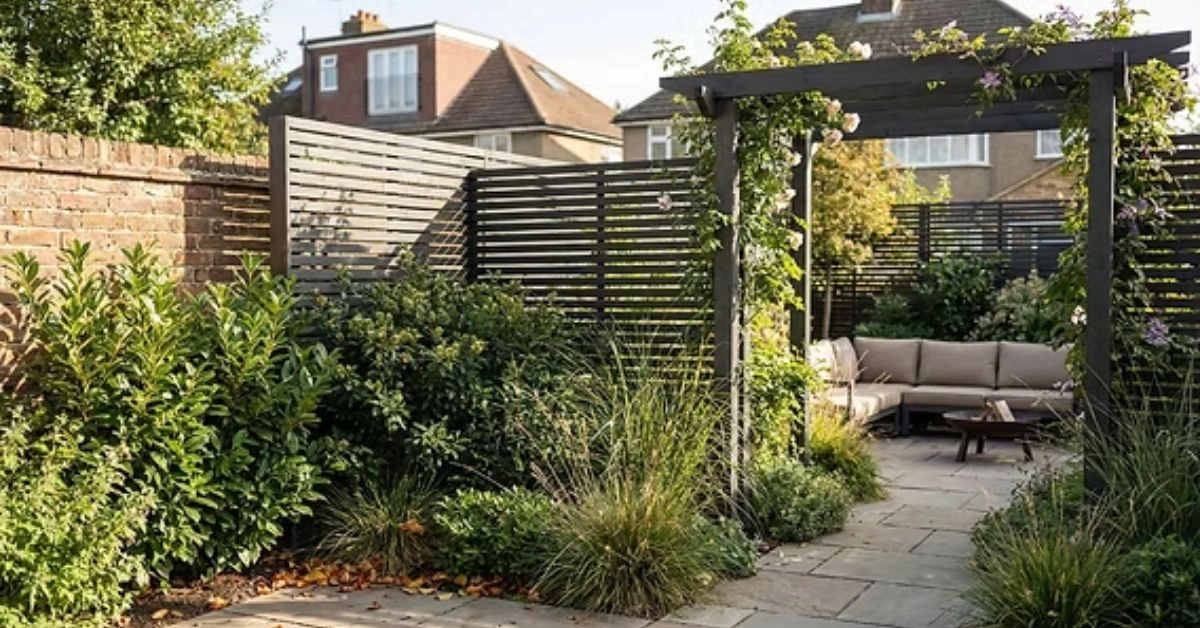
- Slatted timber: targets screening near windows while allowing some light and air.
- Trellis with climbers: adds height without a solid wall, but plants take time to establish.
- Low wall or rail: defines the boundary while keeping sight lines open.
A rear garden can usually be screened around a seating area, but a front garden must also keep access and visibility clear. For entrance areas, our guide to front garden privacy covers boundaries, paths and street-facing sight lines. The wider garden privacy guide is useful when you are comparing fences, hedges and screening materials.
Before you install anything
- Measure the actual screening width and the mature height of plants.
- Check boundary ownership before fixing trellis or brackets.
- Allow space for watering, trimming and moving a bin or mower.
- Secure freestanding structures and tall pots against wind.
- Use outdoor-rated timber, fixings and paint or stain.
- Check local rules before building a new tall fence, wall or permanent structure.
Final thoughts
Small garden privacy ideas work best when they protect a particular activity rather than trying to hide every boundary. Start with the sight line, add height through trellis or planting, and keep the middle of the garden open. The result should feel like a usable outdoor room, not a narrow corridor behind a wall.
Small garden privacy is easiest to create with layers rather than one bulky barrier. Use the height of a trellis, the width of a narrow planter and the position of your seating to interrupt the main view, while keeping enough open space for light, movement and planting. The best solution is usually targeted at the overlooked corner, window or neighbouring garden rather than the entire plot.
Find the sight line before choosing a screen
Stand where you sit and look back towards the windows, balconies or paths that overlook the garden. Mark the exact angle that feels exposed. This simple check stops you buying a tall screen that blocks the wrong part of the view and makes a small garden feel narrower.
Diagnose the angle of overlooking
Most overlooking problems are side-overlook from an upper window or balcony, direct-overlook across a boundary, or street-level views into a front garden. Height helps with side-overlook; close screening or dense planting helps with a direct view; and a lower wall, planting or a change in seating direction can soften a street-level view. Screen the particular angle you use rather than blocking the whole garden.
- Screen the seating area first, because privacy is most noticeable when you are using the garden.
- Keep a clear route for bins, bikes, washing lines and maintenance.
- Check where the sun falls before placing a dense evergreen screen.
- Measure mature plant width as well as the size of the pot.
Compare Screening Types Before Choosing
| Screening type | Best for | Light and space effect | Maintenance to plan |
|---|---|---|---|
| Slatted fence or screen | A defined boundary or a strong architectural look | Can block sight lines while still allowing some light through, depending on spacing | Inspect fixings and finish; repaint or reseal when the material requires it. |
| Trellis with climbers | A softer screen where planting space is available | Keeps the boundary visually light but takes time to fill | Water, tie in, prune and check that mature growth does not overload the support. |
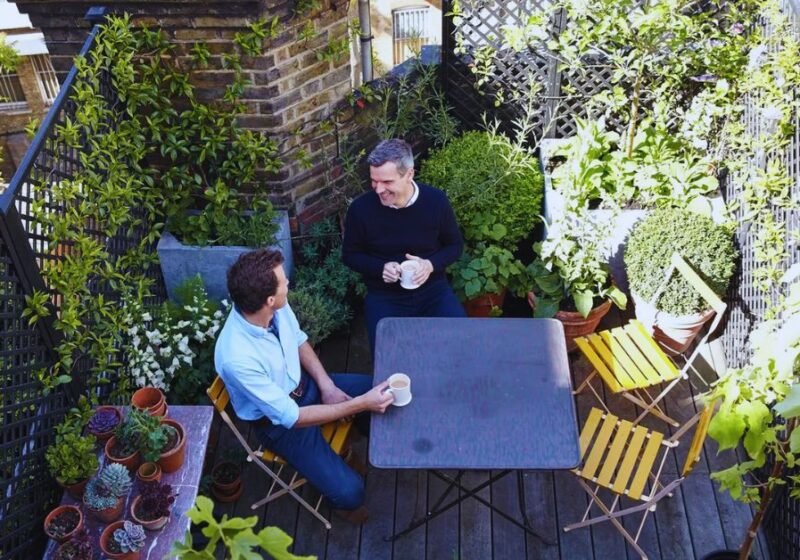
| Tall planters | Renters, balconies and movable privacy | Uses floor space but can be repositioned | Watering, drainage and safe stability in wind. |
| Hedge or living screen | A planted, long-term boundary | Can soften views but needs room for mature growth | Pruning, watering, soil improvement and seasonal leaf management. |
| Folding or freestanding screen | Temporary privacy or a seating corner | Flexible and easy to move, but may take up more floor space | Secure it in wind and check hinges, feet and storage. |
Use relative cost labels only until current supplier and plant prices have been checked. Exact prices are not included in this draft because they vary by material, size, fixing method, plant maturity, delivery and installation.
Choose Plants by Aspect and Mature Size
| Garden condition | Starting point | Check before planting |
|---|---|---|
| Sunny and exposed | Plants that tolerate sun, wind and drying soil | Mature height, root space, watering requirement and support strength. |
| Partial shade | Mixed planting or climbers suited to changing light | How many hours of direct light the area receives and how quickly the soil dries. |
| Shady or damp | Shade-tolerant planting and a lighter physical screen | Drainage, mature spread and whether evergreen coverage is actually required. |
| Small and overlooked | A narrow upright plant, trellis or movable planter | Mature width, pruning access and whether the screen blocks useful light. |
Do not choose a plant only by its height in the pot. Check the mature height and spread, the soil, the aspect and the time needed to establish useful cover.
Plan for Maintenance
A screen should remain useful after installation. Leave access for pruning, painting, cleaning and checking fixings. Avoid placing a planter where it blocks a drain, gate or shared route. Check freestanding screens after strong wind and do not rely on a lightweight screen where it could fall onto a path or neighbouring property.
Planning and Boundary Check
Before fixing a new fence, screen, trellis or structure, check current guidance from the relevant local authority. Also check title documents, lease terms, management-company rules and any shared-boundary agreement that may apply to the property.
There is no single universal rule that covers every screen, boundary, structure or location. Any height, planning or boundary statement should be verified for the property and structure type before publication. This draft deliberately does not include a specific legal limit.
Choose a fence or screen for the job
Closeboard fencing gives privacy from the moment it is installed; overlap or lap panels are a simpler option but may need more care; slatted hit-and-miss fencing lets wind through; louvre fencing gives a lighter modern look; picket fencing defines a boundary without providing privacy; chain-link needs planting to screen it; and metal fencing can be durable and architectural. Compare the privacy, wind resistance, maintenance and visual weight before choosing.
Small garden privacy ideas that save space
Grow climbers up a trellis
A trellis fixed to a sound boundary gives height without taking the footprint of a deep hedge. Climbers can soften the structure and provide seasonal cover, but they take time to establish. Leave room to inspect the wall or fence behind and choose a support strong enough for the mature plant.
A modest trellis can add useful height to an existing fence without taking much ground space. Bamboo roll screening can provide quick visual cover when it is securely fixed to a sound boundary; for living bamboo in containers, choose a clumping type rather than running bamboo.
Use tall, narrow planters
Planters are useful when you cannot alter the boundary. Choose a stable, frost-resistant container and place it where it screens the sight line rather than lining every edge. Upright grasses, small trees and clipped evergreen forms can add height; make sure the pot is heavy or secured where wind could be a problem.
Create a private corner, not a hidden garden
Turning one corner into a small outdoor room can be more effective than screening the whole plot. Place a bench or compact lounge chair beside a trellis, pergola post or group of containers. Leave the centre open so the garden still has a sense of depth when viewed from the house.
Try a folding or freestanding screen
A freestanding screen is a useful rented-home or flexible option. It can shield a table during a meal and be moved when the garden needs more sun. Choose a stable base and an outdoor-suitable finish, and store it safely if strong winds are forecast.
Standalone screen materials
Willow or hazel screening gives a natural, informal finish; composite slatted panels are low-maintenance and consistent; and powder-coated or laser-cut metal panels create a more architectural look. Use the material that suits the boundary, the wind exposure and the amount of maintenance you are willing to do.
Hedges and living screens
Leylandii gives quick height but needs regular trimming. Cherry laurel and Portuguese laurel provide evergreen cover, while yew is slower to establish but long-lived. A native mixed hedge takes longer to fill but supports wildlife. Choose for the mature width as well as the height, leave access for trimming, and avoid planting running bamboo where it can spread into neighbouring ground.
Keep a small garden feeling larger
Privacy materials do not need to be visually heavy. Open slats, a light-coloured trellis or foliage with gaps can provide separation without creating a solid wall. Repeating one material or plant at different heights makes the boundary feel intentional. Reflective surfaces should be used carefully: they can bounce light around, but a mirror facing a neighbour can create unwanted glare and may need weatherproof fixing.
- Keep the tallest screening near the overlooked edge and lower the height towards the centre.
- Use slimline furniture so the private area remains usable.
- Choose pale paving or warm lighting to avoid a dark enclosed corner.
- Prune plants so pathways and drains remain clear.
When privacy also needs overhead cover
An open-roof pergola with climbers can soften views from above while keeping daylight and airflow. A retractable-roof structure gives more control over sun and shade, while a gazebo with a solid roof and side screens can provide a more enclosed outdoor room. Keep the structure proportionate to the garden and secure it carefully in exposed positions.
Front and rear gardens need different solutions
Front-garden screening that stays welcoming
A layered hedge can soften the frontage, while a slatted screen beside a window can interrupt one direct view without closing off the whole boundary. Place taller planting around the problem angle, not in front of every window, and combine a low wall with a rail, trellis or planted bin store where the boundary needs to do two jobs.
Keep driveways, paths, house numbers and the pavement visible. Check drainage, roots, utility covers and access before planting or fixing anything, and plan how the boundary will be maintained from the pavement side as well as from the garden.
- Hedge: softens views and supports planting, but needs space and trimming.
- Slatted timber: targets screening near windows while allowing some light and air.
- Trellis with climbers: adds height without a solid wall, but plants take time to establish.
- Low wall or rail: defines the boundary while keeping sight lines open.
A rear garden can usually be screened around a seating area, but a front garden must also keep access and visibility clear. For entrance areas, our guide to front garden privacy covers boundaries, paths and street-facing sight lines. The wider garden privacy guide is useful when you are comparing fences, hedges and screening materials.
Before you install anything
- Measure the actual screening width and the mature height of plants.
- Check boundary ownership before fixing trellis or brackets.
- Allow space for watering, trimming and moving a bin or mower.
- Secure freestanding structures and tall pots against wind.
- Use outdoor-rated timber, fixings and paint or stain.
- Check local rules before building a new tall fence, wall or permanent structure.
Final thoughts
Small garden privacy ideas work best when they protect a particular activity rather than trying to hide every boundary. Start with the sight line, add height through trellis or planting, and keep the middle of the garden open. The result should feel like a usable outdoor room, not a narrow corridor behind a wall.
Small garden privacy is easiest to create with layers rather than one bulky barrier. Use the height of a trellis, the width of a narrow planter and the position of your seating to interrupt the main view, while keeping enough open space for light, movement and planting. The best solution is usually targeted at the overlooked corner, window or neighbouring garden rather than the entire plot.
Find the sight line before choosing a screen
Stand where you sit and look back towards the windows, balconies or paths that overlook the garden. Mark the exact angle that feels exposed. This simple check stops you buying a tall screen that blocks the wrong part of the view and makes a small garden feel narrower.
Diagnose the angle of overlooking
Most overlooking problems are side-overlook from an upper window or balcony, direct-overlook across a boundary, or street-level views into a front garden. Height helps with side-overlook; close screening or dense planting helps with a direct view; and a lower wall, planting or a change in seating direction can soften a street-level view. Screen the particular angle you use rather than blocking the whole garden.
- Screen the seating area first, because privacy is most noticeable when you are using the garden.
- Keep a clear route for bins, bikes, washing lines and maintenance.
- Check where the sun falls before placing a dense evergreen screen.
- Measure mature plant width as well as the size of the pot.
Choose a fence or screen for the job
Closeboard fencing gives privacy from the moment it is installed; overlap or lap panels are a simpler option but may need more care; slatted hit-and-miss fencing lets wind through; louvre fencing gives a lighter modern look; picket fencing defines a boundary without providing privacy; chain-link needs planting to screen it; and metal fencing can be durable and architectural. Compare the privacy, wind resistance, maintenance and visual weight before choosing.
Small garden privacy ideas that save space
Grow climbers up a trellis
A trellis fixed to a sound boundary gives height without taking the footprint of a deep hedge. Climbers can soften the structure and provide seasonal cover, but they take time to establish. Leave room to inspect the wall or fence behind and choose a support strong enough for the mature plant.
A modest trellis can add useful height to an existing fence without taking much ground space. Bamboo roll screening can provide quick visual cover when it is securely fixed to a sound boundary; for living bamboo in containers, choose a clumping type rather than running bamboo.
Use tall, narrow planters
Planters are useful when you cannot alter the boundary. Choose a stable, frost-resistant container and place it where it screens the sight line rather than lining every edge. Upright grasses, small trees and clipped evergreen forms can add height; make sure the pot is heavy or secured where wind could be a problem.
Create a private corner, not a hidden garden
Turning one corner into a small outdoor room can be more effective than screening the whole plot. Place a bench or compact lounge chair beside a trellis, pergola post or group of containers. Leave the centre open so the garden still has a sense of depth when viewed from the house.
Try a folding or freestanding screen
A freestanding screen is a useful rented-home or flexible option. It can shield a table during a meal and be moved when the garden needs more sun. Choose a stable base and an outdoor-suitable finish, and store it safely if strong winds are forecast.
Standalone screen materials
Willow or hazel screening gives a natural, informal finish; composite slatted panels are low-maintenance and consistent; and powder-coated or laser-cut metal panels create a more architectural look. Use the material that suits the boundary, the wind exposure and the amount of maintenance you are willing to do.
Hedges and living screens
Leylandii gives quick height but needs regular trimming. Cherry laurel and Portuguese laurel provide evergreen cover, while yew is slower to establish but long-lived. A native mixed hedge takes longer to fill but supports wildlife. Choose for the mature width as well as the height, leave access for trimming, and avoid planting running bamboo where it can spread into neighbouring ground.
Keep a small garden feeling larger
Privacy materials do not need to be visually heavy. Open slats, a light-coloured trellis or foliage with gaps can provide separation without creating a solid wall. Repeating one material or plant at different heights makes the boundary feel intentional. Reflective surfaces should be used carefully: they can bounce light around, but a mirror facing a neighbour can create unwanted glare and may need weatherproof fixing.
- Keep the tallest screening near the overlooked edge and lower the height towards the centre.
- Use slimline furniture so the private area remains usable.
- Choose pale paving or warm lighting to avoid a dark enclosed corner.
- Prune plants so pathways and drains remain clear.
When privacy also needs overhead cover
An open-roof pergola with climbers can soften views from above while keeping daylight and airflow. A retractable-roof structure gives more control over sun and shade, while a gazebo with a solid roof and side screens can provide a more enclosed outdoor room. Keep the structure proportionate to the garden and secure it carefully in exposed positions.
Front and rear gardens need different solutions
Front-garden screening that stays welcoming
A layered hedge can soften the frontage, while a slatted screen beside a window can interrupt one direct view without closing off the whole boundary. Place taller planting around the problem angle, not in front of every window, and combine a low wall with a rail, trellis or planted bin store where the boundary needs to do two jobs.
Keep driveways, paths, house numbers and the pavement visible. Check drainage, roots, utility covers and access before planting or fixing anything, and plan how the boundary will be maintained from the pavement side as well as from the garden.
- Hedge: softens views and supports planting, but needs space and trimming.
- Slatted timber: targets screening near windows while allowing some light and air.
- Trellis with climbers: adds height without a solid wall, but plants take time to establish.
- Low wall or rail: defines the boundary while keeping sight lines open.
A rear garden can usually be screened around a seating area, but a front garden must also keep access and visibility clear. For entrance areas, our guide to front garden privacy covers boundaries, paths and street-facing sight lines. The wider garden privacy guide is useful when you are comparing fences, hedges and screening materials.
Before you install anything
- Measure the actual screening width and the mature height of plants.
- Check boundary ownership before fixing trellis or brackets.
- Allow space for watering, trimming and moving a bin or mower.
- Secure freestanding structures and tall pots against wind.
- Use outdoor-rated timber, fixings and paint or stain.
- Check local rules before building a new tall fence, wall or permanent structure.
Final thoughts
Small garden privacy ideas work best when they protect a particular activity rather than trying to hide every boundary. Start with the sight line, add height through trellis or planting, and keep the middle of the garden open. The result should feel like a usable outdoor room, not a narrow corridor behind a wall.

1 thought on “Small Garden Privacy Ideas UK: Smart Screening for Small Spaces”