
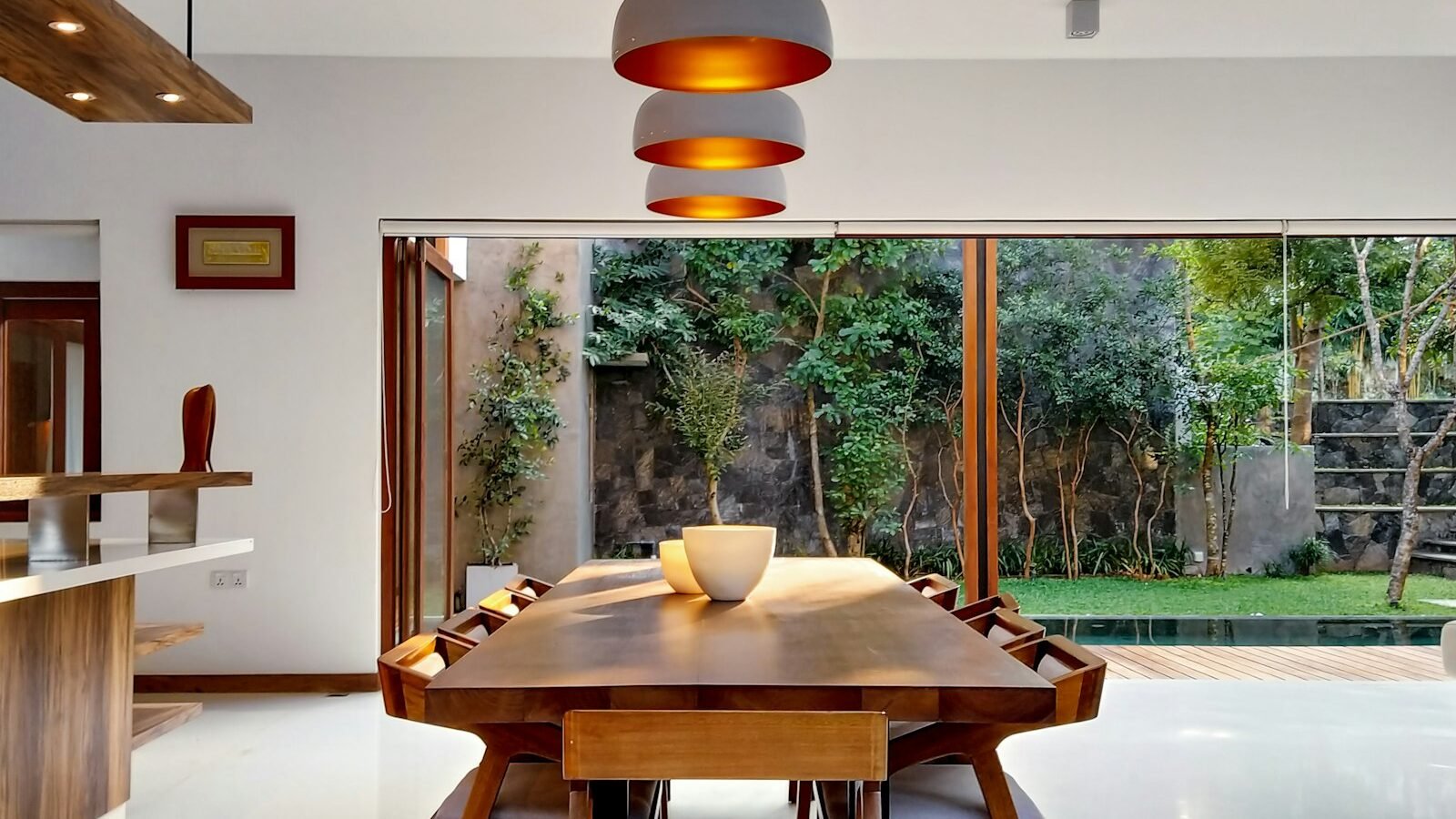
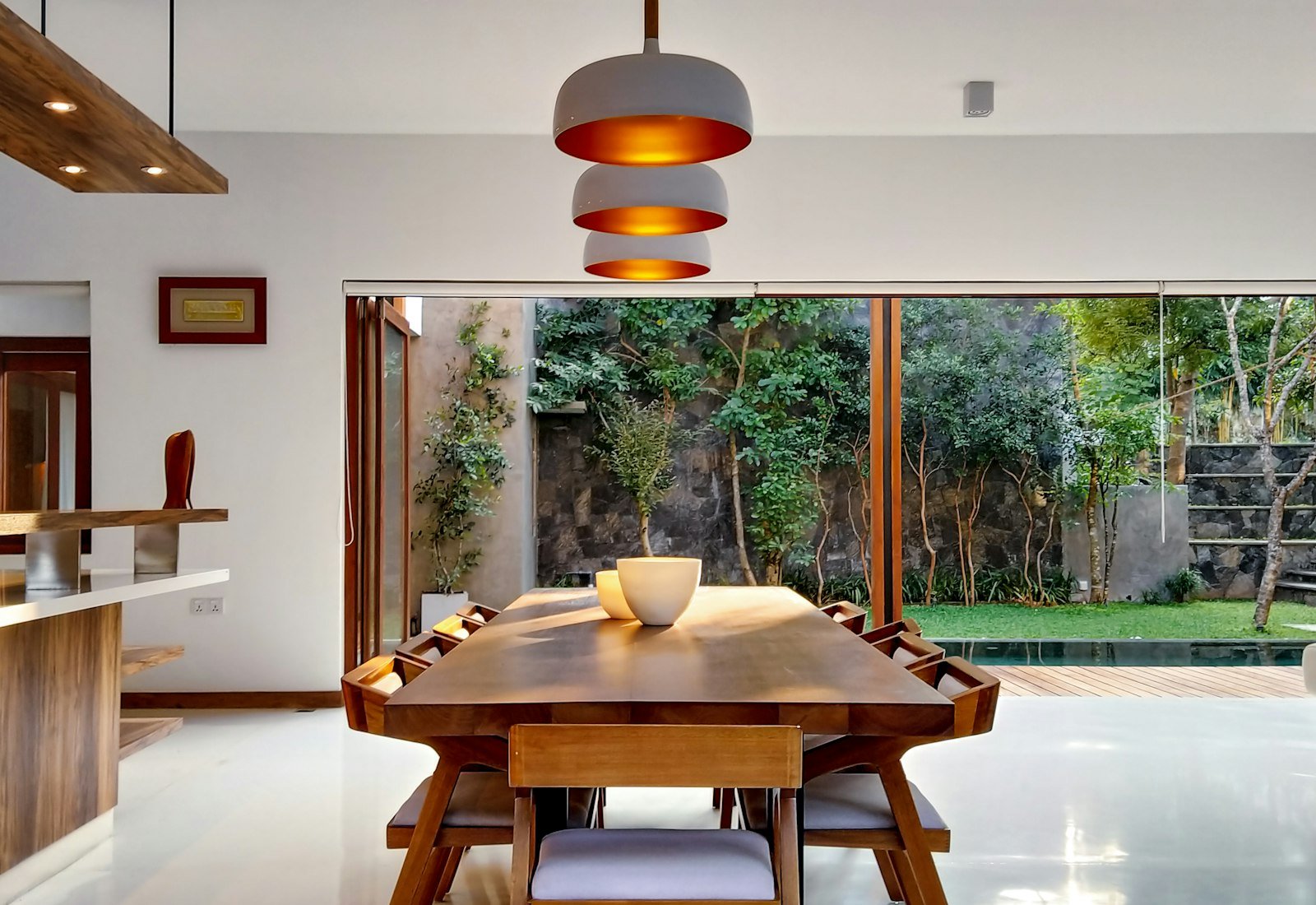
Japandi is the design shorthand for a Scandinavian-and-Japanese blend that finally lets UK homes have the calm, ordered look people want from minimalism without the coldness that goes with it. This guide is built around the specific constraints of British housing — small floor plans, sash windows, low winter light, and Victorian terraces that were never designed to be open-plan — and how Japandi principles adapt to those rooms rather than against them.
A single oak piece often anchors this look; our oak furniture guide explains what to inspect. For adjacent room decisions, see our quiet luxury guide, home accessories guide and small armchair ideas. For paint and lighting references, browse Farrow & Ball, Little Greene and Original BTC.
Table of contents
- What Japandi actually is, and what it isn’t
- Why Japandi suits UK homes specifically
- The four principles to design around
- The colour palette, in plain English
- Materials that do the heavy lifting
- Living room: the room most people overdo
- Bedroom: where Japandi is at its best
- Kitchen: how to Japandi a working kitchen
- Bathroom: small Japandi
- Common mistakes that flatten the look
- Where UK buyers actually shop
- Japandi FAQs
- Final thoughts
What Japandi actually is, and what it isn’t
Japandi is the convergence of two established design traditions — Scandinavian hygge (warm, lived-in minimalism) and Japanese wabi-sabi (the beauty of imperfection and natural ageing). It is not a new style and it is not a brand. It is a set of decisions about what to keep in a room and what to take out.
The look that gets labelled “Japandi” on Pinterest is usually just a Japanese minimalism with Scandinavian furniture substituted in. The deeper version — the one that holds up in a real UK home after six months — is more about the principles than the surface.
Three things Japandi is not:
- It is not “all beige and nothing on the walls”. Pale, yes. Anonymous, no.
- It is not the same as “Scandi” with bamboo swapped in. Pure Scandi can feel cold and a little thin; Japandi adds the depth of wabi-sabi.
- It is not a one-time redecoration. It is a way of editing a room slowly over years.
Why Japandi suits UK homes specifically
Most UK housing stock was not designed with white space in mind. Victorian terraces, 1930s semis, ex-council flats and post-2000 new-build apartments all share two things: limited floor area and lower-than-ideal natural light for half the year. Japandi handles both better than any other current look because its core moves are subtraction, soft tone, and a single material doing the work of three.
Three reasons it works in a UK home:
- Warmth under low light. The Japandi palette (off-white, oat, mushroom, sand, deep brown) holds warmth in winter light far better than cool greys and pure white.
- Calm in small rooms. A 3 m × 3 m UK bedroom feels materially bigger with one piece of oak furniture and a single pendant than it does with a small double bed, two bedside tables and a chest of drawers.
- Forgiveness with age. Oak, linen, ceramic, paper and unlacquered brass all age well. Wabi-sabi is the design tradition that explicitly values patina. The look improves over time, rather than dating.
The four principles to design around
If you remember nothing else, remember these.
1. Subtract, then add
Empty the room. Put back only what you use daily and one piece per zone that you genuinely love. A living room needs a seat, a surface, a light and a single piece of art. Anything else is decoration that you will stop seeing in two months.
2. One material, one job
Pick one hero material per room — usually oak, linen, ceramic or paper — and let it do the visual work. A solid-oak dining table, an oak side table and a small oak-framed mirror will read as calmer than a matched oak set, because the eye can rest.
3. Low and grounded
Both Scandinavian and Japanese interiors favour low-slung furniture. In a UK Victorian terrace with 2.7 m ceilings, this trick — a low sofa, a low bed, a low shelf — makes the room feel taller, not smaller. Resist the urge to elevate everything to a “comfortable” British seat height.
4. Imperfection is the point
Hand-thrown ceramic, slubby linen, a piece of untreated oak that will mark and age — these are not flaws. They are what makes the room feel human. A perfectly polished “Japandi” room is a showroom, not a home.
The colour palette, in plain English
Forget the Pinterest clichés of “greige everything”. A Japandi palette has three layers:
- Base (70% of the room) — warm off-white, oat, putty, mushroom, soft sand. Look at Farrow & Ball’s “Ammonite”, “Shaded White”, “Drop Cloth” and “Jitney” for typical UK Japandi neutrals that read warm even in north-facing rooms.
- Mid (25%) — pale to mid oak, raw linen’s natural colour, paper white, a single soft accent in clay or stone. The mid-tone is what stops the room looking like an empty gallery.
- Accent (5%) — deep brown, charcoal, black, or a single quiet colour such as olive, indigo, persimmon or aubergine. Used in a single object: a vase, a cushion, a piece of art.
Two practical UK points. First, “pure white” looks clinical under UK light. Always tint it: a 5% addition of raw umber to white emulsion gives you a soft, warm off-white that suits the look. Second, choose one surface to be different — a limewashed chimney breast, a clay-coloured headboard wall — and leave the rest quiet. Japandi rooms have one loud moment per space, not five.
Materials that do the heavy lifting
A Japandi room is, more than anything, a room of honest materials. The five that matter most in a UK context:
- Solid oak — the dominant wood, used on floors, dining tables, side tables, shelving and bed frames. Choose European oak with a B/Standard grade for honest character. Budget: £50–£110/m² for engineered oak flooring (190 mm wide, 14–20 mm thick).
- Linens and heavyweight cottons — for curtains, upholstery, bedding and cushions. Avoid polyester blends; they pull the room back into “high-street beige”. Budget: £18–£45/m for curtain-weight linen.
- Ceramic and stoneware — for vases, lamps, mugs and bowls. Hand-thrown is the look; matt over gloss. The UK studio ceramics scene (Alice Campkin, Sue Pryke, Charlie Davis) is excellent value in 2026.
- Unlacquered brass — for handles, taps and pendant hardware. Will patina, which is the point. Avoid polished chrome and black-painted metal in a Japandi scheme.
- Paper and washi-style lighting — for pendant and table lamps. The classic Akari-style paper lanterns (originally Noguchi) and rice-paper pendants are the look. They cast a warm, low-clarity light that suits the room.
Living room: the room most people overdo
UK living rooms are usually 14–22 m², with the fireplace as the focal point. A Japandi living room works with that, not against it.
- The sofa. One low, deep three-seater in a slubby linen (Cultiver, Loaf, Heal’s, Swoon). Avoid the corner sofa — it eats the room and fights the proportions.
- The coffee table. A solid-oak or solid-walnut low table, ideally 350–400 mm tall. The oblong shape suits UK rooms better than a round or square.
- The rug. A natural fibre (wool, jute, sisal) in a single, slightly oversized size. A 200 × 300 cm jute rug with a 20 cm border all round the seating group is more Japandi than a 160 × 230 cm one that disappears under the front legs.
- One piece of art. Not a gallery wall. A single, larger piece in a thin oak frame, hung lower than UK habit (centre around 145 cm from the floor, not 160 cm).
- Light. A paper pendant over the coffee table, a floor lamp by the reading chair, and a warm-tone table lamp somewhere else. The three layers of light at three heights is a real Japandi signature.
Bedroom: where Japandi is at its best
The bedroom is the easiest place in a UK home to do Japandi well, because the room’s natural function is already to be calm. Four moves to focus on.
- Bed. A low wooden platform bed in oak or ash, or a simple iron frame in black for a more Japanese edge. Avoid the UK-standard divan with headboard; it works against the proportions.
- Linens. Stone-washed linen in white, oat, clay or charcoal. Layer two duvet covers and a single throw. No more than four pillows on the bed, ever.
- Walls. A warm off-white (try Farrow & Ball “Ammonite” or Little Greene “French Grey Pale”) and a single piece of art or a woven wall hanging above the bed. Leave the rest of the walls empty.
- Storage. A single oak chest of drawers, a low sideboard, or a built-in with flush fronts. Anything with handles that shout “drawer!” pulls against the look. Push-to-open is closer in spirit, but consider whether the cost is worth the inconvenience.
Kitchen: how to Japandi a working kitchen
The hardest room. A real UK kitchen is full of stuff that has to live somewhere. The Japandi move here is to push the “honesty” principle to the cupboards themselves: a quiet oak-handled kitchen, plain-fronted cabinets, and as much worktop cleared as the room allows.
- Cabinet fronts. A slab or shaker-style front in a warm off-white or pale oak veneer. Plain bar handles in unlacquered brass or oak. Gloss and high-shine acrylics work against the look.
- Worktop. Oak, walnut, or a warm-toned composite (Cosentino Dekton “Aura” or similar). Avoid cool grey granite and bright white quartz.
- Splashback. A single material — limewashed plaster, plain off-white metro tile laid in a stack bond, or a 20 mm slab continuation of the worktop.
- Open shelf. One open shelf, not five. A 90 cm section of solid oak between two walls, with three or four objects on it. Everything else behind closed doors.
Bathroom: small Japandi
UK bathrooms are usually 2.5–5 m². A Japandi bathroom is essentially a Japanese ofuro bathroom, adapted for British plumbing. Three things matter:
- Tile. A single warm off-white or stone-look tile in a large format (600 × 600 mm or larger) on the floor and wet walls. Avoid the small white-square-tile-with-grey-grout look; it fights the look.
- Bath. A single, deep freestanding bath in stone or cast iron if space allows. Otherwise a straight bath panel in oak veneer rather than the standard white plastic.
- Brassware. Unlacquered brass taps and shower. A single round mirror, ideally with a thin brass frame.
Common mistakes that flatten the look
Five traps to avoid:
- Buying everything from the same shop. A matched set is the opposite of wabi-sabi. Mix sources: a Heal’s sofa, a vintage Ercol side table, a ceramic from a small UK studio.
- Treating “minimal” as “empty”. A Japandi room is curated, not stripped. Three perfect things in a corner will look better than seven OK things on a sideboard.
- Going pure white on the walls. Pure white under UK light reads grey and clinical. Tint it.
- Using shiny, lacquered surfaces. Anything high-gloss pulls the look back to mid-2000s minimalism, not Japandi. Choose matt or hand-finished.
- Forgetting lighting. The single biggest difference between a Japandi room that works and one that does not is the lighting. Layer three sources at three heights, all on warm white (2700–3000K).
Where UK buyers actually shop
A working UK shortlist, in 2026, by category:
- Mid-market furniture — Heal’s, Swoon, Loaf, Habitat, John Lewis & Partners, Cultiver, H&M Home (for textiles, surprisingly good).
- Designer — HAY, &Tradition, Menu, Muuto, Normann Copenhagen (all stocked at Heal’s, Nest, or Twentytwentyone).
- Oak and ash furniture — Tylney Hall Furniture, Besselink & Jones, Forest & Maker, Darlings of Chelsea (mid-range), Gaze Burvill (premium).
- Ceramics and lighting — Loaf, Pooky, Davey Lighting, Original BTC, Hector Finch; for small UK studio ceramics, try the quarterly Ceramic Art London fair or Etsy UK studios.
- Second-hand — Vinterior, Facebook Marketplace (search “Ercol”, “G Plan”, “mid-century oak”), eBay local collection, and the regular Decorative Antiques & Textiles Fair at Battersea Park.
Frequently Asked Questions
Q1. Is Japandi just a trend?
No, the two traditions it draws from (Scandinavian and Japanese interior design) are over 100 years old. The name “Japandi” is a marketing term from around 2016. The principles will outlive the label.
Q2. What is the difference between Japandi and Scandi?
Scandi is lighter, cooler, and more often painted in pale grey and white. Japandi is warmer, more grounded, and uses a single darker wood (usually oak or walnut) to anchor the room.
Q3. Can I do Japandi in a small UK flat?
Yes — and small flats are where it works best. The subtraction principle is easier in 30 m² than in 80 m², and the result is more obviously calming.
Q4. Is Japandi expensive?
It can be, but does not have to be. The total cost is driven by how much you subtract and how much you invest in one or two hero pieces. A small bedroom in a 1930s semi can be made Japandi for £600–£1,200 of new purchases, with the rest coming from what you already own.
Q5. Will it date quickly?
No. The two underlying styles are over a century old. As long as you avoid the more literal “Japandi” branding on the high street (sliding shoji doors, calligraphy prints), the room will look as good in 2040 as in 2026.
Final thoughts
Japandi is not a style to copy from a Pinterest board. It is a set of decisions about how you want to live in a room, applied patiently. Start by emptying one room completely. Live in it for a week. Put back only what you use. Add one piece of oak, one warm light, and one handmade object. That is the whole approach. The rest is editing.

12 thoughts on “Japandi Interior Design Ideas for UK Homes: A Practical Guide”