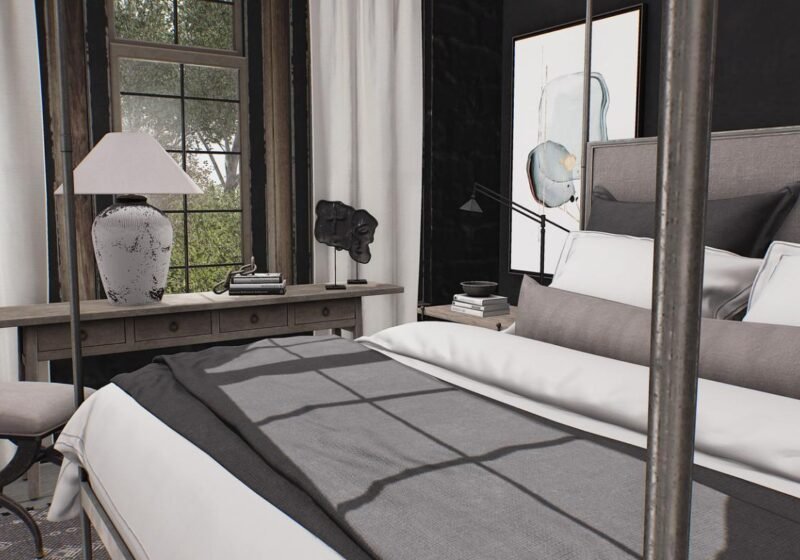

The best cottage home decor ideas create warmth through texture, useful furniture and a restrained connection to the building’s character. You do not need to fill a room with floral prints or distressed objects. Start with the floor, fireplace, beams, doors and natural light, then add colour, pattern and soft layers in a way that still supports everyday life.
A UK cottage may have low ceilings, uneven walls, small windows and awkward routes. Work with those constraints. Choose furniture that fits the scale, keep the entrance usable and avoid covering features that need ventilation or maintenance. Cosy should mean comfortable and welcoming, not crowded or difficult to clean.
Keep the architectural character visible
Let one or two original features lead the room. A stone fireplace can carry a simple mirror or artwork, while exposed timber may need only a warm wall colour and a woven shade nearby. Do not assume every old surface should be stripped or exposed. Check whether the material is sound and whether changes could affect moisture, insulation or the building’s condition.
Choose a grounded palette
Warm white, putty, clay, muted green, faded blue and soft yellow can work with timber, stone and painted joinery. Use a deeper tone in a recess or on a small piece of furniture when the room needs structure. Test paint in every part of the cottage because a colour that works in a sunny kitchen can feel heavy in a small north-facing hall.

Layer natural texture
Linen-look curtains, wool-look throws, timber, rush-style baskets, ceramic and aged metal can create depth without relying on novelty. Mix texture through the sofa, floor and lighting, but keep patterns edited. A small check, stripe or botanical print can lead the scheme; plain fabrics around it will let the room breathe. Choose washable covers and practical finishes where muddy boots, pets or cooking are part of the routine.
Rugs are useful in a cottage because they soften hard floors and define small zones. Measure the furniture group rather than buying a rug that floats in the centre. Secure edges, leave thresholds clear and check how the rug will be cleaned. Keep textiles away from open fires, heaters and damp external walls.
Choose furniture with honest scale
- Use a compact sofa or two chairs where low beams make a deep piece feel imposing.
- Choose a table with enough clearance for knees and an easy route around it.
- Use a bench or hooks in the entrance if a full cupboard would narrow the hall.
- Leave windows, radiators and doors accessible instead of filling every recess.
- Keep one flexible seat or stool that can move for guests and cleaning.
Make low light feel inviting
Use wall, table and floor lamps at different heights so the room is not dependent on one ceiling fitting. Position a reading light beside the chair and a softer lamp on a console or shelf. Keep shades proportionate to the furniture and cables away from fireplaces, stairs and routes. Curtains should provide privacy without stealing the little daylight a small window offers.
Decorative objects should have a connection to the room: a useful basket, a framed botanical print, a ceramic bowl or books that are actually read. Our home accessories guide can help you edit the final layer. Avoid buying a complete country collection; a few personal pieces will feel more authentic than a themed display.
In a working cottage, plan for the moments that create mess. Give muddy shoes a place to dry, keep throws washable and use a tray for logs, candles or table items. Protect an old floor where furniture moves, but do not cover a sound feature just to make the room look more rustic. Practical layers let the character remain visible while the household uses the space normally.
Keep the cottage practical
Plan storage for coats, logs, shoes, cleaning equipment and everyday technology. Check for damp before placing large furniture against an external wall and keep ventilation routes clear. When changing paint, flooring or built-in elements, investigate the construction first and use specialists for work beyond your skill. A cosy cottage survives daily use when its beauty is supported by sound maintenance.
Use character as the starting point, then add warmth with proportion, texture and useful light. Cottage style feels convincing when the room remains calm, comfortable and easy to live in.