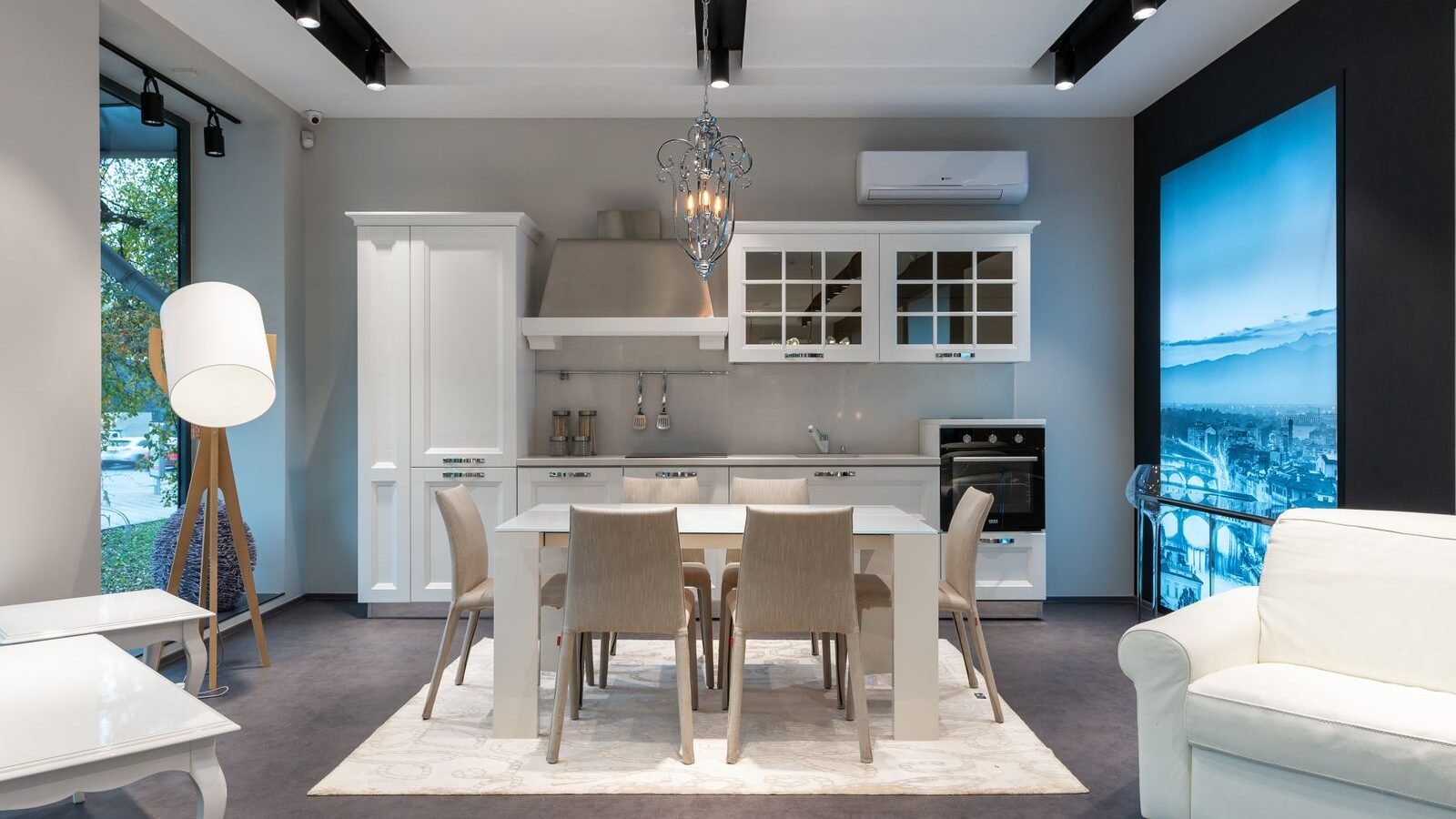
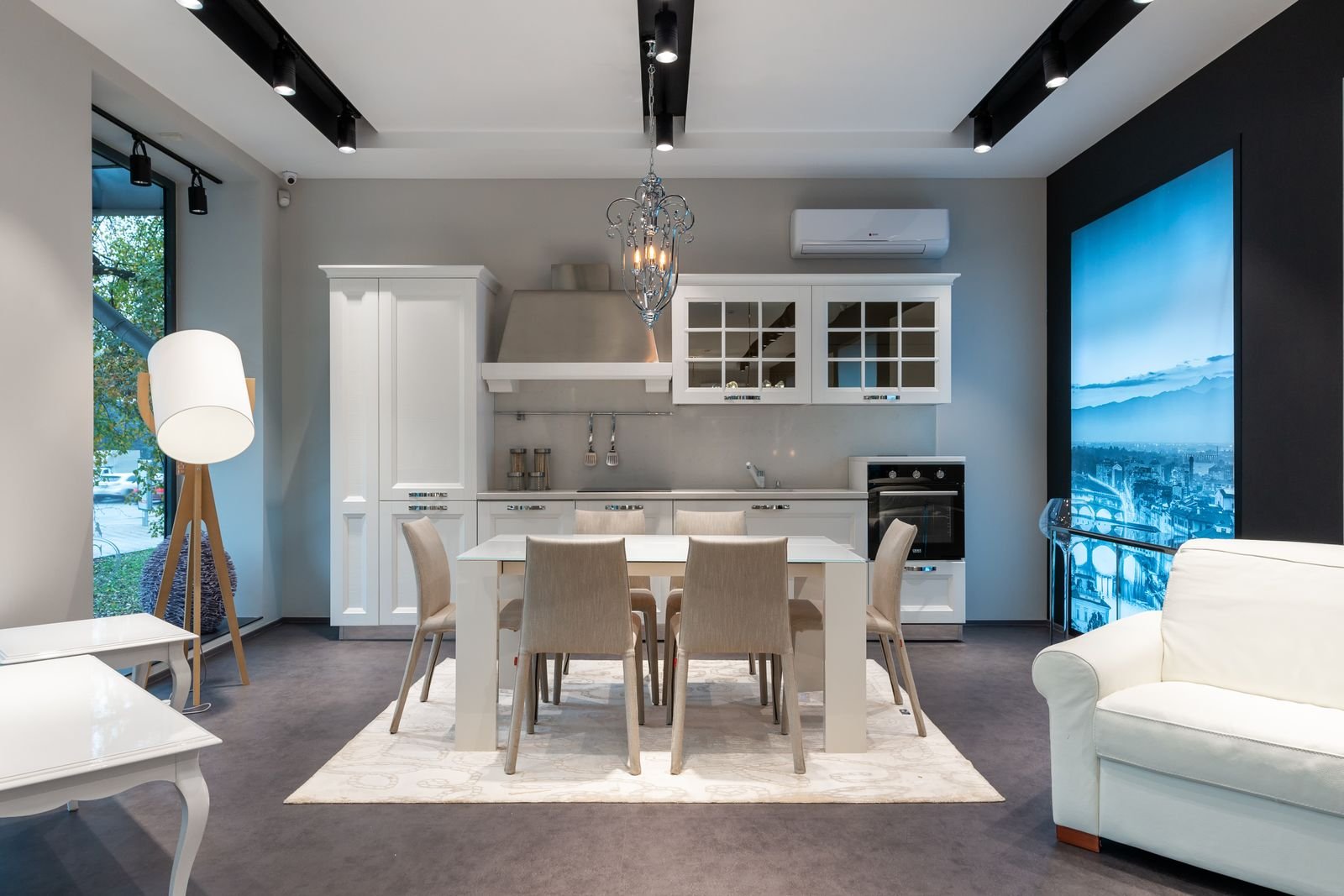
Kitchen rugs and runners work best when they are low-pile, easy to clean and held firmly against a smooth floor. Use a runner to soften the route between cupboards and an island, or a compact mat at the sink; choose the size around doors, appliances and chair movement rather than filling every spare inch.
Kitchen rugs and runners: Choose the right shape
Runner zones
A runner can make a long galley kitchen feel warmer and quieter underfoot. Place it where people actually stand, such as along the sink run or between the island and units, leaving enough room for cabinet doors, dishwasher drawers and the oven to open without catching the edge. In a narrow kitchen, a 50cm to 70cm-wide runner is often easier to live with than an oversized rug.
Dining and breakfast areas
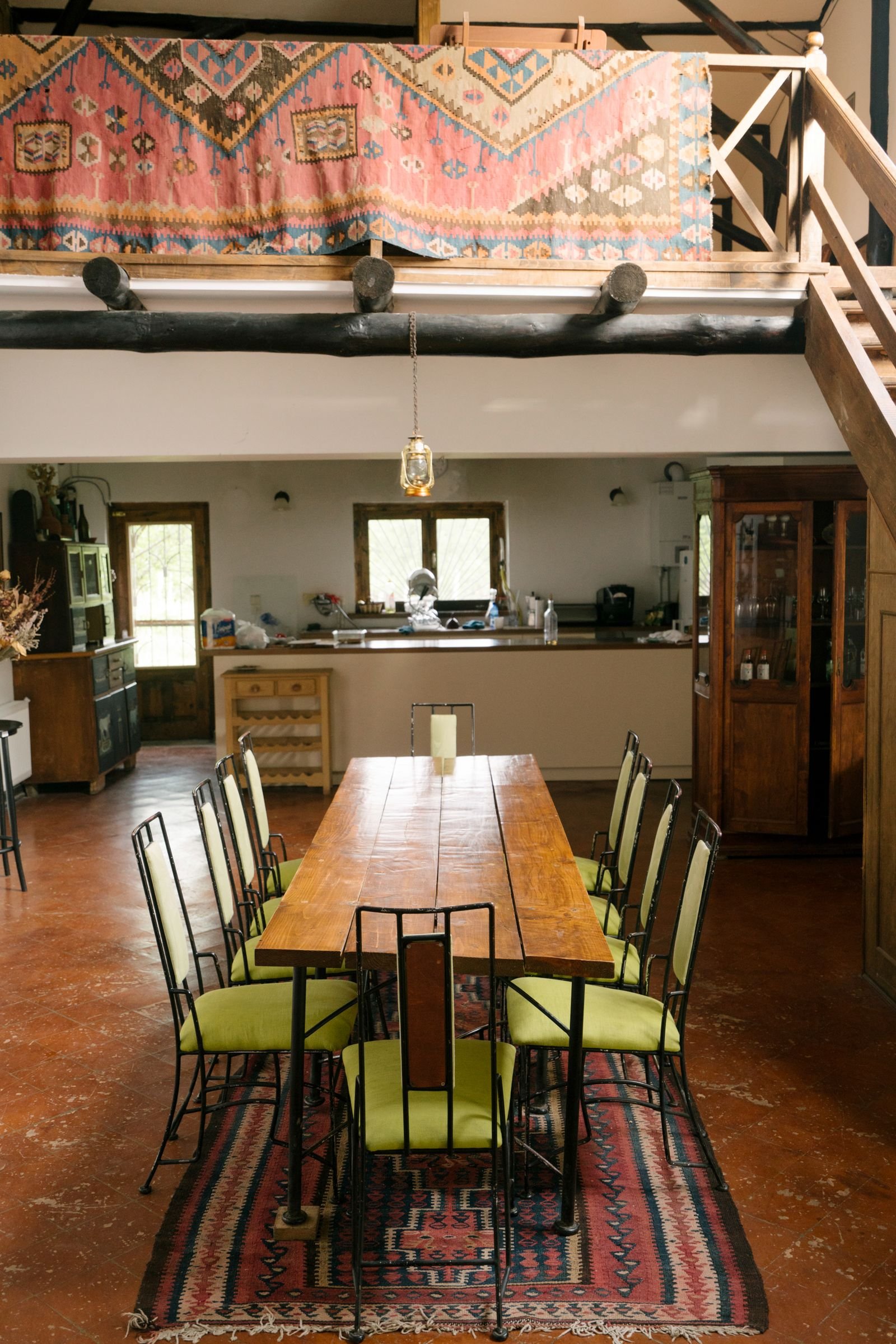
Under a table, the rug should extend beyond the pulled-out chairs, not stop at the tabletop. A low-profile flatweave or washable rug reduces chair wobble. If chairs frequently cross the rug’s edge, a larger rectangle or a rug-free dining zone may be safer. Our rugged dining table guide is relevant if the table and floor need to cope with everyday family use.
Material, pile and backing
- Polypropylene: hard-wearing and often stain-resistant, with many flatweave options.
- Wool: comfortable and naturally resilient, but spills need prompt attention and professional cleaning may be appropriate.
- Cotton: soft and washable in some designs, but check shrinkage and colourfastness.
- Recycled PET: useful for washable, hard-wearing designs; follow the specific wash instructions.
Flatweave and low pile are easier around crumbs, robot vacuums and chair legs. A separate non-slip underlay can improve grip, but it must be compatible with the floor finish. The HSE guidance on slips is a useful reminder that a rug edge, spill or curled corner can create a hazard even when the rug itself is labelled non-slip.
Size and placement checks
Use masking tape to mark the proposed outline for 24 hours. Open every cupboard and appliance, pull out chairs, and walk the usual route carrying a hot pan or shopping bag. Check that the rug does not cover a floor vent, catch a door or run beneath a kickboard where water can sit. Leave enough exposed floor at the sink to see a spill quickly and place an absorbent mat only where it will not curl.
Measure in centimetres and check the supplier’s finished size, not only the nominal label. Washable ranges such as Weaver Green kitchen rugs show how material, backing and washing claims should be read together. A rug described as washable may still require a particular temperature, drying method or commercial machine.
Cleaning without making a mess
Vacuum both sides regularly, lift the rug to clean beneath it and blot spills from the outside towards the centre. Do not rub oil or red wine deeper into the pile. For machine-washable rugs, check the drum size, temperature, detergent and drying instructions; never put a rubber-backed item through a hot cycle if the label warns against it. Keep a spare mat near the sink rather than washing the only one while the floor is unprotected.
Make practical look intentional
Repeat one colour from the splashback, doors or textiles and let the floor remain visible around the rug. Stripes can lengthen a galley kitchen, while a small patterned mat hides crumbs better than a plain pale one. Avoid a high-contrast runner that visually cuts the room in half unless that is the zoning effect you want. In open-plan spaces, align the rug with cabinet or island lines so it looks placed rather than dropped. If the palette is still undecided, our UK colour-scheme guide can help you choose a repeat colour before ordering.
Frequently Asked Questions
Q1. Are rugs a good idea in a kitchen?
Yes, when they are low-pile, washable or easy to clean, and secured against movement. Keep them clear of appliance doors and deal with spills promptly.
Q2. What is the best material for a kitchen runner?
A low-pile polypropylene, washable cotton or recycled PET design can be practical. Choose from the care label and backing, not the fibre name alone.
Q3. How do I stop a kitchen rug slipping?
Use a correctly sized non-slip underlay approved for your floor, keep the backing clean and replace the rug if its edges curl. Do not tape over a damp or greasy floor.
Q4. How wide should a kitchen runner be?
Many kitchens suit roughly 50cm to 70cm, but the correct width is the one that leaves cabinet and appliance doors clear. Mark the outline before ordering.
Final Thoughts
The best kitchen rugs and runners are comfortable, secure and simple to clean. Tape out the shape, check every door and chair, then select a low-profile material whose care instructions fit the way your kitchen is actually used.