
Green Bedroom Ideas for UK Homes: Choose the Right Shade for Your Light
Slug: green-bedroom-ideas
SEO title: Green Bedroom Ideas for UK Homes | Oak & Nook
Meta description: Planning a green bedroom? Use this UK guide to match shades to aspect and light, choose finishes, layer colours and style small rooms on any budget.
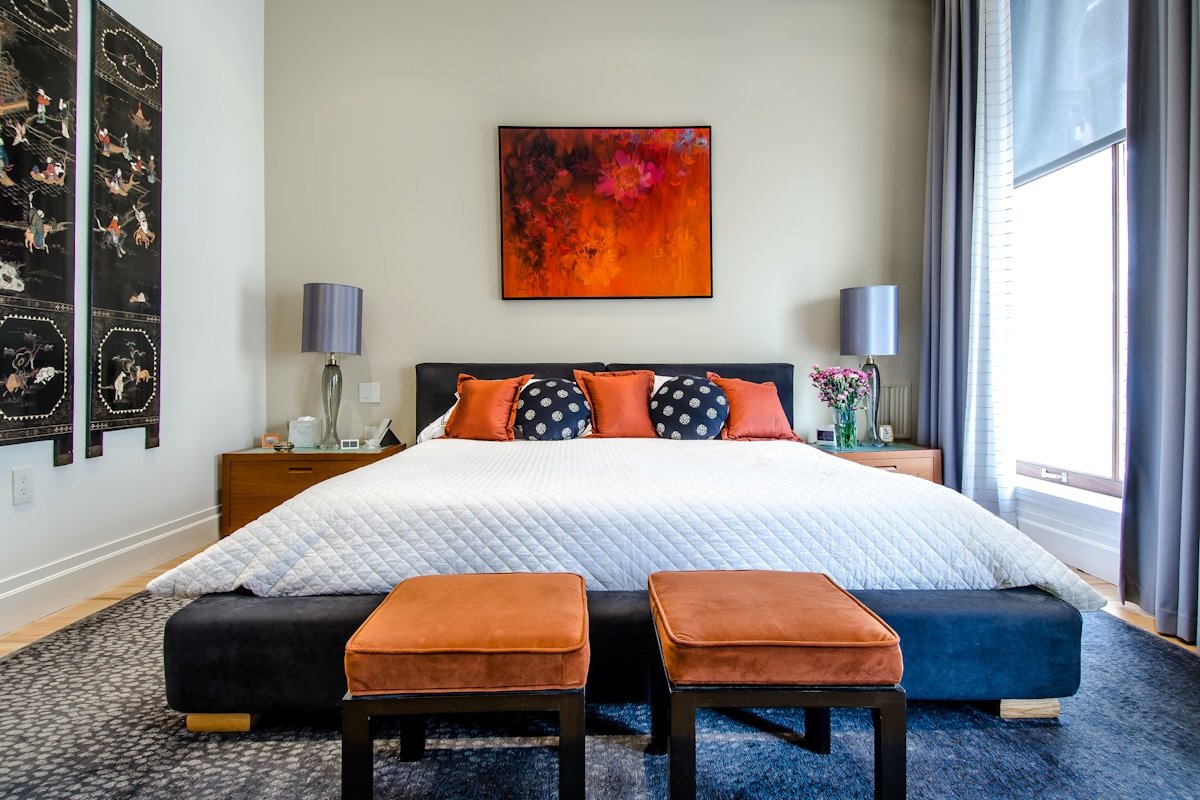
Green can make a bedroom feel quiet, grounded and gently connected to the outdoors—but the green that looks restful in a bright south-facing room can look cold, muddy or surprisingly dark in a shaded one. The best green bedroom ideas therefore start with the room, not a trend card.
This UK-focused guide is a decision-led way to plan the scheme. It covers aspect and time-of-day light, shade and colour pairings, paint sampling, finishes, furniture clearances, small bedrooms, rental-friendly updates and budget levels. Use the measurements as practical planning targets rather than fixed rules: the room, furniture and manufacturer’s instructions always take priority.
Contents
- Start with aspect, not the paint name
- A compact green shade and pairing matrix
- Five green bedroom schemes that are easy to copy
- How to test paint before committing
- Paint finish, furniture and layout details
- Small green bedrooms: make the plan work harder
- Green bedroom ideas for renters
- Budget tiers without false precision
- Frequently asked questions
- Final thoughts
Start with aspect, not the paint name
A shade is not fixed once it is on the wall. Daylight, artificial light, flooring and nearby fabrics all change how it reads. Before choosing between sage, olive or forest green, note where the main window faces and when the bedroom is used.
North-facing bedrooms
North light is usually cooler and steadier, so blue-green paints can feel chilly. Start with a muted olive, moss, lichen or yellow-green with a little warmth. Balance it with creamy white, warm timber, oat linen or aged brass rather than stark brilliant white.
If the room is already dark, a very deep green on every wall may absorb more light than you want. Try a mid-tone on the walls and reserve the darkest shade for the headboard wall, woodwork or a pair of bedside lamps.
South-facing bedrooms
A south-facing room receives stronger, warmer light for much of the day. This gives you room to explore cooler sage, eucalyptus and blue-green shades without the space feeling lifeless. Pale greens can become quite bright at midday, so test them beside the skirting board and behind the bed—not only on a sunlit wall.
Soft white, stone, pale oak and brushed nickel keep the scheme fresh. If you prefer a cocooning result, use a deeper green with chalky pink or warm terracotta accents.
East-facing bedrooms
East light is brighter in the morning and more subdued later. If the room is mainly a morning bedroom, a calm mid green can feel crisp and restorative. If it becomes dim by late afternoon, avoid a green that relies on strong blue undertones. Sage, softened fern and balanced olive are useful starting points.
West-facing bedrooms
West-facing rooms can feel cooler earlier and warmer later. A neutral or slightly greyed green is often more adaptable than an extremely yellow or blue version. Check it at breakfast and again with the lamps switched on.
Quick rule: choose three sample greens—one warmer, one balanced and one cooler—and view them at the times you actually use the room. Aspect guidance narrows the search; it does not replace sampling.
A compact green shade and pairing matrix
| Green starting point | Best for | Pair with | Watch for |
|---|---|---|---|
| Soft sage | Bright, airy rooms and calm modern schemes | Cream, pale oak, white, linen | Can look washed out in very strong light |
| Olive or moss | North-facing rooms and warmer, restful schemes | Oat, terracotta, tan leather, brass | Yellow undertones may feel too warm beside cool grey |
| Blue-green or eucalyptus | South-facing rooms and fresh, coastal or contemporary schemes | Chalk white, stone, navy, brushed metal | Can feel cool under blue-white bulbs |
| Forest or bottle green | A feature wall, generous bedroom or cocooning scheme | Blush, warm white, walnut, antique brass | Needs planned lighting and sufficient contrast |
| Muted fern or mid green | Flexible all-rounder for period and modern homes | Natural wood, black, cream, patterned fabric | A grey undertone can look flat in a low-light room |
The matrix is a starting point rather than a list of guaranteed combinations. For a broader colour comparison, see Oak & Nook’s grey bedroom ideas—particularly useful if you are deciding whether your scheme needs a green-grey or a clearer, more botanical green.
Five green bedroom schemes that are easy to copy
1. Sage, cream and pale oak
Use a soft sage on the walls, cream bedding and pale-oak or light-wood furniture. Add one patterned cushion or a fine stripe to stop the room becoming visually flat. This is a dependable choice for a smaller room because the contrast is gentle and the timber adds warmth without visual weight.
Keep the ceiling and most of the trim a warm white if you want the room to feel taller. If the walls are very pale, repeat the green in the curtains, a lumbar cushion or a small artwork so the colour feels intentional.
2. Olive, clay and aged brass
For a north-facing room, combine an olive or moss green with clay pink, cinnamon, oat and aged brass. The result feels warmer than a green-and-white scheme and works well with oak, walnut or woven textures.
Use brass selectively: two bedside lights, a mirror frame or drawer pulls are enough. Too many shiny finishes can make a restful scheme feel like a showroom. Keep large pieces—bed, wardrobe and curtains—quiet so the wall colour remains the anchor.
3. Blue-green, chalk white and navy
A blue-green wall works particularly well where daylight is generous. Pair it with chalky white bedding and one deeper navy element, such as a bench cushion or narrow stripe. This adds definition without introducing a second competing accent colour.
Choose warm bulbs rather than a cold blue-white lamp. Read the bulb specification and replace mismatched bulbs in the same room so the painted walls do not change dramatically from one side of the bed to the other.
4. Forest green, blush and walnut
A deep green can be enveloping behind a bed, especially in a larger bedroom with good layered lighting. Add a dusty blush or muted rose in the bedding and use walnut or medium-toned wood to keep the palette grown-up rather than sugary.
If you are painting only one wall, stop at the natural corners rather than ending halfway across a wall. For a more architectural effect, carry the green across the headboard wall and a short return, or paint the ceiling as well so the change looks deliberate.
5. Green, pattern and a quiet neutral
Let green provide the background while a botanical, checked or striped fabric supplies the pattern. Pick one neutral from it—cream, sand or warm grey—for the curtains or largest upholstered piece. This avoids several unrelated greens.
A useful formula is 60 per cent quiet neutral, 30 per cent green, 10 per cent accent. It is not a law, just a way to stop every surface competing for attention.
How to test paint before committing
A patch hidden behind a wardrobe tells you very little. Test two or three greens on moveable boards or lining paper, each roughly 500mm square, on the window wall and behind the bed.
Check the samples in morning, midday and dusk light, with the room’s lamps switched on, and beside the floor, headboard and curtains. Leave the boards for at least a full day and view them from the bed and doorway. A close-up favourite can feel intense across a wall, while a subtle sample may be just right when repeated.
Paint brands vary in colour, sheen and coverage. Use the manufacturer’s own sample and coverage guidance; do not calculate quantity from a generic rule. Farrow & Ball’s green bedroom inspiration is a useful paint reference, while IKEA UK’s green bedroom gallery is useful for seeing products and layouts in context. The finished result will still depend on your room and lighting.
Paint finish, furniture and layout details
Choose the finish for the surface
A low-sheen matt or durable matt is usually the calmest choice for bedroom walls because it minimises glare and lets the colour read evenly. Use a suitable woodwork finish on skirting, doors and trim, following the paint maker’s instructions. If condensation or high humidity is a recurring problem, investigate the cause first rather than relying on a decorative finish to solve it.
A green ceiling can look sophisticated, but it needs a plan. Use the same colour on walls and ceiling for a wrapped, cocooning effect, or a lighter related tone to keep the room feeling open. Painting only a narrow ceiling border can look accidental unless it aligns with existing architectural details.
Protect the walking route
Before buying a large bed or deep bedside tables, mark the footprint on the floor with low-tack tape. Aim for a clear route of around 600mm beside the bed where possible; 700–900mm is more comfortable if the room allows it. Treat these as planning targets, not access standards.
Measure the actual furniture, including drawers and doors when open. A wardrobe that fits on plan can still block the bed, radiator or window when used. Keep at least the clearance required by the furniture manufacturer and never cover a heater or obstruct a ventilation opening.
Layer the lighting
Use three lighting jobs: general light for dressing, reading light where needed and a low-level or accent light for evening. Wall lights free bedside space, but check bed height, cables and fixings before drilling; plug-in sconces and table lamps suit rentals.
Place a lamp so its switch is reachable from bed and check that a shade does not cast glare into your eye. Warm, consistent bulbs usually flatter green better than a mixture of cool and warm lamps.
Add texture before more colour
If the room feels flat, add linen, wool, cane, timber, boucle or a tactile rug before introducing another paint colour. A rug under a double bed should generally extend beyond the sides and foot rather than stopping at the bedside tables; tape the proposed outline first to test the scale.
For a practical source of styling contrast, browse Oak & Nook’s black bedroom furniture guide. Black can sharpen a soft green scheme, but use it in a few repeated details rather than making every piece of furniture high contrast.
Small green bedrooms: make the plan work harder
Green does not automatically make a small bedroom feel smaller. The result depends on contrast, light and how much furniture interrupts the walls.
- Use one green across the wall behind the bed and keep the other walls light if you want a clear focal point.
- Alternatively, use the same pale or mid green on all walls and ceiling to blur the boundaries; test this carefully in a low-light room.
- Choose furniture with legs or open space beneath it so more floor remains visible.
- Prefer wall-mounted shelves, slim bedside tables or a shallow picture ledge to bulky chests.
- Hang curtains high and wide enough to frame the window without covering useful glass; check the pole or track can be fixed securely.
- Use a mirror to reflect light or a pleasant view, not simply to fill a blank wall.
For a small room, draw the bed, wardrobe and door swing to scale before painting. Note the window and radiator positions, then test the furniture footprint. Green should support the layout, not disguise a circulation problem.
Green bedroom ideas for renters
You can build a convincing green scheme without repainting. Start with a green duvet cover, quilt or pair of curtains, then repeat the shade in two or three smaller pieces. A removable art print, textile wall hanging, freestanding screen or plant pot can add height without permanent fixings.
For a stronger change, use removable wallpaper only when the product is suitable for the wall and the tenancy agreement allows it. Test an inconspicuous area first and follow the maker’s removal instructions. Do not assume that adhesive hooks, peel-and-stick products or heavy mirrors are safe on every painted, textured or freshly plastered surface.
A green headboard or upholstered bed base can create the effect of a painted feature wall while keeping the landlord’s walls untouched. Add a warm bedside lamp and natural-texture bedding so the result feels designed rather than like a collection of temporary accessories.
Budget tiers without false precision
Brand, finish, room size, labour and availability change prices, so one “cost of a green bedroom” figure would mislead. Use these tiers to set priorities, then check current UK prices and coverage.
Low-commitment refresh
Work with the existing walls and change the bed linen, cushions, lampshade, artwork and one plant pot. Spend first on the largest visible textile and on a consistent pair of bulbs. This is the best route if you are renting or still testing the shade.
Focused paint update
Buy sample pots first, then paint one feature wall or the full room once the colour is proven. Include preparation materials, primer where the surface requires it, masking materials and the correct finish in your plan. A well-prepared single wall usually looks more convincing than rushed paint across every surface.
Full room scheme
Add curtains, a rug, lighting and one substantial furniture or upholstery change. Measure everything before ordering and keep the palette to one main green, one quiet neutral and one accent. This tier benefits most from a drawn plan and a sample board because mistakes multiply when several finishes are bought together.
Bespoke or higher-spec update
Consider fitted storage, made-to-measure window treatments, rewiring or professional preparation only after the layout is settled. Ask for written scope and labour inclusions; electrical or building work may require a qualified professional.
Frequently asked questions
Which green is best for a north-facing bedroom?
Begin with a warm, muted green such as olive, moss or a softened yellow-green. Avoid choosing from a screen alone: compare large samples with the floor, furniture and artificial light. Cream, oat, warm timber and aged brass usually support this direction better than stark white and cool chrome.
What colours go with a green bedroom?
Cream, warm white, pale oak, terracotta, blush, tan, navy, walnut and brass can all work, depending on the green’s undertone. Choose one main neutral and one accent, then repeat each several times. If the green is blue-leaning, warmer accessories can stop it feeling cold; if it is yellow-leaning, cooler stone or soft white can restore balance.
Does green work in a small bedroom?
Yes. Use low-contrast furniture, keep circulation clear and decide whether you want a single feature wall or a wrapped colour-drenched effect. Tape out the bed and wardrobe first, and aim for roughly 600mm of walking space beside the bed where feasible.
Should the ceiling be painted green too?
It can be. The same green on walls and ceiling creates a cocooning effect, while a lighter related tone keeps more contrast. Test the idea on a sample board and consider the room’s ceiling height, daylight and existing trim before committing.
How can renters add green without painting?
Layer a green duvet, curtains, headboard, rug and artwork, using the shade in a few different textures. Removable products can help, but check the tenancy agreement, test the wall and follow the product instructions; do not assume every adhesive or temporary covering is damage-free.
Final thoughts
The most successful green bedrooms are not built around a fashionable shade in isolation. They begin with the room’s aspect, the time of day it is used and the furniture that must fit. Once those decisions are clear, choose a green with the right temperature, test it on large samples, repeat it through fabrics and light, and add contrast gradually.
For a reliable UK scheme, make the walls the considered backdrop rather than the only idea. A measured layout, a coherent three-part palette and lighting that works at night will do more for the room than another list of accessories. Green is wonderfully flexible—but it works best when the design is specific to your bedroom.