
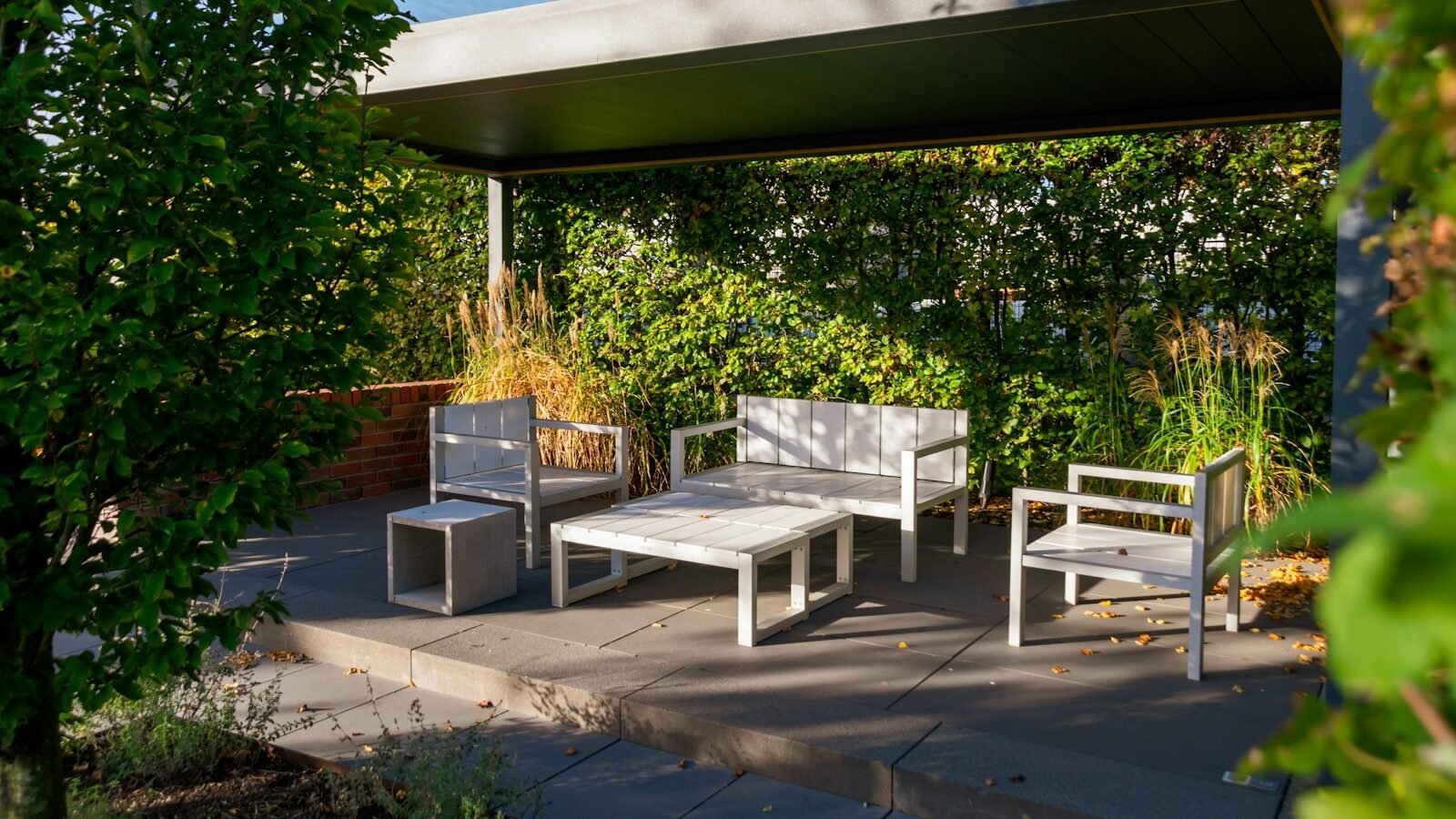
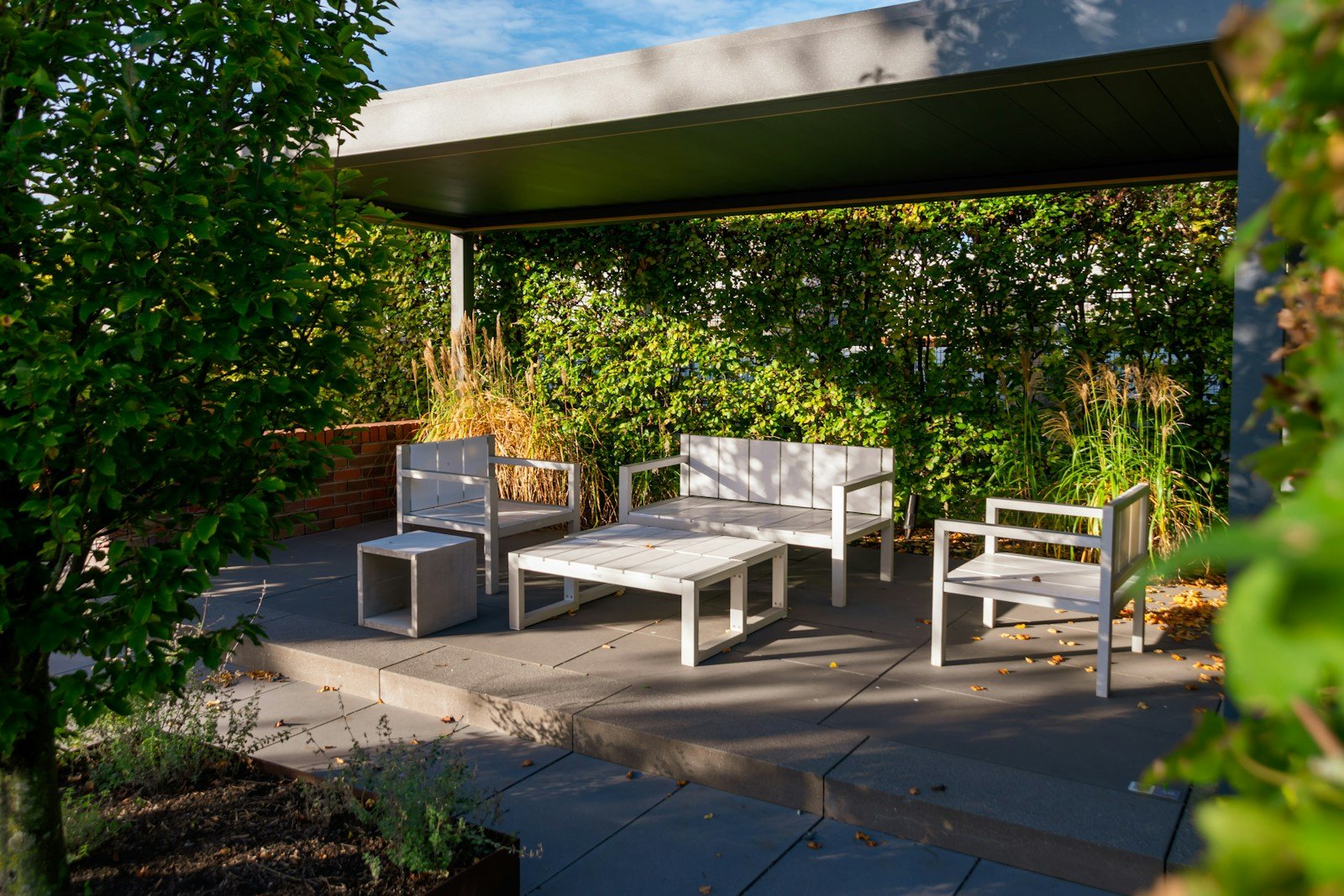
How to choose garden furniture for the UK comes down to matching material and weight to your exposure, measuring the usable patio rather than the whole garden and budgeting for the care the set needs. The best set is the one you can sit on comfortably, move or secure safely and protect when the weather turns.
How to choose garden furniture: measure first
Mark the furniture footprint with masking tape and leave about 90cm behind a dining chair for pulling out and walking past. A two-seater bistro set may fit a 2m x 2m balcony; a six-seat table with chairs often needs roughly 3m x 3m once circulation is included. Measure gates, steps and the narrowest delivery route as well as the patio.
For a windy garden, a heavy table can be an advantage while light chairs may need stacking, anchoring or indoor storage. Check balcony loading and lease rules before taking a stone table upstairs. The RHS garden-design resources are useful for thinking about furniture as part of the layout rather than an afterthought.
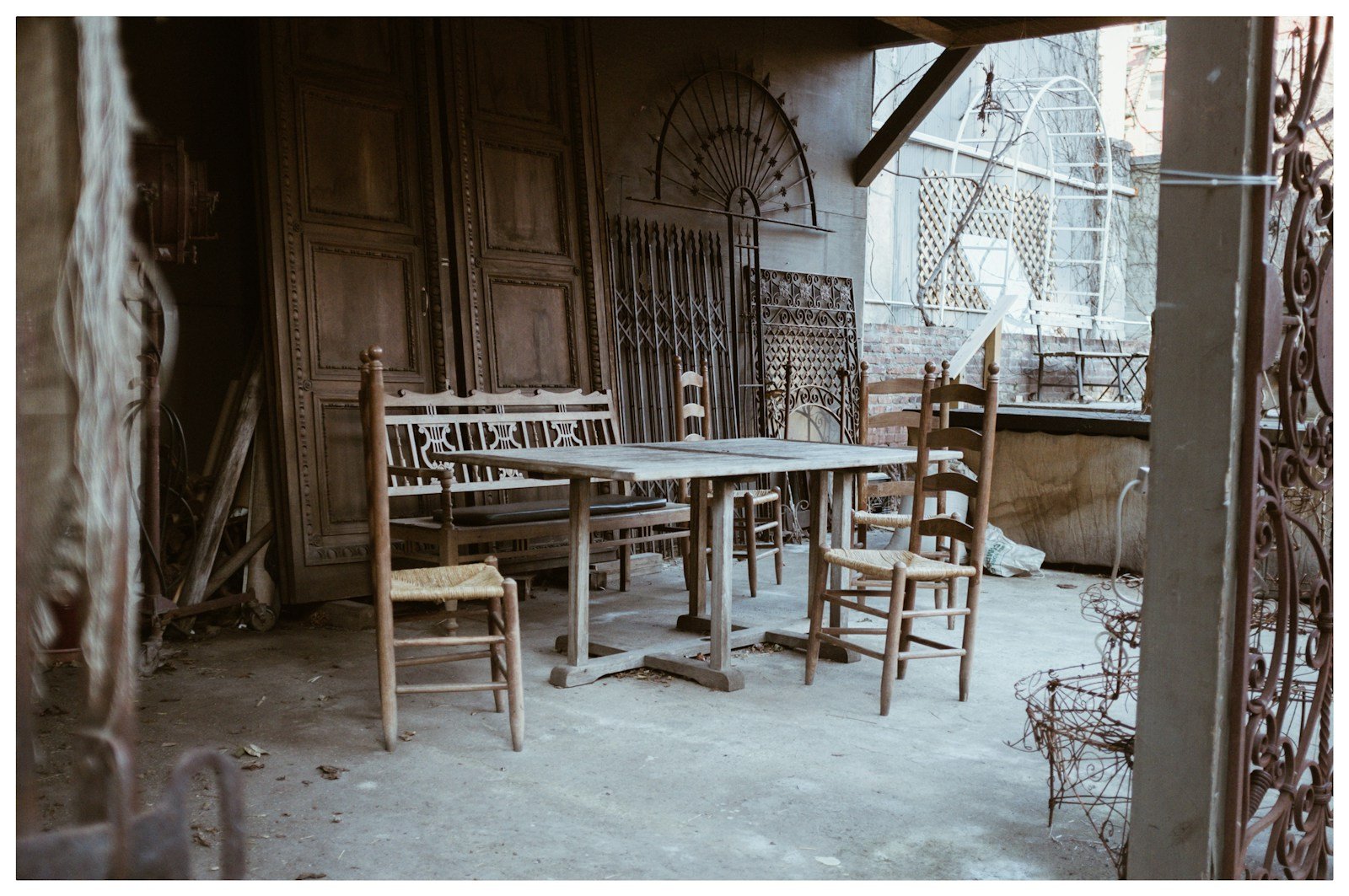
Compare materials honestly
Powder-coated aluminium
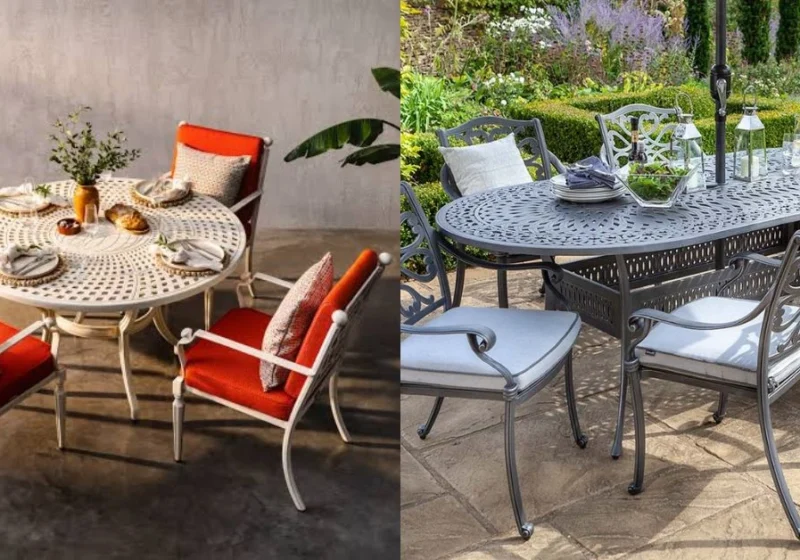
Aluminium is light, rust-resistant and easy to move, making it good for compact patios. It can blow around and the frame may feel cold without cushions. Check the powder coat is even, the welds are tidy and replacement feet are available. Typical UK prices are £250-£900 for a dining set, depending on size and finish.
Synthetic rattan
Good synthetic weave over a sound aluminium frame is comfortable and low effort, but cheap PVC weave can become brittle or fade. Look for UV-stable polyethylene, a lifted weave that does not trap water and a cushion box or washable covers. Expect £350-£1,200 for a useful lounge set rather than judging quality by the weave alone.
Teak and other timber
Teak is naturally durable and ages to silver-grey if left untreated. Oiling preserves a warmer colour but is not what makes the wood weatherproof. Ask whether the timber is responsibly sourced, whether joints are screwed or dowelled, and whether replacement slats are sold. A small teak bench may cost £180-£450; a six-seat table and chair set can exceed £1,500.
Acacia and eucalyptus are more affordable hardwood choices but need regular care. Softwood is a budget option with a shorter expected service life and benefits from suitable treatment. Look for FSC certification when sourcing timber.
Steel and wrought iron
Steel feels stable and suits traditional gardens, but chipped paint allows rust to start. Look underneath seats and around fasteners for a continuous finish. Wrought iron is heavy and can be uncomfortable without cushions, but it works well where wind is a problem.
Aluminium suits many gardens, while stainless steel grade 316 is a useful choice for exposed coastal settings where salt air increases corrosion risk.
Stone, ceramic and glass
Glass is easy to wipe but shows marks and can feel visually heavy. Ceramic and stone tolerate heat but may stain, chip or need sealing. Never assume a table is frost-proof: follow the maker’s winter storage instructions.
Recycled HDPE furniture
Recycled high-density polyethylene (HDPE) furniture is a low-maintenance option that does not need oiling and can last for many seasons. It is practical and durable, although its appearance is usually more functional than natural timber.
Compare Materials Side by Side
| Material | Weather and weight | Upkeep and lifecycle | Small-space considerations |
|---|---|---|---|
| Aluminium | Usually lighter than steel and resistant to rust when the finish remains intact | Check the powder-coat specification, scratches and replacement-part availability | Easier to move, but may need careful anchoring in exposed locations. |
| Synthetic rattan | Performance depends on the weave, resin and frame beneath it | Check UV stability, frame material, cleaning instructions and cushion storage | Corner and modular sets can use awkward patios efficiently, but measure the full footprint. |
| Teak and other timber | Natural timber changes appearance outdoors and needs an appropriate care routine | Check the timber source, finish, maintenance instructions and replacement options | Heavy pieces can be stable but harder to move or store. |
| Steel or wrought iron | Heavier and potentially stable in wind when correctly positioned | Check rust protection, finish damage and whether touch-up products are available | Useful where stability matters, but confirm that the weight suits the patio or balcony. |
| Recycled HDPE | Often durable and relatively low-maintenance | Check the manufacturer’s cleaning, colour-retention and warranty information | Can be practical for small spaces, but confirm weight and storage requirements. |
Material descriptions are not a substitute for the supplier’s specification. Check the frame, finish, fasteners, cushions and warranty separately.
Plan for Wind and Anchoring
Record the exposed sides of the garden, the furniture weight, the position of walls and fences and whether the set can be moved under cover. Ask the supplier whether the product has an anchoring or connector system and whether using it affects the warranty.
Do not drill into paving, decking or a wall without checking the substrate, services and permission requirements. A cover can reduce weather exposure but does not automatically make lightweight furniture safe in strong wind.
Check Warranty and Lifecycle Information
| Check | Why it matters |
|---|---|
| Frame warranty | The frame may have different coverage from cushions, fabric or finish. |
| Finish warranty | Scratches, fading, corrosion and chemical damage may be treated differently. |
| Cushion warranty | Foam, covers, stitching and water exposure may have separate exclusions. |
| Spare parts | Check whether covers, feet, clips and cushions can be replaced. |
| Care requirements | A product that needs regular oiling, covering or indoor storage may not suit the intended routine. |
Make Small Spaces Work Harder
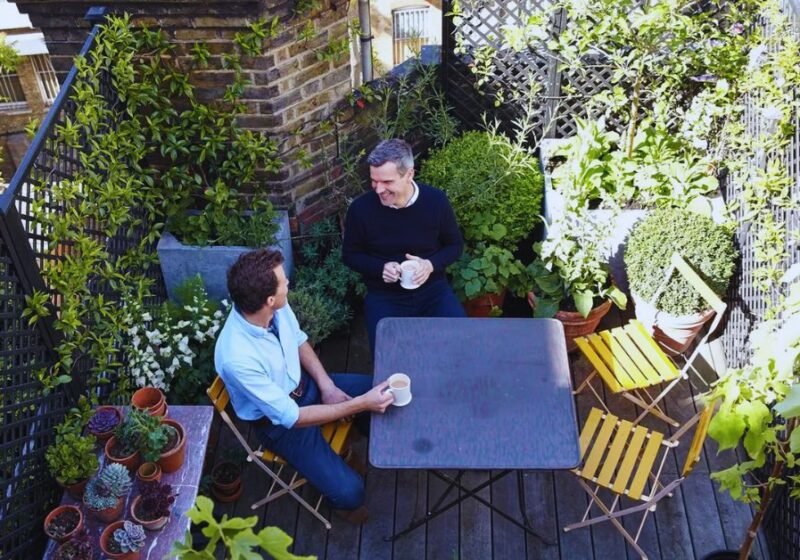
For a balcony or narrow garden, measure the clear route first, then choose the smallest configuration that provides the required seating. Folding chairs, stackable pieces, benches and modular units may be more useful than a large fixed set. Leave access to doors, drains, gates and storage, and measure the route through the house before ordering large furniture.
Choose for comfort and everyday use
- Seat height around 45cm works with a normal dining table; low lounge seats need a lower table.
- Try the chair with the table: armrests must slide under if you want compact storage.
- Removable covers are easier to wash than permanently sewn cushions.
- Check whether the table legs interfere with knees at the end seats.
- For children, rounded corners and stable bases matter more than a trend-led silhouette.
If the set is mainly for meals, use the measurements in our dining table buying guide. If it is for entertaining, an extending outdoor table may be more useful than a permanent eight-seater.
For a medium patio, a corner sofa with a compact coffee table can use space efficiently; for a garden under 3m wide, a bistro set is often the more practical choice. Keep at least 90cm of circulation around furniture so chairs can be pulled out safely.
Outdoor cushion fabrics
Solution-dyed acrylic resists UV and dries quickly; olefin offers a useful middle ground; and polyester is the budget option but tends to fade or hold damp sooner. Whatever the fabric, store cushions dry and ventilated.
Design for British weather
A cover protects from dirt but can trap condensation if it sits on wet cushions. Buy breathable covers with vents and let everything dry before covering. Store cushions indoors or in a ventilated box; do not leave them in a sealed plastic bag through a damp winter.
Keep timber off standing water, touch up paint chips quickly and rinse bird mess from finishes before it etches. In exposed gardens, choose a low centre of gravity and put felt or rubber under feet so moving the furniture does not damage paving.
Think about local exposure as well as the general UK climate: exposed or windy gardens need stable, low-centre furniture; damp or shaded gardens need ventilation and dry storage; coastal gardens need corrosion-resistant finishes; and bright, sunny positions need UV-stable fabrics.
What to budget
Entry-level bistro sets start around £80-£200, durable four-seat dining sets commonly fall between £300 and £1,000, and premium teak or aluminium sets run £1,500-£3,000+. Add £40-£180 for a proper cover, £50-£250 for cushion storage and a small annual allowance for oil, touch-up paint or replacement feet. A cheaper frame that needs replacing after two seasons is not cheaper.
A simple care routine
- Brush off leaves weekly and wash with mild soapy water when needed.
- Dry cushions upright; never store them wet.
- Inspect screws, glides and welds at the start of spring.
- Oil teak only after cleaning and drying, if you want the original colour.
- Move or cover furniture before named storms, not after the first gusts.
Sustainability and repairability
Choose FSC-certified timber where possible, and remember that aluminium is widely recyclable. PE rattan is less straightforward to recycle because it is bonded to a metal frame. Repairable furniture with bolted joints, replaceable slats and standard-sized parts can stay useful for longer than a cheaper set that must be replaced as soon as one component fails.
Frequently asked questions
Q1. What is the best garden furniture material for the UK?
There is no single winner. Powder-coated aluminium is low-maintenance and light, good synthetic rattan is comfortable, and teak is a long-term timber choice if you accept its price and weight.
Q2. Can synthetic rattan furniture stay outside all year?
The frame may tolerate it, but cushions and cheap weave will last longer when kept dry and covered. Follow the maker’s specific UV, frost and cover instructions.
Q3. Does teak garden furniture need oiling?
No. It can weather naturally to silver-grey. Oil is optional and mainly preserves a honey-brown appearance; clean and dry the timber first.
Q4. How much space do chairs need around a garden table?
Allow about 90cm behind a pulled-out chair for comfortable circulation. Increase it where people need to pass between the table and a wall or border.
Final Thoughts
Buy garden furniture as if you were buying a small room: measure its circulation, choose materials that fit your maintenance tolerance and plan where cushions go in November. Comfort, stability and repairable parts will serve you longer than a colour trend.

12 thoughts on “How to Choose Garden Furniture UK: Materials, Sizes & Care”