


The most useful home decor ideas for small homes improve circulation and storage before adding visual tricks. Start by measuring the main routes, door swings, radiators and windows. Then choose furniture that can do more than one job, use vertical space carefully and keep the floor visible where possible. A small room feels generous when it is easy to move through and quick to reset.
UK homes often combine narrow hallways, chimney breasts, low storage and rooms that need to serve several purposes. Treat those features as the starting point rather than trying to hide them. An alcove can hold a shallow shelf, a bay can become a desk or seat, and an underused landing can take a well-planned drop zone.
Measure Each Room Before Choosing Furniture
Measure the usable floor area, door swings, windows, radiators, sockets and the route into the room. The figures below are planning starting points rather than universal rules. Always compare them with the actual furniture dimensions and the manufacturer’s clearance requirements.
| Room | Useful measurements to record | Practical planning check |
|---|---|---|
| Living room | Sofa width and depth, coffee-table footprint, media-unit depth and main route | Keep the main route clear and avoid placing storage where doors or windows need to open. |
| Bedroom | Bed width, wardrobe depth, door swing and usable space beside and beyond the bed | Measure the wardrobe doors and drawers when open, not only the closed furniture footprint. |
| Hallway | Clear route, console depth, coat storage width and door swings | A shallow console or wall-mounted storage may work better than freestanding furniture. |
| Kitchen or dining area | Table footprint, chair pull-out space, appliance doors and working routes | Mark the table and chair positions with tape before choosing a larger dining surface. |
| Bathroom | Fitting footprints, door swing, shower or bath position and storage depth | Use the fitting manufacturer’s clearances and check ventilation, access and service routes. |
As a starting point, a sofa may be around 850-950mm deep, a wardrobe may be around 600mm deep and a hallway console may be around 250-350mm deep. These are not fixed standards. Use the exact dimensions of the products you are considering.
Measure Storage Capacity, Not Just Storage Furniture
Describe storage by usable shelf width and depth rather than by the number of cupboards. Add together the usable shelf widths, then account for doors, drawers, plinths and the items that need to fit.
A tall cabinet may offer more capacity than a wide low unit, but it may also block light or make a narrow room feel heavier. Open shelves keep everyday items visible, while closed storage is usually easier to reset in a busy family home.
Budget by Priority
| Priority | Spend first on | Delay or simplify |
|---|---|---|
| Essential | Safe circulation, a correctly sized main piece of furniture, lighting and useful storage | Decorative accessories that do not solve a room problem. |
| Comfort | Better seating, blackout or privacy treatments, task lighting and durable surfaces | Matching every item or replacing furniture that can be reused. |
| Long-term | Built-in storage, flexible furniture and robust finishes | Trend-led items that cannot move with you. |
Renter and Family Options
For renters, prioritise freestanding, removable and reversible changes. Use tension-fit treatments where suitable, freestanding shelving, removable hooks and furniture that can move to another room.
For family homes, keep routes clear, secure tall furniture according to the manufacturer’s instructions and avoid sharp projections in the main circulation path. Choose wipeable fabrics and storage that children can use without leaving frequently handled items across the floor.
Plan the floor before the decoration
Draw the room from above and mark where people enter, sit, work, eat and store daily items. Use tape to mark furniture at its full size, including arms, open doors and chair pull-back space. Keep a clear route between the entrance and the main window. In a living room, one comfortable chair may be more useful than two cramped seats. In a bedroom, protect the drawers and wardrobe first.
Choose furniture that earns its footprint
Other compact options include a narrow armchair, a drop-leaf table or a sofa table that can work as a desk when needed. A bed with drawers can add storage where the drawers still open fully and the room can be ventilated.
A storage ottoman can provide a seat, table and place for blankets, while a wall-mounted desk can disappear after work. Nesting tables, a bench that slides under a table and a narrow console can keep a room flexible. Measure the closed and open position of anything that converts. A sofa bed is useful only if it can open without blocking the door or forcing every other object into the hallway.

Build storage in layers
Before drilling, check the wall construction, especially in older plaster or stud partitions. Storage doors should open without cutting into the main route through the room.
Keep everyday objects between waist and eye level, use high shelves for occasional items and reserve low storage for heavier things. Hooks near the entrance can hold coats and bags, while labelled baskets prevent a narrow console from becoming a dumping ground. Use the space beneath the bed only when the boxes slide out easily. Closed storage keeps a small room calm, but open storage can make daily items quicker to return.
Check that wall shelves are properly fixed and that tall units cannot tip. Leave access to sockets, heating controls and service panels. Do not fill every alcove with cabinetry if it will make the room difficult to clean. A small empty area is useful because it gives the home somewhere to absorb a parcel, project or change of season.
Use colour without flattening the room
Repeat a small palette across walls, fabrics and larger storage pieces to reduce hard visual stops. Closed storage can keep practical clutter out of sight, while one open shelf or picture ledge gives the eye somewhere to rest.
- Use a consistent base colour through connected spaces to reduce visual breaks.
- Paint an alcove or chimney breast when you want depth without adding furniture.
- Repeat one accent tone in cushions, artwork or a small chair.
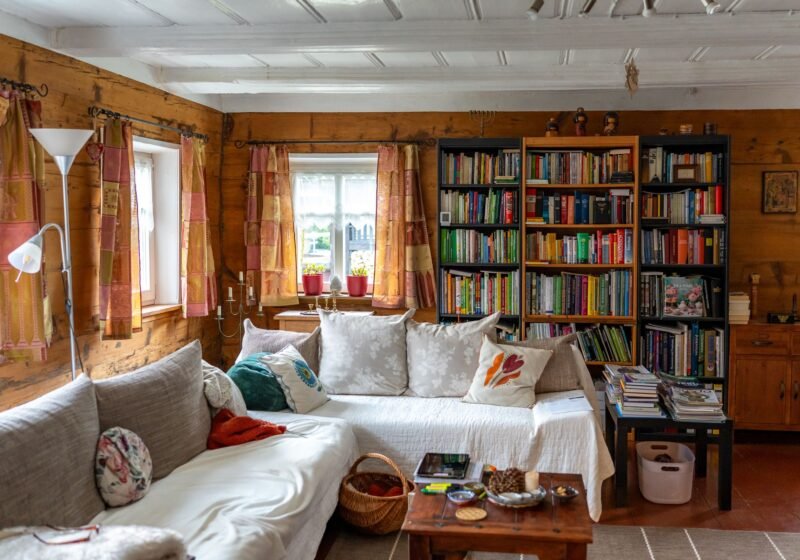
- Use texture from timber, woven storage and curtains to keep pale rooms from feeling bare.
- Test samples in changing daylight before painting the whole room.
Use light to reveal useful space
Leave enough clearance to vacuum, open windows and reach radiators. Avoid storing items in front of vents or using heavy curtains where they reduce useful daylight.
Keep windows as clear as the layout allows and use curtains that stack without covering too much glass. Add task light to a desk, bedside table or kitchen preparation area, then use a softer lamp to prevent the room becoming a bright box. Reflective surfaces can help, but avoid placing mirrors where they create glare or show clutter from every angle.
Our small living room furniture guide can help you compare proportions, while the small bedroom guide covers storage and visual space. Keep accessories edited: one larger artwork or lamp can be clearer than many tiny objects spread across the room.
Make the compact home easy to reset
Give keys, post, laundry, cables and shoes a defined home. Choose furniture that can be cleaned around and keep a route to radiators and windows. The best small-home decor is not an illusion that hides the home’s size. It is a layout, palette and storage plan that lets the household use every room without constant rearranging.
Keep temporary items in mind when planning the room. A drying rack, shopping bags, parcels and a visiting guest all need somewhere to go. Choose a folding or stackable solution where possible, but check that it can be opened without blocking the main route. Small homes feel calmer when occasional needs have a planned place instead of taking over the sofa or floor.
Measure the space, reduce visual noise and choose flexible pieces. A compact home can feel settled when every centimetre has a purpose and enough empty floor remains for real life.

2 thoughts on “Small Home Decor Ideas UK: Storage, Layout & Style Solutions”