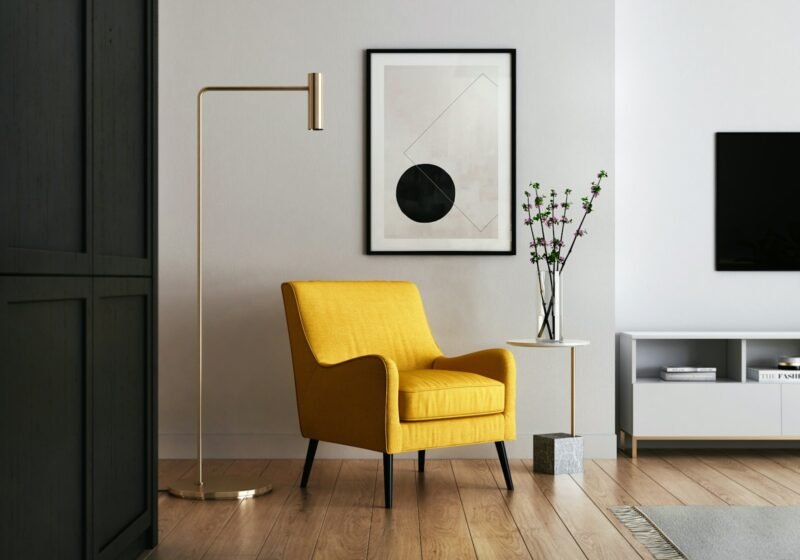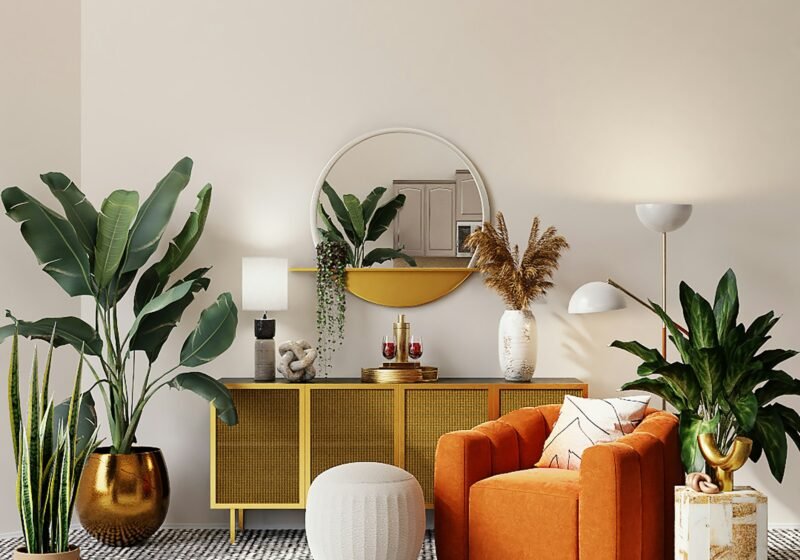
Small armchairs for living room layouts should save space without turning comfort into an afterthought. Compare the outside width, full depth and clearance around the chair, then check the useful seat dimensions. A narrow armchair with broad arms may provide less room than a slightly wider design with slimmer sides. The best compact choice leaves a clear route through the lounge and still supports the way you intend to sit.
Compact seating can work beside a bay window, at the end of a sofa, in an alcove or in an open-plan boundary. It can provide a reading seat, a place to put on shoes or an extra chair for guests. Do not choose solely by the product name. Measure the actual chair and the room around it.
Measure the useful footprint
Write down the outside width, depth and height, then record the inside seat width and depth separately. Add the space needed to open a nearby door, reach a window and pull up a table. Use masking tape or a sheet of newspaper to mark the chair on the floor. Sit on another chair inside the outline and check whether your knees, elbows and walking route still have room. Include skirting boards and the position of sockets.
Look for space-efficient details
Exposed legs can make the floor feel more continuous, while narrow arms reduce overall width. A high back may offer support without a deep seat, and a firm upright shape can be easier to place than a loose lounge chair. A swivel is flexible but needs room to turn. Recliners need extra clearance and should be judged in the open position, not only as a neat closed rectangle.

Choose comfort rather than a miniature shape
A small chair should still let you sit with your back supported and your feet on the floor. Check whether the seat depth suits the main user and whether the arms allow natural movement. A shallow seat may suit an upright reading position, while a deeper seat can be relaxing if the room allows it. Test the firmness, back angle and seat height together. If you cannot try it, use published measurements and choose a retailer with a clear return process.
Scale matters next to a sofa. A tiny chair beside a deep corner sofa can look lost, while a compact but well-shaped armchair can balance a two-seater. Repeat a fabric tone or timber detail to connect the pieces, but do not assume every chair must match. The surrounding rug and table also affect how large the chair appears.
Use the room’s corners carefully
- Angle a chair towards the sofa when conversation matters more than a direct view of the television.
- Place a reading chair near daylight, with a lamp positioned to avoid glare and shadows.
- Keep a wardrobe, door or radiator accessible if the chair sits in a shared room.
- Use a slim table or wall shelf instead of a large side table in a tight corner.
- Leave enough space to clean behind the upholstery and inspect an external wall for damp.
Pick upholstery for the daily routine
A chair used every day needs a cover that suits the household. Removable, washable covers are useful where children, pets or snacks are involved, while a textured mid-tone fabric may be more forgiving than a very pale smooth one. Check the care label before ordering and keep the chair away from direct heat. Do not cover a radiator with a throw or push upholstered furniture tightly against a cold external wall.
Delivery access is easy to overlook with compact furniture. Measure the narrowest door, stair turn and landing, and check whether legs or the back are removable. A chair can be small in the room and still awkward to carry through a Victorian hallway. Keep the packaging until you have checked the fit, condition and comfort.
Make compact seating feel generous
Keep the floor visible beneath a compact frame, use a single cushion rather than a pile and give the chair a little air around it. A nearby wall light or slim floor lamp can make it feel like a purposeful zone. For more layout help, compare our guide to small furniture for small living rooms with the broader advice on living room chairs.
The right small armchair is not simply the narrowest one available. It is a supportive seat with a manageable footprint, a clear route around it and a finish that suits the way the room is used. Measure first, test the proportions and let comfort set the final choice.