Quick answer
An oak kitchen works best when the timber is treated as the room’s warm anchor, not as a reason to make every surface wood. Choose a finish that suits the light, pair it with a practical worktop and use lighting, hardware and wall colour to keep the layout calm.
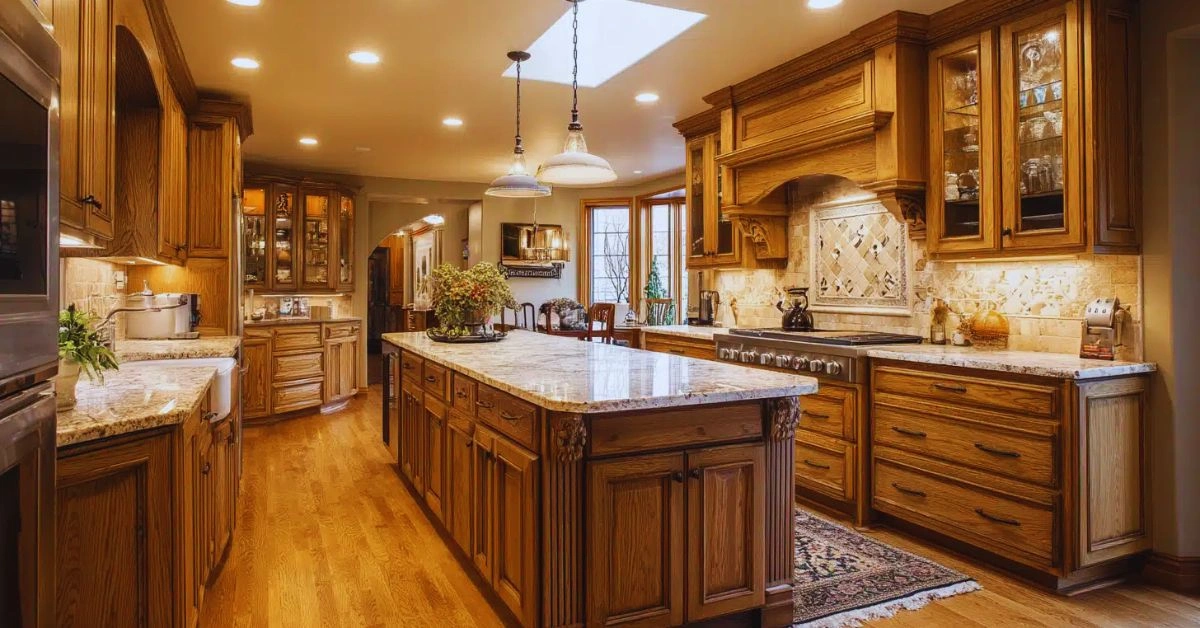
An oak kitchen can feel generous and quietly expensive, but it is also easy to overdo. A full run of strongly grained doors, a busy worktop and yellow-toned lighting can make a room feel darker and more dated than the same cabinets would in a restrained scheme. Planning the relationships between materials matters more than choosing one perfect oak sample.
Oak also describes more than one construction. You may be choosing solid timber doors, oak veneer over a stable panel, an oak-effect laminate or a combination. All can work in a kitchen when the edges are sealed, the hardware is sound and the finish suits daily cleaning.
Choose the oak finish before the colour palette
Look at samples in morning light, overcast light and after the kitchen lights are on. Clear or natural finishes show grain and variation, while a stain changes the undertone and can make pale oak warmer, deeper or slightly grey. A brushed surface catches more shadow and texture; a smooth lacquer reads cleaner but can show fingerprints and scratches differently.
| Cabinet treatment | Useful when | Watch for |
|---|---|---|
| Natural or clear finish | You want the grain and changing timber tone to be the feature | Samples can vary and pale timber can look warmer under artificial light |
| Stained oak | You need a deeper tone or want to coordinate with existing furniture | Repairs and future additions may be harder to colour-match |
| Oak veneer | You want stable wide doors and efficient use of real oak | Edges, moisture protection and the quality of the core are critical |
| Oak with painted units | You want warmth without a room full of visible grain | Keep the paint and timber undertones deliberate rather than accidental |
For the wider layout decisions, use these kitchen design ideas as a planning companion. If timber sourcing matters, the Kitchen and Bathroom Suppliers Association is a useful industry reference, while your installer or cabinet maker should confirm the construction details of a specific scheme.
Pair oak cabinets with the right worktop
Worktops are read next to the cabinet every day, so compare real samples rather than relying on a screen. A pale stone-look surface can keep a darker oak kitchen light; a warm neutral can make pale oak feel more settled; a timber worktop creates a layered look but needs a clear maintenance plan around sinks and hobs.
Compact laminate and other engineered surfaces can offer a practical balance of appearance and maintenance. Stone and ceramic bring visual weight and heat resistance, but the edges, joints and support need to be planned. The guide to kitchen worktop materials compares the main choices without treating one surface as right for every home.
Make the kitchen look modern without hiding the oak
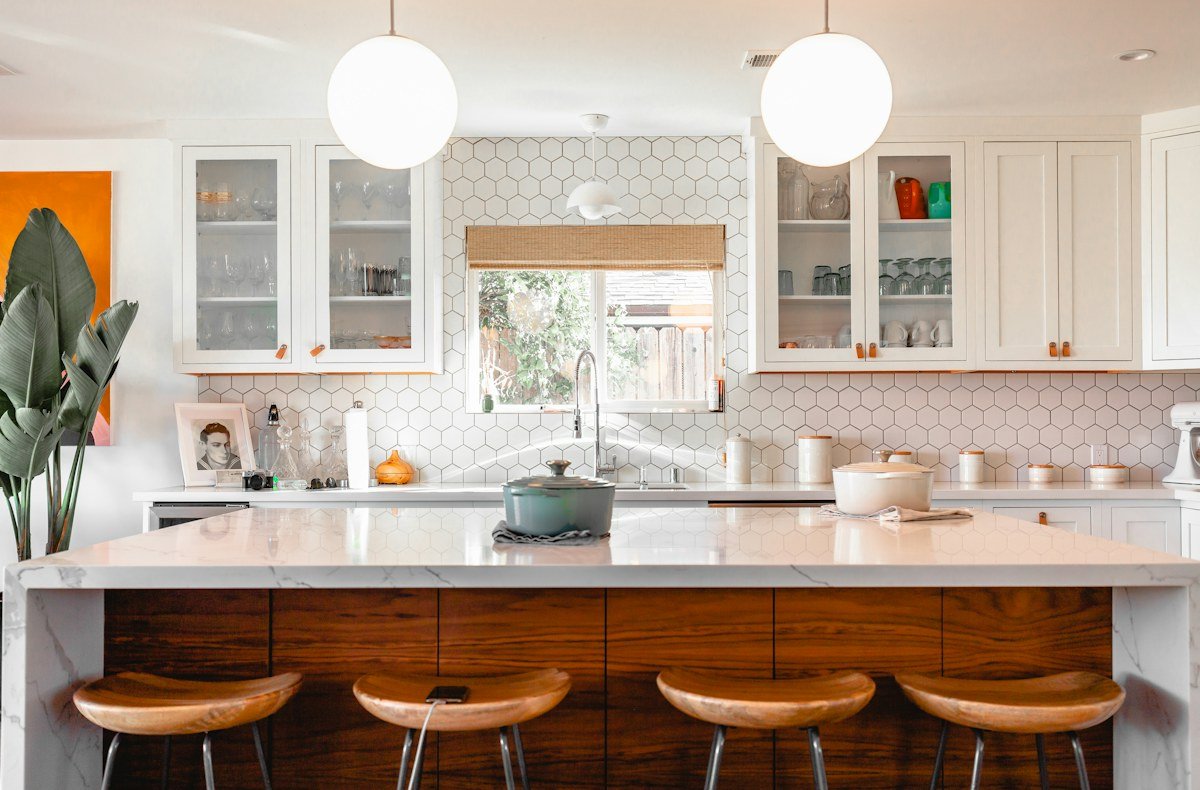
Modernity comes from restraint and proportion, not from stripping all character away. Flat or lightly framed doors, long simple handles, integrated appliances and one strong worktop can make an oak kitchen feel current. If the doors have a strong grain, keep the backsplash quiet and let the hardware provide a small amount of contrast.
- Use one main cabinet tone and one supporting colour.
- Repeat the metal finish in handles, taps and lighting instead of mixing too many.
- Keep open shelving limited so the grain remains the visual focus.
- Choose a splashback that is easy to wipe and does not compete with every door.
Lighting is part of the oak finish
Oak can look very different under a cool ceiling light and a warm pendant. Layer general lighting with task lighting under wall units and a softer source over an island or table. Make sure the worktop is evenly lit so food preparation does not happen in your own shadow.
For a more detailed lighting plan, see the kitchen lighting guide. In a small room, also consider whether wall units, tall cabinets and an island leave enough visual and physical clearance; the ideas in this small kitchen guide help avoid filling every available wall.
New, refreshed or partly painted?
You do not always need to replace an existing oak kitchen. If the carcasses are sound and the layout works, new handles, a better lighting plan, a painted island or a refreshed finish may deliver more value than a complete refit. Check door alignment, hinge condition, drawer runners and moisture damage before spending on cosmetic work.
When commissioning new cabinets, ask how the panels are constructed, how sink and dishwasher edges are sealed and what can be replaced later. A practical kitchen is one that can be maintained in sections rather than one that becomes impossible to repair after a single damaged door.
Care for oak in a busy room
Wipe splashes as they happen, particularly around sinks, kettles and dishwashers. Do not leave wet cloths over a door edge and avoid abrasive pads that polish one area more than another. Oiled timber may need compatible maintenance oil; lacquered or painted doors may need only a damp cloth and the recommended cleaner.
Good ventilation matters as much as the finish. Use the extractor while cooking, keep steam from condensing on cold doors and deal with leaks quickly. Oak is forgiving when cared for, but no timber finish is a substitute for keeping standing water out of joints.
An oak kitchen should feel useful first and styled second. Settle the layout and working clearances, then use the grain, worktop and lighting to create warmth without visual noise.
Frequently Asked Questions
1. Are oak kitchens still fashionable?
Yes. Oak remains useful because its grain and warmth work with modern, traditional and painted schemes. The most lasting result comes from good proportions, a restrained finish and a layout that suits the room rather than a trend-led colour.
2. Is oak good for kitchen cabinets?
It can be, provided the doors, carcasses, edges and finish are suitable for a busy room. Solid oak is not required for every component; well-made veneer and engineered panels can keep wide surfaces stable and consistent.
3. What worktop goes with an oak kitchen?
Stone, quartz-look surfaces, compact laminate, ceramic, stainless steel and carefully chosen timber can all work. Compare the undertones and visual weight, then test samples beside the actual cabinet finish and wall colour.
4. How do you make an oak kitchen look modern?
Use simple door lines, slim or integrated handles, calm worktops, clear lighting and a limited palette. A modern oak kitchen does not need to hide the grain; it needs enough quiet space around it.
5. How do you maintain oak kitchen cabinets?
Wipe moisture and cooking splashes promptly, use only a compatible cleaner and keep steam and standing water away from unsealed edges. Follow the cabinet maker’s care instructions for oiled, lacquered or painted surfaces.