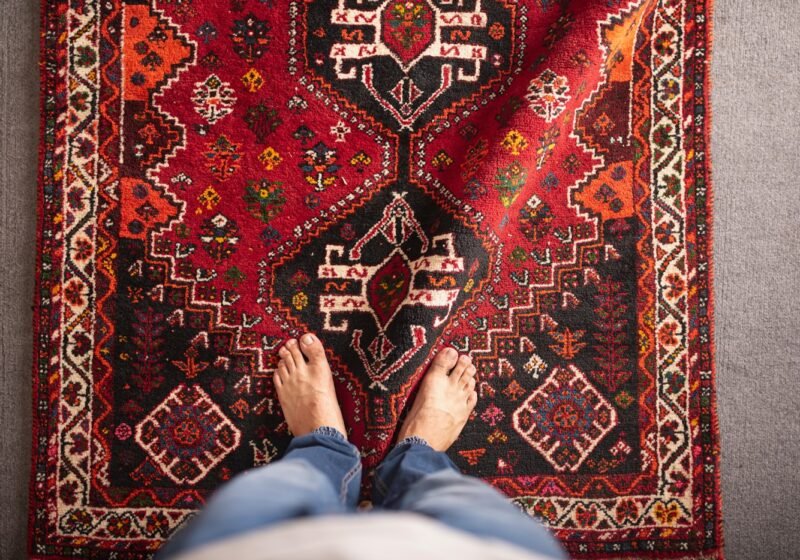
A hallway rug runner has to tolerate the highest traffic in the home while leaving doors, stairs and the main escape route clear. The right size frames the passage; the wrong one curls at a threshold and turns every arrival into a trip risk.
Measure the clear floor between skirting, door swings and furniture. Walk the route carrying shopping or laundry, then test the runner outline with tape before comparing colour and pattern. non-slip rug underlay guidance
Measure the passage and thresholds
Leave a deliberate border of floor rather than forcing the runner against the skirting. Our non-slip rug guide explains why backing must suit the surface, especially when the hallway changes from timber to tile or carpet. rug-grip advice
Choose pile and backing for traffic
Flatweave and low-pile designs usually make doors and vacuuming easier, while a dense wool runner can feel warmer but need careful cleaning. Check the edge binding, colourfastness and whether the runner can be washed or professionally cleaned. pattern and scale ideas
Keep edges flat and easy to clean
Use a compatible underlay or grip, keep the runner clear of thresholds and allow doors to open fully. Our rug-grip advice covers why a product that works on one carpet or floor may fail on another.
Measure, position and prepare
Measure length, width, door clearances, stair nosings and furniture legs. Use the GOV.UK furniture and furnishings safety information as a reminder to keep household routes and materials maintained. GOV.UK furniture-safety information
- Tape the full runner and border before buying.
- Test every door swing and threshold.
- Match backing and underlay to the floor.
- Keep stair edges and escape routes clear.
- Lift and clean beneath the runner regularly.

Use and maintain it well
Vacuum in the direction of the pile, lift the runner to inspect the floor and blot spills quickly. Replace curled edging or compressed grip rather than taping over a developing trip hazard.
Common mistakes to avoid
- Choosing width from the catalogue rather than the passage.
- Letting the runner touch a door swing.
- Using loose tape or an incompatible grip.
- Ignoring muddy entry traffic and cleaning limits.
- Leaving curled corners in a busy route.
Prices are indicative and not financial advice.
Frequently Asked Questions
What should I decide first about hallway rug runner?
Leave a deliberate border of floor rather than forcing the runner against the skirting. Our non-slip rug guide explains why backing must suit the surface, especially when the hallway changes from timber to tile or carpet.
Which hallway rug runner options are worth comparing?
Flatweave and low-pile designs usually make doors and vacuuming easier, while a dense wool runner can feel warmer but need careful cleaning. Check the edge binding, colourfastness and whether the runner can be washed or professionally cleaned.
How should I measure and prepare for hallway rug runner?
Measure length, width, door clearances, stair nosings and furniture legs. Use the GOV.UK furniture and furnishings safety information as a reminder to keep household routes and materials maintained.
How can I keep hallway rug runner working well?
Vacuum in the direction of the pile, lift the runner to inspect the floor and blot spills quickly. Replace curled edging or compressed grip rather than taping over a developing trip hazard.
Final Thoughts
A hallway runner should make the route feel settled, not narrower or less safe. Measure thresholds, choose a backing that suits the floor and treat flat edges as essential maintenance.