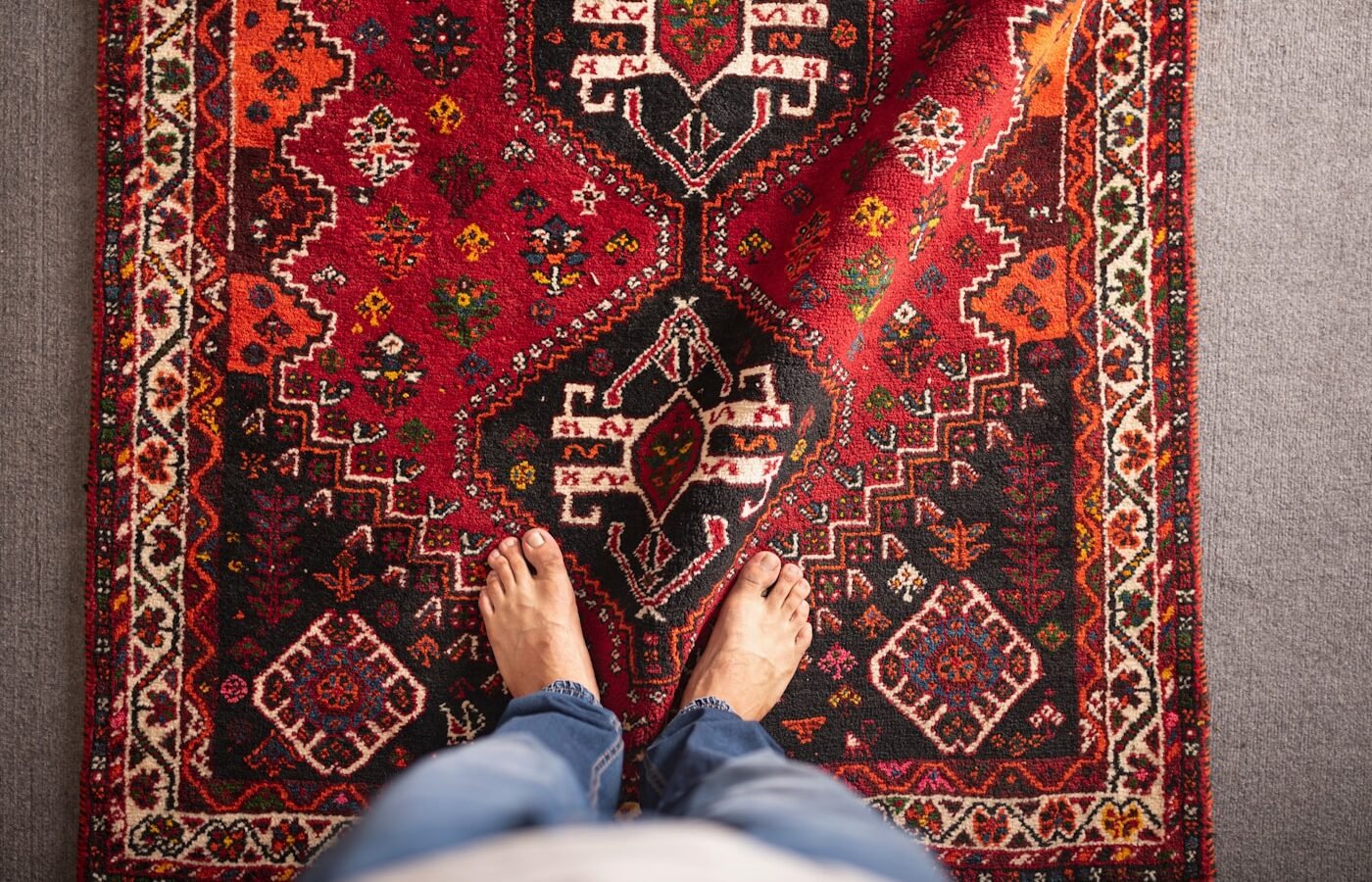
The most dependable way to stop a rug sliding on carpet is to use a gripper made for textile-to-textile contact, fitted slightly smaller than the rug. A generic hard-floor mesh can creep on a deep pile, while double-sided tape may leave residue or pull fibres from the fitted carpet.
Why rugs creep on carpet
Every footstep pushes the rug a little, especially when the carpet has a soft, thick pile or the rug backing is smooth. Vacuuming pulls the leading edge, chair legs catch a corner and a runner can bunch against a skirting board. Once a ridge forms, it concentrates wear on the rug backing and becomes a trip hazard.
Turn the rug over and inspect the backing. Woven cotton, jute, PVC, latex and rubber behave differently with a gripper, and some pads specifically exclude rubber or latex-backed mats. Clean the carpet underneath as well: loose grit reduces contact and can rub a dark mark into a pale carpet.
Choose the right carpet gripper
Look for the words rug-to-carpet, carpet gripper or textile-floor use. RugGrip’s high-performance carpet gripper and dual-surface underlays are examples of the specialist category; they are sold in sizes and can sometimes be custom cut. The Rug Laundry offers pads around the 140 x 200cm size, while generic marketplace sheets commonly cost £10 to £25. A specialist 160 x 230cm pad is more likely to cost £25 to £60 but may stay flatter and last longer.
IKEA STOPP is inexpensive at 67.5 x 200cm, but its UK product feedback shows why the surface matters: some users find it works on wood and not on carpet. Use the maker’s instructions and do not assume a product labelled anti-slip is a carpet solution. Our guide to non-slip rugs and underlay compares the wider floor-compatibility question.
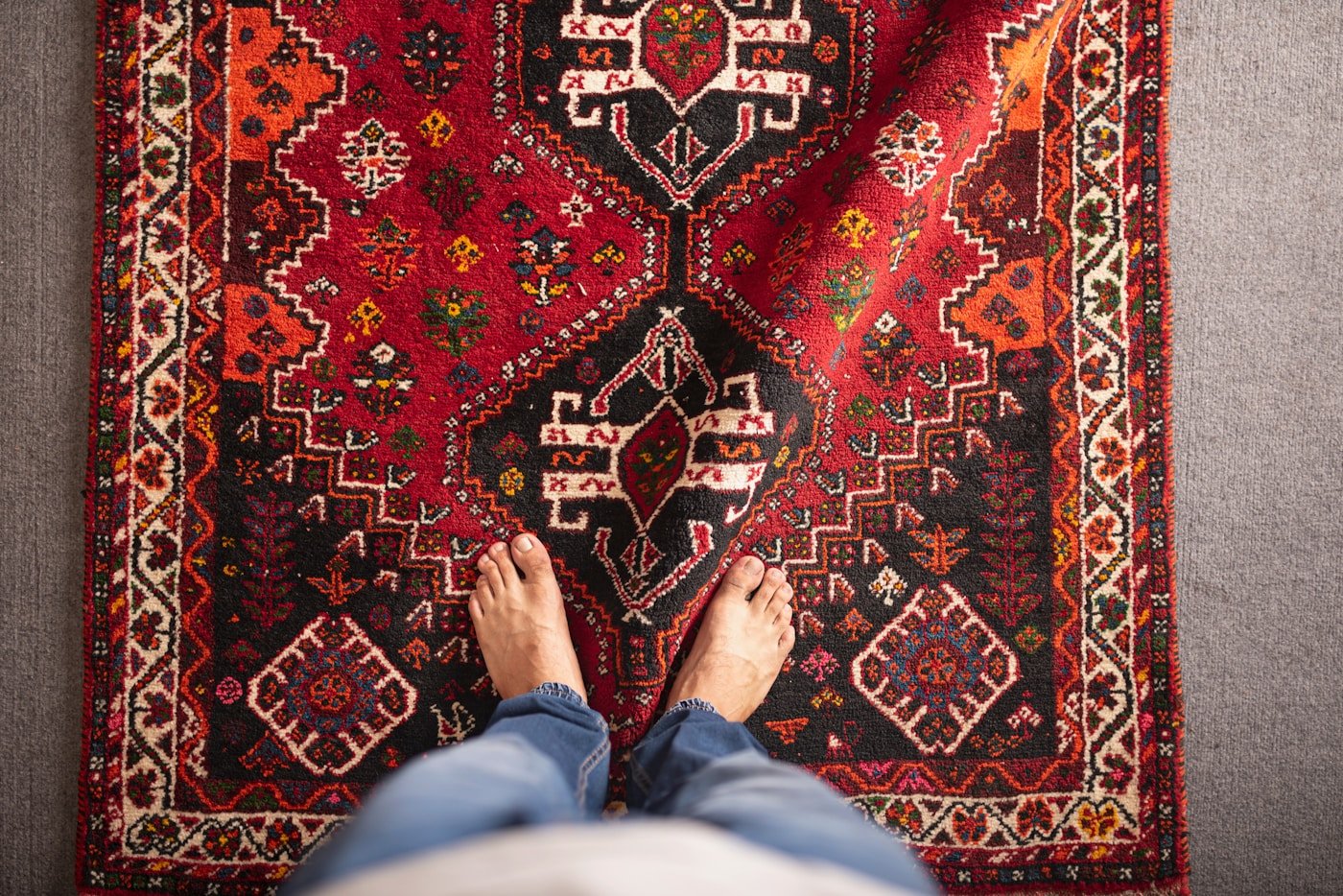
Fit it step by step
- Vacuum the carpet and the rug backing, then let both become fully dry.
- Measure the rug at its longest and widest points. Cut the gripper about 2 to 5cm smaller on every side.
- Lay the gripper flat on the carpet with the specified side down. Do not overlap pieces or leave a loose tail at a corner.
- Place the rug from one end, smoothing it towards the opposite edge so no air pocket or fold remains.
- Walk over the surface, check the corners from floor level and move furniture back only when the rug lies flat.
For a 160 x 230cm rug, a starting pad size around 155 x 225cm usually leaves a discreet border, but the manufacturer’s cutting allowance wins. A round rug needs a smaller circular pad, not a square that creates four ridges. If the carpet is very deep or under a heavy sofa, use a product that names that pile type rather than adding random adhesive.
Deal with curls and deep pile
New rugs may curl because they were rolled tightly. Reverse-roll gently only if the maker permits it, then leave the rug flat in a warm room with clean weights on the corners. Do not iron, steam or soak a backing without checking the care label. A gripper cannot correct a permanently distorted edge.
On a deep Saxony carpet, choose a heavier rug, a larger contact area or a purpose-made textile gripper. Corner stickers often fail because they hold only four points while the middle continues to creep. In a hallway, a narrow runner with a stable pad is usually safer than several tiny mats whose ends meet in the walking line.
Protect the carpet over time
Lift the rug every few months, especially after decorating or building work. Vacuum lint and grit from the pad, check for colour change and move the rug a little if one area of carpet is flattening. Do not leave damp cleaning water trapped beneath it. Wash or replace the gripper only as directed; a brittle or sticky layer can mark the carpet more than the original sliding did.
Keep a record of the pad brand and size. If you later move the rug to laminate, tile or LVT, it may need a different side or a completely different underlay. For a large circular layout, the site’s large round rug guide covers edge placement and the extra care needed to keep a curved perimeter flat.
Sliding-rug mistakes
- Using carpet tape or spray adhesive before testing a reversible gripper.
- Leaving the pad the same size as the rug so its edge can be felt underfoot.
- Putting a smooth-floor pad on thick carpet because the packet says all surfaces.
- Ignoring a corner that curls after vacuuming or a pad that has gathered lint.
- Moving a rug between carpet and hard flooring without checking the backing system again.
Where a rug sits beside stairs or in a busy entrance, use the practical trip-risk principles in RoSPA’s home-safety advice and remove the rug temporarily if you cannot make it lie flat.
Frequently Asked Questions
1. What is the best first fix for a rug sliding on carpet?
Use a rug-to-carpet gripper or dual-surface underlay that explicitly names carpet. Cut it around 2 to 5cm smaller than the rug, lay it flat on clean dry carpet and check that the rug backing is compatible.
2. Why does IKEA STOPP sometimes fail on carpet?
STOPP is a thin mesh and its performance depends on the surface, pile and rug backing. UK product feedback includes reports of movement on carpet, so use a specialist textile-floor gripper when the rug sits on a deep or soft pile.
3. Will double-sided tape damage fitted carpet?
It can leave adhesive, pull fibres or make a future repair difficult, particularly on delicate or rented flooring. Test any temporary product in a hidden area, but a properly sized reversible gripper is usually the safer starting point.
4. How often should I lift a rug from carpet?
Lift it every few months and after decorating, building work or a wet clean. Vacuum grit from the rug and pad, inspect for colour transfer and replace a gripper that has become curled, brittle or sticky.
Final Thoughts
Start with a carpet-specific gripper, cut it smaller than the rug and keep both surfaces clean and dry. A reversible, compatible pad is kinder to a fitted carpet than a quick adhesive fix, and regular lifting prevents a small movement problem becoming a damaged backing or a trip.