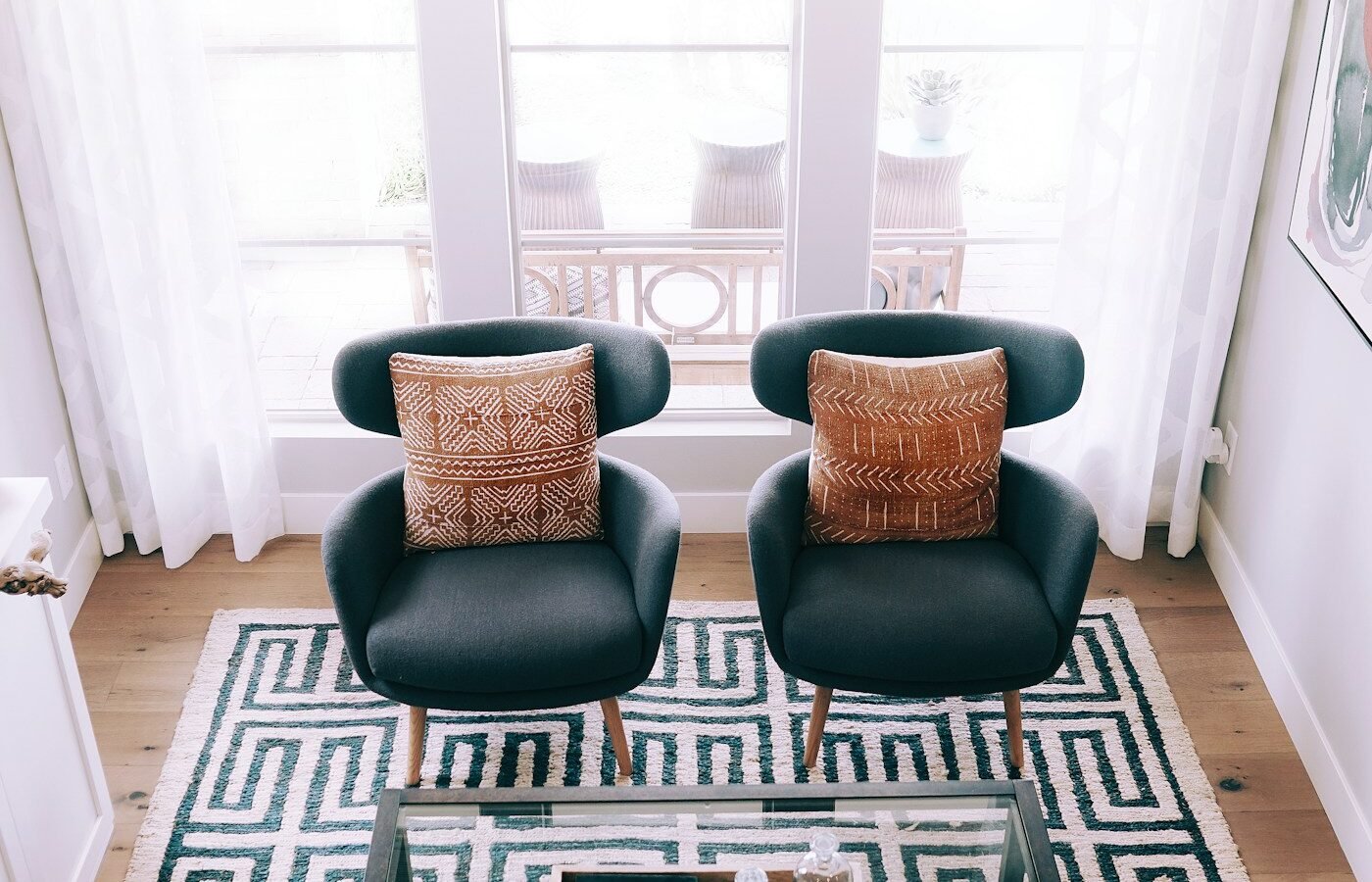
A geometric rug works best when its lines echo something already in the room, such as a window grid, a tiled fireplace or the arms of a sofa. In a small UK sitting room, choose a quieter repeat and let the rug anchor the furniture; in a larger open-plan space, a bolder pattern can define the lounge without adding a partition.
Why geometric rugs work
Repeating diamonds, stripes and stepped shapes give a room a visual rhythm. That is useful in a Victorian terrace with long sightlines or a new-build lounge where the furniture needs a little definition. The pattern should support the room’s architecture rather than fight it: a black-and-cream design can sharpen pale walls, while rust, sage or ochre can connect to timber, plants or upholstery.
Start at the doorway and look towards the seating area. If the eye meets several strong patterns at once, make the rug the only large-scale graphic and keep curtains, cushions and artwork simpler. Our guide to small living-room layouts is useful when the rug also has to share space with a desk, radiator or narrow walkway.
Choose scale, colour and material
Pattern scale changes how large the rug feels. A small repeat is forgiving in a compact room and disguises crumbs between vacuuming, whereas a large optical motif needs clear floor around it. Order a sample or mark out the proposed footprint with masking tape before committing to a high-contrast design.
Wool is warm, resilient and naturally forgiving, but a hand-tufted wool rug can cost roughly £250 to £700 at John Lewis or a specialist independent retailer. Polypropylene and polyester are usually easier on the budget: Dunelm and IKEA offer many patterned options from about £40 for a small rug to £180 for a 160 x 230cm size. A washable system such as Ruggable can be useful in a dining area or home with a dog, although a large cover and pad can push the cost towards £200 to £300.
Check the pile as carefully as the colours. A low-pile flatweave lets dining chairs move more easily and is less likely to catch under a robot vacuum. A deeper pile feels pleasant beside a bed, but it needs more clearance below doors and can make a crisp geometric line look softer.
Get the size and placement right
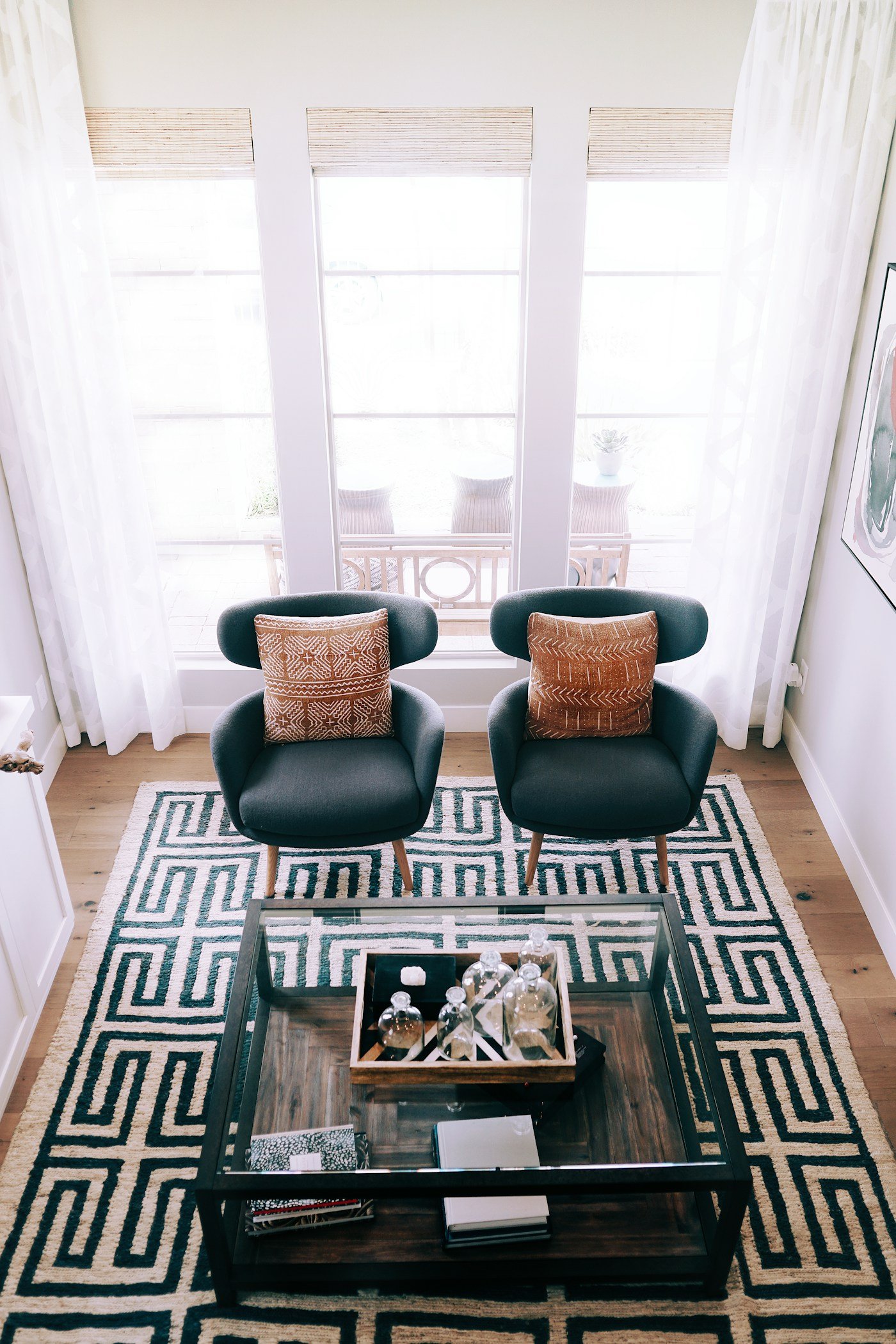
For a typical UK lounge, 160 x 230cm is a sensible starting point for a sofa and coffee table, while 200 x 290cm gives a three-seater, two chairs and the table more breathing room. At minimum, put the front legs of the main seating on the rug so the group reads as one zone. Leave roughly 30 to 60cm of visible floor at the edges where the room allows; forcing a large rug against skirting boards makes the space feel tight.
In a dining room, measure the table with the chairs pulled out. A 160 x 230cm rug may suit a compact four-seat table, but a 200 x 290cm rug is safer for everyday chair movement. Keep door swings, French-door tracks and the route to the kitchen clear. If the room is open plan, turn the rug so its long edge reinforces the seating arrangement instead of creating a visual barrier.
For a bedroom, run the rug beyond both sides of the bed so bare feet land on it. A 200 x 290cm rug often works beneath a double bed, while two 60 x 180cm runners can be more practical in a narrow room. See the advice on arranging living-room furniture before deciding whether the rug should centre on the room or the furniture cluster.
Layer pattern without visual noise
Choose one dominant shape and repeat only one or two of its colours elsewhere. For example, a charcoal diamond rug can sit with a plain oatmeal sofa, a black metal floor lamp and one rust cushion; it does not need a second patterned throw. Rounded furniture can soften a hard-edged motif, while a plain jute basket or timber coffee table gives the eye a rest.
Do not use a geometric rug to hide a layout that is already awkward. Keep at least 75cm for a comfortable main walking route where possible, and avoid putting a strong diagonal directly beneath a door threshold. A suitable non-slip rug underlay also stops the pattern drifting out of alignment every time someone crosses the room.
Cleaning and care
Vacuum low-pile rugs with suction adjusted to the maker’s instructions and avoid repeatedly catching a fringed edge with a beater bar. Blot tea, red wine or muddy paw prints with a white cloth rather than scrubbing across the pattern. Wool needs a gentler approach than polypropylene; for a valuable hand-made rug, budget for a professional clean rather than experimenting with a supermarket spray.
Rotate the rug a quarter turn every few months if the manufacturer permits it, especially where sunlight falls through a south-facing window or a sofa concentrates foot traffic. Lift it during a deep clean so grit cannot work through the backing and damage the floor below.
Pattern pitfalls to sidestep
- Buying a 120 x 170cm rug for a full seating group and leaving every sofa leg floating outside it.
- Choosing a tiny, high-contrast repeat for a busy small room without testing it in daylight.
- Putting a thick rug where a door, dining chair or robot vacuum needs a flatter surface.
- Assuming a washable label means the whole rug fits in a standard UK washing machine.
- Ignoring the backing, underlay and floor compatibility because the top pattern looks right.
For general household trip-risk checks, the RoSPA home-safety guidance is a useful independent reference.
Frequently Asked Questions
1. Is a geometric rug suitable for a small living room?
Yes. Use a smaller repeat with low contrast, keep the rest of the large surfaces plain and choose a size that reaches at least the front legs of the sofa. A 160 x 230cm rug is often a better anchor than a tiny 120 x 170cm mat.
2. Which geometric rug material is easiest to live with?
Low-pile polypropylene is usually the most forgiving choice for busy UK homes because it is affordable and easy to vacuum. Wool lasts well but needs gentler stain treatment, while a washable cover is useful where dining spills or pets are likely.
3. How much floor should show around a geometric rug?
Aim for roughly 30 to 60cm of visible floor where the room allows it, but prioritise the furniture footprint and door routes. The front legs of the main seating should sit on the rug rather than leaving it isolated under the coffee table.
4. Can I put a geometric rug over carpet?
You can, provided the backing and underlay are compatible with the carpet pile. Use a rug-to-carpet gripper designed for textile floors, trim it slightly smaller than the rug and lift it periodically to check for flattening or colour transfer.
Final Thoughts
A geometric rug should make the room easier to read, not give it another problem to solve. Test the pattern at full scale, size it around the furniture rather than the coffee table alone, and choose a fibre whose cleaning demands match the people, pets and muddy-weather routines in your home.