Effective carpet moth treatment has to reach the larvae and the quiet places where they feed, not just kill the adult moths you notice flying. Start by isolating and cleaning affected textiles, vacuuming carpet edges and under furniture, then use traps to monitor activity; extensive or recurring damage needs a pest professional.
Carpet Moth Treatment: Identify the problem first
What people call a carpet moth is often a clothes moth feeding on wool carpet, rugs, felt, hair or other animal fibres. The damage is usually made by pale larvae, not the small adult moth. Look for irregular bare patches, loose fibres, gritty webbing or tiny cases along carpet edges, beneath furniture, under stair nosings and in dark cupboards. Check wool rugs, pet bedding, stored blankets, upholstered furniture and bird nests in loft or eaves areas as well as the visible room.
Small holes can also come from carpet beetles, wear or furniture movement. Photograph the damage, save a sample if safe and compare several locations before buying a chemical. The Natural History Museum’s clothes moth guidance is useful for distinguishing the pest from a general carpet stain.
The first 48 hours
- Move lightweight furniture and inspect the carpet perimeter, underlay edge and skirting gap.
- Bag removable wool rugs, throws and clothing before carrying them through clean rooms.
- Vacuum slowly along edges, corners, under furniture and stairs, then empty the machine outdoors into a sealed bin bag.
- Wash or dry-clean suitable textiles according to their labels; do not put a delicate rug through a hot wash just because it is infested.
- Place pheromone traps where activity was seen, following the maker’s number and position instructions.
Traps are mainly a monitoring tool. A caught adult proves activity; an empty trap does not prove the larvae are gone. Avoid moving infested furniture from room to room and keep children and pets away from any treatment product until the label says the area is safe. For ordinary carpet mishaps while you clean, our guide to removing candle wax from carpet covers a separate fibre-care problem.
Cleaning and treatment options
Vacuuming the places people miss
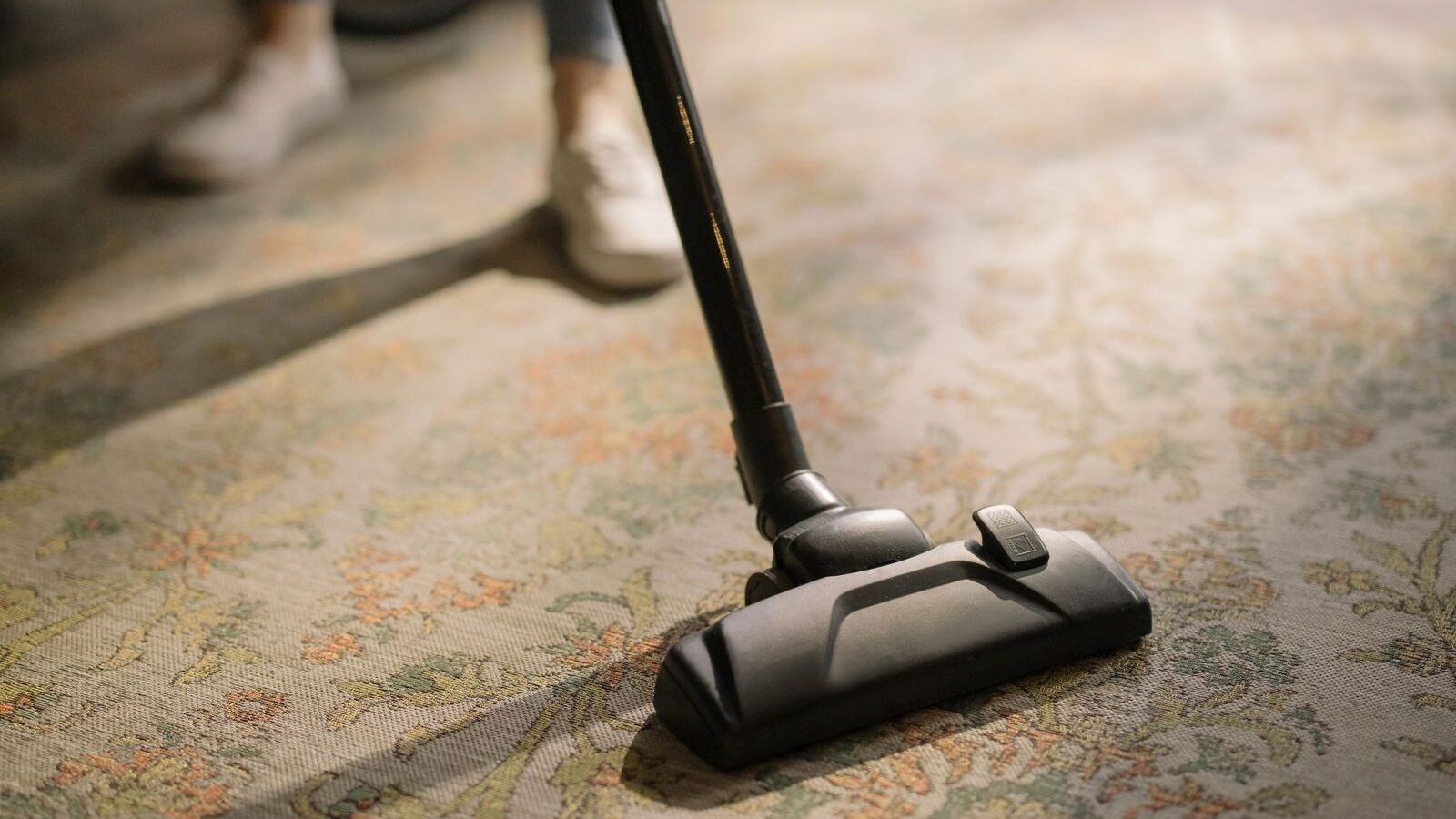
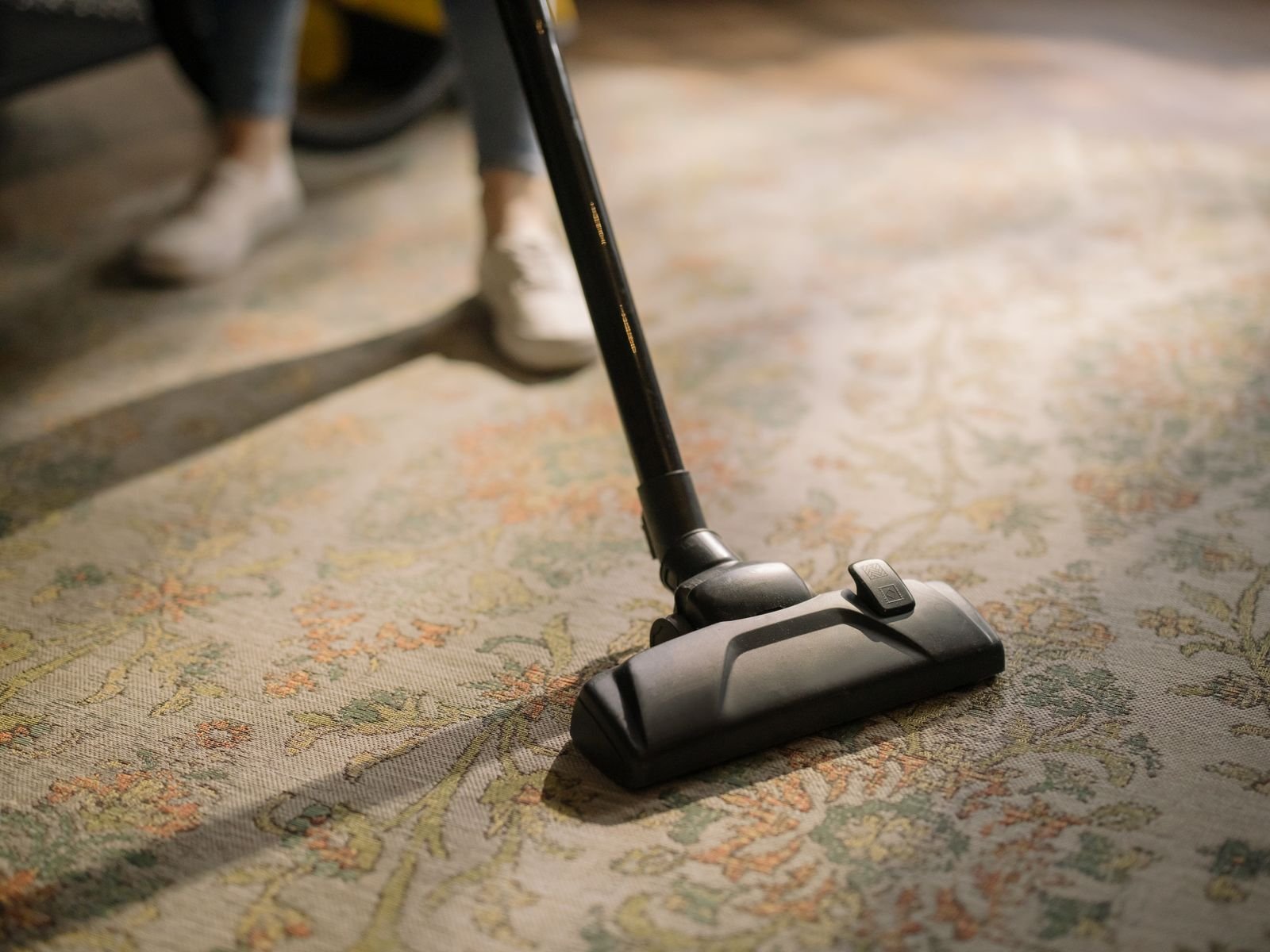
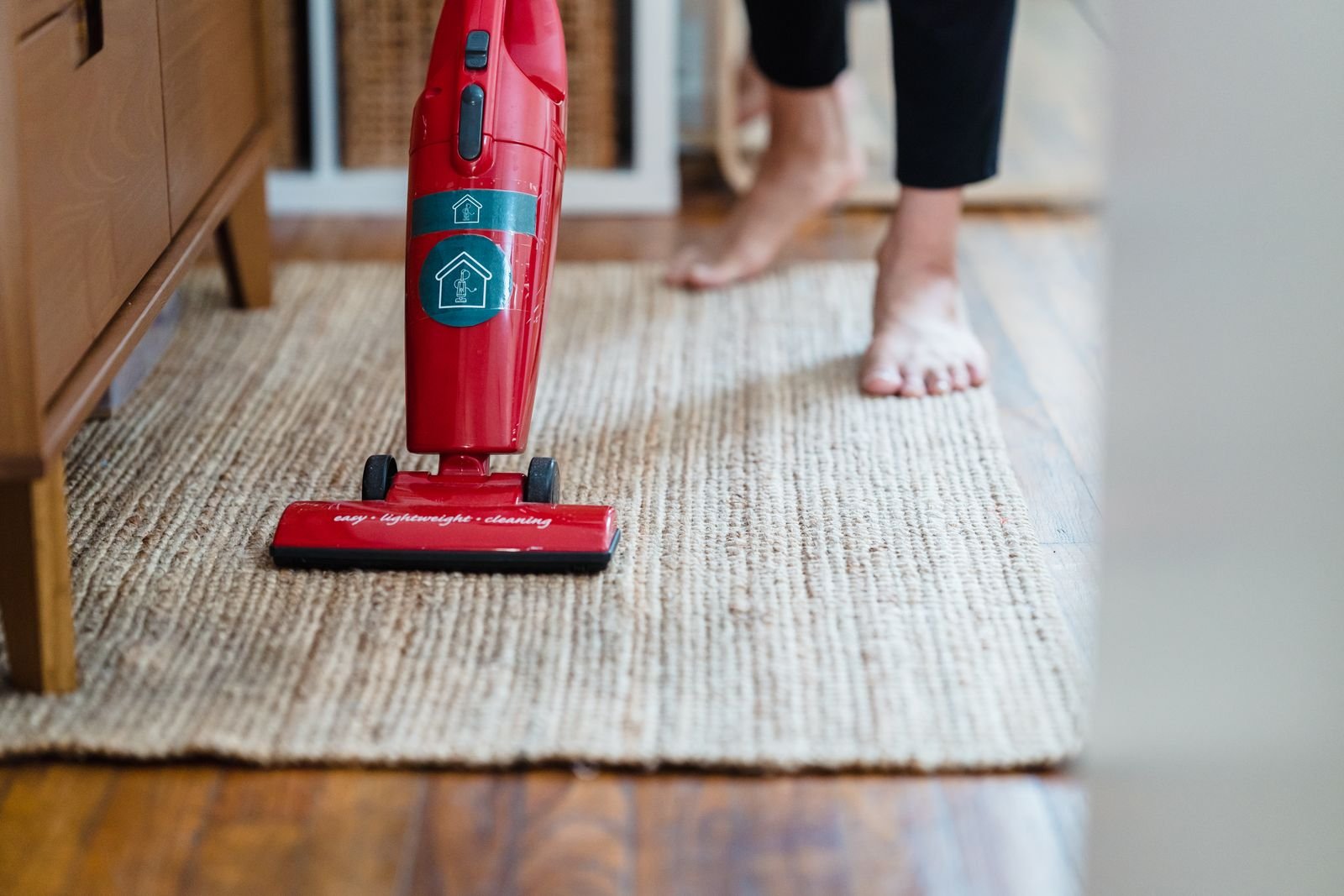
Use the crevice tool along the carpet-to-skirting line, beneath radiators, around stair rods and under heavy furniture. Repeat regularly for several weeks, not just once. The English Heritage moth-control guidance specifically stresses disturbance and cleaning of edges and hidden areas. It is a sensible routine even if you decide to use a professional treatment.
Sprays, powders and pheromone traps
Only use a product labelled for carpet moths or clothes moths on the surface and material you intend to treat. Read the UK label, ventilate as directed, protect food and aquariums, and never mix products. Residual treatments can be useful on carpet edges and cracks, but they may need a follow-up because eggs and newly hatched larvae are easily missed. Do not fog a whole home casually, and do not spray a valuable or antique textile without checking its care requirements.
Professional heat treatment can be appropriate for fixed carpets or widespread textile damage, but ask what temperatures, preparation, follow-up and guarantees are included. A carpet cleaner may improve hygiene and appearance without solving a hidden moth source, so “deep cleaned” is not the same as “pest eradicated”.
When professional treatment is sensible
Call a qualified pest controller when damage is appearing in several rooms, larvae return after cleaning, the source may be in a loft or wall void, or the affected item is valuable. Ask whether the technician identifies the species, inspects adjacent rooms, explains preparation and schedules a follow-up. A trade body such as the British Pest Control Association can help you understand what a professional service should cover. Keep the written product information and any guarantee.
Prevent a repeat infestation
Vacuum carpet edges and under furniture as part of normal cleaning, rotate stored wool items and avoid leaving a rug folded pile-to-pile for months. Store clean woollens in sealed containers, inspect second-hand rugs outdoors before bringing them in and check loft insulation, old felt and bird nests if moths recur. Repair or replace badly damaged underlay only after the infestation is controlled. If the skirting gap is harbouring dust, our skirting board covers guide may help with the trim question, but it is not a pest treatment.
Frequently Asked Questions
Q1. Do carpet moth traps get rid of an infestation?
Pheromone traps mainly catch adult males and monitor activity. They are useful alongside cleaning and treatment but do not reach every larva, egg or hidden source.
Q2. Can vacuuming alone remove carpet moths?
Thorough, repeated vacuuming can reduce larvae, debris and eggs in accessible areas, but a recurring or widespread infestation may need a labelled treatment or professional inspection.
Q3. Does steam cleaning kill carpet moths?
Heat may affect pests where it reaches, but ordinary carpet cleaning is not automatically a complete moth treatment. Ask the provider exactly which life stages and areas are covered.
Q4. When should I call a pest controller?
Get professional help for multiple rooms, continuing damage, hidden loft or wall sources, valuable textiles, or activity that returns after careful cleaning and monitoring.
Final Thoughts
Treat carpet moths as a source-and-lifecycle problem. Edge cleaning, textile checks and monitoring give a small infestation a fair chance of stopping, while prompt professional advice protects the carpet when the damage is broad or persistent.