
A halogen oven is a compact countertop cooker that uses a halogen heating element and a fan to circulate hot air around food. Many models use a heat-resistant glass bowl with a lid containing the lamp, controls and fan. They can roast, bake, grill and reheat, but the small cooking chamber means they are not a straight replacement for every full-size oven.
In practical terms, a halogen oven is most useful when you want a small, visible cooking space that heats quickly and can cook a modest quantity without turning on a large oven. The exact temperature, capacity and permitted accessories vary by model, so use the manual for the oven you own.
How does a halogen oven work?
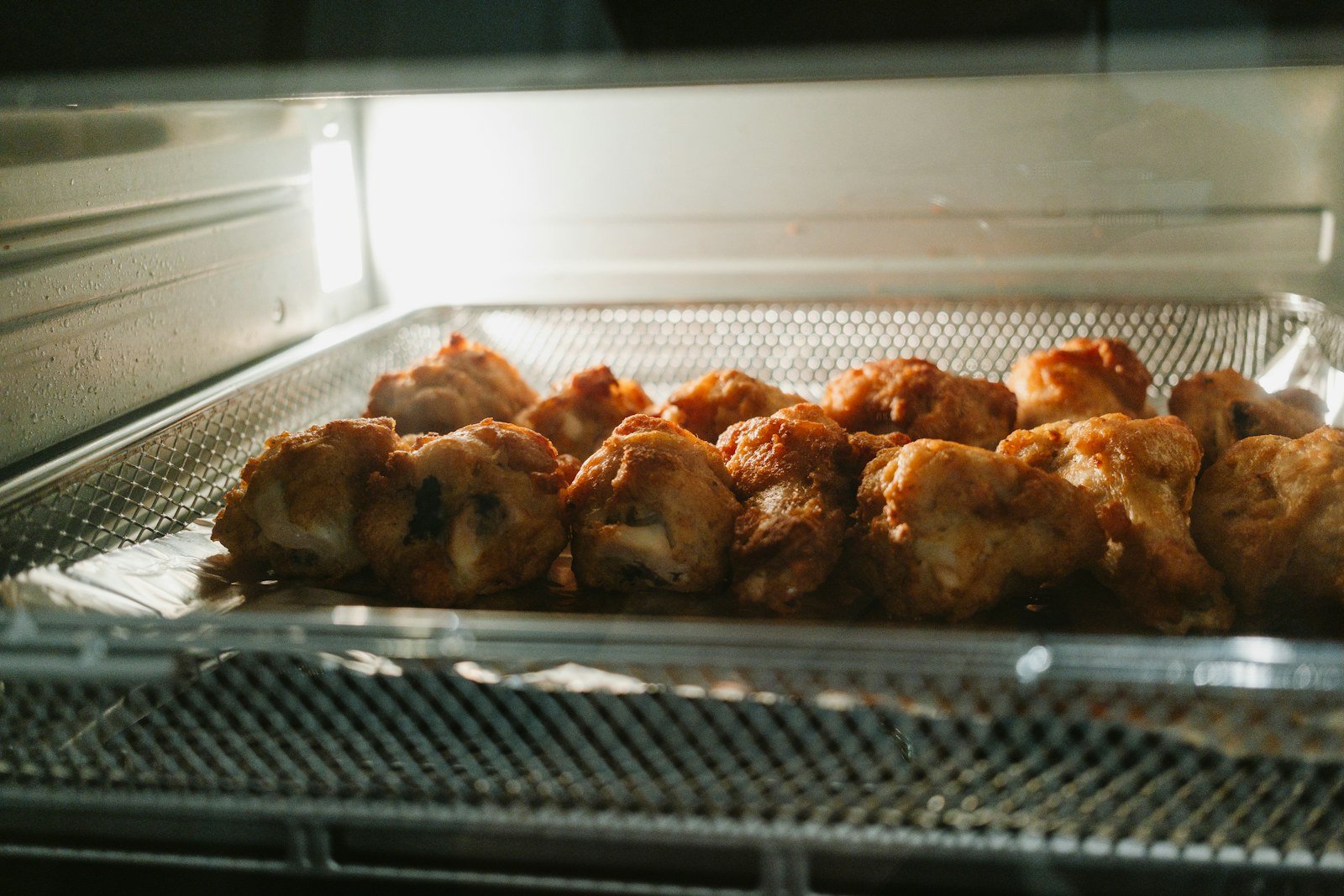
The halogen lamp produces intense radiant heat while the internal fan moves hot air around the bowl. Food is cooked from the combined heat rather than by microwave energy. The glass bowl lets you watch browning and cooking progress without opening a conventional oven door, although the glass and lid become very hot.
- Halogen element: supplies direct radiant heat.
- Fan: circulates hot air around the food.
- Glass bowl: contains the cooking space and makes the food visible.
- Rack or tray: lifts food and allows hot air to move underneath where the model permits it.
- Timer and temperature controls: set the cooking period and heat, but do not remove the need to check the food.
What can you cook in a halogen oven?
Typical uses include a small chicken, sausages, vegetables, jacket potatoes, fish, toast, frozen foods and simple baked dishes. It can also reheat food, but keep portions spread out rather than blocking the air flow. A manual for a 12-litre model may list roasting, baking, grilling, steaming or air-frying functions, but those labels do not mean every accessory or recipe is suitable for every oven.
Use an ovenproof dish only when the manufacturer allows it and when it leaves enough room around the sides and above the food. Avoid filling the bowl so high that it touches the lid, lamp or fan housing.
Does a halogen oven need preheating?
Some models heat almost immediately, while others specify a short preheat. Follow the recipe and the appliance manual rather than assuming that every halogen oven can start cold. If you adapt a conventional-oven recipe, begin checking early because a small, fan-assisted chamber can brown food sooner than expected.
Record your first few cooking times. The same setting can behave differently depending on the food thickness, starting temperature, rack height, bowl size and how full the oven is. A food thermometer is more reliable than browning alone for meat and poultry.
Halogen oven versus a conventional oven
| Question | Halogen oven | Full-size oven |
|---|---|---|
| Best for | Small portions, quick roasting and countertop cooking | Large trays, family meals and several dishes at once |
| Visibility | Glass bowl often makes food easy to watch | Usually requires opening the door or using the light |
| Capacity | Limited by the bowl and rack height | More flexible shelves and larger dishes |
| Heat pattern | Halogen heat plus fan circulation | Varies by conventional or fan-assisted setting |
A halogen oven may use less energy for a small meal because it heats a smaller space, but the result depends on the wattage, cooking time, portion size and whether you would otherwise use the full oven. Treat “faster” or “cheaper” claims as something to check against your own use rather than a guarantee.
Halogen oven versus an air fryer
The terms overlap because both use moving hot air and can brown food with little added oil. A halogen oven normally has a glass bowl and a larger, more open cooking chamber, while a drawer-style air fryer is often easier for small batches of chips or crisp food. Look at the usable tray area, not just the stated litre capacity, and check how easy each model is to clean.
What to check before buying one
- Usable capacity: check whether it will take the dishes and portions you normally cook.
- Controls: confirm the temperature range, timer and whether settings are easy to read.
- Height and clearance: measure the appliance with the lid open, not only when stored.
- Accessories: check which racks, trays, tongs or extension rings are included and approved.
- Cleaning: look for removable, washable parts and clear instructions for the lid and electrical controls.
- Warranty and support: choose a model with a UK manual, replacement parts information and a clear returns route.
A manual is a better buying signal than a long list of cooking functions. For example, the Salter EK2098 manual sets out model-specific operating and safety instructions, while an Argos halogen oven manual shows why capacity, accessories and handling instructions need to be checked for the exact appliance.
Halogen oven safety in a UK kitchen
Place the oven on a stable, heat-resistant surface with the clearance stated in the manual. Keep the lid, vents and fan outlet unobstructed, and do not put it under a low cupboard if the manufacturer warns against that position. The bowl, lid, racks and food can stay hot after the timer ends.
- Use oven gloves or the supplied tongs when handling hot parts.
- Do not move a hot glass bowl unless the manual says how to do so safely.
- Keep the power lead away from hot surfaces and water.
- Do not immerse an electrical lid or control unit in water.
- Inspect the plug, cable, bowl and lid for damage before use.
- Unplug the appliance before cleaning and allow it to cool fully.
Electrical Safety First’s oven and grill advice is a useful general reference. UK electrical equipment should also meet the relevant safety requirements; the GOV.UK electrical equipment regulations explain the wider product-safety framework.
Where will it fit?
Counter space is often the deciding factor. Measure the depth of the worktop, the width of the appliance and the height needed to lift the lid. Leave enough room to handle hot food safely rather than treating the oven as a permanent object squeezed between the kettle and the wall.
Our guides to small kitchen ideas, smart kitchen storage and an appliance garage can help you decide where a countertop cooker can live between uses. If the worktop is crowded, compare the space required with a built-in option using our guide to UK kitchen worktop materials.
Is a halogen oven worth buying?
A halogen oven is worth considering if you cook small portions, want to watch food as it browns, have limited oven capacity or need a countertop cooker for a particular routine. It is not automatically the best choice for a large household, batch baking or anyone without safe storage and cooling space.
Choose by usable capacity, safe placement, cleaning and support rather than by the promise of instant savings. If the appliance will sit permanently on a cramped worktop or make every meal require a different timing conversion, the convenience may not outweigh the extra object in the kitchen.
Frequently Asked Questions
Q1. Is a halogen oven the same as an air fryer?
Not exactly. Both circulate hot air, but a halogen oven commonly uses a glass bowl and halogen lamp, while an air fryer usually uses a drawer or basket. Their useful capacity, airflow and results can differ.
Q2. Can you cook directly in a halogen oven bowl?
Only when the manual allows it and the food is placed on the correct rack or tray. Keep clearance around the lamp, lid and fan, and do not use accessories that are not approved for the model.
Q3. Do halogen ovens use less electricity?
They can use less energy for some small meals because they heat a smaller space, but it depends on wattage, cooking time, portion size and what appliance you would otherwise use.
Q4. How do you clean a halogen oven?
Unplug it, let it cool fully and follow the manual. Wash only the removable parts that are approved for cleaning, and keep the electrical lid, controls and cable away from water.



1 thought on “Halogen Oven: What It Is, How It Works and Whether You Need One”