Smart thermostats combine a temperature sensor, a control unit and a way to tell the heating system when to run. Many also add schedules, remote control and automation, but the basic job is still simple: compare the room temperature with the chosen target and call for heat when needed. The useful question is whether the system works with your boiler and suits the way you use your home.
The basic signal path
A sensor measures the air near the thermostat. When the temperature is below the set point, the thermostat sends a signal to a receiver or wiring centre. That control then asks the boiler or heating circuit to operate. Once the room reaches the target, the signal changes and the heating stops or reduces, depending on the system.
Some controls use a simple on-and-off relay. Others can communicate more closely with compatible boilers and adjust the heat output in smaller steps. The product description and boiler documentation should explain which control method is supported; an internet connection alone does not guarantee modulation.
What makes a thermostat smart?
- Schedules can be set for different times and days.
- An app can show the temperature and allow a remote adjustment.
- Geofencing may respond when household phones leave or return.
- Learning features can suggest or change routines based on use.
- Temperature history may help identify rooms that cool quickly.
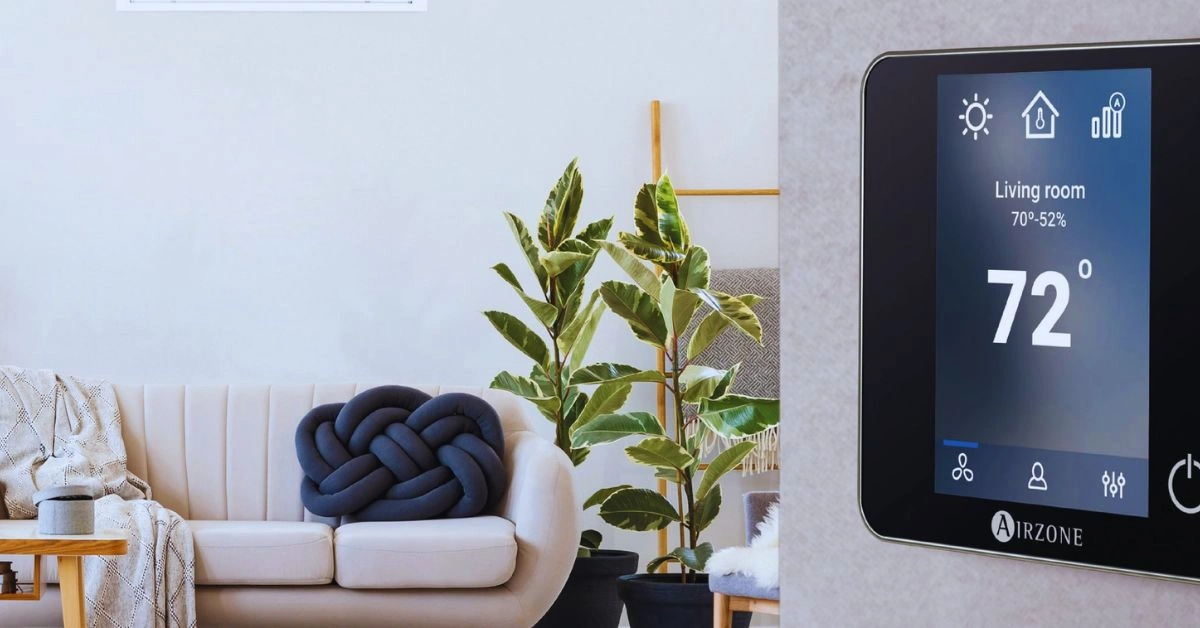
These features are conveniences rather than a replacement for sensible heating habits. A manual override and a clear local display remain important, particularly if the Wi-Fi connection fails or someone needs to change the temperature without using a phone.
Smart thermostats and combi boilers
Compatibility depends on the boiler, receiver, wiring and communication protocol. A combi boiler may accept several thermostat arrangements, but the correct choice cannot be confirmed from the boiler type alone. Check the exact model information and installation instructions before buying.
Consider where the thermostat will be mounted. It should measure a representative room, away from direct sunlight, radiators, draughts and large appliances. A wireless sensor can make positioning easier, while a wired control may be simpler where suitable cable is already available.
Does a smart thermostat save energy?
It can help reduce waste when it makes schedules easier to follow or stops heating an empty home, but the saving depends on the building, the settings and the household routine. It will not fix poor insulation, a faulty valve or a badly balanced system. Start with an accurate temperature target and review the schedule rather than relying on an automatic mode without checking it.
Privacy, reliability and installation
Before creating an account, check what information the app stores and whether two-step sign-in is available. Ask what remains usable if the broadband connection or cloud service is unavailable. Installation may involve mains wiring or boiler controls, so use a qualified professional where the work is outside your competence.
For a buying-focused comparison, read our guide to the best smart thermostat options for UK homes. Understanding how the system works first makes it easier to judge which features are genuinely useful.