

Last updated: 3 November 2026
Trallehylde is a Danish compound, but it does not literally mean “trolley shelf”. In the Danish dictionary, tralle is a slatted scaffold plank or grating, while hylde means shelf. A Danish retailer uses the word for a wall shelf made from oak and spacers. In UK shops, a wheeled version is more likely to be called a shelf trolley, utility cart, storage trolley or kitchen trolley.
What does trallehylde mean?
Trallehylde most safely means a shelf made from, or styled after, a Danish tralle: a long, narrow slatted plank or grating. The second part, hylde, means a shelf or a small shelving unit. It is therefore a description of a shelf form or material, not a reliable translation of the English word “trolley”.
The distinction matters because a search for trallehylde can lead to two different shopping ideas. One is a fixed wall shelf made from slatted timber. The other is a mobile piece of storage that an English-speaking shopper might call a shelf trolley. They can look useful in the same home, but they are not the same object.
Den Danske Ordbog defines tralle as a long, narrow board made from slats that form a grid, chiefly used as flooring on scaffolding. Its entry for hylde covers a horizontal storage board and, in a second sense, a small piece of furniture with several such boards. That gives a sound explanation of the compound without inventing a modern trend around it.
Is trallehylde a real product, brand or trend?
It is a real product term in at least one live Danish retailer listing, but it is not evidence of a single brand or universal product category. Toka Design sells a product titled Trallehylde and describes an oak shelf with black spacers for books, plants and decorative objects. The page offers several lengths, including 43 cm and 63 cm.
That is useful evidence of genuine usage, not proof that every Danish retailer uses the term in the same way. The Danish search results also contain marketplace wording such as “shelves of tralles”, alongside other product and second-hand listings. The sensible conclusion is narrow: trallehylde is used for a shelf made from or inspired by slatted tralle material.
It is not a brand name on the evidence checked here. Nor is there reliable evidence that it is a cryptid, a named social-media movement or a standard international furniture category. A search result that repeats an attractive story is not enough to establish any of those claims.
What do you call a trallehylde in the UK?
For a fixed slatted shelf, search for terms such as slatted shelf, scaffold-board shelf, reclaimed timber shelf or oak wall shelf. For a wheeled storage unit, UK shops generally use shelf trolley, utility cart, storage trolley, kitchen trolley, bathroom trolley, craft trolley or bar cart.
These are practical shopping terms rather than exact translations. “Shelf trolley” describes open shelves on wheels. “Utility cart” is broader and may include trays or a worktop. “Kitchen trolley” usually suggests extra storage or movable preparation space. “Slim gap trolley” describes a narrow unit designed to roll between appliances or cabinets.
Retail terminology varies by retailer. IKEA UK, for example, places kitchen trolleys alongside islands and describes them as movable extra workspace or storage. If you are trying to recreate the look of a Danish trallehylde, add “slatted”, “oak”, “scaffold board” or “wall shelf” to your search rather than relying on the Danish word alone.
What types of shelf trolley are there?
The useful choice depends on whether you need a work surface, open storage, a narrow footprint or a presentation piece. The dimensions below are planning guides only. Products vary, and the maker’s stated measurements and load rating should always take priority.
| Type | Typical planning size | Best for | Watch-outs |
|---|---|---|---|
| Kitchen trolley | About 45–90 cm wide; 35–60 cm deep | Extra prep space, appliances, crockery | Check clearance for doors, handles and hot pans; a worktop may make it heavier. |
| Wire utility cart | About 40–75 cm wide; 30–50 cm deep | Utility rooms, pantry overflow, cleaning supplies | Small items can fall through; check rust resistance near water. |
| Bar cart | About 60–90 cm wide; 35–50 cm deep | Bottles, glasses and serving pieces | Glass and liquid create a high, shifting load; lock the castors when parked. |
| Slim gap trolley | About 15–25 cm wide; 40–60 cm deep | Gaps beside a fridge, cabinet or washing machine | Measure the narrowest point and allow room to pull the handle. |
| Bathroom trolley | About 30–50 cm wide; 25–40 cm deep | Towels, toiletries and spare paper | Choose wipe-clean materials and avoid blocking ventilation or access. |
| Craft or workshop trolley | About 40–80 cm wide; 35–60 cm deep | Paints, tools, yarn and portable projects | Sharp tools and heavy stock need secure storage and a stable base. |

How do you choose one?
Start with the space, then check the load rating, castors, material and cleaning needs before you compare appearance. A trolley that fits the room but cannot roll safely when loaded is not a good fit.
- Measure the space. Record width, depth and height at the tightest points. Check skirting boards, pipes, handles, radiator edges and the route the trolley must travel.
- Check the maker’s stated load rating. Do not infer capacity from a photograph or from the number of shelves. A stated rating may apply to the whole unit or to each shelf, so read the wording carefully.
- Look at the wheels. Swivelling castors make steering easier. Locking castors help the unit stay put while you open a drawer, pour a drink or use a worktop.
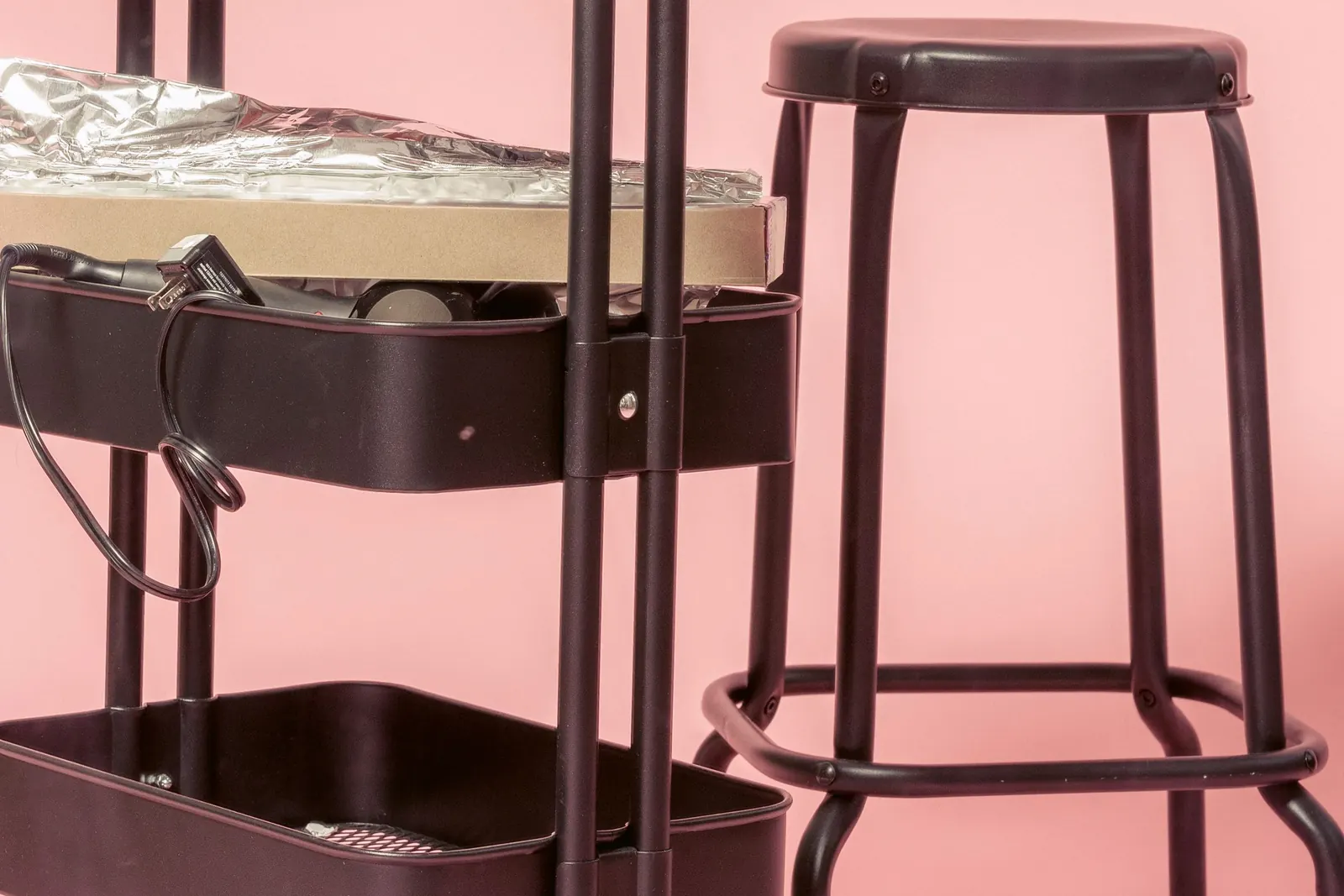
- Match the material to the room. Powder-coated metal and sealed timber suit different conditions. Near a sink or bathroom, look for a surface that can tolerate regular wiping and occasional splashes.
- Check shelf spacing. Measure your tallest bottle, appliance or storage box. A three-tier trolley is not useful if the shelves cannot take the items you actually need.
- Plan cleaning. Open wire shelves are easy to see through but collect dust. Timber needs the finish specified by the maker. Avoid soaking materials that are not designed for it.
- Read the assembly information. Confirm whether tools are needed, whether the castors are fitted during assembly and whether the product can be returned if it does not roll square.
Where does a shelf trolley work in a UK home?
A mobile shelf unit is most useful where storage needs change or a fixed cabinet would waste valuable floor area. It can add capacity without committing to a built-in alteration, provided its route and parked position remain clear.
In a kitchen, use one for oils, cookbooks, a coffee station or occasional preparation. Keep hot pans and sharp objects away from edges, and do not assume that a decorative cart is a substitute for a heat-rated work surface. In a utility room, a wire trolley can hold detergents, pegs and folded cloths, but keep chemicals inaccessible to children.
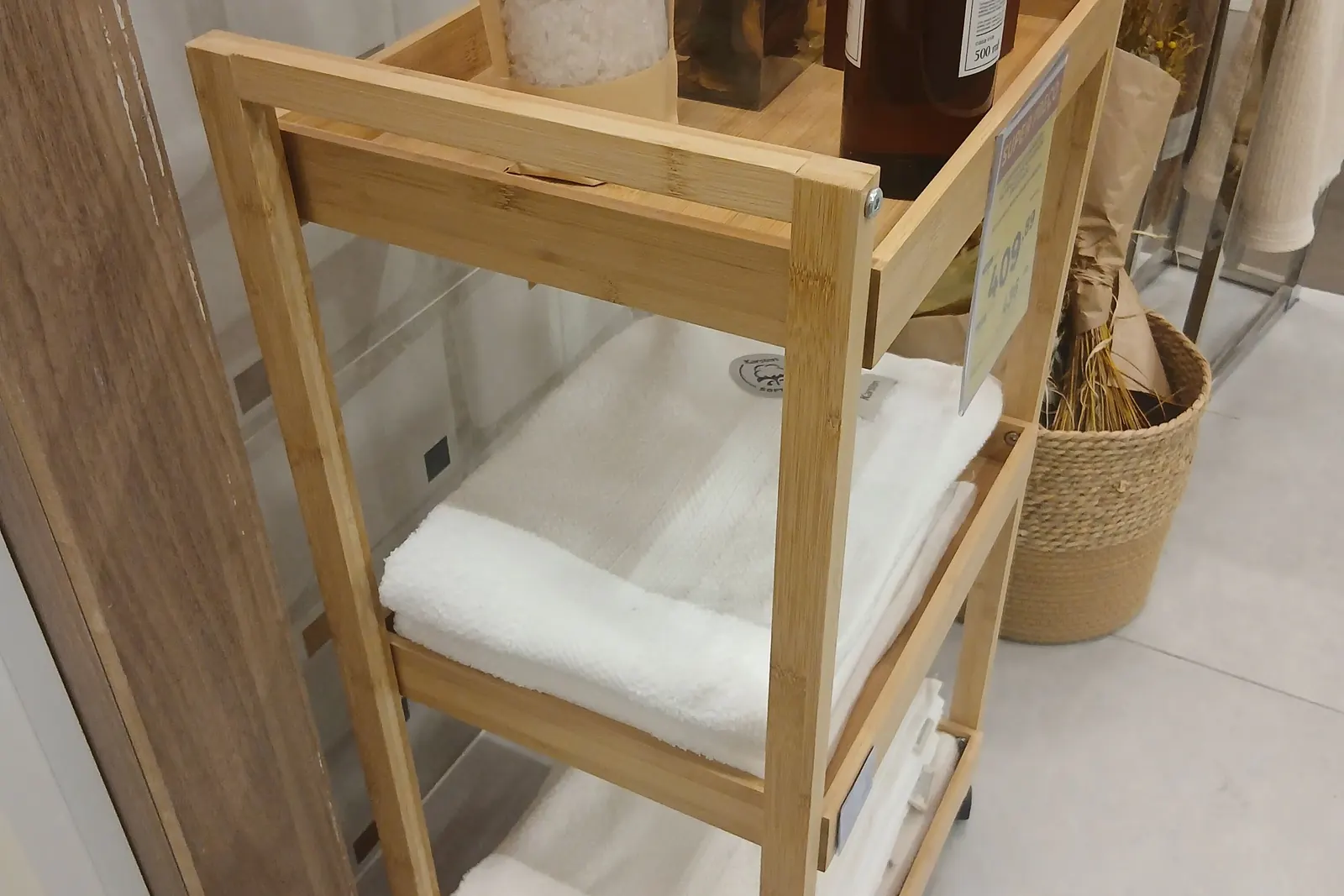
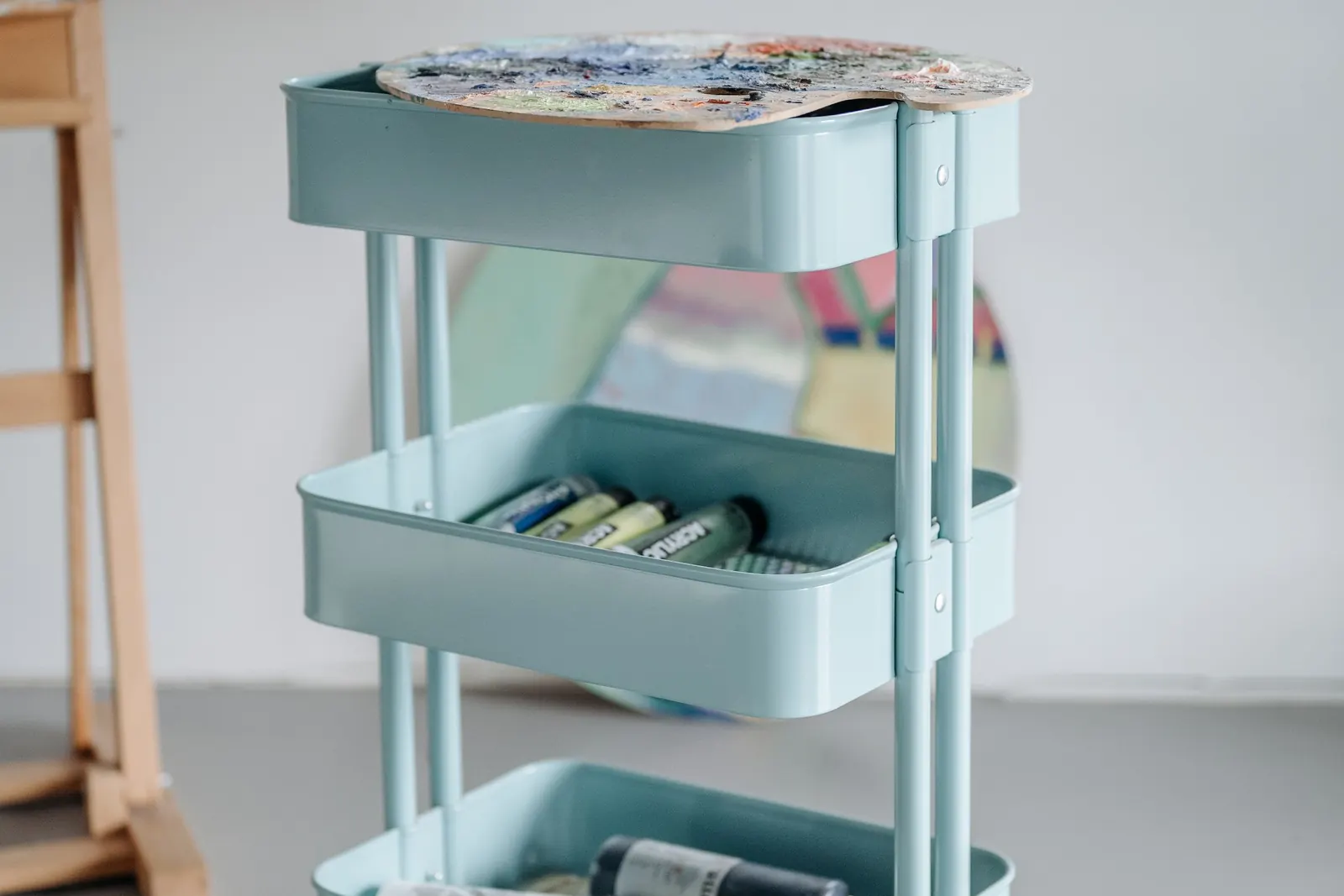
In a bathroom, a compact trolley can hold towels and toiletries. Keep it clear of the swing of the door and away from a position where it could be pulled into a bath or basin. In a home office or craft room, it can follow a project between desk and storage area. In a small flat, the same trolley might serve as a drinks station one day and extra kitchen storage the next.
How much does a shelf trolley cost?
As a planning guide, a basic plastic or wire trolley is often in the lower tens of pounds, while sturdier timber, metal, kitchen and design-led pieces can move into the low hundreds. Treat those bands as budgeting guidance rather than a current price list.
A simple slim or bathroom trolley may typically sit around £20–£60. A more substantial three-tier utility, craft or kitchen trolley may commonly fall around £50–£150. A heavier kitchen trolley with a worktop, a better-finished bar cart or a made-to-order timber piece may be £150–£300 or more. Delivery, assembly, finish and accessories can change the total.
Check current prices, dimensions, returns and the stated load rating at the point of purchase. A cheaper trolley that flexes, sheds parts or cannot be moved when loaded is not necessarily the economical choice.
How can you keep a trolley safe and stable?
Use the brakes when parked, put heavy items low, keep the route clear and never treat a wheeled shelf as climbing furniture. Stability depends on the unit, the floor, the load and how it is moved, so follow the maker’s instructions rather than relying on a generic rule.
RoSPA advises keeping floors free of trip hazards and securing furniture that could be pulled over. Apply the same practical caution to a tall trolley: do not overload the top, do not leave it where a child can pull it towards them, and consider whether a supplied restraint or alternative fixed storage is more appropriate. Keep bottles, blades, tools, medicines and cleaning products out of reach.
Lock castors before loading or unloading. Move slowly over thresholds and uneven flooring. Keep hot items on a surface intended for them and do not push a loaded cart across a wet floor. If it rocks, twists or rolls unexpectedly, unload it and investigate the assembly, castors and floor before using it again.
How do you care for and clean it?
Follow the material-specific care instructions and clean spills promptly rather than flooding the shelves. Dust open shelves with a soft cloth, wipe sealed surfaces with a lightly damp cloth and dry metal parts where moisture could encourage corrosion.
Do not use abrasive pads on a painted finish. Do not apply oil or polish to timber unless the maker says it is suitable for that finish. Check castors periodically for hair, thread and grit, and tighten accessible fixings if the instructions permit it. A trolley that is used near food should be cleaned with products suitable for food-contact surroundings, without implying that every domestic cart is food-safe.


What mistakes should you avoid?
The most common mistake is buying for the empty gap instead of the loaded, moving trolley. Use this quick checklist before ordering:
- Measuring only the width, not the depth, height and route.
- Ignoring skirting boards, pipes, handles or a door swing.
- Assuming every shelf carries the same weight.
- Putting the heaviest items on top.
- Choosing non-locking castors for a trolley that will be used as a work surface.
- Using untreated or unsuitable material beside a sink or in a damp bathroom.
- Leaving bottles, tools, medicines or cleaning products where children can reach them.
- Confusing a decorative wall shelf with a mobile trolley when searching by the Danish word.
- Copying a product photograph without checking the actual dimensions.
What does a 40 cm fridge gap example look like?
For a 40 cm gap beside a fridge, measure the tightest width, allow clearance for movement and choose a unit whose loaded depth will not obstruct the fridge door or walkway. A slim trolley advertised as 35 cm wide may still need more room once its handle, skirting and castor swing are considered.
First, measure the gap at floor level and at worktop height. Next, check the fridge door’s opening arc and the trolley’s full depth. Plan the shelves around the items you will store: perhaps oils and unopened packets low, everyday jars in the middle and lighter items high. Confirm the manufacturer’s load rating rather than estimating it from the shelf thickness.
When the trolley is assembled, test it empty, then add weight gradually. Lock it before taking items out. If the gap is too tight for a controlled pull-out, a fixed narrow shelf may be safer and more useful. The measurement is a planning example, not a universal recommended trolley size.
FAQs
1. Is trallehylde Danish?
Yes. It is a Danish compound made from tralle and hylde. The dictionary-supported sense is closer to a shelf made from slatted scaffold-plank material than to a wheeled trolley.
2. Does trallehylde mean trolley shelf?
Not literally. The Danish dictionary entry for tralle describes a slatted plank or grating, not a wheeled cart. Use UK terms such as shelf trolley or utility cart when you mean mobile storage.
3. Is trallehylde a wall shelf?
It can be. A live Danish retailer uses the term for an oak wall shelf with black spacers. The word alone does not guarantee that a particular product is wall-mounted, so read the product description.
4. What is the closest UK shopping term?
For a fixed shelf, try slatted shelf, scaffold-board shelf or reclaimed timber shelf. For a mobile unit, try shelf trolley, storage trolley, kitchen trolley, utility cart or slim gap trolley.
5. Can a shelf trolley be used in a kitchen?
Yes, if its materials, shelves, castors and stated load rating suit the job. Check clearance around appliances and doors, and do not put hot cookware on a surface that is not intended for it.
6. Are dimensions for shelf trolleys standard?
No. The ranges in this guide are planning aids only. Check the manufacturer’s actual width, depth, height, shelf spacing and load information before ordering.
7. Should shelf-trolley castors lock?
Locking castors are useful when the trolley must stay still while you load it or use a worktop. They do not make an unstable or overloaded unit safe, so stability and the maker’s instructions still matter.
8. Is trallehylde a cryptid or a social-media trend?
No reliable source checked for this guide supports that claim. The captured UK SERP was noisy and did not establish a cryptid or trend. The Danish evidence instead points to a real shelf term used by a retailer and in marketplace listings.
9. Can I use a trallehylde in a bathroom?
If you mean a fixed slatted shelf, choose a finish and fixing method suitable for the room. If you mean a trolley, choose wipe-clean materials, keep it clear of doors and water, and do not overload it.
10. What should go on the lowest shelf?
Put heavier, stable items low and lighter items higher, while keeping anything hazardous or child-accessible out of reach. Always follow the product’s load guidance rather than assuming that low placement removes every risk.