Table Decorations: 24 Practical Ideas for a Beautiful UK Dining Table
Good table decorations finish a dining room without taking over. They leave room for eating, work every day and can be moved when guests arrive.
This guide focuses on dining tables in real UK homes: compact kitchens, open-plan rooms, extendable tables and family spaces that have to work hard. Ideas are organised by table shape and size, then by everyday meals, entertaining and the seasons. Measurements for runners and centrepieces make each idea usable.
Contents
- Start with the table, not the ornament
- 24 table decoration ideas by shape, size and occasion
- Everyday combinations that stay practical
- How to decorate for guests without losing serving space
- Seasonal updates that do not look themed
- A realistic way to plan your budget
- Safety and maintenance
- A five-minute styling checklist
- Frequently asked questions
- Final thoughts
Start with the table, not the ornament
Before choosing a vase or candle holder, measure the surface and decide what must remain on it. A table that is mainly used for homework and quick meals needs a different arrangement from one reserved for dinner parties.
Measure the usable surface
Write down the table’s length and width with any leaves fitted, then measure again in its everyday configuration. Note where the legs sit, whether a pedestal restricts knee room and whether the table is pushed against a wall. These details determine whether a runner can sit centrally and whether a tray can be lifted easily.
As a planning guide, allow roughly 60cm of table edge per seated diner. A 120cm by 75cm rectangular table will usually feel comfortable for four, while a 160–180cm by 90cm table is more workable for six. These are furniture-planning ranges rather than fixed rules: chair width, table legs and the way you serve food all matter.
For round tables, a diameter of about 90–105cm often suits four people; around 120–135cm is more comfortable for six. A round table tends to need a smaller, central decoration because every seat faces it.
Keep the centre zone useful
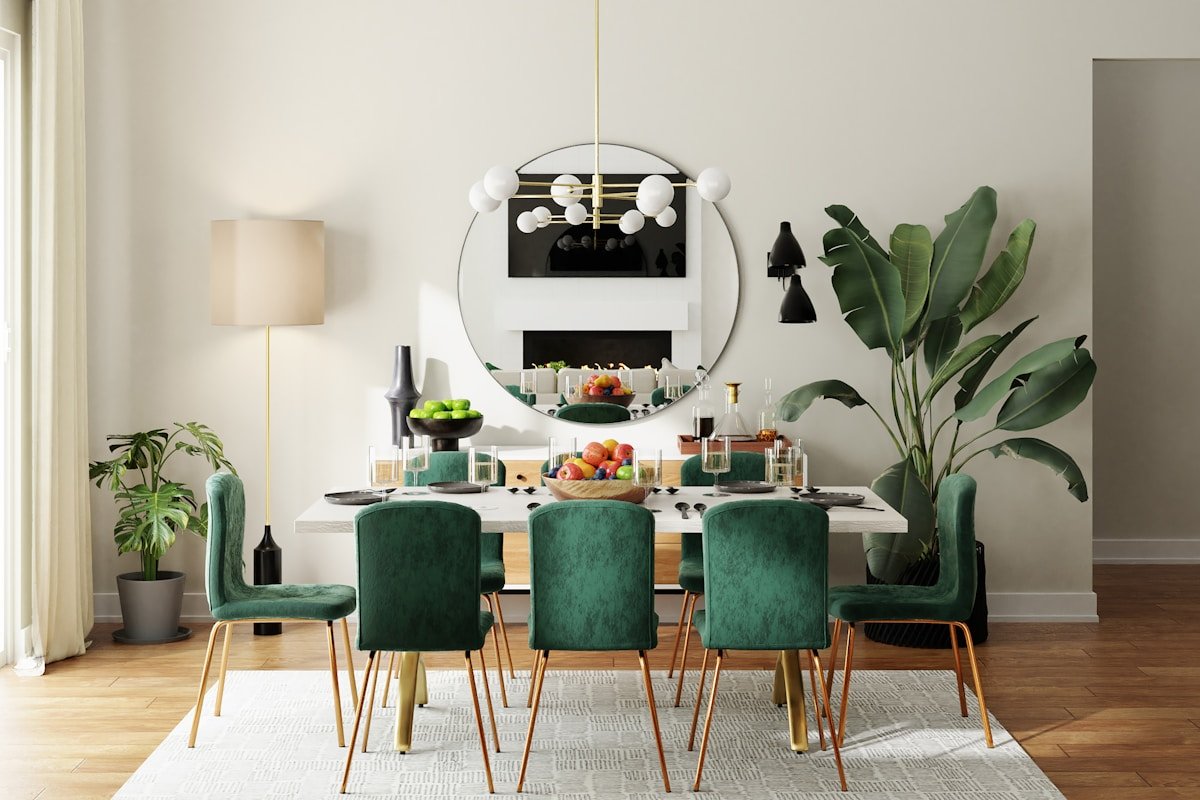
On a table about 90cm wide, reserve a central strip of roughly 25–30cm for decoration when place settings are in use. That leaves about 30cm on each side for plates, cutlery and glasses. If serving dishes also sit on the table, reduce the decorative strip or move the food to a sideboard.
A seated sight line matters too. Keep a single centrepiece around 25–30cm high where possible, or use several low pieces. Tall branches can work, but only if they are narrow enough to see around; never make guests lean sideways to talk.
Choose the right footprint
A tray, shallow bowl or low planter creates a defined footprint and can be cleared in one movement. A loose collection of objects is more flexible but easier to spread too far. For a small table, choose one anchor—such as a vase or bowl—and no more than two supporting pieces.
For a long table, use a repeated rhythm rather than one oversized object: three small vessels, a pair of lamps, or a narrow line of greenery. Leave visible gaps so the surface does not look like a shop display.
24 table decoration ideas by shape, size and occasion
Compact rectangular tables
1. A narrow runner. Choose a runner around 30–40cm wide. For a relaxed everyday look, let it stop short of the ends; for a formal setting, allow a 15–30cm drop at each end. Check that it will not catch on passing chairs.
2. One generous bowl. A 30–40cm-wide bowl filled with fruit, pine cones or folded napkins gives a small table a focal point without consuming every seat. Keep the contents low enough to see across.
3. The tray-and-vase edit. Put one vase and one small candle holder on a tray no wider than about 25cm. When dinner is served, lift the whole arrangement and set it on a sideboard.
4. A square textile. Instead of a full runner, place a square cloth or folded table linen beneath a bowl. This adds colour while keeping the table edges clear for chairs and place settings.
5. A single stem. One branch of blossom, eucalyptus or foliage in a slim bottle can look more intentional than a crowded bouquet. Use an odd number of bottles only if each remains narrow enough to preserve space.
Long rectangular and extendable tables
6. Three matching vessels. Repeat one material—ceramic, glass or metal—in three different heights. Keep the tallest vessel at about 25–30cm for an everyday arrangement, lowering it further when food will be served.
7. A broken line of greenery. Lay short sprigs or small posies along the centre rather than one continuous garland. Breaks of 10–20cm make cleaning easier and prevent the arrangement from becoming visually heavy.
8. Paired candle holders. Place two holders along the centre line, not directly in front of diners. Use flameless lights if children, pets or busy serving routines make naked flames impractical.
9. A centre runner plus clear ends. On a 200cm table, a runner around 150–170cm long can frame the setting while leaving the corners available for serving bowls. Adjust the drop to the table’s actual length rather than buying by seat count.
10. A serving-station end. Keep the central 60–90cm decorative and use one end for water, bread or condiments. This works particularly well on an extendable table because the decoration can remain in place while the table grows.
11. A low bowl at each third. Two or three shallow bowls create balance across a long top. Keep each bowl well inside the edge and use similar colours rather than identical contents.
12. A decorative stack. A small stack of attractive, washable placemats or folded napkins can become part of the display. Avoid placing precious or unstable objects where children will pull them down.
Round and oval tables
13. A round tray. Echo the table shape with a circular tray, low bowl or lazy Susan. Keep its diameter to roughly one-third of the table diameter so diners still have room to reach across.
14. A central posy. A compact arrangement in a 15–20cm-wide vessel suits a round table. Choose a weighted base if the table is in a busy walkway.
15. Concentric texture. Layer a placemat, shallow charger and small bowl at the centre when the table is not being used for a full meal. Remove the charger before serving if it crowds the place settings.
16. An oval runner. On an oval table, a straight runner can look crisp; a soft, narrow cloth can look more relaxed. Keep it aligned with the long axis and check that its ends do not sit where knees or chair backs catch them.
17. Four corner lights. For a larger round or oval table, place four identical flameless lights around a low centrepiece. Keep the arrangement symmetrical and leave a clear route for plates.
Everyday family tables
18. Washable foliage in a jug. Choose a jug that can be wiped clean and fill it with hardy stems. Change the water regularly, keep leaves away from food and avoid delicate petals if the table doubles as a work surface.
19. A fruit bowl with a boundary. Use a bowl with a stable base and keep it on a tray. Separate ripe fruit from anything that bruises easily, and move it away from direct sun or a radiator.
20. A lidded pot for small essentials. A ceramic pot can hold salt, tea lights or spare napkins, keeping useful items tidy without turning them into clutter. Choose a lid that is easy to lift with one hand.
21. Textured placemats as decoration. Stack four or six placemats at one end in a calm colour. This is a practical display rather than an object that needs dusting, and it can be put to work immediately.
22. A seasonal branch in a bottle. One bare branch in a heavy bottle gives height without a full bouquet. Secure it if it is near a walkway, and remove sharp or brittle twigs before children use the table.
Hosting and special occasions
23. Name-card rhythm. Repeat one small detail—kraft card, ribbon or a sprig of rosemary—at each place rather than covering the table in decorations. Keep cards outside the plate and cutlery footprint.
24. A centrepiece in modules. Build one arrangement from three small, movable parts: a low bowl, a pair of candles and a few stems. Guests can see one another, and you can transfer each piece to a sideboard when the main course arrives.
Everyday combinations that stay practical
A reliable scheme needs contrast, not a large number of objects. Try one of these combinations:
- Quiet and natural: linen runner, ceramic jug, green foliage and one wooden bowl.
- Colour-led: plain runner, three small vessels in one accent colour and matching napkins.
- Minimal: bare table, one sculptural bowl and a small stack of placemats.
- Family-proof: washable runner, weighted vase, flameless lights and a lidded pot for napkins.
- Small-flat friendly: round tray, low posy and one candle holder that can be removed together.
Keep the palette to two or three main tones, then add a contrasting texture—glass against linen, timber against ceramic or metal against paper. This is usually more convincing than matching every item.
For broader help choosing finishing pieces, see Oak & Nook’s home accessories guide. If your surface is a console or occasional table rather than a dining table, use the more general decor table ideas guide instead of forcing dining-table proportions onto it.
How to decorate for guests without losing serving space
Start with the meal. If you are serving family-style dishes, aim for one movable centrepiece rather than a fixed garland. If food is coming from a kitchen island or sideboard, you can use a little more height and spread.
For each setting, allow room for a dinner plate, side plate, cutlery and a glass. Put the glass above the knife area, not inside the centre decoration. Keep serving spoons, water and hot dishes away from trailing fabric and candle flames.
A useful hosting sequence is:
- Place chairs and confirm the number of diners.
- Add placemats or a runner, keeping the edges straight.
- Set plates and glasses before adding decoration.
- Place the centrepiece in the remaining central zone.
- Sit down at two opposite places and check sight lines.
- Lift anything that blocks conversation or access to a dish.
When extending the table, avoid a decoration that depends on one exact length. Modular bowls, separate candle holders and short pieces of greenery can be spread out or gathered in seconds.
Seasonal updates that do not look themed
Seasonal table decorations work best when the base stays the same and only one layer changes.
- Spring: pale foliage, blossom branches or a small bowl of painted eggs. Keep water away from unsealed timber.
- Summer: a washable runner, glass vessels and herbs in small pots. Put living plants on saucers to protect the surface.
- Autumn: warm linen, pears or apples, and a few seed heads. Remove fallen plant material promptly because it can stain.
- Winter: evergreen sprigs, paper stars or metallic napkins. Keep greenery well away from candles and heat sources.
- Christmas or a special dinner: choose one repeated detail—ribbon, colour or foliage—rather than mixing every festive motif.
For an occasion that is specifically a party or wedding, check the venue’s rules on confetti, naked flames and attaching decorations. This home-focused guide is not a substitute for an event venue’s fire or food policy.
A realistic way to plan your budget
You do not need a matching collection. Divide the plan into three levels:
- Use what you own: existing glassware, a serving bowl, folded tea towels or garden foliage in a clean bottle.
- One considered purchase: a washable runner, stable tray or versatile vase that works throughout the year.
- Build a set: add matching napkins, candle holders and seasonal stems only after the basic arrangement works.
For UK shopping, measure first and check the retailer’s dimensions, materials and care instructions rather than relying on the product photograph. Prices and availability change frequently, so any pound figure should be checked at the time of purchase; this guide deliberately avoids presenting unverified current costs as facts.
Safety and maintenance
Keep candles, matches and hot serving dishes away from trailing greenery, paper decorations and curtains. Never leave a naked flame unattended. The UK government’s fire-safety guidance for the home is a useful general reference; follow the candle maker’s instructions as well.
Use weighted vessels on high-traffic tables and check that tall branches cannot tip into a child’s reach. Avoid toxic plants where pets may chew them, and remove berries or small decorative pieces that could be swallowed.
Wash vases and bowls regularly. Change flower water before it becomes cloudy, wipe spills from porous stone or unsealed wood quickly, and use coasters beneath anything that can sweat. For food displayed on the table, follow the Food Standards Agency’s food-safety advice, particularly for chilled dishes and leftovers.
A five-minute styling checklist
Before calling the table finished, ask:
- Can everyone see across it without leaning?
- Is there about 60cm of edge space per diner?
- Does the runner have a safe, tidy drop—if it has a drop at all?
- Can the centrepiece be lifted in one movement?
- Are flames, water and trailing stems away from hazards?
- Does the arrangement still work when the table is extended?
- Is there one clear surface for serving or putting down a hot dish?
If the answer to any of these is no, remove an item before adding another. Restraint is often what makes table decorations look expensive and calm.
Frequently asked questions
Editorial note: the audit recorded no observed People Also Ask questions for this keyword. The questions below are practical editorial FAQs, not claims about Google’s PAA results.
How wide should a table runner be?
For most dining tables, around 30–40cm wide is a useful starting point. It leaves room for place settings on either side while creating a visible central strip. On a narrow table, choose the lower end of that range; always confirm the finished width against your plates and serving dishes.
How long should a runner be on a dining table?
Measure the table rather than choosing by the number of seats. A formal look may use a 15–30cm drop at each end, while an everyday runner can finish short of the ends. If chairs or a walkway catch the fabric, use a shorter length or a table-centred strip.
How tall should a dining-table centrepiece be?
Keep a single everyday centrepiece to about 25–30cm high so people can talk over it. Taller designs can work when they are narrow or easy to move, but test them from seated eye level before guests arrive.
What can I use as a table decoration every day?
A washable runner, stable bowl, low vase, tray of placemats or a small plant can all work. Choose something that can be wiped clean and moved quickly. If the table is used for homework or crafts, practical textiles are usually better than fragile ornaments.
How do I decorate a small dining table?
Choose one focal point: a low bowl, a narrow vase or a small tray. Keep the central footprint to roughly 25–30cm on a table about 90cm wide, and remove anything that prevents plates and glasses sitting comfortably. A single strong shape will look less cluttered than several tiny objects.
Are candles safe on a dining table?
They can be, provided they are stable, kept clear of foliage and fabric, and never left unattended. Use flameless lights when the table is near children, pets or a busy serving route. Always follow the product instructions and your household’s fire-safety precautions.
Final thoughts
Good table decorations are not a contest to fill the surface. They are a small piece of room planning: the right height for conversation, the right footprint for plates, and the right level of flexibility for the way your household actually eats.
Start by measuring the table, reserve space for people, then choose one anchor and a little repetition. A 30–40cm runner, a low bowl or a few movable vessels can be enough. Once the everyday arrangement works, change one layer for guests or the season. The result will feel considered, useful and unmistakably yours—without needing to be packed away after every meal.