Kids Bedroom Furniture: A Practical UK Buying Guide by Age and Room Size
Meta description: Choose kids’ bedroom furniture by age, room size and budget. Compare UK bed sizes, storage, desks and safety essentials for UK homes before you buy.
Table of Contents
- Start with the child, not the theme
- The essential furniture checklist
- Choose the right bed and mattress size
- Plan furniture around real measurements
- Compare bunk beds, mid-sleepers and high-sleepers
- Make storage do more work
- Add a desk without losing floor space
- Safety checks before furniture arrives
- When is grow-with-child furniture worth it?
- Realistic UK budget bands
- Three workable room plans
- Where to start shopping
- Kids bedroom furniture FAQ
- Final Thoughts
A child’s bedroom has to cope with sleep, dressing, play, reading, homework and changing interests. The best kids bedroom furniture is not the set with the most matching pieces, but the combination that fits now, remains safe and adapts as your child grows.
Start with the child, not the theme
A themed room can look lovely, but a bed or wardrobe is a long-term purchase. Start with age, independence and the next likely change instead.
From baby to toddler
A cot or cot bed is a nursery decision first. Check the manufacturer’s instructions for the exact mattress size, base positions and conversion stages. Do not assume that a mattress from another cot will fit, even if the measurements look close.
When a child moves into a first bed, keep the room simple: a low bed, easy-to-reach clothes storage and a few open baskets are enough. For a complete nursery, use [Internal link: Oak & Nook’s nursery furniture guide] rather than repeating a full cot-buying guide here.
Primary-school years
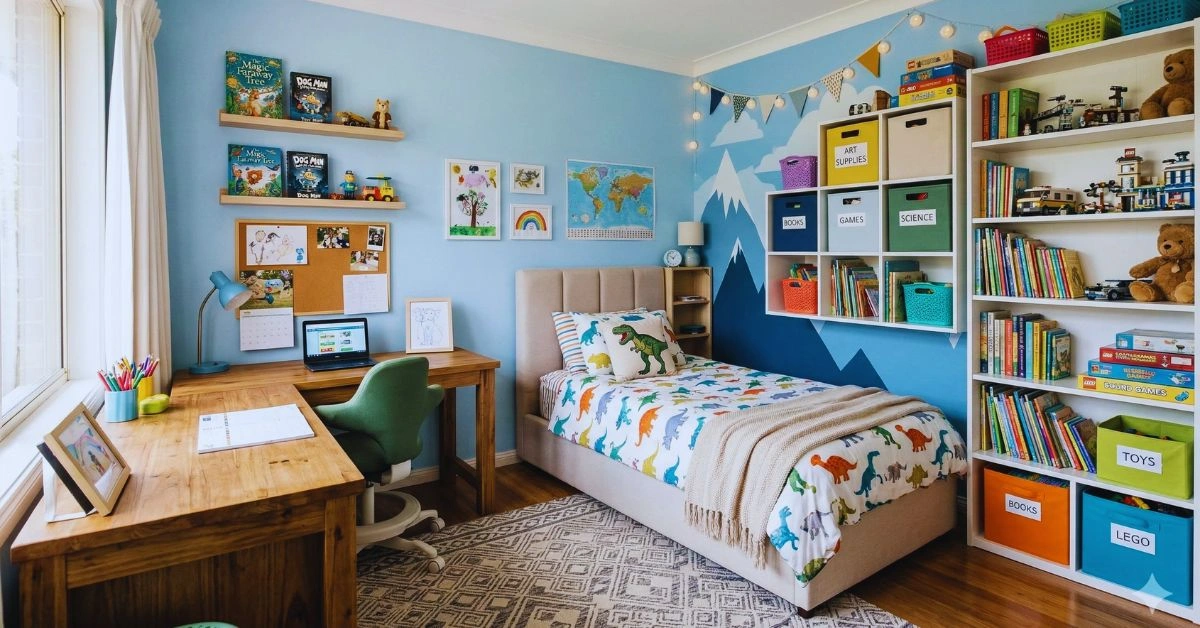
This is usually when one room must accommodate toys, school clothes, books and homework. Prioritise a dependable single bed, enclosed clothes storage and a work surface. Mix closed cupboards and drawers with one accessible open shelf to control visual clutter.
Older children and teenagers
Older children need privacy, charging space and room for larger clothes and sports equipment. A standard single with a robust frame can last longer than a novelty bed. Give school bags, laundry and shoes a designated home or the room will quickly feel untidy.
The essential furniture checklist
Buy in this order if the budget is limited:
- Bed and correctly sized mattress: the safety-critical foundation of the room.
- Clothes storage: a wardrobe, drawers or a combination that matches the child’s reach and the available wall width.
- Everyday storage: space for books, toys and bedding, with some closed storage to control visual clutter.
- Lighting and a clear route: a dependable bedside light or wall light, plus a walkway that is not blocked by baskets or cables.
- Desk and chair: add these when homework, drawing or computer use requires a dedicated surface.
- Optional extras: a reading seat, dressing table, display rail or themed accessories.
Check that the bed and wardrobe leave a usable route before buying a large desk or elaborate play storage. For compact rooms, use [Internal link: Oak & Nook’s small-bedroom storage guide] once the correct article URL is added by the editor.
Choose the right bed and mattress size
In the UK, a standard single mattress is usually 90cm wide by 190cm long. A small single is commonly 75cm by 190cm, while a small double is often 120cm by 190cm. Dimensions can vary by manufacturer, so measure the frame’s internal mattress space and not just its advertised category.
A standard single is the most flexible long-term choice. A small single releases floor space, but check replacement mattresses and fitted sheets first. A small double can suit a teenager or sleepovers, although its extra width may crowd a small room.
A cabin, mid-sleeper or high-sleeper creates storage or a desk underneath, but compare its footprint with a normal bed plus shallow storage. Check the product’s stated age suitability, mattress specification, guard rails and access requirements rather than relying on a generic age claim.
| Bed type | Useful when | Check before buying |
|---|---|---|
| Standard single | You want the longest useful life and easy-to-source bedding | Allow room to walk alongside it and open nearby furniture |
| Small single | The room is narrow or shared | Check mattress, sheet and protector availability |
| Storage bed | You need bedding or seasonal storage without another cabinet | Confirm drawer clearance and whether drawers can open fully |
| Mid-sleeper | You need a compact play, storage or desk zone below | Check ceiling height, ladder position and the child’s confidence using it |
| Bunk bed | Two children share a room or occasional guests need a bed | Follow the manufacturer’s age and safety instructions; measure ladder and access space |
| High-sleeper | An older child needs a serious desk or storage zone below | Check head clearance, guard rails, ceiling height and safe access |
Do not buy a mattress by thickness alone. The frame instructions may specify a maximum mattress height so that the guard rail remains effective. Keep the manufacturer’s information with the bed and re-check fixings after assembly and after the first few weeks of use.
Plan furniture around real measurements
Draw the room on squared paper or in a simple planning app before shopping. Record wall lengths, door swing, window position, radiator, sockets, skirting-board depth and any chimney breast or boxed pipework. A product that fits the wall may still block a door, heat source or opening window.
Use these practical starting measurements:
- Wardrobe depth: allow roughly 55–60cm for a conventional hanging wardrobe, then add opening space in front. A sliding-door design may reduce door-swing conflict, but it still needs a clear approach.
- Desk depth: 50–60cm is usually enough for writing, a lamp and a laptop. A desk around 100–120cm wide gives one child a more comfortable work area than a very narrow shelf.
- Book shelving: 25–30cm deep is often sufficient for children’s books. Deeper shelves can encourage piles and reduce usable floor space.
- Walking route: aim for about 60cm of clear passage beside the main bed where the room allows. It is a planning target, not a substitute for checking the actual furniture and door swings.
- Bed footprint: a standard single needs at least its 90 × 190cm mattress area, plus the frame, skirting clearance and a route to get in and out.
A small room is easier to use when the tall pieces stay on one wall. Put the wardrobe and shelving together, keep the centre of the room clear and avoid placing a desk where a chair will collide with the bed. Do not cover a radiator with a full-height cabinet unless the manufacturer and installer confirm that the arrangement is suitable for the heating system.
Compare bunk beds, mid-sleepers and high-sleepers
Raised beds can solve a storage problem, but they also concentrate risk and make the room feel visually heavier. Treat them as a specific equipment choice, not as a default solution for every small bedroom.
For any raised or bunk bed, check the supplied instructions for age suitability, guard-rail position, maximum mattress height and ladder access. Measure from the top of the mattress to the ceiling and look for pendant lights, beams and high windows. Leave enough space to make the bed without leaning dangerously over a rail.
The lower level of a mid-sleeper is useful for drawers, a reading den or a compact desk. A high-sleeper can create a larger work zone, but it requires a child who can use the ladder confidently and follow the house rules. Keep the area under the bed free of hard-edged furniture that could obstruct a safe exit.
If you are comparing several models, record the overall width, length and height, the mattress size, under-bed clearance and the location of the ladder. This makes an online comparison more meaningful than judging by a product photograph. Add [Internal link: Oak & Nook’s bunk-bed and high-sleeper guide] when the correct existing article URL is confirmed.
Make storage do more work
Children’s storage needs to be easy to use, not merely large. A five-year-old is unlikely to maintain a tall rail of adult-height hangers, while an older child may resent a toy chest that makes daily clothes difficult to reach.
Use a layered approach:
- Daily clothes: low drawers or a rail the child can reach without climbing.
- Occasional clothes: the upper section of a wardrobe, with a safe adult-access plan.
- Toys: shallow bins or drawers grouped by type, rather than one deep box that hides everything.
- Books: front-facing display shelves for younger children, then deeper conventional shelves as reading habits change.
- Bedding and bulky items: under-bed drawers or the top of a wardrobe, provided they can be accessed without unsafe climbing.
- School and sports kit: a hook rail or ventilated basket close to the door.
Measure existing storage before replacing it. If a 60cm-deep wardrobe opens into the bed route, a narrower sliding-door unit may be more useful. Prioritise adjustable shelves, replaceable handles and available spare parts, and ask about assembly and delivery before ordering.
Add a desk without losing floor space
A child’s first desk does not need to be large, but it does need a stable work surface, a comfortable chair and enough light. Start with a 50–60cm-deep surface and check that the chair can pull out without hitting the bed or wardrobe. A desk around 100cm wide is a sensible minimum for books, paper and a lamp; go wider if the room and schoolwork require it.
A wall-mounted or fold-down desk can save space, but plan sockets and cable management. Place a desk near daylight where possible without blocking a radiator; add task lighting and keep chargers and cables away from the bed and main route.
Safety checks before furniture arrives
Safety information is not interchangeable between products. Read the instructions for the exact bed, wardrobe or shelving unit and follow the supplied assembly method.
Before your child uses the room, check that:
- Tall wardrobes, bookcases and chests are secured to a suitable wall using the supplied or correctly specified fixing system.
- The wall type has been identified before drilling; a fixing suitable for masonry may not be suitable for plasterboard.
- Bed rails, ladder parts, bolts and drawer runners are fully assembled and tightened as instructed.
- The mattress matches the frame’s stated dimensions and maximum height.
- Windows, blind cords, heaters and electrical leads are not made more hazardous by the furniture layout.
- Heavy items are kept low, and shelves are not overloaded or used as climbing steps.
- Furniture doors and drawers can open fully without trapping the walking route.
Never modify a guard rail, remove a ladder or add homemade parts to a raised bed. If the instructions are missing, contact the manufacturer before use. Retailer guidance can help you compare products, but the product manual remains the relevant source for assembly and use.
When is grow-with-child furniture worth it?
Grow-with-child furniture is worthwhile when the conversion path is clear and the later configuration suits the room. Check whether it needs a different mattress, whether replacement hardware is available and whether the frame remains stable at every setting. A neutral bed and storage scheme is easier to update with bedding, paint, posters and handles.
Realistic UK budget bands
The following are planning allowances for the UK, October 2026, not a live price survey or a quotation. They exclude delivery, assembly, decorating and, in most cases, the mattress. Retailer promotions, material, size, brand and bespoke work can move the final figure considerably.
| Purchase level | Typical allowance | What it might cover |
|---|---|---|
| Essential refresh | £250–£600 | A basic single bed, mattress and modest storage, often using existing drawers or shelves |
| Complete mid-range room | £600–£1,200 | Bed and mattress, wardrobe or drawers, practical shelving and a simple desk |
| Raised or space-saving setup | £800–£1,800 | A mid-sleeper, high-sleeper or bunk, suitable mattress, storage and a work surface |
| Full, durable furniture scheme | £1,200–£2,500+ | Higher-spec bed, wardrobe, drawers, desk, chair and coordinated storage |
Get separate prices for assembly and delivery, especially for a narrow stairway or a heavy wardrobe. Ask whether a mattress is included, whether old furniture is removed and what happens if a part arrives damaged. These details affect the real cost more than a small difference in the headline price.
Three workable room plans
A narrow 2.1m × 2.4m room
Use a 75 × 190cm small single only if the child’s long-term needs and replacement bedding are acceptable. Put the bed along the longest wall, use a wardrobe no deeper than necessary and choose wall shelves or under-bed drawers instead of a second tall cabinet. A fold-down desk can work beside the window, provided it does not block the radiator or opening area.
A typical 2.7m × 3m room
A standard single can sit on the long wall with around 60cm of access along its open side. Place a 55–60cm-deep wardrobe near the door, so clothes are easy to reach without crossing the whole room. Put a 50–60cm-deep desk near daylight and keep one corner open for a laundry basket or reading chair.
A 3m × 3m shared room
Two standard single beds may fit along opposite walls, but measure each frame rather than assuming the mattress size is the full footprint. Keep a clear route to the door and window. If a bunk bed releases more play space, compare its total height and ladder position with two low beds plus slim drawer units. The best choice is the one that leaves the children a safe, usable route every day.
Where to start shopping
Use retailers as research tools, not substitutes for measuring. Compare categories at IKEA UK, specialist beds at Room to Grow and Cuckooland, and broader ranges at Next and John Lewis. Boori’s children’s furniture collection is another comparison point. Check dimensions, mattress requirements, age guidance, delivery, assembly and returns; availability and prices change.
Kids bedroom furniture FAQ
What furniture does a child’s bedroom need first?
Start with a suitable bed and mattress, then add clothes storage and a practical route through the room. Add toy storage, a desk and decorative pieces only after the essentials fit. This keeps the budget focused on furniture that is used every day.
Is a small single bed suitable for a child?
It can be, particularly in a narrow room, but check the exact mattress size and the future availability of sheets, protectors and replacement mattresses. A standard single is usually easier to keep for longer, while a small single can make a meaningful difference in a compact layout.
How deep should a child’s wardrobe be?
Allow roughly 55–60cm for a conventional hanging wardrobe, then check the product’s external depth and door clearance. If the wardrobe faces the bed or desk, sliding doors or a shallower storage arrangement may improve the route through the room.
Are bunk beds a good idea for a small bedroom?
They can free floor space in a shared room, but they are not automatically the safest or most comfortable option. Check the manufacturer’s age guidance, guard rails, mattress height, ladder access and ceiling clearance. Compare the complete footprint with two low beds before deciding.
How do I stop a wardrobe or bookcase tipping?
Anchor tall furniture to a suitable wall using the supplied or correctly specified fixings, following the assembly instructions. Identify whether the wall is masonry, stud or plasterboard before drilling. Keep heavy items low and do not let children climb shelves or drawers.
Should children’s bedroom furniture match?
No. Matching furniture can simplify the look, but a durable neutral bed, flexible storage and a good desk are usually more useful than a complete themed set. Changeable items such as bedding, artwork and handles can provide colour without replacing large pieces.
Final Thoughts
Choose kids bedroom furniture as a room plan, not a collection of attractive products. Measure the bed, wardrobe, desk and door swings first. Then select the safest bed and mattress combination for the child’s stage, provide storage they can actually reach and leave enough floor space for everyday movement.
A standard single, adaptable storage and a properly sized desk will often outlast a novelty set. If the room is very small, compare the real clearances of a raised bed with a simple low bed and shallow storage. Spend more on sound construction, a suitable mattress and safe installation before spending on a theme. That approach gives the room a better chance of working through the next growth spurt, school year and change of interest.