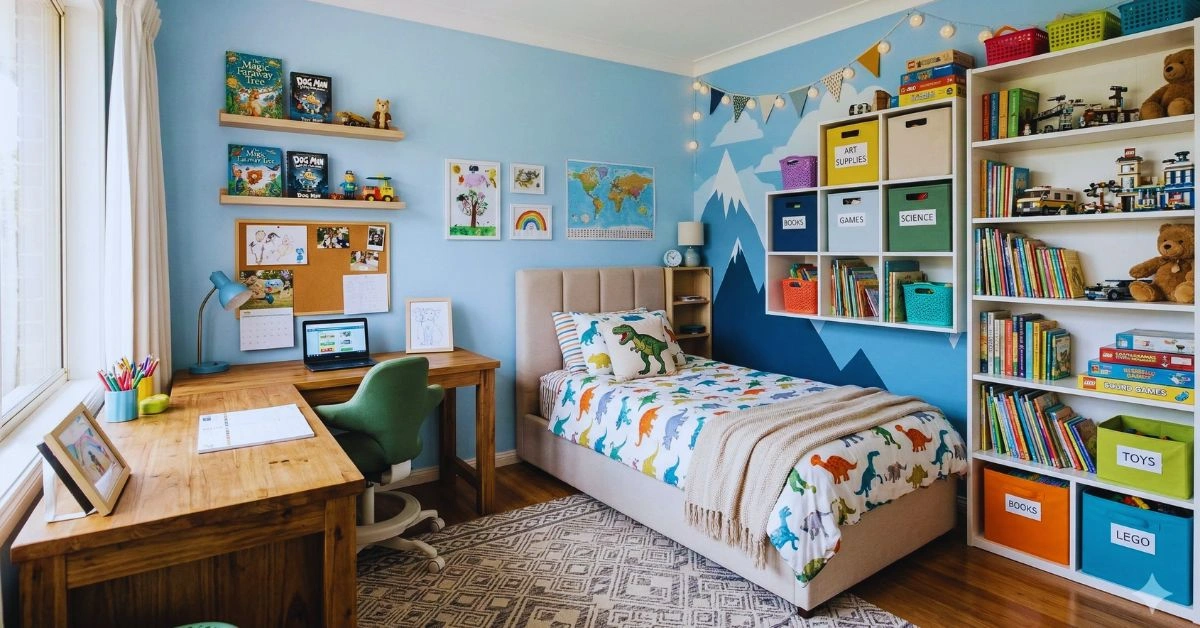
Kids bedroom furniture are the foundation of a thoughtful, well-planned space. This comprehensive guide brings together everything our editors have learned about kids bedroom furniture, from layout and lighting to materials, finishes and budget-friendly upgrades, so you can make confident decisions and avoid the costly mistakes we see repeated in homes every year. Whether you are starting a full refurbishment or simply refreshing a tired room, the kids bedroom furniture covered here will help you get the most from your space, your budget and your time.
Why Kids Bedroom Furniture Deserves More Thought Than Adult Furniture
It is a curious quirk of family life that we agonise over our own bedroom furniture for months, reading reviews, visiting showrooms, and consulting partners, then wander into the kids bedroom section of a superstore and grab whatever is on offer because the children are running amok and we need a bed by Sunday.
Table of Contents
The result is often a child who is perfectly happy with their bright blue wardrobe and dinosaur-print bedding, until they are six, then eight, then twelve, at which point the entire room needs to be replaced. Kids bedroom furniture, done well, is an investment that should last a decade, grow with the child, and survive the daily assault of sticky fingers, juice spills and the occasional headlong charge across the room.
This guide brings together 23 kids bedroom furniture ideas that are smart, safe, stylish and built to last. Whether you are setting up a nursery, refreshing a primary school child’s room, or preparing a teenage retreat, you will find practical advice and inspiration here.
The Principles of Good Kids Bedroom Furniture
Before you start shopping, it is worth understanding the principles that govern good kids bedroom design. These principles apply whether you are buying a single piece or furnishing the entire room.
Safety First
The most important consideration is safety. Kids bedroom furniture must meet British safety standards (look for the British Standard mark, BS 8500 for children’s furniture), be securely fixed to the wall where required (all tall furniture in kids rooms should be anchored), and use child-safe materials and finishes. Avoid furniture with sharp corners, small parts, or toxic finishes.
Built to Last
Children are hard on furniture. Beds get jumped on, drawers get overstuffed, desks get covered in paint. Choose pieces made from solid wood or high-quality MDF, with sturdy joints, smooth-running drawers and reinforced corners. Cheap furniture will not survive a childhood.
Grows with the Child
The most cost-effective kids furniture is the kind that adapts as the child grows. A cot that converts to a toddler bed, a junior desk that adjusts in height, a wardrobe with adjustable shelves, a bed that can be extended from junior to full size: these are the pieces that pay for themselves over a decade of use.
Encourages Independence
Good kids bedroom furniture is the kind that allows children to do things for themselves. Low hooks they can reach, drawers they can open, a bed they can climb into unaided, a desk they can sit at comfortably: these small details make a child feel capable and in control of their own space.
Tells Their Story
A childs bedroom should reflect their personality, interests and dreams. The furniture is the canvas; the colours, the bedding, the posters, the toys, the collections are the marks the child makes on it. Choose furniture that is a flexible backdrop, not a themed set piece that will be outgrown in two years.
23 Kids Bedroom Furniture Ideas
1. A Convertible Cot-to-Toddler Bed
A convertible cot, which transforms from a cot to a toddler bed and sometimes to a junior bed, is one of the most cost-effective pieces of nursery furniture you can buy. Brands such as Stokke, Boori and IKEA offer well-designed convertible cots that genuinely last.
2. A House Frame Bed
A house frame bed, in plain pine or painted white, is endlessly popular and can be styled to suit any age or theme. Add fairy lights, draped fabric, or a canopy for a magical feel, or leave it plain for a Scandinavian look that works into the teenage years.
3. A Bunk Bed for Siblings
A bunk bed is the classic space-saving solution for shared bedrooms. Modern designs prioritise safety with full-length guard rails, sturdy ladders and rounded edges. Look for designs that can be split into two single beds when the children get older.
4. A Mid-Sleeper with Storage
A mid-sleeper, with a desk or play area underneath the bed, is a brilliant space-saving solution for smaller bedrooms. Children love the sense of having their own den underneath, and the integrated storage and workspace make the most of every centimetre.
5. A High-Sleeper with Play Space
A high-sleeper, with a significant space underneath for a sofa, a desk, a wardrobe or a play area, is the ultimate space-saver for older children. Most high-sleepers can support a teenager as well as a younger child, so they genuinely last.
6. A Solid Wood Single Bed
A simple, solid wood single bed, in pine, oak or beech, is the workhorse of the kids bedroom. Choose a design that is not too themed, so it can be styled up or down as the child grows. Painted versions in white, soft grey or sage green work particularly well.
7. A Day Bed
A day bed, with a back and sides, doubles as a sofa during the day and a bed at night. It is a great choice for smaller rooms, for guest rooms that double as kids rooms, and for children who like to read and relax on their bed rather than sit on the floor.
8. A Bed with Storage Drawers
Beds with built-in storage drawers underneath are invaluable in kids bedrooms, where the floor tends to be covered in toys. The drawers can hide everything from Lego to spare bedding, freeing up wardrobe and chest-of-drawers space.
9. A Captains Bed
A captain’s bed, which combines a single bed with a chest of drawers, shelves and sometimes a desk, is a complete bedroom solution in a single piece of furniture. Ideal for very small bedrooms where every centimetre counts.
10. A Child-Sized Armchair
A small, child-sized armchair, in a wipeable fabric, is a wonderful addition to a kids bedroom. It gives the child their own special seat for reading, watching TV or simply lounging, and it makes the room feel more like a real living space.
11. A Bookshelf at Child Height
A low bookshelf, with the bottom shelves at child height, encourages independence and a love of reading. Children can see and reach their own books without help, and they are more likely to put them back.
12. A Toy Storage Chest
A toy storage chest, in wood or fabric, is a tidy way to contain the inevitable mountain of toys. Choose one with a soft-close hinge to prevent trapped fingers, and avoid heavy lids that small children might struggle with.
13. A Wardrobe with Adjustable Shelves
A wardrobe with adjustable shelves and a low hanging rail is the most flexible kids wardrobe solution. As the child grows, the rail can be raised and the shelves reconfigured. Look for soft-close doors and rounded edges for safety.
14. A Chest of Drawers with Rounded Corners
A chest of drawers is a kids bedroom essential, and one with rounded corners is much safer than one with sharp edges. Look for drawers that slide smoothly and have child-safety stops to prevent them being pulled out completely.
15. A Low, Sturdy Desk
A low desk, sized for the child rather than for an adult, encourages drawing, writing and homework. A height-adjustable desk is the best investment, as it can grow with the child and is the only one that can be used ergonomically from age five to eighteen.
16. A Desk Chair That Grows
An adjustable desk chair, with a height and depth adjustment, supports the child properly as they grow. A good chair is more important than a good desk; a poor chair will cause back, neck and shoulder problems from a young age.
17. A Book Display Shelf
A forward-facing book display shelf, designed for picture books, allows very young children to see and choose their own books. As they get older, the same shelf can hold small toys, treasures and school books.
18. A Toy Kitchen or Play Kitchen
A wooden toy kitchen, in plain wood or painted, provides hours of imaginative play. The best ones are solidly built and have realistic details: clicking knobs, a working oven door, removable shelves. Choose a model that will survive several children and several years of use.
19. A Teepee or Play Tent
A teepee or play tent, in cotton canvas or wool, provides a quiet, enclosed space for play, reading or simply retreating from the world. It can be moved around the room, packed away when not needed, and works from toddler to early primary age.
20. A Reading Nook
A reading nook, whether a small tent, a beanbag in a corner, a window seat with cushions, or a low armchair with a bookshelf beside it, encourages a love of books. A clip-on reading light and a small rug make the nook feel like a destination.
21. A Wall-Mounted Desk
A wall-mounted desk, which folds down when needed and folds up out of the way when not, is a brilliant space-saving solution for smaller bedrooms. The folded-up desk doubles as a shelf, and the lack of legs means the floor remains clear for play.
22. A Floor Mattress for Sleepovers
A floor mattress, in a washable cover, is invaluable for sleepovers, pyjama parties and guests. It can be rolled up and stored in a cupboard, or left out as a permanent lounging area. Older children love the casual, flexible feel.
23. A Personalised Name Sign
A personalised wooden or fabric name sign, hung above the bed or on the door, is a finishing touch that makes the room feel like it belongs to the child. It can be updated as they grow, and it doubles as a keepsake once they have outgrown the room.
Choosing Safe and Sustainable Materials
The materials you choose for kids bedroom furniture matter more than for any other room in the house. Children sleep longer in their bedrooms than adults, they breathe closer to any off-gassing materials, and they put their hands and mouths on everything.
Solid Wood
Solid wood, particularly FSC-certified wood, is the most durable and the most sustainable option. It is also the most expensive. Look for pine, beech, oak or birch, ideally with a low-VOC or water-based finish.
High-Quality MDF
MDF, when made to high standards and finished with low-VOC paints, is an acceptable alternative to solid wood for many pieces. It is particularly common in painted furniture. Avoid cheap MDF, which can contain high levels of formaldehyde.
Avoid
Avoid furniture made from chipboard, particleboard or low-grade MDF, particularly for items the child will use daily. These materials off-gas more than solid wood, and they do not stand up well to the rough and tumble of childhood.
Safety Essentials
A few non-negotiable safety essentials for kids bedroom furniture:
- Anchor all tall furniture (wardrobes, tall chests of drawers, bookcases) to the wall using appropriate brackets
- Choose furniture with rounded corners, particularly for younger children
- Ensure bunk beds have full-length guard rails on the top bunk
- Use soft-close hinges on all doors and drawers
- Avoid furniture with small detachable parts for under-threes
- Check that all finishes are water-based and low-VOC
- Ensure the mattress fits the bed frame snugly, with no gaps
Frequently Asked Questions
What age should you move a child from a cot to a bed?
Most children move from a cot to a bed between 18 months and three years old, although there is no fixed rule. Signs that a child is ready include climbing out of the cot, asking for a big bed, or being too long for the cot. A toddler bed is often a useful intermediate step, as it is closer to the floor and feels more familiar.
How long does kids bedroom furniture typically last?
Well-made kids furniture should last at least ten years, and often considerably longer. A solid wood single bed, for example, can easily serve three children. Convertible cots and adjustable desks can last from birth to late teens. The key is to choose neutral, well-made pieces rather than heavily themed ones that will quickly feel dated.
Is it worth buying second-hand kids furniture?
Yes, particularly for pieces that see heavy use. Solid wood beds, wardrobes and chests of drawers are often available second-hand in excellent condition, and buying them is both more sustainable and more affordable than buying new. Check that second-hand furniture meets current safety standards, particularly for cots and bunk beds, and that all fittings are intact.
How do you make a small kids bedroom feel bigger?
The most effective strategies are bunk beds or high-sleepers to free up floor space, wall-mounted desks and shelves, low furniture that keeps sight lines clear, light colours on walls and ceilings, mirrors to reflect light, and good storage to keep clutter contained. Choose multi-functional pieces: a bed with drawers, a desk with shelves, a wardrobe that doubles as a noticeboard.
What colours work best in a kids bedroom?
Soft, calming colours tend to work best in kids bedrooms, particularly for the walls. Soft greens, warm whites, gentle blues and pale greys are all popular. The room can be made vibrant with bedding, art, toys and accessories, which can be changed easily as the child grows. Avoid painting every wall in a strong, saturated colour, as it can feel overstimulating for sleep.
Conclusion
Kids bedroom furniture is one of the most important purchases a family makes, and it is worth taking the time to get it right. The pieces you choose will shape your childs sleep, play, study and development, and they will be part of their childhood memories for decades.
Choose for safety first, longevity second and style third. Buy the best quality you can afford, opt for adaptable pieces that grow with the child, and remember that the most important thing is not the furniture itself, but the life that happens around it.
Related Articles You May Find Useful
Continue exploring the topic with these hand-picked guides from our editorial team.
- green decorated bedrooms (UK)
- green bedroom ideas (UK)
- decorating green bedroom (UK)
- green bedroom (UK)
- black bedroom furniture (UK)
Further Reading and Trusted Sources
For more inspiration and expert advice, see the latest from Real Homes — expert UK home renovation advice.
For more inspiration and expert advice, see the latest from Ideal Home — British decorating and interiors inspiration.