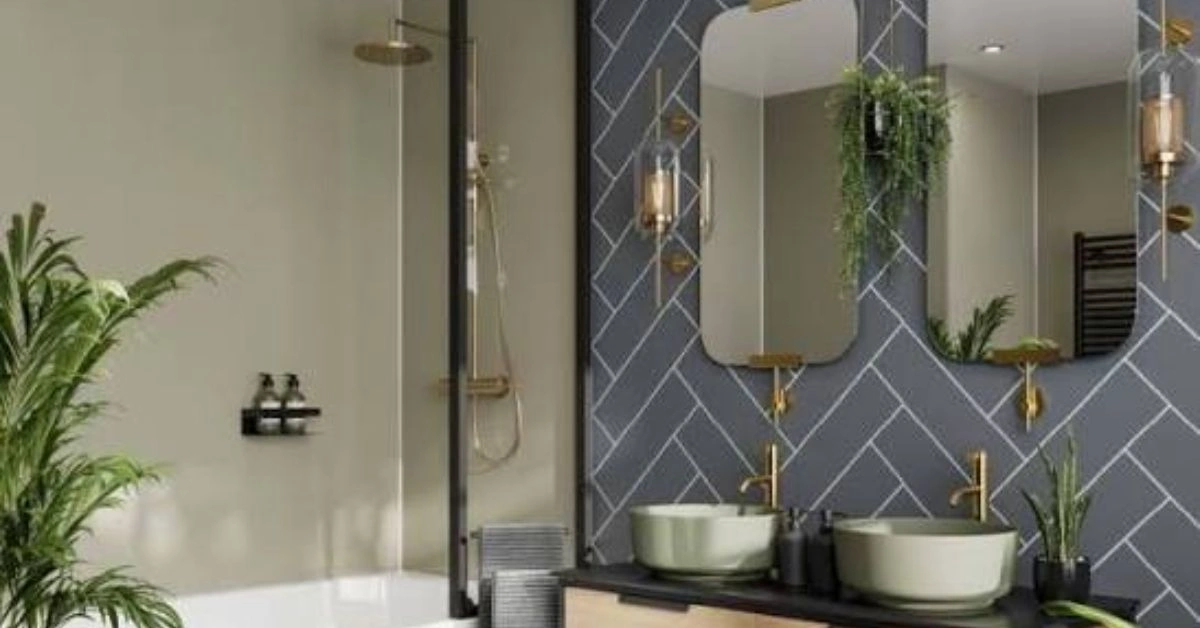
Bathroom Decor Colour Ideas are the foundation of a thoughtful, well-planned space. This comprehensive guide brings together everything our editors have learned about Bathroom Decor Colour Ideas, from layout and lighting to materials, finishes and budget-friendly upgrades, so you can make confident decisions and avoid the costly mistakes we see repeated in homes every year. Whether you are starting a full refurbishment or simply refreshing a tired room, the Bathroom Decor Colour Ideas covered here will help you get the most from your space, your budget and your time.
Bathroom Decor Colour Ideas: Why Bathroom Colour Choices Deserve More Thought Than You Think
Most homeowners spend longer choosing a kitchen splashback than they do choosing the entire bathroom colour scheme, and most regret the decision within a year. The bathroom is the room in the house where colour matters most and yet is given least thought. It is the smallest, most utilitarian, most frequently used room, and the one where every wall is right in front of your face while you brush your teeth.
Table of Contents
The right bathroom colour can make a tiny room feel spacious, a dark room feel bright, a clinical room feel warm, and a tired room feel like a boutique hotel. The wrong colour will do the opposite of all of these.
This guide brings together 23 bathroom decor colour ideas for UK homes, from soft, timeless neutrals to bold feature walls and dramatic dark schemes. Sample at different times of day, test against your tiles, and remember that bathroom paint needs to be specifically formulated for humid environments.
Compare Colour by Light Direction
Natural light changes the way a paint colour looks during the day. Use the table as a starting point, then test the actual colour in the bathroom alongside the tiles, sanitaryware, flooring and metal finishes.
| Bathroom light | How the room may feel | Useful starting point | Test before committing |
|---|---|---|---|
| North-facing | Cooler and flatter, with less warm direct light | Warm neutrals, soft warm whites, muted greens and gentle clay tones | Check that the colour does not look too grey or cold in the morning and evening. |
| East-facing | Brighter and warmer in the morning, cooler later | Balanced neutrals, soft blues and gentle greens | View the sample at breakfast time and again in the afternoon. |
| South-facing | Brighter and warmer for more of the day | Soft blue-greens, balanced neutrals and cooler accents | Check whether warm neutrals become too yellow under strong light. |
| West-facing | More subdued earlier, warmer later | Balanced neutrals, dusty blues, greens and deeper accent colours | Test in the morning as well as during the warmer evening light. |
| Windowless | Dependent on bulbs and reflected surfaces | Light, warm neutrals, soft greens or blue-toned whites | Test under the exact bulbs that will be used in the room. |
Example Paint References and Swatches
The references below are examples for comparison, not a substitute for a current manufacturer swatch or fan deck.
| Colour direction | Example reference | Useful pairing |
|---|---|---|
| Warm neutral | Farrow & Ball Skimming Stone No. 241 | Warm white sanitaryware, timber tones and aged brass. |
| Pale blue | Farrow & Ball Borrowed Light No. 235 | White tiles, chrome and pale grey flooring. |
| Soft green-blue | Farrow & Ball Green Blue No. 84 | Natural stone, warm white and brushed metal. |
| Muted green | Farrow & Ball Pigeon No. 25 | Timber, cream tile and aged brass. |
| Deep accent | Farrow & Ball Hague Blue No. 30 | Use on a feature wall or lower section with lighter surrounding surfaces. |
Paint a large sample card rather than relying on a small printed chip. Move it around the room and view it near the window, in the shower-room light and beside the tile, floor, worktop and sanitaryware. Check it in the morning, afternoon and evening before ordering paint.
Choose the Finish as Carefully as the Colour
| Finish | Where it may work | Points to check |
|---|---|---|
| Durable bathroom matt | Walls where a low-sheen appearance is preferred | Confirm that the product is suitable for bathrooms and follow its preparation and ventilation guidance. |
| Eggshell or satin | Woodwork, furniture and areas that need easier wiping | The sheen reflects more light and can show surface imperfections. |
| Higher-sheen finish | Selected trim or small accents | Use carefully because stronger reflection can make uneven preparation more visible. |
| Ceiling finish | A bathroom-suitable ceiling product | Consider condensation, ventilation and how the ceiling finish relates to the wall colour. |
A mould-resistant or moisture-resistant product can support easier maintenance, but paint does not replace ventilation, waterproofing or prompt repair of leaks. Prepare the surface properly, allow it to dry and follow the manufacturer’s instructions for cleaning.
Start with the Light
Before choosing a colour, understand the light in the bathroom. A windowless room, a small or frosted window, and a bright south-facing window will make the same paint look very different.
Windowless Bathrooms
In a windowless bathroom, light warm colours such as soft creams, pale greys, gentle pinks, sage greens and warm whites help prevent a clinical, cave-like feel. Test the colour under the artificial lighting that will be used in the room.
Small or Frosted Windows
Where natural light is limited but present, deeper greens, moodier blues and richer greys can work well. Test the colour with both the artificial light and the available daylight.
Bright, South-Facing Bathrooms
A bright bathroom with a large clear window gives you more freedom to use deeper, more dramatic shades that might overwhelm a darker room.
The Best Bathroom Colour Families in 2026
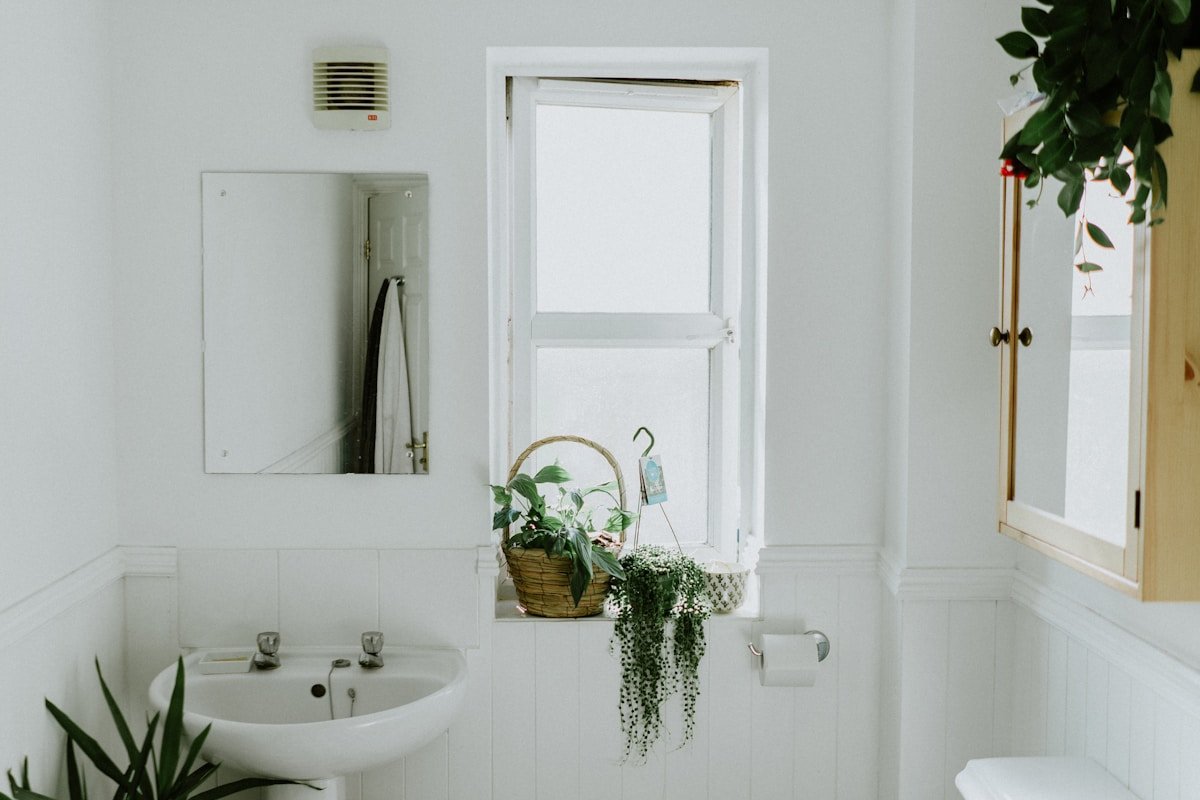
Bathroom colour trends move more slowly than other rooms, because the practicalities of tiling, plumbing and waterproofing mean the room is not redecorated as often. The current favourites, in most UK homes, are warm neutrals, soft greens, gentle blues and earthy naturals.
Warm Neutrals
Warm whites, soft greys, gentle greiges and creamy off-whites remain the safest and most popular choice for UK bathrooms. They work in any light, with any tile, and any style.
Soft Greens
Soft greens, particularly sage and eucalyptus, are extremely popular in current bathroom design. They feel calm, natural and slightly spa-like, and they pair beautifully with natural stone, brass and warm wood.
Soft Blues
Soft blues, from pale powder blue to deeper sea green, evoke water and the seaside. They work particularly well in coastal and country bathrooms.
Earthy Naturals
Terracotta, clay, sand, putty and mushroom: earthy naturals are increasingly popular. They feel warm, grounding and organic.
23 Bathroom Decor Colour Ideas
Soft, Timeless Neutrals
1. **Farrow & Ball All White** with strong white woodwork – a clean, crisp white that feels timeless. 2. **Dulux Egyptian Cotton** with white woodwork – a gentle, warm neutral for north-facing bathrooms. 3. **Mylands Hoxton Blue** with ivory woodwork – technically a soft blue but reads as a neutral in most lights. 4. **Little Greene French Grey Mid** with white woodwork – a balanced grey for modern and traditional bathrooms. 5. **Farrow & Ball Ammonite** with strong white woodwork – a soft grey-green that is endlessly versatile.
Soft Greens
6. **Farrow & Ball Treron** with all white woodwork – a confident, mid-tone green. 7. **Dulux Sage Splash** with white woodwork – a softer, lighter sage for smaller bathrooms. 8. **Mylands Belgravia** with all white woodwork – a more earthy, brown-toned green. 9. **Little Greene Tracery** with slaked lime woodwork – a soft, slightly grey-green. 10. **Paint & Paper Library Verdigris** with ivory woodwork – a soft, slightly blue green.
Soft Blues
11. **Farrow & Ball Borrowed Light** with all white woodwork – a very soft, almost-white blue. 12. **Dulux Denim Drift** with white woodwork – a soft, slightly muted blue. 13. **Mylands Pimlico** with all white woodwork – a deep, sophisticated blue-green. 14. **Little Greene Hicks’ Blue** with slaked lime woodwork – a soft, slightly grey blue. 15. **Farrow & Ball Pigeon** with all white woodwork – a much-loved blue-grey.
Earthy Naturals
16. **Farrow & Ball Setting Plaster** with strong white woodwork – a warm, dusty pink. 17. **Mylands Belgravia** with all white woodwork – a sophisticated terracotta. 18. **Little Greene Windmill Lane** with roman plaster woodwork – a soft, earthy red. 19. **Farrow & Ball Dead Salmon** with strong white woodwork – a complex, characterful pink-brown. 20. **Paint & Paper Library Portland Stone** with ivory woodwork – a soft, warm putty.
Bold, Dramatic Colours
21. **Farrow & Ball Hague Blue** with all white woodwork – a deep, dramatic blue-green. 22. **Farrow & Ball Inchyra Blue** with shaded white woodwork – a moody, atmospheric blue. 23. **Farrow & Ball Pitch Black** with all white woodwork – a true black that can feel incredibly sophisticated.
Additional Colour Schemes
Mylands Buckingham Green with all white woodwork is a confident, traditional green that feels timeless.
Little Greene Hopper Head with Slaked Lime woodwork is a deep, slightly green black that feels dramatic without being oppressive.
Practical Considerations for Bathroom Paint
Bathroom paint is not the same as ordinary emulsion. Bathrooms are exposed to high humidity, frequent temperature changes, and the occasional splash of water, all of which can cause ordinary paint to peel, blister or develop mould.
Choose Bathroom-Specific Paint
Most paint manufacturers now produce bathroom-specific emulsions, which are formulated to resist moisture and inhibit mould growth. These are worth the small premium.
Use Satin Finish
Satin is the most popular choice because it is wipeable, moisture-resistant and has a soft sheen that works in most bathrooms. Matt is more forgiving of wall imperfections but harder to clean.
Use Mould-Resistant Finishes
In particularly humid bathrooms, consider an anti-mould additive mixed into the paint before application.
Choose the Right Sheen
Matt is more forgiving of wall imperfections but harder to clean. Satin is wipeable, moisture-resistant and softly reflective. Gloss is the most durable option, but it shows every imperfection.
Beyond the Walls: Other Ways to Add Colour
Painting the walls is the most obvious way to add colour, but it is not the only way.
Coloured Tiles
Coloured tiles are a more permanent way to add colour. Choose a tile colour that will stand the test of time.
Coloured floor tiles, wall tiles or a feature strip can all work, but tiles are expensive to replace, so choose a colour that will stand the test of time.
Painted Woodwork
Painted woodwork in a colour that contrasts with the walls can add interest, such as pale green walls with deep green woodwork.
Painted Furniture
If the bathroom has a vanity unit, cupboard or shelf, painting it in a contrasting colour is a quick way to introduce another shade and create a focal point.
Coloured Brassware
Coloured brassware, in brass, copper, gunmetal, or matte black, is an easy way to add colour at the fittings level.
Coloured Sanitaryware
Coloured sanitaryware, whether a sage green loo, a black basin or a coloured bath, is a brave and characterful choice.
Muted earthy tones such as forest green, terracotta, mushroom and soft black are the most versatile choices.
Coloured Textiles
Coloured towels, bath mats and shower curtains are the easiest way to change the colour of a bathroom without any decorating.
Rotate the textiles seasonally to keep the room feeling fresh while leaving the permanent finishes unchanged.
Frequently Asked Questions
Q1. What is the best colour for a small UK bathroom?
Light, warm colours are the safest choice for a small bathroom. Soft whites, pale greys, gentle greens and warm beiges all work well. Avoid very dark colours on all four walls in a small bathroom.
Q2. Should a bathroom be painted in a special paint?
Yes. Use a bathroom-specific paint, formulated to resist moisture and inhibit mould.
Q3. Is grey still popular for bathrooms in 2026?
Soft, warm greys remain popular. The trend has shifted towards warmer neutrals, soft greens and earthy naturals.
Q4. Can you paint bathroom tiles?
Yes, you can paint bathroom tiles, but it requires careful preparation and the right products. Use a specialist tile primer and tile-specific topcoat, and allow the paint to cure fully before exposing it to water. Painted tiles are a cost-effective refresh, but they are less durable than new tiles and may need repainting every few years.
Q5. What colours make a small bathroom look bigger?
Light, warm colours such as white, cream, soft grey, pale green and warm beige reflect light and make a small bathroom feel bigger. Using the same colour on the walls and ceiling can blur the room edges, while a large mirror and good lighting add to the sense of space.
Conclusion
The right bathroom colour is one of the most transformative changes you can make to a UK home. Whether you opt for a timeless neutral, a soft green, a gentle blue or a bold, dramatic dark, the colour will shape how the room feels and how you feel in it, every single day.
Take time to sample at different times of day. Use bathroom-specific paint. And remember that the colour is just the starting point: the tiles, the brassware, the sanitaryware and the textiles all contribute to the overall effect.
Related Articles You May Find Useful
Continue exploring the topic with these hand-picked guides from our editorial team.
- room painting ideas living room (UK)
- units for the living room (UK)
- grey living room ideas (UK)
- live room colours (UK)
- living room with panels (UK)
Further Reading and Trusted Sources
For more inspiration and expert advice, see the latest from Real Homes — expert UK home renovation advice.
For more inspiration and expert advice, see the latest from Ideal Home — British decorating and interiors inspiration. Put simply, the right Bathroom Decor Colour Ideas can transform how a room looks, feels and functions — and that is exactly what we hope this guide helps you achieve.
2 thoughts on “Bathroom Colour Ideas UK: 23 Palettes for Every Size and Style”