Table of Contents
- What quiet luxury means in a real UK home
- Build a calm, layered colour palette
- Choose materials that age well
- Use proportion, light and negative space
- Apply the look room by room
- Quiet luxury on a 2026 UK budget
- Mistakes that make the look feel staged
- Quiet luxury FAQs
- Final Thoughts
What quiet luxury means in a real UK home
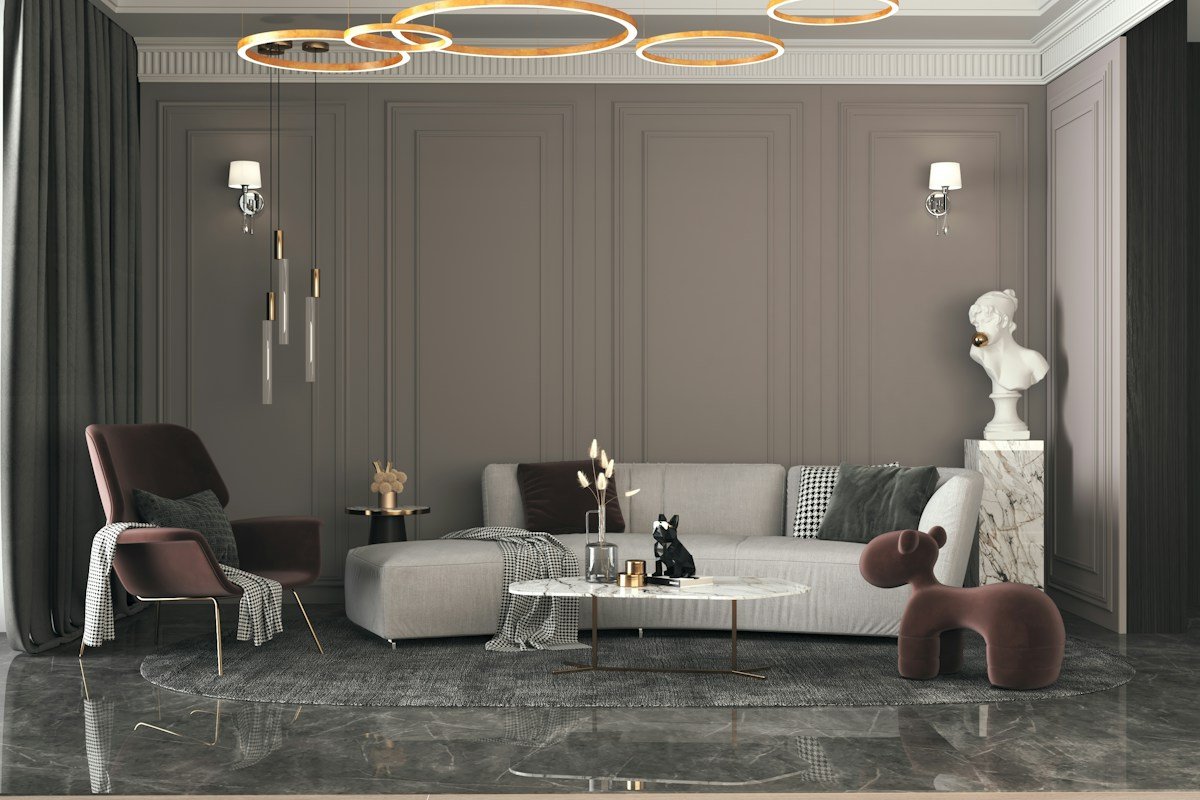
Quiet luxury is not a shopping list of beige furniture, and it is not the same as an empty minimalist room. It is a design approach based on quality you can see and feel: good proportions, calm colour relationships, natural or convincing materials, comfortable lighting and fewer pieces chosen with care. The aim is a room that feels settled rather than newly staged.
For a UK home, that means adapting the idea to small rooms, period details, changing daylight and ordinary wear. A painted MDF bookcase can sit comfortably in a quiet-luxury room if it is well proportioned and carefully finished. A designer logo cannot rescue a sofa that is too large for the access route.
Build a calm, layered colour palette
Start with three related values rather than one flat neutral: a light ceiling or upper wall, a middle tone for walls and upholstery, and a darker grounding note in timber, metal or flooring. Warm white, chalk, stone, mushroom, putty, tobacco and soft olive make a useful base. Add navy, muted burgundy or deep green as an accent, not as a competing palette.
Paint samples should stay on the wall for at least a full day. A north-facing room may make beige look grey; a south-facing room can turn cream yellow. View the sample at 9am, midday, dusk and under the actual lamps. Use a low-sheen matt or durable washable finish on walls, and a slightly different sheen on woodwork if you want depth without contrast.
Do not make every surface the same colour. The quiet effect comes from small shifts: warm stone wall, oatmeal sofa, darker oak, aged brass and a rug with a barely visible pattern. Three close tones often look more expensive than one perfect shade repeated everywhere.
Choose materials that age well
| Material | Where it works | Useful 2026 allowance | How to keep it quiet |
|---|---|---|---|
| Linen or cotton-linen | Curtains, cushions and relaxed upholstery | £40-180 per panel or cushion grouping | Use texture and one tone rather than many patterns |
| Wool | Rugs, throws and upholstery | £150-600 for a living-room rug | Choose a restrained stripe, check or plain weave |
| Solid timber or veneer | Tables, shelving and doors | £250-2,000 depending on scale | Prefer matt oil or natural grain over gloss |
| Stone or porcelain | Tabletops, hearths and bathrooms | £80-250/m2 for many fitted options | Use one strong surface and keep surrounding details simple |
| Aged brass or bronze | Handles, taps and lighting | £10-150 per fitting | Repeat one metal finish; do not mix five shiny finishes |
Natural materials are not automatically practical. Unsealed stone stains, linen creases and oiled timber marks. The quiet-luxury choice is often the material you are willing to maintain, not the most expensive one in the sample box. For a busy family sofa, a high-quality performance weave may be more honest than pale velvet.
Use proportion, light and negative space
Buy fewer, better-sized pieces
Measure the room and maintain clear routes of about 60-90cm. A sofa that fills 90% of a wall usually feels less luxurious than one with breathing room and a properly sized rug. In a living room, the front legs of the main seating should normally sit on the rug. A 160 x 230cm rug suits a compact group; 200 x 300cm creates a more generous arrangement.
Low, flimsy furniture can make a room feel temporary. Look for solid or well-finished frames, consistent reveals, straight doors and hardware that operates smoothly. You do not need bespoke joinery everywhere, but the pieces in the main sightline should not wobble or fight the proportions of the room.
Make the lighting difficult to identify
A calm room has light at several heights: ceiling or wall ambient light, a lamp beside a chair, concealed or under-shelf light, and a low accent on artwork. Use dimmers and warm 2,700-3,000K LEDs in living and bedroom spaces. The light should reveal texture without making every fitting a feature.
Apply the look room by room
Living room
Anchor the room with the best sofa you can afford, usually in a warm neutral woven fabric or good leather. Add a timber or stone-topped table, a wool rug, full-length curtains and one considered artwork. Keep the television practical but visually quiet: a low cabinet, concealed cables and no row of small objects beneath the screen.
Bedroom
Invest in the bed, mattress and window treatment before decorative accessories. An upholstered headboard in oatmeal, taupe or muted green gives softness; solid timber is equally effective when the grain is good. Use two reading lights at a consistent height and keep bedside surfaces mostly clear. A 60cm walking route beside the bed is more luxurious than a second chair that blocks it.
Kitchen
Use a simple cabinet profile, one durable worktop and hardware in aged brass, bronze or matt black. A timber chopping board, linen blind and ceramic pendant can add warmth without making the kitchen look themed. Hide only the appliances that create visual noise; a well-used coffee machine can be part of a believable home.
Bathroom
Use large-format porcelain or a restrained tile, good mirror lighting and one timber or stone note rated for the moisture. Avoid excessive brass, shiny marble-effect panels and open shelves full of toiletries. Quiet luxury in a bathroom is mostly about clean junctions, adequate storage and light that does not cast shadows on the face.
Quiet luxury on a 2026 UK budget
| Spend | Typical range | Highest-impact choices |
|---|---|---|
| Under £500 | £150-500 | Paint, warm bulbs, one lamp, good cushions and edited surfaces |
| Room refresh | £1,000-3,000 | Quality rug, curtains, hardware and one timber or upholstered piece |
| Full living room | £4,000-10,000+ | Sofa, rug, window treatment, lighting and joinery or flooring |
Buy the best version of one visible, heavily used item rather than buying five cheaper substitutes. Second-hand solid timber, vintage lighting that has been safely rewired and good-quality frames can give more character per pound than new trend accessories. Keep a contingency for delivery and installation: made-to-order furniture can take 6-12 weeks, and bespoke curtains cost more than the fabric alone.
Mistakes that make the look feel staged
- Using only beige, with no tonal or textural change.
- Buying an oversized sofa or rug before measuring access and clearances.
- Adding too much shiny brass, marble effect, bouclé or fluted detail at once.
- Removing useful storage in the name of minimalism.
- Choosing pale, fragile fabrics for a room used by pets or children.
- Using cool, bright lighting that makes warm materials look flat.
- Copying a hotel room instead of keeping books, art and objects that belong to you.
Quiet luxury FAQs
Can quiet luxury work in a small terrace house?
Yes. Use fewer, correctly scaled pieces, keep the main walking route 60-90cm wide, layer warm lighting and repeat two or three tones. A small room benefits more from editing and storage than from expensive finishes.
What is the best quiet-luxury sofa fabric for a family?
A tightly woven, washable or performance fabric in a mid-tone neutral is usually the most practical. Check the care code and Martindale rating, and choose removable covers only if they can actually be washed or replaced.
Does quiet luxury require real marble?
No. Honed porcelain, good quartz, timber or a restrained laminate can provide the right visual weight at lower cost and maintenance. The important details are proportion, edge quality and a finish that suits the use.
Which metal finish looks most timeless?
Muted aged brass, bronze, nickel or matt black can all work. Choose one dominant finish and repeat it in handles, lighting or taps rather than mixing bright chrome, gold and copper across a small room.
How much does it cost to make a room look quietly luxurious?
A £150-500 edit with paint, warm lighting and better textiles can make a clear difference. A more complete living-room refresh commonly costs £4,000-10,000+ when a quality sofa, rug and curtains are included.
Is quiet luxury the same as minimalism?
No. Minimalism reduces visual and material elements; quiet luxury can include books, art and collected pieces. Both depend on restraint, but quiet luxury places more emphasis on texture, comfort and ageing well.
Final Thoughts
Quiet luxury works when it is felt rather than announced. Give the room good proportions, a calm palette, useful storage and lighting that flatters the materials. Spend selectively on what hands touch and eyes rest on, then leave enough personality in the room for it to feel like a home rather than a showroom.

8 thoughts on “Quiet Luxury Interior Design for UK Homes: A Practical 2026 Guide”