
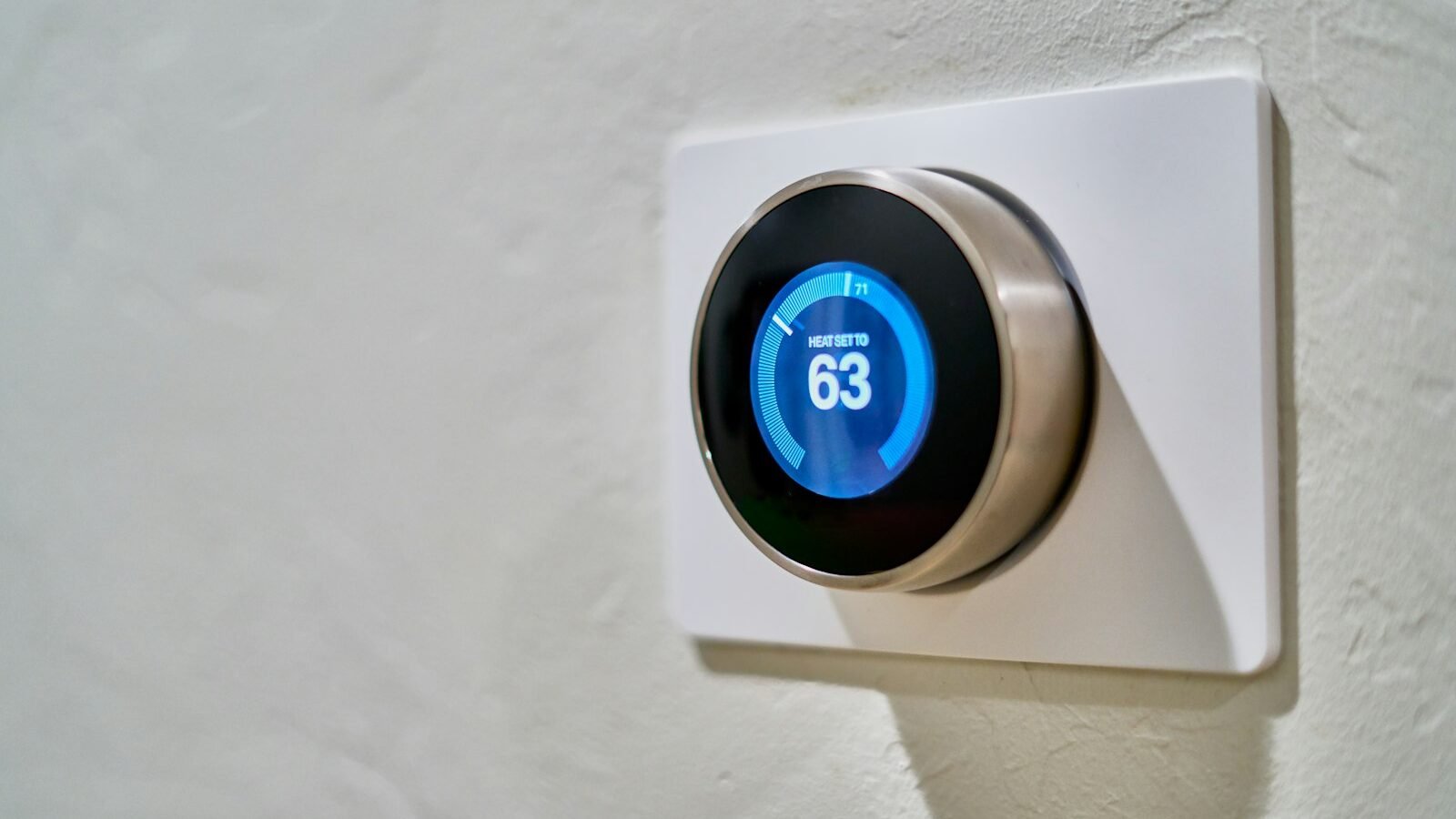
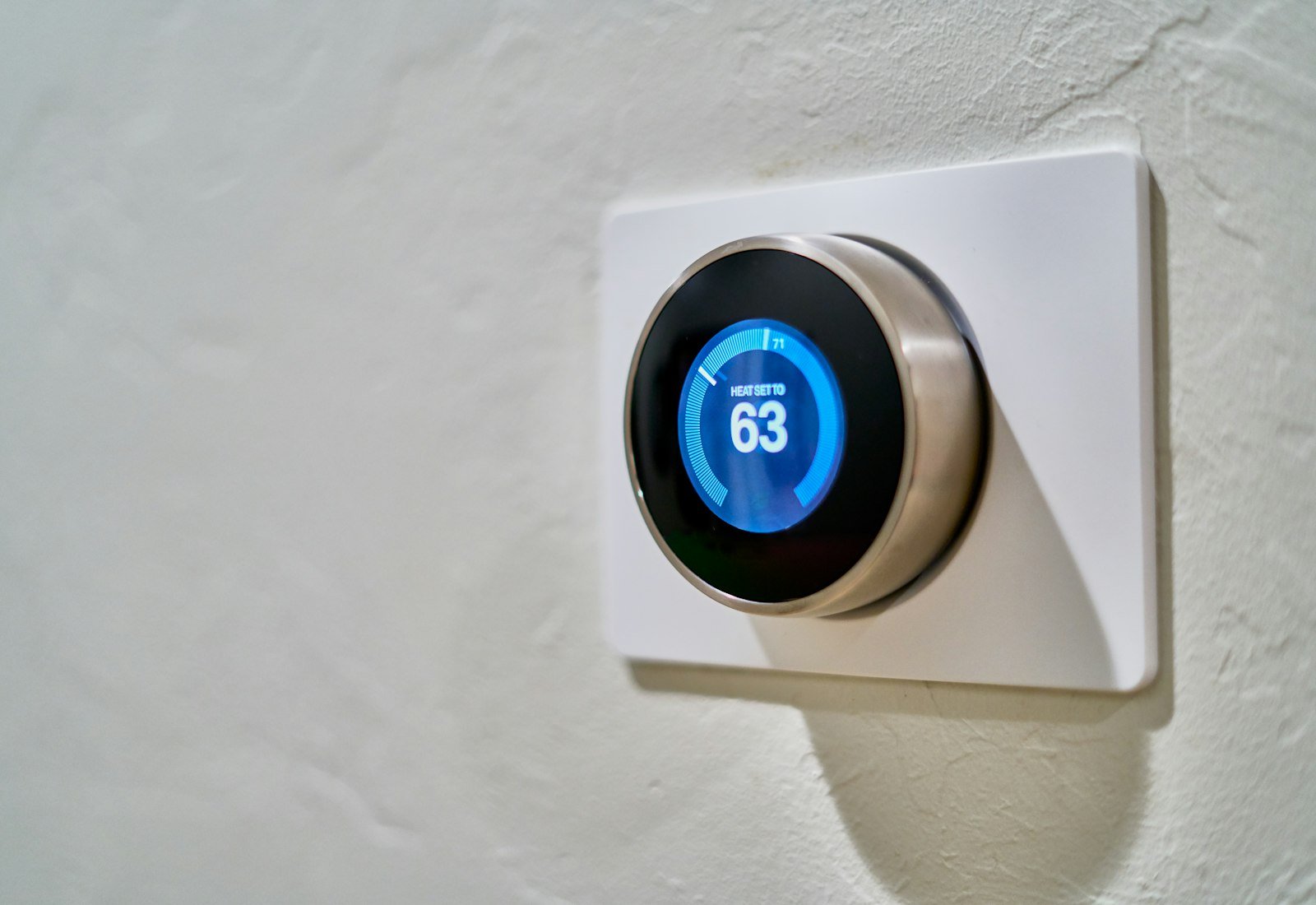
A smart thermostat in a UK home is no longer the obvious win it was in 2018. Heating controls have caught up, energy prices have stabilised, and several of the early leaders have been overtaken. This guide is built around what actually matters in 2026: which smart thermostats work with the boiler in a typical UK home, which deliver real energy savings, and which the installers quietly rate over the ones the marketing pushes.
Before buying, read our thermostat guide, wireless thermostat guide, smart heating guide and smart thermostat explainer so the control matches the boiler. For safety and savings context, use HSE gas-safety guidance, Ofgem’s energy advice and Tado°’s UK documentation.
Table of contents
- How smart thermostats actually work in a UK home
- UK boiler types: combi, system, heat-only, and what each needs
- The features that genuinely matter in 2026
- The shortlist: nine thermostats worth knowing
- The picks in detail
- Installation: DIY, professional, and the OpenTherm question
- What smart thermostats really save
- Five pitfalls worth knowing before you buy
- Real 2026 UK prices
- Smart thermostat FAQs
- Final thoughts
How smart thermostats actually work in a UK home
A UK smart thermostat is a small wall-mounted or freestanding unit that replaces the old manual timer and room thermostat. It connects to your home Wi-Fi and to your boiler, and lets you set the temperature by app, by voice, or by schedule.
Three jobs it does:
- Time and temperature control. Replaces the old timer with a smarter schedule that you can override from your phone. Most units can learn or be told the times you actually want heat.
- Geofencing. Detects when your phone leaves or returns to the home and adjusts the temperature automatically. Genuinely useful for the irregular-hours household.
- Weather compensation. Adjusts the heating start time based on the outdoor temperature. Cold day: heat earlier. Mild day: heat later. Saves the 30 minutes of wasted overheating most UK homes do every morning.
The “smart” promise in 2014 was that a smart thermostat would learn your schedule and save 20% on your heating bill. The honest 2026 answer: it saves around 8–12% on the heating portion of the bill (so 4–7% on the total energy bill), and only if the home was previously on a poor manual schedule.
UK boiler types: combi, system, heat-only, and what each needs
This is the part most UK guides skip, and the part that determines whether a thermostat works in your home.
- Combi boiler. Heats water on demand, no tank. The most common UK boiler (about 70% of homes in 2026). Almost every smart thermostat works with a combi. The simplest install — usually a 30-minute swap of the existing room thermostat.
- System boiler. Works with a hot water cylinder. Needs a smart thermostat that can also schedule hot water. Most modern units (Hive, Tado°, Honeywell, Drayton) handle this, but check the spec before you buy.
- Heat-only boiler (regular boiler). The traditional UK setup with a tank in the loft. The smart thermostat needs a 230 V mains supply at the thermostat location. Many older UK homes were wired with the old switch-wire only, and the install becomes a small rewire.
- Back boiler. Found in many 1960s–1980s UK homes. The thermostat is in a different location. Some smart thermostats (Tado°, Salus) handle this; older models of Nest and Hive do not.
If you don’t know which type of boiler you have, look at the make and model on the front of the boiler and Google “[model] boiler type UK”. Or take a photo to a local independent heating engineer; they will tell you for free in 30 seconds.
The features that genuinely matter in 2026
Eleven years of UK smart thermostats have settled the question of which features actually matter. A short, honest list.
- OpenTherm support. OpenTherm is a two-way digital communication between the thermostat and the boiler. Allows the boiler to modulate its flame rather than simply on/off, which is more efficient and quieter. Most modern boilers (Worcester Bosch, Vaillant, Ideal, Baxi) support OpenTherm. A smart thermostat that supports it (Tado°, Honeywell T6, Drayton Wiser) will save more than one that doesn’t.
- Geofencing. Saves the 1–2 hours a day of heating an empty house. Hive, Tado°, Nest all do it. Honeywell Evo and Drayton Wiser do it less well.
- Multi-zone support. The ability to control upstairs and downstairs separately. Most UK homes are single-zone, but a two-storey home with a thermostat on each landing benefits. Tado° and Drayton Wiser handle this cleanly; Hive and Nest require add-on kits.
- Hot water scheduling. Required for system and heat-only boilers. Almost universal on the mid-range and up; missing on some entry-level units.
- Works without internet. Important in 2026. Several smart thermostats become useless if the cloud service goes down. Tado° and Honeywell’s recent units work locally; Hive and Nest rely on the cloud.
- Voice control. Genuinely useful for the “I’m already in bed” moment. All major UK units work with Alexa and Google Assistant. Apple HomeKit support is rarer; only Tado° and Honeywell are reliable.
- App quality. The Hive app is the most polished UK app in 2026. Tado°’s is best for energy reporting. Nest’s is the simplest for less technical users. Honeywell’s has improved but is still behind.
- Multi-room sensors. Tado°’s and Honeywell’s individual room sensors (small battery units) are the best way to control bedrooms that run hot or cold.
- Boiler service reminders. Tado° and Hive both have annual service reminders. A small thing that adds up.
- Compatibility with your existing wiring. Most UK homes can fit any of the major brands, but check the wiring guide on the manufacturer’s site before you buy.
- No subscription fee. None of the major UK brands charge a subscription in 2026 for the basic app or the basic scheduling. Watch out for “premium AI” tiers that promise savings and lock features behind a £3–£8 monthly fee.
The shortlist: nine thermostats worth knowing
The 2026 UK market, in order of how often they are fitted by professional installers.
- Honeywell Home T6R / T6 (Resideo). The workhorse. OpenTherm, app, multi-zone, works with combi, system and heat-only. The most common professional fit in 2026.
- Tado° Smart Thermostat (V3+). German engineering. OpenTherm, multi-room sensors, geofencing, no subscription for basic features. The most flexible system on the UK market.
- Drayton Wiser. UK brand (Drayton is part of Schneider Electric). Multi-zone, OpenTherm, neat heat hub, the best value mid-range option. Strongest UK support.
- Hive Thermostat (British Gas). The best-known UK brand. Simple app, no subscription, available with British Gas service plans.
- Google Nest Learning Thermostat (3rd gen). The design icon. Learns your schedule, fewer controls, polished hardware. Loses out on OpenTherm and multi-zone in 2026.
- Salus Quantum. UK-friendly, OpenTherm, works with underfloor heating. Niche but excellent where it fits.
- Netatmo Smart Thermostat. Apple HomeKit friendly, no subscription, less common in the UK in 2026 than it was.
- Ecobee Smart Thermostat Premium. Big in North America, growing in the UK. Multi-room sensors in the box, good value.
- Worcester Bosch EasyControl (with Nest integration). Worth a mention because it’s the closest integration between a major UK boiler brand and a smart thermostat.
The picks in detail
Three that consistently top UK installer shortlists in 2026.
1. Tado° Smart Thermostat V3+ — the most flexible
Tado° is the system you buy if you want control. The app is the best in class for energy reporting — you can see in pounds and pence what each room is costing you. Multi-room sensors are about £55 each, the smart radiator thermostats about £80, and the basic starter kit (one thermostat + internet bridge) is around £200.
The one thing to know: Tado° works on a subscription for some advanced features (auto-assist, geofencing with multiple users). The basic app and scheduling are free. Without the subscription, multi-user geofencing and open-window detection are disabled.
Best for: a tech-comfortable household with multiple rooms, a heat pump, or underfloor heating. The V3+ is the most future-proof unit you can buy in 2026.
2. Honeywell Home T6R — the installer’s choice
Honeywell (now Resideo) is the brand most UK heating engineers have fitted for 20+ years, and the T6R is the wireless model they reach for. OpenTherm, multi-zone (with additional TRVs), hot water scheduling, works with combi / system / heat-only. Wireless receiver means no need to run a cable to the boiler.
App is solid but not best in class. The single-zone thermostat kit is around £180. Multi-zone kits are £250–£400. No subscription.
Best for: a homeowner who wants a fitted-and-forgotten thermostat, and is happy to have an engineer configure it.
3. Drayton Wiser — the best mid-range value
Drayton is a 100-year-old UK brand now owned by Schneider Electric, and the Wiser is the smartest smart thermostat you can buy under £150. The starter kit (one thermostat, one smart radiator thermostat, the heat hub) is about £140. Adding a full house of smart TRVs is around £400.
The app is good. OpenTherm, multi-zone, hot water scheduling all included. No subscription. The build quality is solid rather than premium; the design is plain.
Best for: a UK home with a combi boiler, a single zone, and a budget. The Drayton Wiser is the best £140–£200 thermostat you can buy in 2026.
Installation: DIY, professional, and the OpenTherm question
Three honest install options.
- DIY (30–90 minutes, no electrician needed). For a combi boiler with a wired thermostat (most UK homes). You switch off the spur, swap the old thermostat for the new one, follow the app setup. Many UK buyers do this. The risk is mis-wiring, which can blow the fuse in the boiler PCB. Photos before, photos during, photos after.
- Heating engineer (60–120 minutes, £80–£180 fitted). The right answer for a system or heat-only boiler, a wireless receiver install, or an OpenTherm upgrade. Most local independent engineers will fit any of the major brands. British Gas, E.ON, Octopus and Ovo offer install services for their own-branded units; usually more expensive but tied to a service plan.
- Heat engineer + electrician (3–5 hours, £300–£600). For an OpenTherm retrofit on an older boiler that wasn’t wired for it, or a full multi-zone install. Worth it for the right home; overkill for most.
The OpenTherm question: if your boiler is a 2015+ Worcester Bosch, Vaillant, Ideal, Baxi, Glow-worm or Viessmann, it almost certainly supports OpenTherm. The new thermostat will need a two-wire connection to the boiler terminals, not the single switch-wire used by older thermostats. Check the boiler manual and the thermostat manual before buying.
What smart thermostats really save
Honest 2026 numbers, based on the Energy Saving Trust and the manufacturer’s own data.
- A typical UK home spends £1,100–£1,800 a year on gas heating in 2026.
- A smart thermostat on a previously-poorly-controlled system saves 8–12% of the heating cost, so £90–£220 a year.
- On a previously-well-controlled system (a well-set timer, sensible thermostat), the saving is closer to 3–6%, so £35–£110 a year.
- The savings are higher in homes that are out during the day (geofencing pays off), and lower in homes with someone at home most of the time.
- Multi-zone with smart TRVs adds another 5–10% on top of the basic saving in a typical 3-bed UK home, because you stop heating bedrooms during the day.
The single biggest thing that determines whether a smart thermostat pays for itself is whether the previous heating was poorly controlled. If the old timer was set to come on at 6 am regardless of whether anyone was up, a smart thermostat pays back in 2–3 years. If the old schedule was already optimised, a smart thermostat is a quality-of-life upgrade, not a financial one.
Five pitfalls worth knowing before you buy
- Cloud-only smart thermostats. Hive, Nest, and some Honeywell units stop working if the manufacturer discontinues the cloud service. This has not happened in the UK in 2026 but is a real risk over a 10-year product life. Tado°, Drayton Wiser, and Salus all work locally as well as through the cloud.
- The subscription trap. A few brands are moving to subscription-only for the smart features. Tado° has a £3.99/month “Auto-Assist” that adds value but disables some features without it. Read the small print.
- Two-zone vs true multi-zone. A “two-zone” thermostat usually means upstairs and downstairs controlled separately. A “multi-zone” system controls each room. If you only need upstairs and downstairs, two-zone is enough. If you want bedroom-by-bedroom control, you need a multi-zone system with smart TRVs.
- Wiring assumptions. UK homes built before 1990 often have a 2-wire (no neutral) thermostat loop. Most modern smart thermostats need a neutral. The install becomes a small rewire. Check the wiring before you buy.
- Boiler compatibility. Worcester Bosch’s “Wave” and “Greenstar i” ranges have their own smart controls. If you have a recent Bosch boiler, the EasyControl or the Bosch-specific integration is worth a look before defaulting to Hive or Tado°.
Real 2026 UK prices
Installed prices for a single-zone combi install, including VAT, 2026.
- Hive Active Heating thermostat: £180–£220 (kit) + £80–£120 (install).
- Google Nest Learning Thermostat (3rd gen): £200–£250 (kit) + £80–£150 (install).
- Tado° V3+ starter kit: £180–£220 (kit) + £80–£150 (install).
- Honeywell Home T6R wireless: £160–£200 (kit) + £80–£150 (install).
- Drayton Wiser starter kit: £130–£170 (kit) + £80–£150 (install).
- Salus Quantum: £140–£200 (kit) + £80–£150 (install).
- Multi-zone system (4 smart TRVs + thermostat): £400–£800 (kit) + £150–£300 (install).
Frequently Asked Questions
Q1. Do smart thermostats work with all UK boilers?
Almost. All the major brands support combi boilers. System and heat-only boilers need a thermostat that handles hot water scheduling. Worcester Bosch and Vaillant have their own integrations; a third-party thermostat like Tado° or Honeywell will also work.
Q2. How much will a smart thermostat save on my UK energy bill?
Typically 8–12% of the heating cost, so £90–£220 a year on a typical UK home. Less on a previously well-controlled system, more on a previously poorly-controlled one.
Q3. Is Google Nest still worth it in the UK in 2026?
For a single-zone combi install, yes — the hardware is still excellent and the design is the best. For a system or heat-only boiler, or a multi-zone install, Tado° or Drayton Wiser are better in 2026.
Q4. Do I need an electrician to install a smart thermostat?
For a combi boiler with a wired thermostat and a straight swap, no. For a system or heat-only boiler, a new thermostat location, or an OpenTherm retrofit, a heating engineer is the right call.
Q5. Do smart thermostats work with underfloor heating?
Yes, but the spec matters. Tado° and Salus Quantum both work cleanly with UK underfloor heating. Nest and Hive work in many cases but with quirks; check the wiring diagram before buying.
Final thoughts
For most UK homes in 2026, the right answer is the Honeywell T6R, the Tado° V3+, or the Drayton Wiser, depending on how much you want to fiddle with the app. The Nest is still worth it if the design matters to you and you have a single-zone combi. The Hive is a fine choice if you’re already a British Gas customer. Spend an afternoon with each app, decide which one you’ll enjoy using for the next 10 years, and fit that one.



1 thought on “Best Smart Thermostat UK 2026: Tested Picks for Combi, System and Heat-Only Boilers”