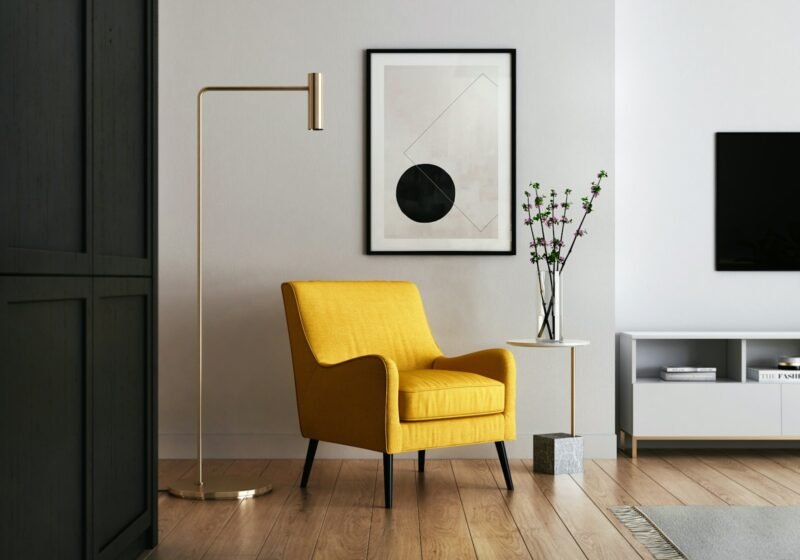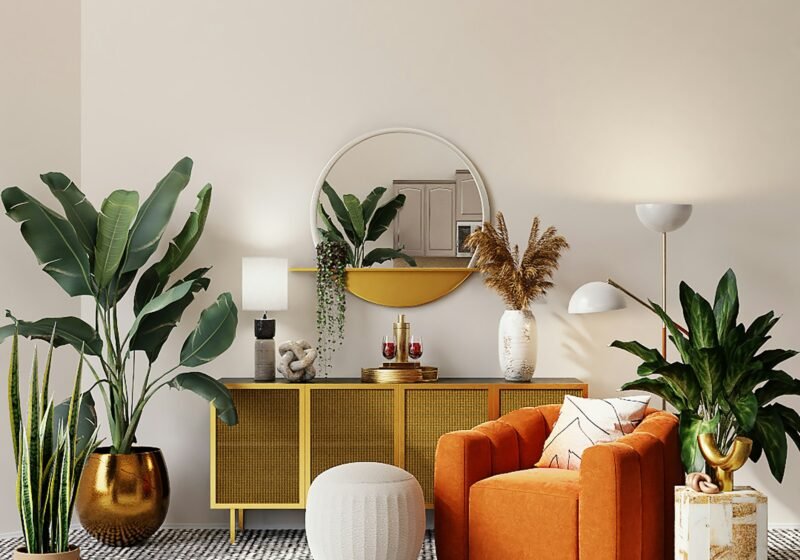
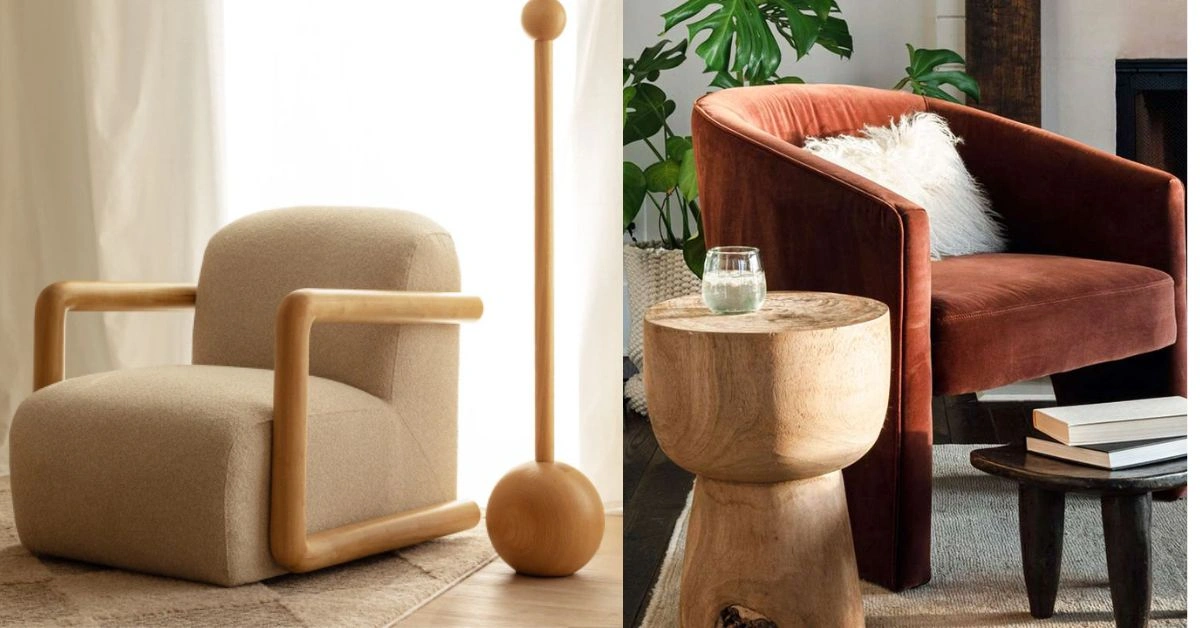
An accent or statement armchair should do more than fill an empty corner. It can add a strong colour, a distinctive silhouette or a comfortable place to read, while still working with the sofa and the way people move through the room. The best choice balances visual impact with seat height, depth, fabric and available floor space.
Accent versus statement
An accent armchair usually adds a supporting colour or texture to an existing scheme. A statement chair is more deliberately noticeable, perhaps through a rounded back, sculptural frame, bold pattern or unusual upholstery. Neither has to be loud. A simple boucle, deep green velvet or curved timber frame can be a statement when the rest of the room is restrained.
Choose the chair’s role first
- For reading, prioritise a supportive back, useful arm height and a nearby light.
- For conversation, choose a seat that faces the sofa without blocking the route across the room.
- For occasional seating, a lighter chair may be easier to move when the room changes.
- For everyday use, check the seat depth and cushion support rather than judging by appearance alone.
Get the scale right
Measure the chair footprint, not just the width shown online. Include the arms, the widest point of a curved back and the clearance needed to sit down. Leave a comfortable route around the chair and check that it can pass through the front door, hall and stair turns before ordering.
In a compact room, a raised base or open-sided frame can look lighter. A deep, low chair may be inviting but can dominate a small layout. If the chair sits near a coffee table, allow enough space to move the table or stretch your legs without closing the main walkway.
Colour, pattern and fabric
Use an accent chair to repeat a colour already present in a rug, curtain or artwork, or choose a nearby tone rather than a completely unrelated one. A patterned chair can work with plain walls and a simple sofa; if the room already has several patterns, a textured solid fabric may be calmer.
Ask about cleaning instructions, light-fastness and removable covers. Families with pets or young children may prefer a tightly woven, hard-wearing fabric and a design without fragile trims. Leather and faux leather have different cleaning and temperature characteristics, so follow the manufacturer’s care guidance.
Make the corner feel intentional
Pair the chair with one useful element: a floor lamp, slim table, footstool or basket. Avoid building a second furniture island that makes the living room feel crowded. A small plant or framed print can connect the chair to the wider scheme without competing with it.
Before buying, test the seat if possible and compare the dimensions with the sofa. A statement shape is only successful if people genuinely want to sit in it. For more layout guidance, see our article on small living room design.