
Good bedroom designs for teenage guys do more than choose a colour and put a bed against a wall. The room needs to feel personal now, while still working when hobbies change, school demands increase and taste moves on. A successful design balances personality, comfort, storage, study space and flexible choices that are not expensive to replace.
Start with the parts that are difficult to change, such as the bed position, sockets, storage and desk. Add character through paint, bedding, artwork and movable pieces. That gives the room a clear identity without making it feel like a themed set with an expiry date.
Table of Contents
Start with how the room needs to work
Before choosing finishes, list what happens in the room on an ordinary weekday. Sleeping, dressing, homework, gaming, reading, listening to music and storing equipment all compete for the same floor area. The design is easier to live with when those activities have defined places rather than being tidied away from scratch every evening.
- Keep a clear route from the door to the bed and window.
- Place the desk where daylight is useful without putting a screen directly in glare.
- Leave open floor for dressing, stretching or moving equipment.
- Put everyday clothes and school items within easy reach.
Measure the room and mark furniture footprints with masking tape before buying anything. If the bed dominates the space, drawers under the bed, a narrower frame or wall-mounted storage may create more usable room than another freestanding cabinet.
Choose a scheme that can change
A flexible colour scheme has a quiet base and personality in layers that can be swapped. Soft grey, warm white, muted green, navy or earthy neutrals can support different bedding and artwork later. The room does not have to be plain; the point is to avoid locking every permanent surface into one short-lived interest.
Ask the teenager to choose a small number of decisions that matter to them, such as the wall colour, a poster rail, desk chair or blind fabric. Shared ownership is more useful than trying to predict a style they may outgrow. Our guide to making a small bedroom look bigger also explains how light and visual clutter affect a compact room.
Give clothes, kit and technology a home
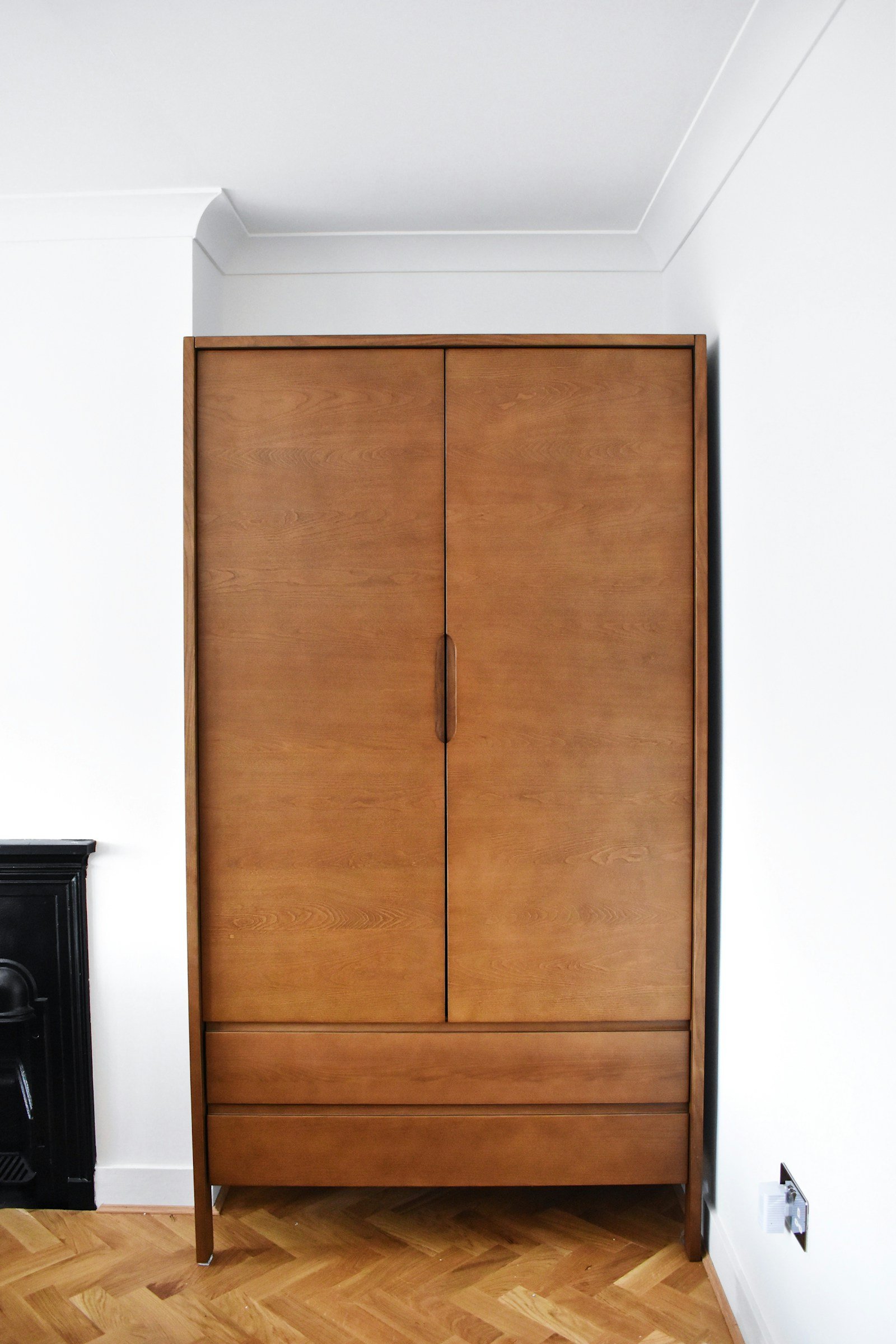
Teenage rooms often feel untidy because storage is present but inconvenient. A wardrobe may hold clothes yet leave school bags, shoes, headphones and equipment on the floor. Combine closed storage for visual calm with open storage for things used every day.
- Clothes: use hanging space, drawers and a shelf for folded jumpers or bedding.
- School and sports kit: give bags and shoes a landing place near the door.
- Technology: plan charging near the desk and use a cable tray or clips.
- Collectables: display an edited group, with a box or cupboard for the rest.
Do not build storage around one exact hobby. Adjustable shelves, pegboards and labelled boxes can serve art supplies today and camera equipment or model-making materials later. If the room needs a new bed, compare frame types and proportions in our beds buying guide before using up the floor area.
Make space for study and hobbies
A desk should support the work that actually happens there. Allow room for a laptop or monitor, books, a light and a comfortable chair. For creative or practical hobbies, a fold-down surface, trolley or stackable boxes can be more flexible than a dedicated workstation.
Keep a clear surface for starting an activity, then make the end-of-day reset easy. One shallow drawer for cables, controllers or stationery can prevent the desk becoming a permanent pile. The NHS sleep guidance is a useful reminder to keep the room capable of winding down as well as working, so use a focused desk light and a softer controllable light near the bed.
Layer lighting and display
Plan general light for dressing and cleaning, task light for the desk, and lower light for reading or relaxing. A plug-in wall light or desk lamp can move as the layout changes. Keep cables tidy and avoid adapters that make the socket area difficult to inspect.
Display should feel intentional rather than filling every wall. A picture ledge, magnetic rail, corkboard or framed print lets the teenager change the room without repainting. If posters are important, use a removable display panel and keep one wall available for a future change.
Plan furniture in a small bedroom
In a small bedroom, prioritise circulation and daily access before decorative furniture. A bed with drawers, a high shelf and a slim desk may provide more value than separate bedside furniture, chest and bookcase. Measure door swings, radiators and window openings, then check every drawer and wardrobe door can open without blocking the route.
- Use one substantial storage piece instead of several small items that create visual noise.
- Keep the floor clear beneath the desk so the chair can move properly.
- Use the room’s height where safe, but keep everyday items within reach.
- Leave some empty space so a new hobby or school project has somewhere to go.
Finish with bedding and a reset routine
Bedding is one of the easiest ways to make the room feel personal. Choose a durable, washable base and add colour through a duvet cover or blanket rather than buying a complete themed set. Keep enough of the bed surface usable for sleeping and easy to make.
A water-resistant layer can protect a mattress during a room change or if younger siblings use the bed. Our guide to water-resistant mattress protectors explains the difference between everyday protection and a fully waterproof construction. A laundry basket, bin beside the desk and hook for tomorrow’s clothes then remove small barriers to keeping the room usable.
Design for next year, not just this year
The most durable teenage bedroom is not the one with the most personality on day one. It is the one where the bed, storage, desk and lighting remain useful while the easy-to-change layers evolve. Review the room every few months: remove equipment that is no longer used, adjust shelves, rotate display and ask what has become awkward.
That approach keeps the teenager involved and reduces expensive redecoration. Keep permanent decisions calm, make storage adaptable and let the room show who lives there now. The result should feel neither childish nor overly grown-up, but ready for the next stage.

1 thought on “Bedroom Designs for Teenage Guys: Creating a Room That Grows With Them”