

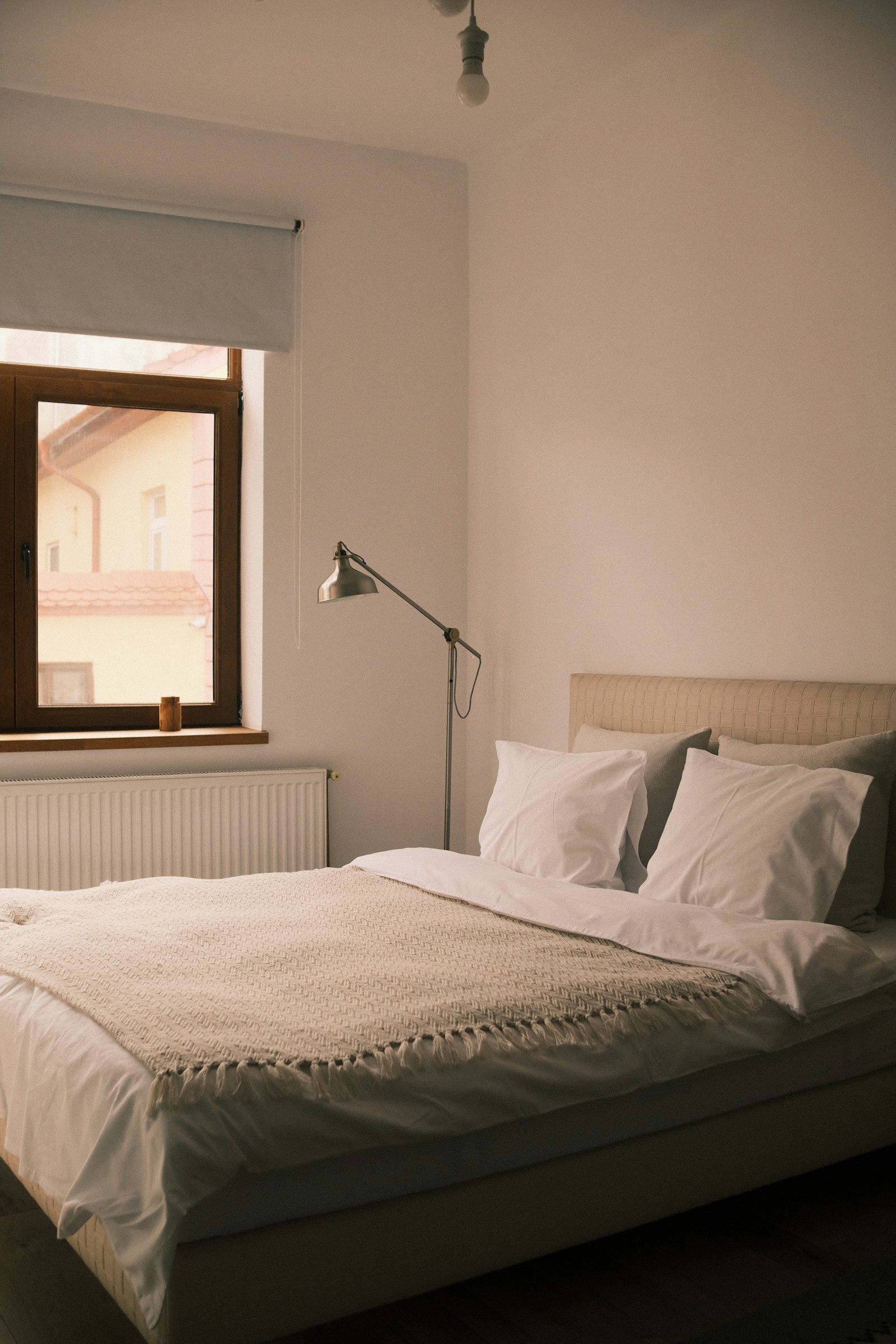
Your hand can stop on the same phrase in several very different product listings: water resistant. On one mattress protector it may describe a tightly woven top fabric; on another it may refer to a coating or a thin backing layer. It is not, by itself, a promise that a full mug of tea will stay away from the mattress.
That makes the search for a mattress protector water resistant option slightly more useful than it first appears. You are really choosing a level of liquid protection, then balancing it against softness, airflow, noise, fit and the way the bed is used. For a low-risk adult bedroom, a lighter protector may be perfectly sensible. For a child, a pet or a bed where drinks regularly appear, a continuous waterproof barrier is the safer brief.
The phrase on the packet is doing too much work
Water resistance describes a degree of performance, not one standard mattress-protector design. A fabric may resist moisture because its fibres are closely woven, because the surface has been treated so droplets bead, or because a backing slows liquid from moving through. Those constructions do not all behave in the same way when liquid is left in place, pressed into the fabric or spread towards an edge.
Be especially careful with words such as water repellent, spill resistant and showerproof. They can be useful descriptions, but they do not tell you how long the surface will resist moisture or whether the finished protector has a liquid barrier underneath. A good product listing should explain the materials, coverage and care instructions rather than relying on one reassuring adjective.
If a listing quotes a test method, read what it actually measures. ISO 811, for example, describes a hydrostatic method for testing a fabric’s resistance to water penetration. That is useful technical information, but it is not the same as a guarantee about every seam, edge and finished mattress protector.
A tea spill is a different test from dampness
A water-resistant mattress protector can buy you time. A few droplets may bead on the surface or take longer to soak through, giving you a chance to blot them with a clean cloth. It may also suit a bed where the main concern is light everyday moisture and you want the least additional bulk beneath the sheet.
It is not wise to treat that as the same protection as waterproofing. A full mug, wet clothing, a damp towel, a pet jumping onto the bed after rain or liquid left beneath bedding creates more volume and more contact time. Pressure from a sleeper can push moisture into fabric, while liquid can travel through a seam or around the edge of the protected panel.
In practical terms, water resistance reduces the chance of a small incident becoming a mark on the mattress. Waterproof protection is designed for the more definite job of stopping liquid passing through the covered area when the barrier is intact and correctly fitted. Neither label removes the need to deal with a spill promptly.
The layer you do not sleep on decides the result
Most protectors are a small stack of materials rather than a single fabric. Look at the complete construction:
- Sleeping surface: cotton terry, polyester microfibre or another textile determines much of the texture and how quickly a small amount of liquid is absorbed.
- Surface treatment: a finish can help droplets sit on the surface instead of spreading straight into it. Treatments can become less effective with wear and washing.
- Backing or membrane: polyurethane or TPU may be used as a flexible layer beneath the face fabric. If it is continuous, it provides a more deliberate liquid barrier than a surface finish alone.
- Seams and skirt: the protected panel, stitching and elasticated sides decide how well the product stays in place and where liquid might find a route around it.
The wording matters. “Water-resistant top” tells you about the face fabric; “waterproof membrane” tells you that the manufacturer is claiming a different type of protection. If the description does not say what happens beneath the fabric, ask before buying rather than guessing from a photograph.
Breathability is a construction question
It is tempting to assume that a water-resistant mattress protector will always sleep cooler than a waterproof one. That is too simple. A protector without a dense film may allow more air through, but its weave, quilting, filling and the sheet above it still affect heat and moisture. Conversely, a thin polyurethane membrane can be flexible and quiet, while a thicker or stiffer film may feel warmer or rustle more.
Look for a construction that matches your priorities rather than trusting “breathable” as a stand-alone promise. A soft cotton or microfibre face can improve the feel under a sheet, but it does not tell you how the backing behaves. Protect-A-Bed’s UK care and product FAQ is a useful example of a manufacturer explaining its polyurethane membrane and the washing restrictions that go with it.
Noise is affected by fit as well as material. A loose protector can rub against the mattress; one stretched too tightly can pull at its seams. A close, smooth fit and a normal sheet often make a bigger difference than a marketing claim about silence.
Choose the lighter layer only when the risk is genuinely light
Water resistance may be enough when your main aim is to give the mattress some protection without changing its feel. It can make sense in an adult bedroom where drinks are not normally taken to bed, spills are unusual and you are comfortable responding quickly to a small splash.
- Choose a water-resistant layer when softness, low bulk and a natural-feeling surface matter more than full spill security.
- It can suit occasional moisture or a minor surface mark, provided you accept that a larger wet incident may still reach the mattress.
- It is a reasonable choice for a spare bed with low use if you can remove and wash it promptly after an accident.
A fully waterproof protector is more appropriate when the consequence of liquid reaching the mattress is high or the risk is predictable. That includes a young child’s bed, toilet training, pets that climb onto the bed, frequent breakfast or drinks, and a guest bed where you cannot control every situation. If that is your brief, our guide to a waterproof mattress protector covers barrier construction, fit and care in greater depth.
This is not an argument that waterproof is automatically better. It is about buying enough protection for the job. A water-resistant cover that you chose for comfort is the wrong economy if you already know that a soaking accident is likely.
Measure the finished bed, not the label
Start with the UK mattress size: Single, Small Double, Double, King or Super King. Then measure the mattress itself. Width and length need to match, but depth is just as important. Measure from the base to the highest sleeping surface, including any topper that will remain on the bed.
- A shallow protector pulled over a deep mattress can ride up, expose the sides and put unnecessary tension on the seams.
- An oversized protector may bunch below the sheet, move when you turn and create avoidable rustling.
- An elasticated skirt should reach below the mattress edge without having to be stretched to its limit.
- If a topper is added later, recheck the combined depth rather than assuming the original fit still works.
Do not choose from the bed-frame description alone. A divan, slatted frame or upholstered bed can all take a different mattress depth. OakAndNook’s Guide to choosing the perfect bed is a useful companion if you are still deciding on the mattress and frame together.
Washing can change what the fabric can do
Care is part of the protection, not an afterthought. A surface treatment can gradually lose some of its water-shedding effect after repeated washing, while excessive heat, bleach or unsuitable chemicals may damage a coating, membrane or elastic. There is no universal wash temperature for every protector, so the care label takes priority.
- Deal with a spill promptly and remove the protector so moisture is not held against the mattress.
- Use only the detergent, temperature and drying method the manufacturer allows.
- Avoid bleach, fabric conditioner and ironing when the label warns they can weaken the protective layer.
- Dry the protector fully before refitting it, then check the backing, seams and elastic for cracking, peeling or loss of stretch.
Sealy’s mattress-care guidance recommends a breathable mattress cover to help protect against body moisture and other liquids, while also warning against using detergents or chemical cleaners on the mattress itself. That distinction is sensible: wash the removable protector according to its label, rather than trying to clean the mattress with household products.
How to read a product listing before paying
Before you add a water-resistant mattress cover to your basket, look for answers to these questions:
- What is the exact claim? Is the product water repellent, water resistant or waterproof, and does the description explain the difference?
- What is underneath the sleeping surface? Look for a stated backing or membrane, not just a soft top fabric.
- Where does the protection reach? Check whether the panel covers the whole sleeping surface and whether the side construction is described.
- Is there meaningful test information? A named test method is more useful than a vague “liquid proof” badge, but it still describes only what was tested.
- Will it fit your actual mattress? Confirm the UK size and maximum depth, including a topper.
- Can you live with the care instructions? A protector that needs special drying or cannot be washed in your machine may not suit the way the bed is used.
Reviews can flag noise, shrinkage or a poor skirt, but they cannot prove that every part of a product is waterproof. Treat them as clues, then return to the manufacturer’s construction and care information.
The sensible choice for a UK bedroom
Think of water resistance as extra time and reduced risk, not as an invisible guarantee. It may be exactly right when you want a light, quiet layer for a bed with a low chance of spills. Waterproofing earns its place when liquid protection is the main job and a larger accident would be expensive or difficult to deal with.
Choose the weakest level that genuinely meets the situation, then buy the correct UK size, check the mattress depth and follow the care label. The protector should disappear beneath the sheet rather than dictate how the room feels; for the finishing layer, our grey bedding ideas for UK bedrooms show how practical bedding can still look considered. More bedroom-specific ideas are collected in our Bedroom guides.
Frequently Asked Questions
Q1. Can a water-resistant protector stop a coffee spill?
It may slow a small splash long enough for you to blot it, but it should not be treated as a guarantee against a full mug or liquid left in contact with the bed. If that risk is realistic, choose a protector with a stated waterproof membrane.
Q2. Is a water-resistant protector always more breathable?
No. A protector without a dense film may allow more airflow, but the top fabric, quilting and sheet also matter. Some thin waterproof membranes are designed to allow water vapour through, so judge the complete construction rather than the label alone.
Q3. Will washing remove water resistance?
A surface finish may become less effective over time, while a membrane protector depends on the condition of its backing and seams. Follow the care label, avoid anything it excludes and inspect the protector after repeated washes.
Q4. Do I need waterproof protection for ordinary perspiration?
Not necessarily. If light everyday moisture is the only concern, a washable protector with a comfortable, breathable-feeling surface may be enough. If you also need protection from spills, wet clothing or accidents, choose the stronger barrier for those situations rather than buying solely for perspiration.


3 thoughts on “Mattress Protector Water Resistant: What It Means and When You Need One”