
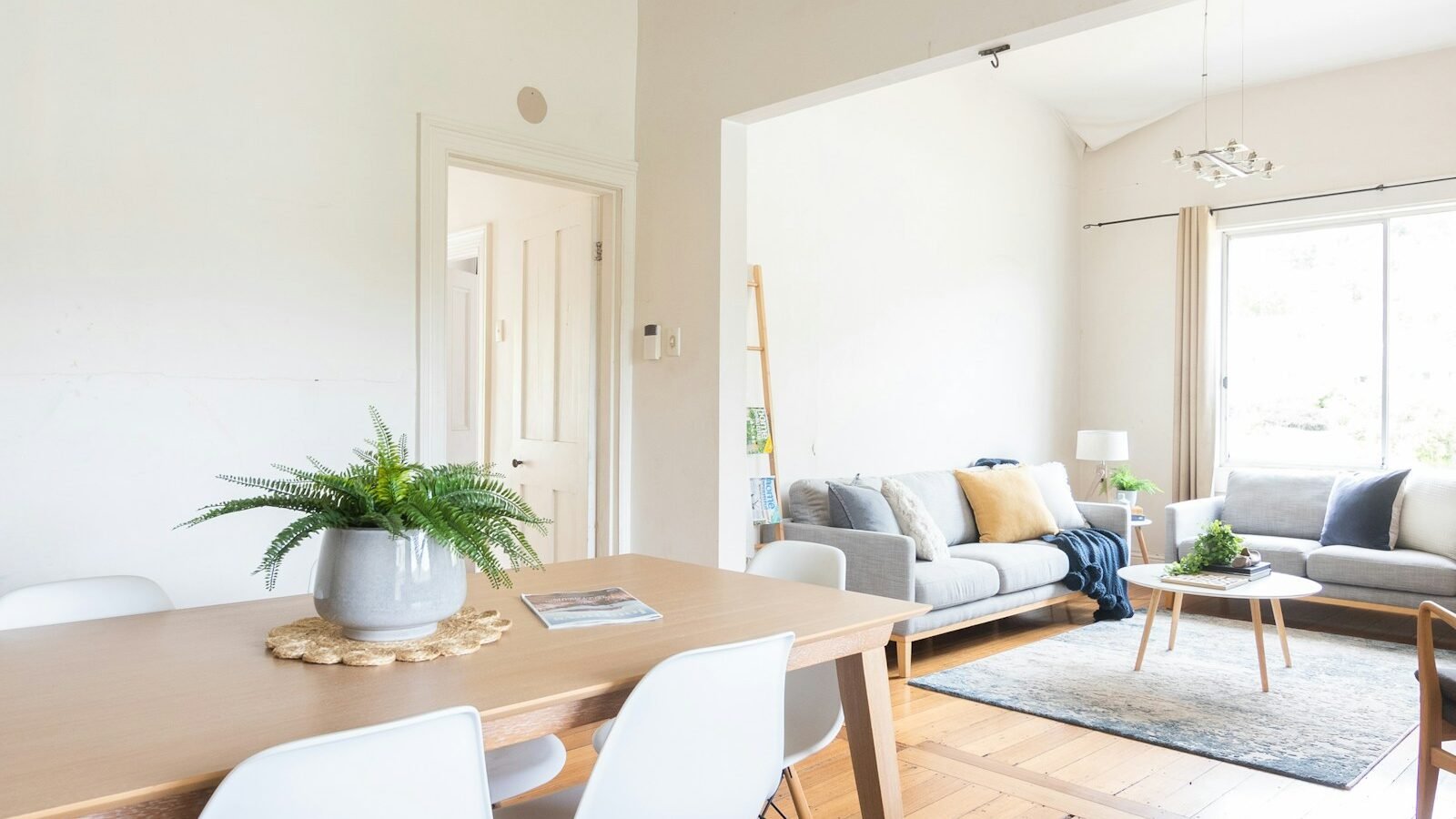
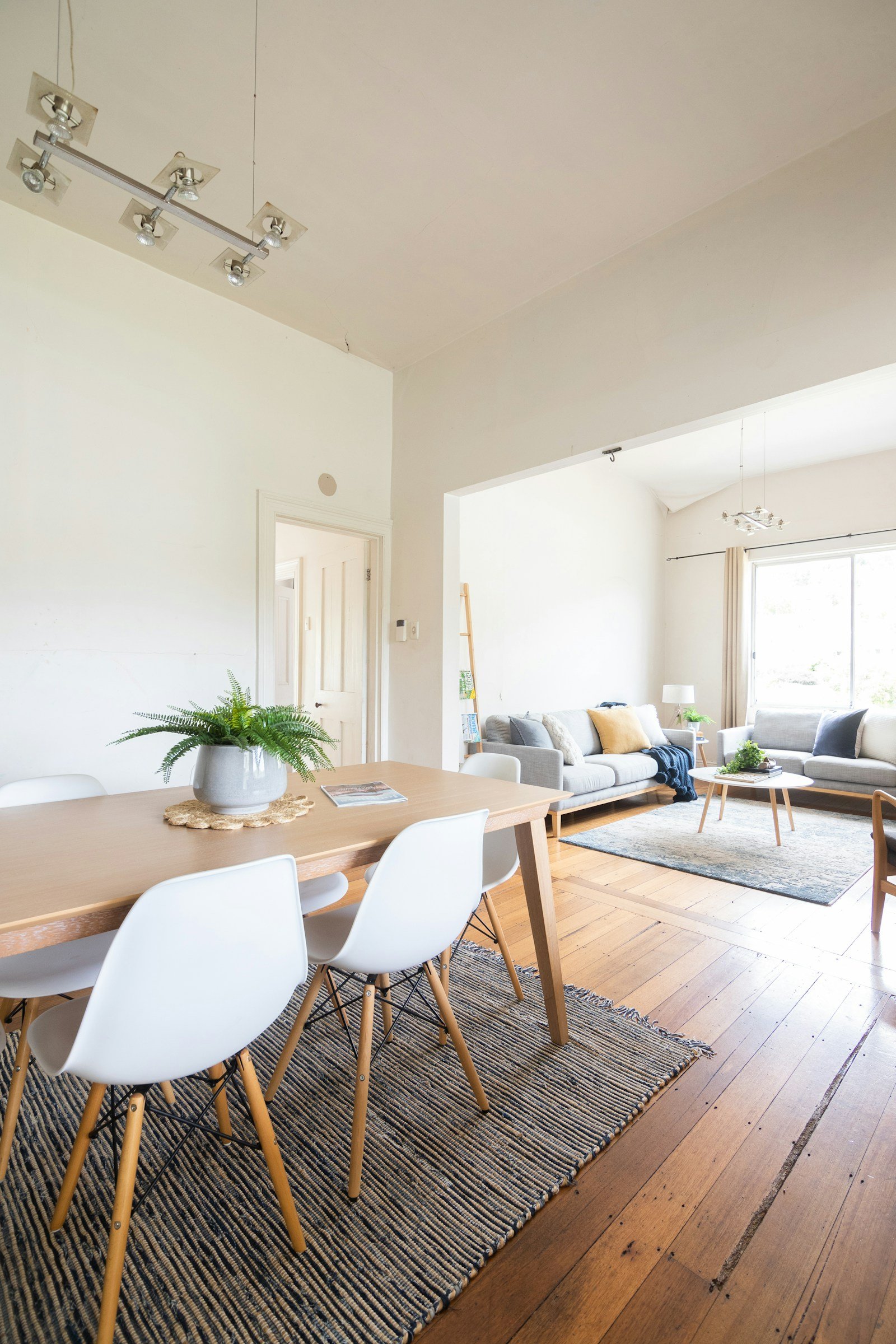
A dining table buying guide should start with room clearance: the right table fits with chairs pulled out, gives each diner about 60cm of elbow room and suits how you actually eat. Measure the room and delivery route first; only then choose between a rectangular, round, oval or extending table and decide whether solid wood, veneer, glass or stone is sensible.
Dining table buying guide: measure the room and the route
Measure the clear floor area, then subtract a 90cm circulation band around the table. If people need to walk behind chairs, 100-110cm feels better. A 180cm table therefore wants a room at least about 360cm long for comfortable end-to-end use, before accounting for a sideboard or radiator.
Record door widths, stair turns, lift dimensions and the height of any window or banister. A 240cm solid oak top may fit the dining room but fail at the first corner. Ask the retailer for packaged dimensions and whether the legs arrive separately.
Choose size and shape
Rectangular
A 120-140cm table usually suits four; 160-180cm suits six; 200-240cm can seat eight depending on leg position and chair width. Rectangular tables work well in long rooms but the ends are less sociable for everyday meals.
Round and oval
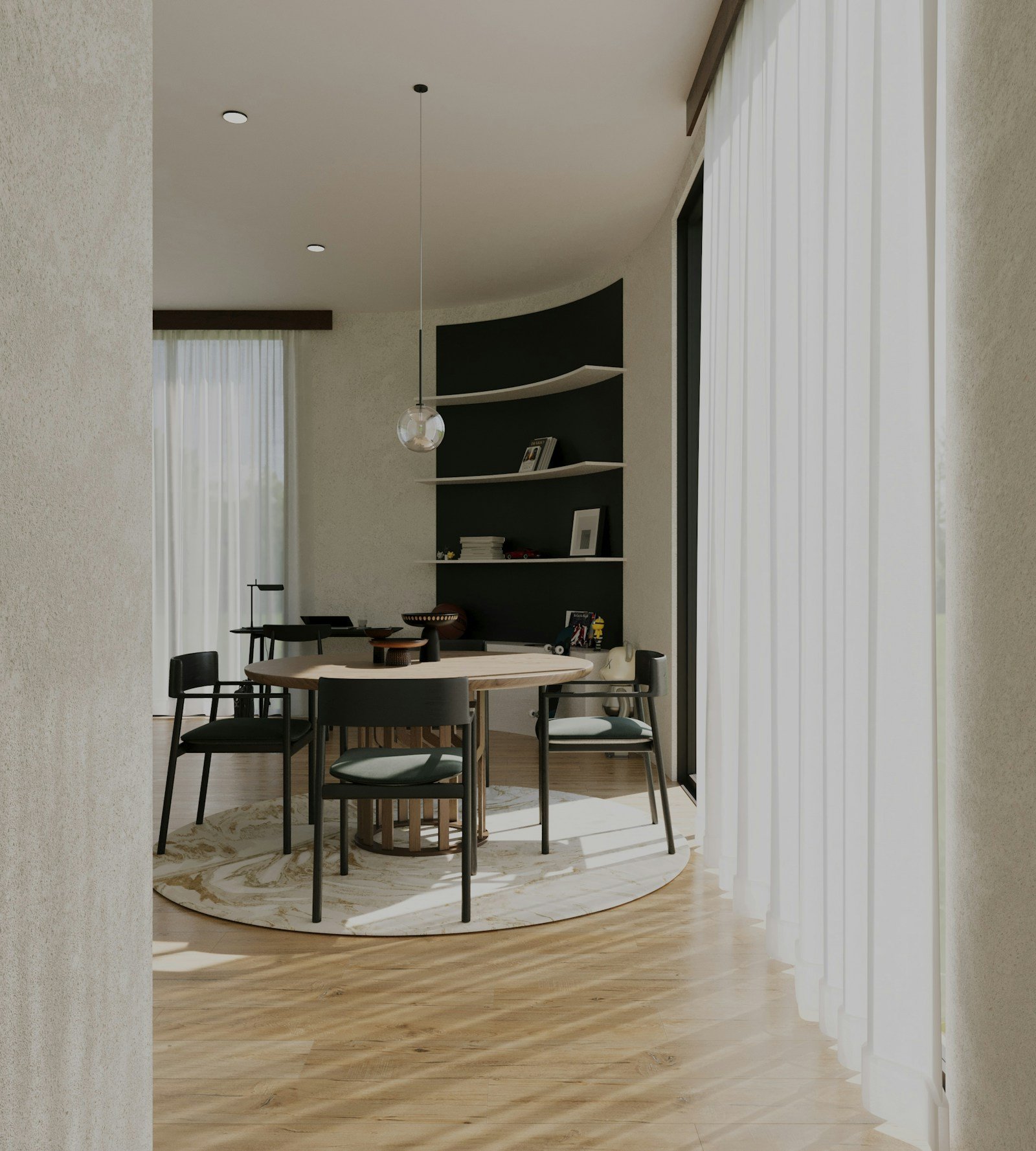
A 100-110cm round table is comfortable for four and 120-135cm for four to six. An oval table keeps the visual softness of a round top but uses a room’s length more efficiently. Check that the base does not prevent chairs being placed evenly around it.
Square
A 90-100cm square table is useful for two to four in a compact kitchen, but it can dominate a small room when pushed against a wall. Leave enough space to pull out the chairs you use most often.
Use 60cm per person as a starting point, then add width for broad chairs, armrests or a serving-heavy Christmas dinner. In our garden furniture guide, the same clearance principle applies outdoors.
Compare table materials
Solid wood
Oak, ash and walnut can be repaired and refinished, but timber moves with humidity. Look for a stable construction, a finish that suits hot plates and a clear care sheet. A solid oak four-seat table often starts around £450-£900; larger or handcrafted pieces can exceed £2,000.
Veneer and engineered board
A real-wood veneer over a stable core gives a timber appearance with less movement, often at £250-£800. Inspect exposed edges, the thickness of the veneer and whether the finish can tolerate everyday wiping. A printed foil is not the same as a repairable wood veneer.
Glass
Glass makes a small room feel lighter and wipes clean, but fingerprints, chipped edges and visible crumbs are part of the bargain. Toughened glass is preferable; ask how the top is tested and whether the support remains stable if someone leans on the edge.
Stone and ceramic
Marble is porous and can stain from acidic foods; granite is hard but heavy; sintered stone and ceramic can be resilient but may chip at a corner. Check the delivery weight, base design and whether the surface needs sealing. Budget £700-£2,500+ for substantial stone or ceramic designs.
When an extending table makes sense
An extending table should be easy for one person to open, close flush and store its leaves. Butterfly mechanisms are convenient; separate leaves can be more flexible but need a dry, flat storage place. Examine the closed and open lengths, the support under the extension and whether the grain or finish remains visually coherent.
Do not buy an eight-seater extender if the extension will be used twice a year but occupy the room every day. A six-seater with a folding console or a separate table for big gatherings may be better value.
Match chairs and legroom
Most dining tables are 74-76cm high and pair with a seat around 45-48cm high, but measure the actual apron clearance. A central pedestal gives more leg flexibility than four corner legs, while trestles can limit the end positions. Allow 50-60cm table width per chair; broad upholstered chairs need more.
Delivery, finish and care
Confirm whether delivery is room-of-choice, whether assembly is included and what happens if the packaged item will not pass the route. For online purchases, keep the order, measurements and damage photos; UK consumer-rights guidance explains the basic protections for faulty or misdescribed goods.
Use coasters and trivets, wipe spills rather than flooding the top and follow the finish maker’s instructions. Do not put a solid-wood table beside a radiator and assume a generic oil is safe: the wrong product can leave a sticky or patchy surface.
Frequently asked questions
Q1. How much space should I leave around a dining table?
Allow at least 90cm for a chair and basic circulation, and around 100-110cm where people need to walk behind seated diners.
Q2. What dining table size seats six?
A 160-180cm rectangular table commonly seats six, but check chair width and leg position. A 120-135cm round or oval table can also suit four to six.
Q3. Is solid wood better than veneer?
Solid wood can be repaired and has a natural feel, while good veneer is stable and often more affordable. Construction and finish quality matter more than the label alone.
Q4. Are extending dining tables reliable?
A good mechanism can be reliable. Test that it opens smoothly, closes flush and supports the extension properly; ask where the leaves are stored and how the finish is maintained.
Final Thoughts
Buy the table that leaves room for life around it. A slightly smaller top with comfortable circulation, stable legs and a finish you will maintain will serve a household better than the largest table that makes every meal feel like an obstacle course.
5 thoughts on “Dining Table Buying Guide: Sizes, Shapes and Materials for UK Homes”