
Quick answer
Choose oak laminate flooring by the room’s traffic, moisture risk and subfloor, not simply by the colour of the plank. Compare wear rating, board thickness, locking system, water guidance and warranty, then allow the floor to acclimatise and prepare the base properly before fitting.
Oak laminate flooring gives you the visual warmth of timber with a consistent surface and usually simpler day-to-day maintenance than a natural wood floor. It is not one universal product, however. A light oak board for a spare bedroom and a heavy-use floor for a kitchen-diner may look similar online while having very different cores, edges and installation limits.
The most expensive mistake is choosing the finish first and reading the specification later. Start with what the room demands, then narrow the appearance down to a plank width, colour and grain that work with the existing doors, skirting and furniture.
What oak laminate flooring is made of
Most laminate flooring combines a wear layer, a printed decorative layer, a dense core and a balancing layer. The oak image is printed, so the floor can be very consistent, but quality still varies in surface texture, joint design, core density and edge protection. A convincing board repeats the design less obviously and aligns its texture with the printed grain.
| Specification | Why it matters |
|---|---|
| Wear rating or class | Indicates the intended traffic level when read alongside the manufacturer’s full specification. |
| Board thickness | Can affect feel, sound and stability, but does not replace a flat, dry subfloor or correct underlay. |
| Water guidance | Separates spill resistance from permission for wet rooms or prolonged moisture. |
| Locking system | Affects fitting speed, joint tightness and whether a damaged board can be replaced. |
| Warranty | Shows the maker’s intended use and the conditions that must be followed. |
For independent flooring terminology and trade information, the British Flooring Association is a useful starting point. Always read the specific product data sheet because a category label is not a guarantee for one range.
Choose the oak tone and plank format
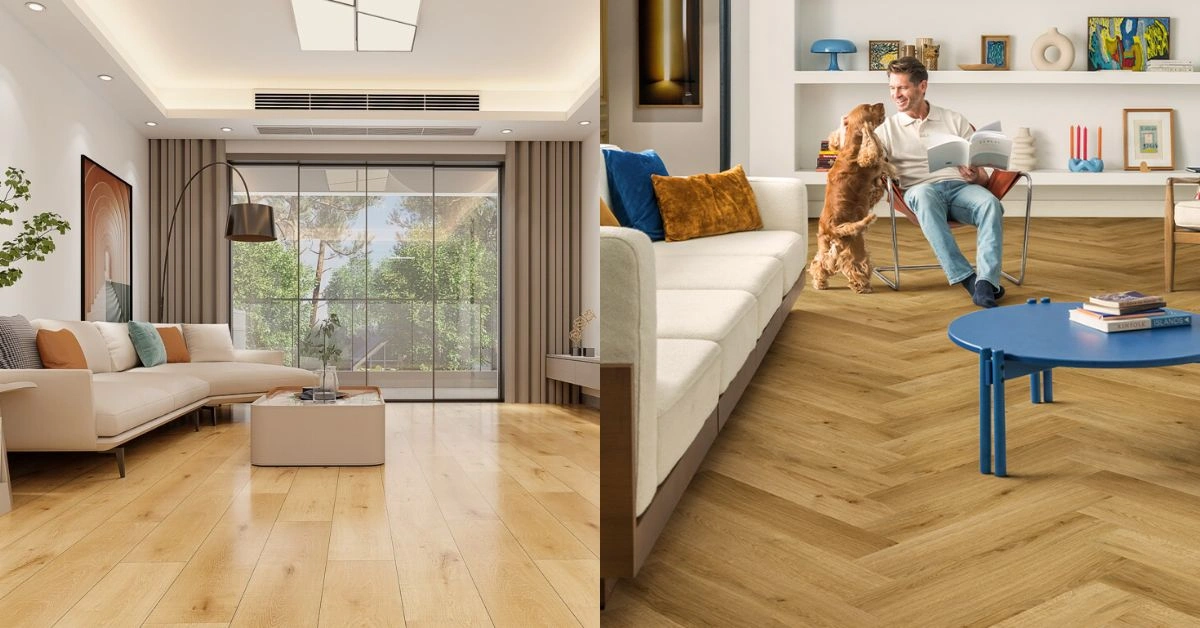
Pale oak can make a narrow room feel more open, while a mid honey tone brings warmth to a large, cool space. Greyed oak can sit well with painted joinery but may look flat under cold light. Take full-size samples home if possible and view them beside the skirting, doors and largest piece of furniture.
Long, wide planks reduce the number of joints and can make a room feel calmer, but they may emphasise a crooked wall or need more careful planning at doorways. Narrower boards can suit a traditional layout and produce more visual rhythm. Use an offcut or layout drawing to decide which direction should run through connected rooms.
Subfloor preparation and underlay
Laminate will not hide a badly uneven subfloor for long. Remove high spots, deal with low areas using a suitable method, check for damp and follow the manufacturer’s flatness tolerance. A concrete base may need a moisture barrier, while a timber subfloor may need loose boards secured and protruding fixings dealt with before the underlay goes down.
Underlay is part of the floor system, not a way to compensate for a failed base. It can improve sound, comfort and minor surface tolerance, but the correct type depends on the subfloor, underfloor heating, moisture protection and the product instructions. Do not add layers simply to make the floor feel softer.
Plan door clearances, radiator pipes, thresholds and the expansion gap at the perimeter. Skirting or a suitable cover can hide the gap, but it should not pin a floating floor in place.
Oak laminate flooring in kitchens and busy rooms
A kitchen is harder on a floor than a bedroom because splashes, grit, dropped pans and frequent cleaning are normal. If the product is approved for kitchens, follow the edge and seal guidance precisely, keep leaks from appliances dealt with promptly and use mats where wet footwear or food preparation makes sense. The warranty’s room limitations matter as much as the surface appearance.
- Use felt pads under movable furniture and replace them when they collect grit.
- Lift appliances and heavy pieces instead of dragging them across the joints.
- Keep a spare pack from the same batch for future board replacement.
- Use doormats that catch grit without trapping moisture against the floor.
Cleaning, repairs and everyday care
Sweep or vacuum regularly so grit does not act like sandpaper under shoes. For a deeper clean, use a well-wrung damp mop and the recommended cleaner. Do not flood the floor, polish it with wax or use a steam mop unless the maker explicitly permits it.
Small surface marks may respond to a product-specific repair kit, but a swollen edge or damaged locking joint usually needs a board replaced rather than filled. Keep the batch number, installation instructions and a few spare boards. If you are comparing alternatives, the hardwood, laminate and LVT guide explains where each floor type earns its advantages.
Make the floor work with the rest of the room
Oak laminate flooring is a large uninterrupted surface, so it should sit comfortably with the skirting and doors. White or painted skirting creates a crisp boundary; timber skirting gives a more continuous joinery look but should be tested against the floor’s undertone. The practical points in the white skirting board guide help when you are deciding how much contrast the room needs.
For open-plan spaces, run the boards in a direction that supports the main sight line and use thresholds where the manufacturer’s installation method calls for them. Avoid forcing one continuous floor through every awkward doorway if movement, moisture or future repairs will become difficult.
A buying and fitting checklist
- Classify the room by traffic, grit, moisture and cleaning routine.
- Compare wear specification, thickness, locking system, edge treatment and warranty.
- Take samples home and view the oak tone beside walls, doors, skirting and furniture.
- Test the subfloor and plan underlay, moisture protection, thresholds and expansion gaps.
- Buy a spare pack, keep the documentation and follow the maker’s cleaning instructions.
A good oak laminate floor is a system: board, subfloor, underlay, edges and care all contribute. Get those decisions right and the printed oak finish becomes the easy part.
Frequently Asked Questions
1. Is oak laminate flooring any good?
Good oak laminate flooring can be durable, easy to clean and more predictable than natural timber, provided the product suits the room and is installed on a prepared subfloor. Judge the wear layer, locking system, moisture guidance and warranty rather than the printed oak pattern alone.
2. What is the best thickness for oak laminate flooring?
Thickness is only one part of performance, but a substantial board can feel quieter and more stable when paired with the correct underlay. Check the manufacturer’s installation instructions, the subfloor and the intended traffic level before choosing a thickness.
3. Is oak laminate flooring waterproof?
Many products are water-resistant, while fewer are genuinely suitable for prolonged water exposure. Read the exact room and spill guidance, seal or protect edges where instructed and do not treat a marketing label as permission for standing water.
4. Can oak laminate flooring go in a kitchen?
Some products are suitable for kitchens when installed and maintained exactly as specified. Pay particular attention to perimeter gaps, appliance leaks, sink areas, cleaning methods and whether the warranty covers the room.
5. How do you clean oak laminate flooring?
Vacuum or sweep first, then use a well-wrung damp mop and the cleaner recommended by the floor maker. Avoid soaking the floor, steam mops unless specifically approved, abrasive pads and wax products that leave a film.

1 thought on “Oak Laminate Flooring: How to Choose, Fit and Care for It”