Quick answer
The best balcony garden starts with weight, sunlight, wind and watering rather than decorative ideas. Measure the usable footprint, choose a small number of containers that can be reached easily, then build height with trellis or rails only when the fixing and building rules allow it.

Balcony garden ideas for small space should make the outdoor area easier to use, not turn it into a row of pots that are impossible to water. A balcony has limits that a garden bed does not: the load is concentrated, wind is stronger, storage is scarce and drainage affects the space below.
Begin with a tape measure and a short observation of the balcony at different times of day. Note where the sun reaches, which corners are exposed to wind, whether the door needs a clear landing and how you will carry water and compost. Those facts will shape a better garden than a mood board alone.
Balcony garden ideas for small space: plan the base
| Constraint | Planning response |
|---|---|
| Limited floor area | Use a few larger useful containers, vertical planting and foldable furniture instead of many small pots. |
| Wind exposure | Choose stable low containers, sheltered plants and approved screens rather than tall loose objects. |
| Weight limits | Spread loads and use lightweight containers, while confirming the balcony’s capacity with the responsible building professional. |
| Hard-to-reach water | Group plants by need and place them where a watering can can be carried safely. |
Do not put the heaviest planters on a projecting edge. Wet compost, water reservoirs and mature plants can weigh much more than an empty pot suggests. If you rent or live in a managed block, check restrictions before drilling, screening or attaching a planter to a rail.
Choose containers that earn their footprint
A narrow trough can make a useful boundary, but several tiny pots usually dry faster and create more maintenance. One deep container can support herbs or a compact edible crop; a shallow one is suited to seasonal colour or trailing plants. Use containers with drainage and protect the balcony surface according to the building’s rules.
- Group containers by sun and water requirement.
- Leave access around pots so leaves can be checked and dead growth removed.
- Use a saucer or tray only where it will not create standing water or stain the surface.
- Choose a pot size that supports the mature plant, not only the nursery plant.
For wider garden planning, the new-build garden guide shows how to work from constraints before adding decoration. The same discipline helps a balcony feel edited rather than crowded.
Plant for sun, shade and wind
South-facing balconies can become hot and dry, while a shaded balcony may need plants that tolerate lower light. Wind dries foliage, knocks over stems and can make a balcony uncomfortable even when the planting is healthy. Look at the conditions at plant height, not only the weather app for the street.
Herbs and salad leaves are rewarding when the balcony receives enough light and regular water. Compact tomatoes, strawberries or chillies need more sun and feeding. In shade, focus on texture and reliable foliage rather than trying to force sun-loving flowers to perform.
Build height without creating a hazard
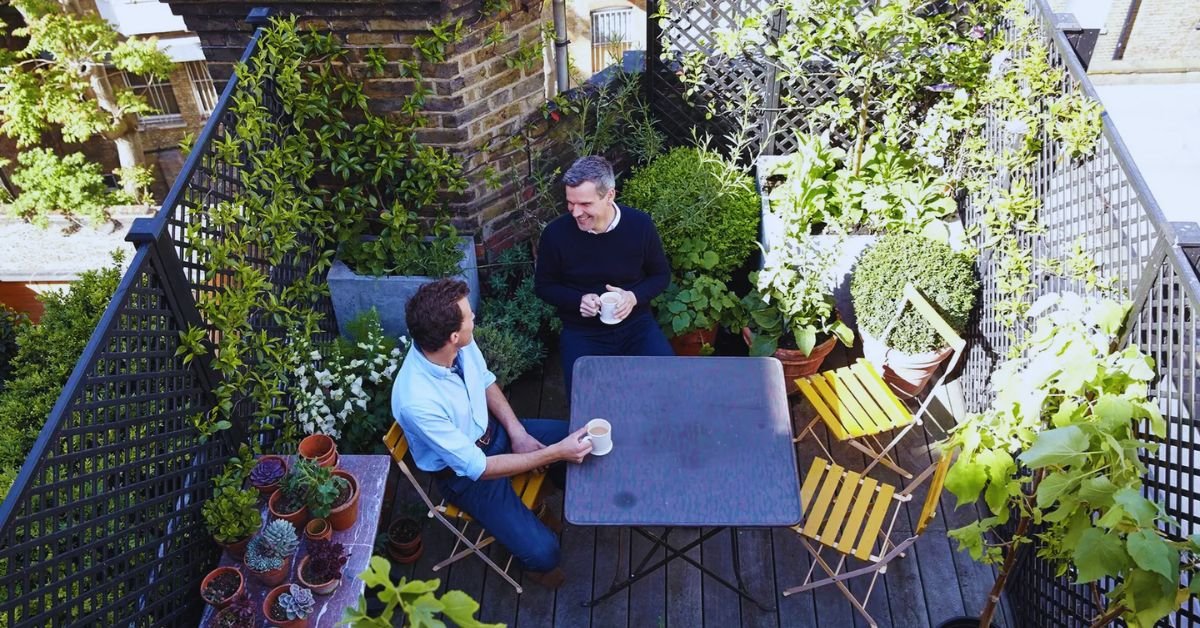
Vertical planting saves floor space, but it should be anchored to an approved structure. A trellis can support climbers and create privacy; a wall-mounted rail can hold small pots when the wall and fixing are suitable. Do not attach a tall screen or hanging basket to a railing unless the system is designed and approved for that load and wind exposure.
Keep the view and the door usable. A small foldable chair, wall-mounted table or narrow bench can make the balcony a place to sit without claiming every centimetre. The principles in the small outdoor structure guide are useful when you are considering shade or screening, even though a balcony has stricter weight and fixing limits.
Watering, drainage and seasonal care
Windy containers may need water more often than plants at ground level. Check the compost with a finger, water thoroughly when needed and avoid creating a cycle of a wet surface with a dry root ball. Grouping by need means you are not overwatering a drought-tolerant plant to keep a thirsty one happy.
Before winter, remove dead annuals, protect vulnerable pots and check that drainage holes remain clear. Store lightweight furniture and secure anything that could blow into a neighbour’s space. If you want a little evening atmosphere, use safe, suitable lighting rather than trailing cables across the threshold; the garden lantern guide covers outdoor placement and care.
The Royal Horticultural Society’s garden design guidance is a useful general reference, but plant choice should still follow your balcony’s actual microclimate and the care instructions for each plant.
A small balcony garden checklist
- Measure the floor, door landing, railing and any storage route.
- Confirm balcony rules, fixing permissions and load information.
- Record sun, shade and wind before choosing plants.
- Use stable, drained containers that can be watered without unsafe carrying.
- Keep one clear sitting or access zone and test the watering routine.
A successful balcony garden is not the one with the most pots. It is the small outdoor room that remains safe, green and easy to care for through the season.
Frequently Asked Questions
1. How do I start a balcony garden in a small space?
Measure the usable floor, check the building rules and identify sun, wind and access to water. Start with a few containers that solve a real need, then add vertical or hanging planting only when the structure and watering routine are clear.
2. What plants are best for a small balcony garden?
Choose plants for the actual light and wind rather than a generic list. Herbs, compact vegetables, grasses, hardy perennials and seasonal flowers can work, but container depth, watering and exposure matter as much as the plant label.
3. How much weight can a balcony hold?
Only the building owner, managing agent, engineer or relevant building information can confirm a specific balcony’s capacity. Spread loads, avoid concentrated heavy planters and never assume a lightweight-looking container is light when full of wet compost.
4. How do you water balcony plants when away?
Group pots by water need, use saucers where appropriate and create a simple tested routine before leaving. Self-watering containers can help, but they still need checking in hot, windy conditions.
5. How can I add privacy to a small balcony garden?
Use a few planters at the sightline, a trellis or an approved screen rather than closing every edge. Check wind loading and building rules before attaching anything, and choose plants that will not become top-heavy.