Gold Wall Decor Ideas for UK Homes: How to Choose, Size and Hang It
Gold wall decor can make a room feel warmer, brighter and more considered—but only when the finish, scale and placement are right. Used without a plan, it can quickly look glittery, overly matched or out of proportion. The most successful schemes treat gold as an accent material: one that picks up warm light, links different furnishings and adds a little contrast against paint, wallpaper, timber or stone.

This UK-first guide takes you from inspiration to a workable shopping plan. It covers mirrors, framed art, gallery walls, shelves, lighting and sculptural pieces, then explains how to choose between polished, brushed, antique and champagne finishes.
Contents
- Start with the room, not the gold finish
- Eight gold wall decor ideas that are easy to plan
- A large mirror as the main feature
- A restrained gold gallery wall
- Picture ledges with a changing display
- Gold wall lights that do a job
- One sculptural or architectural statement
- A gold-framed map, botanical or still life
- Decorative plates and shallow relief
- A small gold detail in an awkward spot
- Get the scale and spacing right
- Choose the gold finish for your decorating style
- How to mix gold with other materials
- A practical UK shopping and hanging plan
- Frequently asked questions
- Final thoughts
Start with the room, not the gold finish
Before buying anything, decide what the wall needs to do. A mirror may solve a dark-hallway problem; a picture ledge may give a rented sitting room personality without a large gallery-wall commitment; a pair of wall lights may improve bedside reading. The best piece is the one that earns its space as well as looking attractive.
In a hallway or entrance
A gold-framed mirror is usually more useful than a purely decorative object here. Choose a shape that leaves clear circulation space: a round or gently arched mirror softens a narrow hall, while a tall rectangular design makes a low-ceilinged entrance feel more vertical. If the wall faces a window or glazed door, place the mirror where it can reflect light without creating glare at eye level.
Pair it with a slim console, a bowl for keys and one restrained object. A mirror around 600–800 mm wide works over many compact consoles, but measure the furniture first: a wall feature generally looks balanced at roughly two-thirds to three-quarters of the console’s width rather than stretching beyond it.
In a living room
Living rooms can carry more visual weight. Consider one large framed print, an oversized sunburst-style mirror, or a composition of three to five pieces rather than several unrelated small items. Gold is particularly effective against deep green, navy, charcoal, aubergine and warm white, but it can also sharpen a room of pale oak and neutral upholstery.
If the wall is above a sofa, keep the arrangement connected to the furniture below it. As a starting point, aim for an overall display width of about two-thirds to three-quarters of the sofa width. Leave approximately 150–200 mm between the top of the sofa and the lowest frame; adjust this if the sofa is unusually low or the art is very tall.
In a bedroom
A pair of small gold frames or slim brass-toned sconces can introduce symmetry without making the room feel formal. Above a bed, keep the central line calm: one wide piece or a matched pair is often more restful than a busy collection. Avoid placing heavy objects where they could be knocked by a headboard, bedside lamp or opening cupboard door.
In a dining room or kitchen
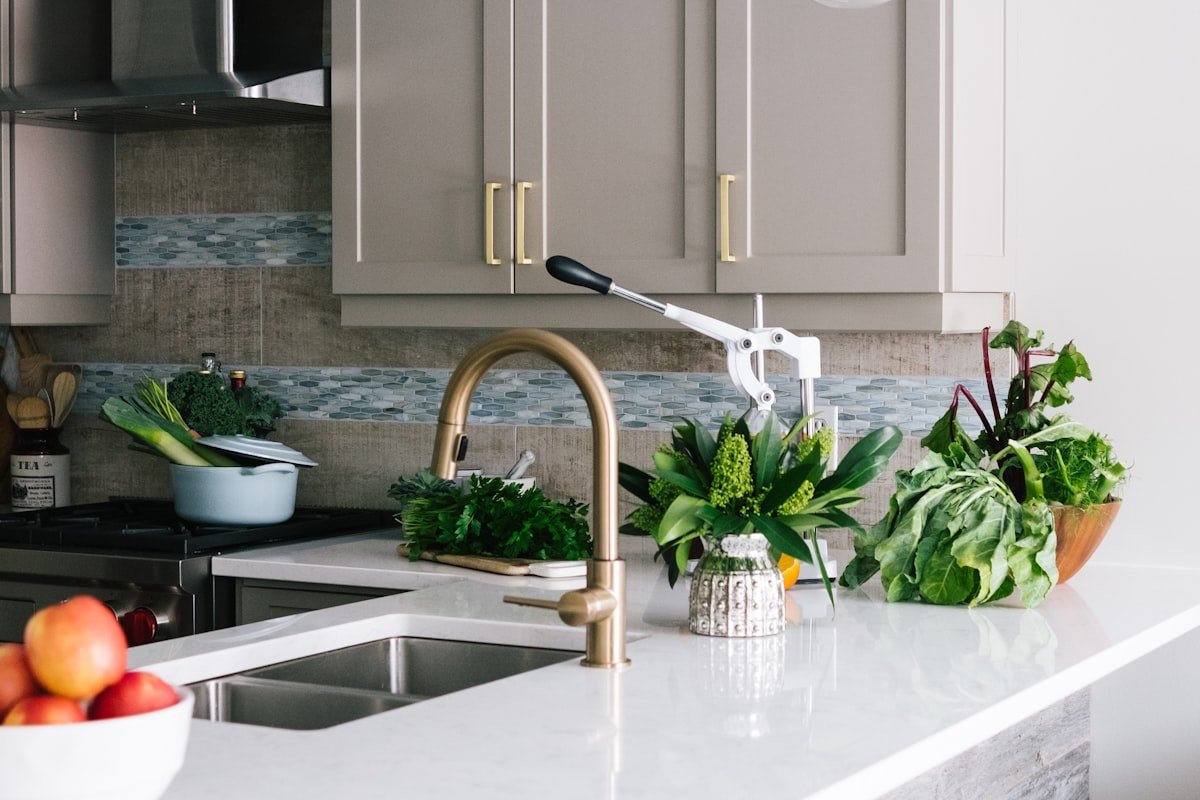
Use gold to echo handles, taps or lighting, but do not assume every metallic surface must match. A framed botanical, a shallow relief or a small decorative clock can add warmth to a dining wall. In a kitchen, keep porous paper art away from steam and grease, and choose wipeable frames or sealed surfaces where splashes are likely.
Eight gold wall decor ideas that are easy to plan
A large mirror as the main feature
A mirror is the safest starting point if you want gold wall decor to improve a room, not merely fill a blank wall. Look for a frame with a profile that suits the space: a thin brushed edge feels contemporary, a moulded antique frame suits a period home, and a softly muted champagne tone bridges modern and traditional furniture.
Measure the wall and the route into the room before ordering. A mirror can be wider than expected once packaged, and stairwells or tight corners can be the real constraint. For a console, bench or fireplace, centre the mirror on the furniture rather than automatically on the wall.
Do not hang a large or heavy mirror from a single lightweight picture hook. Check the manufacturer’s weight and fixing instructions, identify the wall construction, and use fixings rated for that substrate. On plasterboard, a suitable cavity fixing or a fixing into a stud may be needed; on masonry, the plug and screw must match the wall. When in doubt, use a qualified installer—especially above a bed, on a chimney breast or in a busy hallway.
A restrained gold gallery wall
A gallery wall makes gold feel collected rather than showroom-perfect. Mix two or three gold frames with painted wood, black or natural timber, keeping one common thread such as a cream mount, botanical subject or restrained palette. This is more forgiving than buying six identical metallic frames.
Lay the arrangement on the floor first. Use paper templates on the wall and leave roughly 50–80 mm between frames for a calm composition. Start with the largest piece, then balance its visual weight rather than simply mirroring its shape. In a small room, four larger pieces can look more deliberate than ten tiny frames.
Picture ledges with a changing display
A narrow picture ledge is practical in a rented home or a room that changes often. Choose a ledge deep enough for the frame bases—around 100–150 mm is a useful planning range for many standard frames—and secure it according to the manufacturer’s instructions. Layer a large print behind two smaller pieces, then add one small object such as a candle holder or ceramic bud vase.
A ledge also prevents the “all gold, all the time” effect. Keep it neutral and let one gold frame provide the accent.
Gold wall lights that do a job
Wall lights are a strong choice when the gold needs to contribute to the room’s function. A pair beside a mirror, fireplace or bed creates rhythm; a single articulated light can work beside a reading chair. Choose the shade and bulb colour carefully: warm white light can make yellow gold look richer, while a very cool lamp may make it appear stark.
Plan cable routes, switch positions and the wall construction before drilling. Electrical work should be carried out by a competent person and, where applicable, checked against current UK requirements. If you are not rewiring, plug-in or rechargeable options can provide the look with less disruption, but keep cables tidy and away from heat or walkways.
One sculptural or architectural statement
A gold sunburst, abstract metal form, relief panel or architectural fragment can be enough on its own. This is particularly effective above a sideboard, in an alcove or at the end of a sightline. Let the silhouette do the work: the wall behind it should be comparatively quiet.
Check the projection as well as the width: a deep piece may catch shoulders in a narrow passage or conflict with a door swing. Favour a shallow design in a busy route.
A gold-framed map, botanical or still life
A framed map adds structure to a study, landing or family room, while a botanical print works in a bedroom, conservatory or dining space. The gold frame can make an inexpensive print feel finished, but the mount matters: a generous white or warm-grey mount gives the metallic edge breathing room.
Choose a subject with personal relevance rather than adding gold for its own sake. Protect paper art from direct, strong sunlight and damp walls.
Decorative plates and shallow relief
A group of decorative plates can bring pattern and movement to a dining room, kitchen-diner or stair landing. Use plate hangers or manufacturer-approved fixings, and check that the wall can take the combined load. Arrange the largest plate first, then place smaller pieces around it with consistent gaps.
Gold-edged ceramics work best when another material interrupts the metallic repetition. Keep a little negative space around the grouping so it reads as one composition.
A small gold detail in an awkward spot
Not every wall needs a feature. A small framed print, decorative letter, gold clock or narrow shelf can finish a dead corner, cloakroom or landing without competing with the main room. This is a good place to use a brighter polished finish because the dose is small.
Measure around sockets, switches and architraves. A 300–450 mm piece may be all a narrow return wall can comfortably accommodate.
Get the scale and spacing right
Gold wall decor is especially sensitive to proportion because reflective surfaces attract attention. Use these measurements as design starting points, then adjust for your furniture and ceiling height:
- Above furniture: keep the artwork or mirror around two-thirds to three-quarters of the furniture width where possible.
- Above a sofa, console or bench: start with a 150–200 mm gap from the furniture top to the lowest point of the display.
- Gallery-wall gaps: 50–80 mm between frames gives a composed look; tighter spacing feels denser and more traditional.
- Viewing height: for a standing viewing position, place the centre of the main artwork around 1,450–1,550 mm from the floor. In a room viewed mainly from a sofa or bed, lower it so the centre sits closer to the seated sightline.
- Shelves and ledges: allow enough depth for the frames to sit securely, and keep the front edge clear of doors, curtains and passing shoulders.
Make paper templates before purchasing multiple pieces. Mark the edges with low-tack tape and live with the layout for a day; this catches art placed too high or a mirror reflecting an unhelpful clutter zone.
Choose the gold finish for your decorating style
Polished gold
Polished gold is bright, reflective and glamorous. It suits contemporary interiors, dark paint and rooms that need a deliberate flash of light. Use it in smaller quantities—one mirror frame, a pair of lights or a few gallery-wall details—unless the room is intentionally maximalist.
Brushed or satin gold
Brushed gold has a softer sheen and is easier to live with beside timber, linen, terrazzo and warm neutral paint. It is a reliable choice when you want a modern finish without a high-shine statement. Look at it in daylight as well as evening light; brushed finishes can vary considerably between brands.
Antique or aged gold
Aged gold has visible variation, darker recesses or a slightly distressed character. It works naturally with period architecture, traditional furniture, vintage maps and collected gallery walls. Pairing it with one contemporary shape stops the room becoming too themed.
Champagne gold
Champagne gold is usually paler and less yellow than classic gold. It can bridge cool stone, pale grey, blush, cream and light timber. It is useful when a strong yellow metal would fight with the rest of the scheme, but check samples where possible because retailers use the term inconsistently.
How to mix gold with other materials
The most polished rooms rarely use one metal in isolation. Gold can sit beside brass, bronze, black, chrome or nickel if the combination looks intentional. Repeat the secondary metal at least twice—for example, a black picture frame and black lamp base—so it reads as a relationship rather than a mismatch.
Wood is a useful counterbalance: walnut feels richer, while pale oak makes gold fresher. Stone, rattan, linen and painted ceramics prevent reflective surfaces from taking over.
For more general wall planning, see Oak & Nook’s wall furnishing ideas guide. These should support—not duplicate—the gold-finish focus of this guide.
A practical UK shopping and hanging plan
Start with a short brief: room, wall width, furniture width, preferred finish, maximum projection and whether the piece needs to solve a practical problem. Then shortlist by dimensions rather than browsing only by colour. A “gold” filter can include frames, mirrors, metal art and accessories with very different proportions.
Dunelm is the strongest observed exact-topic retail benchmark in the audit, with a broad gold wall-art category and filters by product type, style and design: Dunelm gold wall art. For marketplace variety, Etsy UK’s gold wall decor selection can be useful, but check seller dimensions, dispatch times, returns and whether the frame is included. Next’s gold wall-art selection is another straightforward comparison point.
UK cost guide: the audit snapshot dated 17 October 2026 recorded Dunelm examples from approximately £25 to £160 across its gold wall-art assortment. Treat that as an observed planning band, not a guaranteed current price: size, frame material, finish, delivery and promotions can change the total. Bespoke framing, large mirrors, professional fitting and electrical work are separate costs and should not be assumed to sit within that range.
Before checkout, confirm:
- The exact width, height, depth and packed dimensions.
- The total weight, fixing points and supplied hardware.
- Whether the colour is painted, plated, foil, metal or a printed effect.
- Delivery, returns and breakage procedures.
For heavy pieces, use two fixing points where possible and never rely on an adhesive pad unless the manufacturer specifies it for that weight and surface. Scan for pipes and cables before drilling, and ask a professional to install anything large, high or electrically connected.
Frequently asked questions
Should all the gold in a room match?
No. Matching every finish can look staged. Keep the undertone broadly compatible, then repeat the main gold two or three times. A brushed gold mirror can sit comfortably with aged brass or a muted bronze if the rest of the scheme contains enough texture and the difference is intentional.
How do I make gold wall decor work in a small room?
Use one reflective focal point, such as a mirror, and keep the surrounding display quieter. Measure the available wall and choose a piece that leaves visible breathing space. Avoid deep projections in narrow routes, and use a pale wall colour or glass-fronted frame if you want the area to feel lighter.
Can I hang a heavy gold mirror on plasterboard?
Possibly, but the fixing must suit the wall construction, the mirror’s weight and its fixing points. Do not assume a standard picture hook is adequate. Locate a stud where practical or use a suitable rated cavity fixing; follow the manufacturer’s instructions and use a qualified installer if the mirror is large or positioned above people.
What is the easiest gold wall decor to change later?
A framed print, picture ledge or small gallery wall is more adaptable than a wired wall light or a very large mirror. Use standard frame sizes and keep templates or measurements so new artwork can be swapped without re-planning the entire wall.
Final thoughts
Gold wall decor works best when it is planned as part of the room rather than bought as a colour category. Start with the wall’s job, measure the furniture and circulation space, choose a finish that supports the existing materials, and use one strong focal point before adding smaller accents. A mirror can bring light to a hall, a pair of lights can improve a bedroom and a restrained gallery wall can make a neutral sitting room feel personal.
Use the UK shopping range as a starting point, verify live dimensions and delivery before ordering, and treat heavy or electrical pieces as installation projects rather than simple accessories. The result should feel warm and deliberate: enough gold to catch the eye, with enough contrast and breathing space for the rest of your home to remain the focus.