
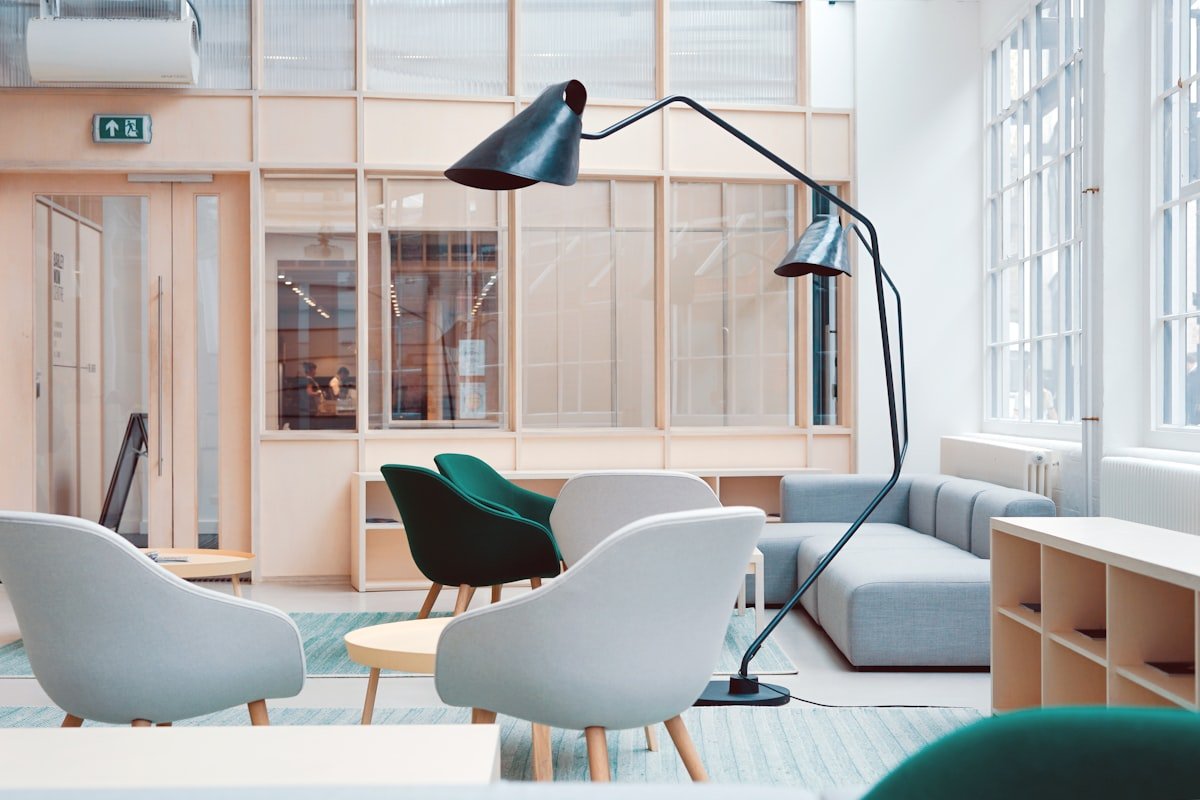
Home working is now a fixture of UK life, and the right home office furniture is the difference between a real workspace and a kitchen table. The wrong furniture causes back pain, eye strain, and a daily fight with the rest of the household. This guide is a UK-specific walkthrough of the desk, the chair, the storage, and the small details that turn a home office into a workspace that actually works.
Table of contents
- The principle of a good home office
- The desk
- The chair
- Storage and shelving
- Lighting
- Monitor, keyboard and the small kit
- Furniture for small home offices
- Shared home offices
- UK brands worth considering
- UK cost guide
- Common mistakes
- Home office furniture FAQs
- Final thoughts
The principle of a good home office
A good home office is built on three ideas.
- Comfort. You will spend 6 to 10 hours a day in this room. The chair and the desk are the most important pieces of furniture you own. A good chair is worth more than a good desk.
- Light. A well-lit home office makes you more productive, less tired, and less likely to suffer eye strain. Aim for natural light from one side, a desk lamp on the other, and an overhead light for the room.
- Separation. A home office that is also a dining table, a kitchen counter, or a bedroom corner is a home office that does not get used. The best home office is in a separate room, behind a door that closes.
Where a separate room is not possible, the next best answer is a corner of a room with a divider (a bookshelf, a curtain, a folding screen) that separates the workspace from the rest of the room.
The desk
The desk is the centre of the home office. The right answer depends on the work and the room.
Size
For a one-monitor setup, 120cm wide x 70cm deep is the minimum. For a two-monitor setup, 140cm to 160cm wide. For a three-monitor or a sit-stand setup, 160cm to 180cm wide. The depth should be at least 70cm to take a monitor at a comfortable viewing distance.
Sit-stand
A sit-stand desk is the most useful home office upgrade you can make. The ability to stand for 30 minutes a day reduces back pain, increases energy, and improves focus. The right answer is an electric sit-stand frame with a solid timber worktop.
UK brands worth considering.
- Budget: Fully Jarvis, Flexispot, IKEA BEKANT or IDÅSEN
- Mid-range: Ergotopia, Standing Desk Mate
- High-end: Herman Miller, Knoll, Steelcase
For most UK homes, a Flexispot E7 or an IKEA IDÅSEN sit-stand frame, with a 140cm to 160cm solid oak worktop, is the right answer. Around £400 to £700 fitted.
Worktop material
The worktop material affects the look, the feel, and the durability. Three options worth considering.
- Solid oak or beech. The classic choice. Hard-wearing, repairable, looks good in a period or country interior. The right answer for a long-term desk. From English Woodlands Timber or Wood Finishes Direct.
- Laminate-faced MDF. Cheaper, easier to clean, available in a wide range of colours. The right answer for a small or rented home office. From IKEA or any Wickes.
- Linoleum or composite. The middle answer. Soft to the touch, hard-wearing, available in a small range of colours. The right answer for a modern or designer home office. From Forbo or Desktop Stories.
The chair
The chair is the most important piece of home office furniture. The right chair supports your back, allows you to sit for 6 to 10 hours, and lasts 10 to 15 years. The wrong chair causes back pain, neck pain, and a daily fight with the rest of the day.
What to look for.
- Adjustable lumbar support. The chair should support the small of the back, not the upper back. Adjustable lumbar support is essential.
- Adjustable armrests. The armrests should support the elbows at 90 degrees, with the shoulders relaxed. Adjustable in height, width, and angle is the right answer.
- Adjustable seat height. The seat should be at a height where the feet are flat on the floor and the knees are at 90 degrees. A gas-lift height adjustment is essential.
- Adjustable seat depth. The seat should be deep enough to support the thighs, but not so deep that it cuts into the back of the knees. Adjustable seat depth is a luxury, but worth it for taller or shorter users.
- Mesh or foam. Mesh is cooler, more breathable, and more expensive. Foam is softer, warmer, and cheaper. Choose mesh for a warm room; foam for a cool room.
UK brands worth considering.
- Budget: IKEA MARKUS or FJÄLLBERGET, Argos Hygena
- Mid-range: Ergotopia, Sihoo, Humanscale Freedom
- High-end: Herman Miller Aeron or Embody, Steelcase Gesture, HÅG Creed
For most UK homes, a IKEA MARKUS or Ergotopia NextBack is the right answer. The MARKUS is £200 and has a 10-year guarantee, which is exceptional for the price. The Ergotopia is £500 and is one of the best mid-range ergonomic chairs in the UK.
For a serious home office (8+ hours a day, 5+ days a week), a Herman Miller Aeron is the gold standard. It is expensive (£1,200 to £1,500) but it will last 15+ years and comes with a 12-year guarantee.
Storage and shelving
The right storage in a home office is the difference between a calm workspace and a daily mess. The most useful pieces.
- A drawer unit under or beside the desk. The right answer is a 3-drawer unit, with the top drawer for stationery and small kit, the middle for files and notebooks, and the bottom for cables and power strips. From IKEA ALEX or Ergotopia. £100 to £400.
- A wall-mounted shelving system. For books, files, plants, and a small printer. The right answer is a modular system that can be reconfigured as the storage needs change. From IKEA BOAXEL or String. £100 to £800.
- A filing cabinet. For physical files, contracts, and the paperwork that has not been digitised. A 2-drawer lateral filing cabinet is the right answer for most UK home offices. From IKEA or Bisley. £100 to £500.
For more on the wider project, see our guide to smart kitchen storage ideas for the principles, which apply to home offices too.
Lighting
Lighting is the most underrated element of a home office. The right lighting makes you more productive, less tired, and less likely to suffer eye strain.
Three sources of light.
- Natural light. The right answer is a desk perpendicular to the window, with the light coming from one side. Avoid a desk facing the window (screen glare) or back to the window (face in shadow).
- Desk lamp. A dedicated task lamp on the desk, with an adjustable arm and a daylight-rated bulb (5000K to 6500K). From Anglepoise or Astro Lighting. £50 to £300.
- Overhead light. A pendant or a flush-mount fitting, on a dimmer, for the room as a whole. The right answer is a soft 2700K to 3000K bulb, not a daylight bulb, for general lighting.
Monitor, keyboard and the small kit
The desk, chair and storage are the big pieces. The monitor, keyboard and mouse are the small pieces that you use every minute of every day. The right answer is to invest in them, not skimp.
- Monitor. A 27-inch 4K monitor is the right answer for most UK home offices. From Dell UltraSharp or LG UltraFine. £300 to £700.
- Monitor arm. A monitor arm frees up desk space and allows the screen to be positioned at the right height. From Ergotron or CBS. £80 to £300.
- Keyboard. A mechanical keyboard with a UK layout. From Keychron or Logitech MX. £80 to £200.
- Mouse. An ergonomic vertical mouse reduces wrist strain. From Logitech MX Vertical or Anker. £50 to £100.
- Headphones. Wireless noise-cancelling headphones for calls and focus. From Sony WH-1000XM5 or Bose QC. £200 to £400.
Furniture for small home offices
For a small home office, every piece has to do more than one job. The most useful moves.
- A wall-mounted fold-down desk. 60cm to 80cm wide, with a small shelf above for a laptop and a mug. From IKEA NORBERG or String. £100 to £600.
- A chair that disappears. A folding chair or a stool that can be hung on a hook when not in use. Frees up 50cm x 50cm of floor space.
- Wall storage instead of a drawer unit. A wall-mounted shelving system with a small drawer, instead of a freestanding drawer unit. Frees up 50cm x 50cm of floor space.
- A laptop stand. A small stand that raises the laptop to eye level, used with a separate keyboard and mouse. The right answer if the desk is only used occasionally.
Shared home offices
For a shared home office, the right answer is two desks facing each other, with a shared storage system in the middle. The setup needs a 3m x 2.5m room minimum, and the desks should be at least 1.2m apart to allow for chair movement.
For a one-desk shared office, the right answer is a sit-stand desk with two monitors, two keyboards and two mice. The desk should be 160cm to 180cm wide, and the worktop should be 70cm to 80cm deep.
UK brands worth considering
A summary of the best UK home office brands, by category.
- Desks: IKEA, Flexispot, Ergotopia, Heal’s
- Chairs: IKEA, Ergotopia, Sihoo, Herman Miller
- Storage: IKEA, String, Bisley
- Lighting: Anglepoise, Astro Lighting, Artemide
UK cost guide
Typical UK home office costs in 2025 prices.
- Sit-stand desk (Flexispot or IKEA): £400 to £700
- Solid oak desk top (bespoke): £300 to £800
- Office chair (IKEA MARKUS): £200
- Ergonomic chair (Ergotopia or Sihoo): £400 to £700
- High-end chair (Herman Miller Aeron): £1,200 to £1,500
- Drawer unit (IKEA ALEX): £100 to £200
- Wall shelving (String or IKEA): £200 to £800
- Desk lamp (Anglepoise): £100 to £300
- Monitor arm (Ergotron): £80 to £300
A full home office setup, including desk, chair, storage, lighting and small kit, lands at £1,500 to £3,000 for a mid-range setup, or £3,500 to £6,000 for a high-end setup with a Herman Miller chair.
Common mistakes
- Cheap chair. A £50 chair will cause back pain within a month. A £200 chair will last 10 years and protect your back. The chair is the most important home office investment.
- Wrong desk height. The desk should be at a height where the elbows are at 90 degrees, with the shoulders relaxed. A sit-stand desk solves this for everyone in the household.
- Screen glare. A desk facing the window is a daily fight with screen glare. The right answer is a desk perpendicular to the window, with the light from one side.
- No cable management. Cables trailing across the floor are a trip hazard and a daily annoyance. Use cable ties, cable trays, and a power strip mounted under the desk.
- No storage. A home office without enough storage becomes a desk covered in piles within a week. A drawer unit and a wall shelving system are essentials, not luxuries.
Related reading. Modular furniture guide · Multifunctional furniture for small UK homes · Curved sofa buying guide · Oak furniture buying guide UK.
Frequently Asked Questions
1. What is the best home office desk?
For most UK homes, a sit-stand desk from Flexispot or IKEA IDÅSEN with a solid oak worktop. For a high-end desk, a Herman Miller or Knoll sit-stand desk. The right answer depends on budget, how long the desk is used each day, and the size of the room.
2. What is the best home office chair?
For a budget, the IKEA MARKUS. For a mid-range, the Ergotopia NextBack. For a high-end, the Herman Miller Aeron. The right answer depends on budget, how long the chair is used each day, and the size and weight of the user.
3. Are sit-stand desks worth it?
Yes. The NHS and the HSE both recommend standing for 30 minutes a day for office workers. A sit-stand desk is the easiest way to do that. For most UK homes, a Flexispot or IKEA IDÅSEN sit-stand frame is the right answer. £300 to £500.
4. How do I light a home office?
Three sources of light. Natural light from a side window (a desk perpendicular to the window). A desk lamp on the worktop, with an adjustable arm and a daylight-rated bulb. An overhead light on a dimmer, for the room as a whole. The right answer for most UK home offices is an Anglepoise desk lamp and a flush-mount ceiling fitting.
5. How do I set up a small home office?
A wall-mounted fold-down desk, a folding chair or a stool that hangs on a hook, wall-mounted shelving, a laptop stand with a separate keyboard and mouse, and a single task lamp. For more, see our guide to multifunctional furniture for small UK homes.
6. Can I claim tax relief on home office furniture?
If you are a PAYE employee working from home, you can claim £26 per month (£312 per year) without receipts, or the actual cost of equipment you bought and use solely for work. If you are self-employed, you can claim the actual cost of equipment as a business expense. Check the latest HMRC rules.
Final thoughts on home office furniture
The right home office furniture turns a spare room, a corner, or a kitchen table into a real workspace. The chair is the most important investment, the sit-stand desk is the most useful upgrade, and the storage is the difference between a calm workspace and a daily mess. Spend the money once, and the home office will be in daily use for the next 10 years.
For more on the wider project, see our guides to modular furniture guide and multifunctional furniture for small UK homes.



8 thoughts on “Home Office Furniture Guide: A Practical UK Buyer’s Guide”