Quick answer
The best oak wardrobe is not simply the heaviest one. Choose a size that leaves a usable walkway, a carcass with dependable joints and a back that keeps the cabinet square, then select rails, shelves and drawers around the clothes you actually own.
An oak wardrobe can be the most useful piece in a bedroom or the one that makes the room feel permanently cramped. The difference is usually decided before delivery: the depth is guessed, the internal layout is treated as an afterthought, or a dark stained veneer is mistaken for solid oak. A careful shortlist avoids all three.
Oak is attractive because it has a visible grain, takes a range of finishes and can be repaired when a door edge or top gets marked. It is also heavy, so measure the route into the room and do not assume a large freestanding wardrobe can be carried through a narrow stair turn as one piece.
Oak wardrobe construction: solid wood, veneer or oak-effect?
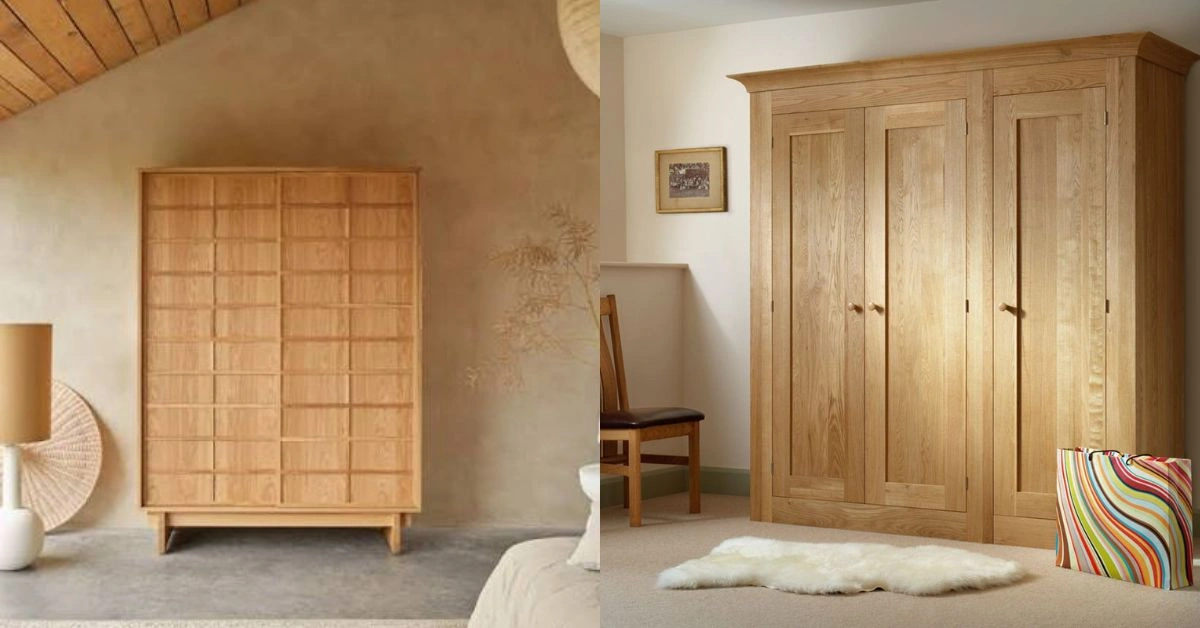
“Oak wardrobe” describes the look as often as it describes the material. Solid oak is used for frames, doors and sometimes the main panels. Oak veneer is a thin real-oak surface over a stable engineered core, while oak-effect laminate or foil is a printed finish. None is automatically wrong, but they suit different budgets and repair expectations.
| Construction | What it does well | What to check |
|---|---|---|
| Solid oak | Substantial feel, repairable and naturally varied grain | Panel movement, joint quality, weight and the finish on end grain |
| Oak veneer | Stable wide panels and a real-oak surface at a lower weight | Edge banding, core material, back panel and veneer thickness |
| Oak-effect finish | Consistent colour and easy cleaning at a lower price | Edge durability, hardware quality and whether the surface can be repaired |
If responsible timber sourcing matters to you, ask what the supplier can document rather than relying on the word “natural”. The Forest Stewardship Council UK explains how certification and chain of custody work, although certification is only one part of assessing the furniture itself.
Measure the bedroom before choosing wardrobe depth
Start with the wall, but finish with the space in front of the wardrobe. Hinged doors need their opening arc; drawers need room to pull out; and you still need to stand back far enough to lift a coat from a rail. A shallow cabinet that blocks the bed can be less practical than a deeper one on a different wall.
- Measure the full wall width, including skirting and any pipe boxing.
- Check ceiling height at the lowest point and allow for skirting, coving and uneven floors.
- Leave a realistic walkway rather than measuring only to the bed frame.
- Confirm the delivery path, door width, stair turns and whether the top can be assembled in the room.
For a fuller sizing check, the guide to wardrobe depth explains why the hanger, not the catalogue photograph, should set the internal measurement.
Design the inside around your clothes
A beautiful oak wardrobe is still a poor buy if every section is a single tall rail. Divide the interior according to your wardrobe: shorter hanging for shirts, longer hanging for dresses and coats, shelves for folded knitwear, and drawers for items that become untidy in a deep pile. A removable shelf is useful because storage needs change more quickly than furniture does.
Sliding doors save the swing arc but usually take some of the internal depth for their tracks. Hinged doors give a clearer view of the whole interior and make a traditional oak cabinet easier to repair. If you want a more contemporary modular layout, compare the planning points in the modern wardrobe guide before choosing the door style.
Construction details that separate lasting pieces
Open a door and look past the grain. The cabinet should sit squarely, the doors should meet evenly and the hinges should allow adjustment. A thin loose back can let a tall wardrobe rack out of square; a properly fixed back helps the carcass hold its shape. Drawer boxes should run smoothly without excessive side play, and handles should feel fixed to the door rather than merely screwed into a thin facing.
On solid timber, small seasonal changes in gaps are normal because wood responds to moisture. Large splits, loose joints, doors that drop and a top that is visibly bowed are not charming signs of character. Ask how the piece is finished and whether spare hinges, handles or shelves can be ordered.
Choose a finish that can live with the room
Clear oil keeps the grain tactile and makes local repairs possible, while lacquer gives a more sealed, consistent surface. A stained finish can be attractive, but it makes colour matching harder if you add a bedside table later. Request a real sample or photograph the piece in daylight; warm shop lighting hides orange or grey undertones.
Keep the top clear enough to dust and avoid pushing the wardrobe tight against a damp external wall. Use coasters for anything placed on the top, wipe spills quickly and never drag the cabinet across the floor. If an older piece has become dull, the careful approach in how to restore faded oak furniture is safer than sanding through the veneer or applying a random stain.
A practical oak wardrobe buying checklist
- Write down the usable wall width, height, depth and delivery route.
- Count the hanging, shelf and drawer space you need now, with one flexible section.
- Ask whether the piece is solid oak, oak veneer or an oak-effect board in every major component.
- Inspect the back, hinges, drawer runners, handles and finish at the edges.
- Confirm assembly, floor protection, delivery access and the availability of replacement parts.
The right oak wardrobe should make the bedroom calmer, not just look expensive in a product photograph. Treat dimensions and construction as the decision, then choose the grain and finish that make the room feel settled.
Frequently Asked Questions
1. What is the best wood for a wardrobe?
Oak is a strong, repairable choice, but the best material depends on the construction and the room. Look for a stable carcass, sound joints, a properly fixed back and a finish that can be refreshed rather than choosing on timber name alone.
2. Is solid oak better than oak veneer for a wardrobe?
Not automatically. Solid oak gives you a substantial, repairable frame, while a well-made oak veneer wardrobe can be more stable across wide panels and more economical. Check the core, edges, back and hardware as well as the surface.
3. How deep should an oak wardrobe be?
Around 600mm is the dependable starting point for front-facing hanging, with extra allowance for doors and internal fittings. Measure your largest hangers and the available walkway before ordering, especially for a fitted or sliding-door design.
4. How do you care for an oak wardrobe?
Dust with a soft dry cloth, wipe spills promptly with a barely damp cloth and keep the piece away from direct heat and persistent damp. Do not use silicone-heavy sprays, soaking wet cloths or abrasive cleaners on the finish.
5. Can oak furniture be mixed with other bedroom wood?
Yes, if the undertones and finish levels are deliberate. Keep one timber as the main anchor, repeat the secondary tone at least twice, and avoid placing several almost-matching but slightly different finishes side by side.