panelling ideas are the foundation of a thoughtful, well-planned space. This comprehensive guide brings together everything our editors have learned about panelling ideas, from layout and lighting to materials, finishes and budget-friendly upgrades, so you can make confident decisions and avoid the costly mistakes we see repeated in homes every year. Whether you are starting a full refurbishment or simply refreshing a tired room, the panelling ideas covered here will help you get the most from your space, your budget and your time.
Why Panelling Is Quietly Taking Over UK Homes
Walk into any modern British new-build showhome, browse the Instagram feed of any interiors influencer, or tour a recently refurbished Victorian terrace, and one feature keeps appearing in all three: wall panelling. After decades in the design wilderness, when MDF dado rails and pine tongue-and-groove were associated almost exclusively with 1980s bungalows, panelling has quietly become one of the most sought-after features in contemporary UK interior design.
Table of Contents
The reasons are both aesthetic and practical. Aesthetically, panelling adds depth, texture and a sense of architectural maturity that flat painted walls cannot match. Practically, it hides a multitude of sins, from dodgy plaster to uneven walls, and it can be installed in a weekend by a competent DIYer. It is also one of the more affordable ways to transform a room without the disruption of a full refurbishment.
This guide brings together 21 panelling ideas for UK homes, covering everything from classic styles that suit period properties to contemporary designs that work in modern new-builds. You will also find practical advice on materials, costs, installation and how to choose the right style for your space.
Classic Panelling Styles
Some panelling styles have been around for centuries because they simply work. They suit traditional British architecture, they photograph beautifully, and they add character to otherwise plain rooms.
Shaker Panelling
The Shakers, a religious community in 18th-century America, were arguably the original minimalists, and the panelling style that bears their name reflects that ethos. Shaker panelling is essentially a series of square or rectangular frames applied to the lower half of a wall, with clean lines, no ornamentation, and a quiet, understated elegance. In a UK home, it works particularly well in hallways, dining rooms and bedrooms.
Georgian Panelling
Georgian panelling is grander than Shaker, with more elaborate mouldings arranged in a symmetrical grid of rectangles. In a genuine period property, original Georgian panelling is a treasure; in a modern home, it can be replicated with MDF mouldings and finished in a heritage colour.
Victorian Dado Panelling
The classic Victorian dado, with a chair rail, a deeper dado rail, and tall, narrow panels below, is making a strong comeback in UK interior design. It works particularly well in homes with higher ceilings and adds proportion and visual weight to the lower half of a wall.
Contemporary Panelling Styles
If your home is a 1990s new-build or a sleek modern flat, traditional panelling can feel a bit much. The last few years have seen a wave of contemporary panelling designs that are just as stylish but feel more in keeping with modern architecture.
Slat Panelling
Without doubt the dominant panelling trend of the past five years, slat panelling features vertical wooden slats with regular gaps between them. It is typically used as a feature wall behind a TV, a bed or a desk, and it adds warmth, texture and a sense of natural rhythm to a room.
Picture Rail Panelling
Picture rails were originally a practical feature: a moulding near the ceiling from which paintings and mirrors could be hung without damaging the plaster. They fell out of fashion in the 20th century but have been rediscovered by designers who appreciate the visual interest they add to a plain wall.
Board and Batten
Board and batten is a simple, vertical panelling style that originated as exterior cladding on American farm buildings but has crossed over into UK interior design. It consists of wide vertical boards with narrow battens covering the joints, creating a series of regular vertical lines.
21 Panelling Ideas
1. Hallway Shaker Panelling
A dado-height Shaker panelling in a heritage colour, paired with a papered or painted wall above, is a timeless hallway combination. The panelling adds character and protects the lower wall from knocks.
2. Bedroom Shaker Panelling
Shaker panelling in a bedroom, behind the bed in place of a headboard, is one of the most popular panelling applications. The depth of the panels creates a focal point and the colour can be tailored to the rest of the room.
3. Dining Room Georgian Panelling
Georgian panelling in a dining room, in a heritage colour such as Farrow & Ball Card Room Green or Setting Plaster, is an elegant, formal choice that suits both period and modern homes.
4. Slat Panelling Behind the TV
A slat panelling feature wall behind the television is the dominant modern application. The slats add warmth and texture, and conceal the cable runs that would otherwise be visible.
5. Slat Panelling Behind the Bed
A slat panelling behind the bed, in place of a headboard, is a beautifully contemporary choice. The slats add depth and rhythm, and the wall can be finished in a natural wood or painted to match the rest of the room.
6. Picture Rail Throughout a Period Home
If you have an original picture rail in a period property, restore it and use it. Picture rails add architectural interest to a plain wall, and they allow paintings and mirrors to be hung without damaging the plaster.
7. Board and Batten Hallway
A board and batten hallway panelling, painted in a soft white or heritage colour, is a beautifully understated choice. The vertical lines make the hallway feel taller and more elegant.
8. Board and Batten Stairwell
A board and batten panelling in a stairwell, painted in the same colour as the surrounding walls, is a subtle but effective way to add interest to what is often a neglected space.
9. Full-Height Panelling in a Dining Room
A full-height panelling, running from floor to ceiling, in a dining room is a more formal, dramatic choice. The panelling can be painted in a single colour for a more contemporary look, or finished in a heritage colour for a traditional feel.
10. Wainscoting in a Home Office
Wainscoting in a home office, painted in a quiet, focused colour, creates a calm, professional environment. The panelling can be traditional or modern in style, depending on the rest of the room.
11. Picture Frame Panelling in a Living Room
Picture frame panelling, with simple rectangular frames applied to the lower half of the wall, is a softer, less formal alternative to traditional wainscoting. It works well in both modern and traditional homes.
12. Tongue-and-Groove in a Bathroom
Tongue-and-groove panelling in a bathroom, painted in a moisture-resistant finish, is a traditional British choice. The vertical lines add character and the panelling can be combined with a dado rail for a more formal look.
13. Beadboard in a Country Kitchen
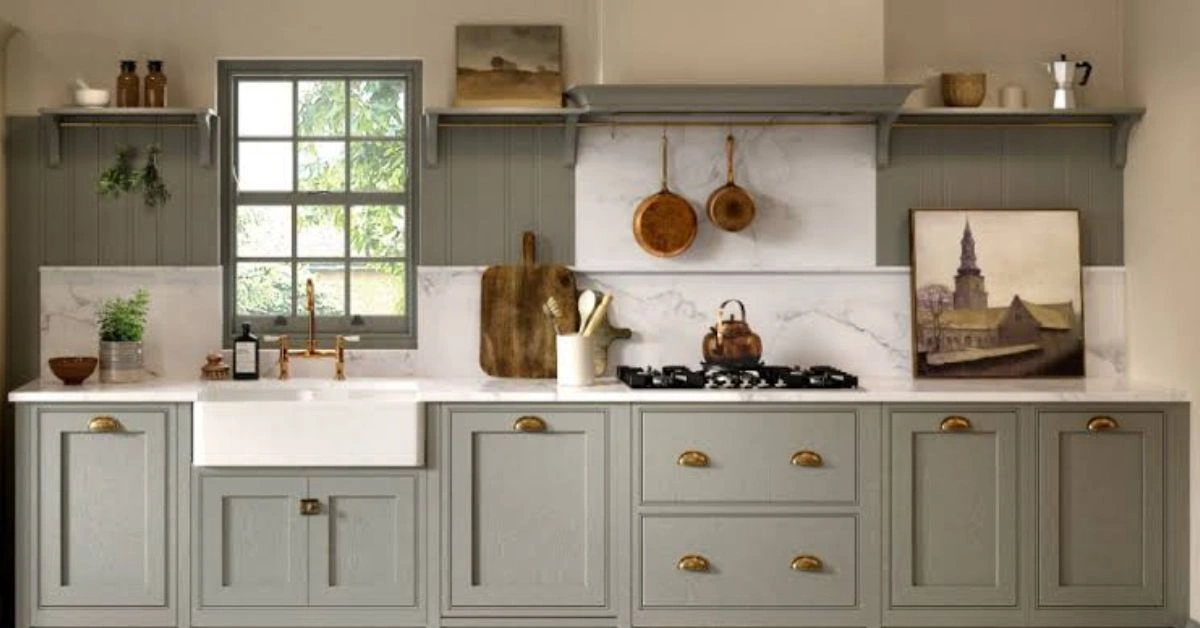
Beadboard, a form of tongue-and-groove panelling with small, rounded beads along the edge of each board, is a classic country kitchen choice. It works particularly well in shaker-style and country-style kitchens.
14. Slat Panelling on a Staircase Wall
Slat panelling on a staircase wall is a contemporary, sophisticated choice. The slats follow the angle of the staircase, which adds visual interest and makes the space feel more bespoke.
15. Panelling Around a Fireplace
Panelling around a fireplace, whether existing or newly added, frames the fireplace and creates a focal point. The panelling can match the rest of the room or be painted in a contrasting colour.
16. Panelling on a Chimney Breast
A chimney breast, in many UK homes, is a blank wall that cries out for panelling. The panelling can be a simple picture-frame design, a more elaborate Shaker style, or a contemporary slat wall.
17. Two-Tone Panelling
Two-tone panelling, with the panels in one colour and the frame in another, is a more designer-led look. The contrast adds depth and visual interest, and the colour combination can be tailored to the rest of the room.
18. Painted Panelling in a Heritage Colour
A panelling painted in a heritage colour, such as Farrow & Ball Hague Blue, Card Room Green or Setting Plaster, is a beautiful way to add character. The panelling transforms an otherwise plain wall into a focal point.
19. Natural Wood Panelling
A panelling in natural wood, particularly oak, ash or walnut, is a more expensive but more characterful choice. The wood adds warmth and depth, and ages beautifully over time.
20. Painted Slat Panelling
A slat panelling, painted in a single colour, is a more contemporary alternative to natural wood. The painted slats add rhythm and texture without the warmth of natural wood.
21. Panelling as a Headboard Alternative
A full-height panelling behind the bed, in place of a headboard, is a contemporary, designer-led look. The panelling creates a focal point and can be styled with cushions, throws and a pendant light to complete the look.
Materials and Costs
The cost of a panelling project depends on the material, the style and the size of the room.
MDF
MDF is by far the most popular material for interior panelling in the UK. It is stable, easy to cut, takes paint beautifully, and is significantly cheaper than solid timber. For most projects, MDF is the right choice.
Real Wood Veneer
Real wood veneered MDF or plywood is a good compromise if you want the look of solid timber without the cost. Oak, walnut and ash veneers are widely available.
Solid Timber
Solid timber is the most expensive option but also the most beautiful. For a single feature wall in a key room, solid timber can be a worthwhile investment.
Approximate Costs in 2026
- MDF picture-frame panelling, materials only: £15 to £30 per square metre
- MDF tongue-and-groove panelling, materials only: £20 to £40 per square metre
- Real wood veneer slat panelling, materials only: £50 to £90 per square metre
- Solid timber panelling, materials only: £80 to £200 per square metre
Professional installation adds £30 to £60 per square metre for straightforward projects.
DIY or Professional Installation?
Many panelling projects are within the capability of a competent DIYer, particularly those using off-the-shelf MDF mouldings. Slat panelling, particularly with concealed LED lighting, is more specialist and is usually best left to a professional.
If you are DIYing, take your time with the prep. Measure twice, cut once, and use a spirit level on every panel. The most common DIY mistakes are uneven spacing, crooked panels and visible nail holes, all of which are easily avoided with a little care.
Frequently Asked Questions
Q1. Is panelling expensive in the UK?
Simple MDF picture-frame panelling is very affordable, around £15 to £30 per square metre in materials. Real wood or slat panelling is considerably more expensive, but still cheaper than a full refurbishment.
Q2. Can you put panelling on any wall?
Most interior walls can take panelling, provided they are structurally sound, dry and reasonably flat. Plasterboard, brick and block walls are all suitable.
Q3. What is the best height for wall panelling?
The classic dado-height panelling sits at around 90 to 110cm from the floor, which works well in most UK homes with standard 2.4m ceiling heights. Full-height panelling, running from floor to ceiling, is increasingly popular in modern homes.
Q4. Does panelling make a room look smaller?
Used carelessly, panelling can make a room feel more enclosed. Used thoughtfully, with light colours and well-spaced panels, panelling can actually make a room feel more structured and intentional.
Q5. Can you put panelling in a bathroom?
Panelling in a bathroom is possible but requires careful material choice. Standard MDF will absorb moisture and swell. Moisture-resistant MDF, properly sealed and painted, can work in well-ventilated bathrooms.
Conclusion
Wall panelling is one of those rare interior design choices that is both beautiful and practical, both timeless and of-the-moment. Whether you are restoring a Victorian terrace, refreshing a 1990s new-build or finishing a brand-new flat, there is a panelling style that will suit your home and your budget.
The most important thing is to take your time choosing the right style. Look at homes of a similar period to yours for inspiration, sample paint colours in situ, and do not be afraid to seek professional advice if you are unsure.
Related Articles You May Find Useful
Continue exploring the topic with these hand-picked guides from our editorial team.
- wall panelling ideas (UK)
- inspiration for decorating hallways (UK)
- modern hallway ideas (UK)
- hallway decorating tips (UK)
- hallway paint ideas (UK)
Further Reading and Trusted Sources
For more inspiration and expert advice, see the latest from Real Homes — expert UK home renovation advice.
For more inspiration and expert advice, see the latest from Ideal Home — British decorating and interiors inspiration.