Table of Contents
- Measure the room before buying anything
- Choose a bed that leaves usable floor space
- Use vertical and hidden storage
- Plan the walking route and door swings
- Use colour, light and mirrors with purpose
- Pick compact furniture that earns its footprint
- Small bedroom makeover costs in 2026
- Small bedroom makeover FAQs
- Final Thoughts
Measure the room before buying anything
A UK small bedroom is often under 9-10m2, and a box room may be closer to 5-7m2. The difference between a room that works and one that feels impossible can be 10cm beside the bed, so measure the clear floor rather than guessing from the furniture catalogue.
Record the room length and width at skirting level, the position and depth of the radiator, door swing, window opening, sockets, alcoves and any chimney breast. Mark the maximum bed footprint with masking tape. Also measure the access route; a large ottoman bed that cannot turn at the top of the stairs is not a space-saving solution.
Choose a bed that leaves usable floor space
| UK mattress | Mattress size | Best use | Planning note |
|---|---|---|---|
| Single | 90 x 190cm | Child, guest or narrow box room | Allow 60cm clear on the main access side |
| Small double | 120 x 190cm | One adult who needs more width | Good compromise, but bedding and frames vary |
| Double | 135 x 190cm | Two adults where the room allows | Usually needs a room at least about 2.6m wide to feel comfortable |
| King | 150 x 200cm | Larger room only | Needs extra length and more clearance at the foot |
The mattress size is not the bed size. A heavy upholstered frame may add 10-20cm to both width and length. In a 2.15m x 2.75m box room, a single or small double often leaves a usable route, while a full double can turn the space beside the wardrobe into a pinch point.
An ottoman bed can provide roughly the footprint of a bed with wardrobe-like storage underneath. Choose a gas-lift mechanism that you can operate safely, check the maximum mattress weight, and leave space to open it. Drawers are useful only on the side with clearance; do not pay for drawers that will be trapped against a wall.
Use vertical and hidden storage
Floor area is precious, but wall height is usually underused. A tallboy about 40-45cm wide can hold several drawers in half the floor width of a conventional chest. Use the chimney breast or an alcove for shallow shelving, but subtract 2-3cm from the measured width so the furniture can be fitted without scraping the plaster.
Storage that works in a compact room
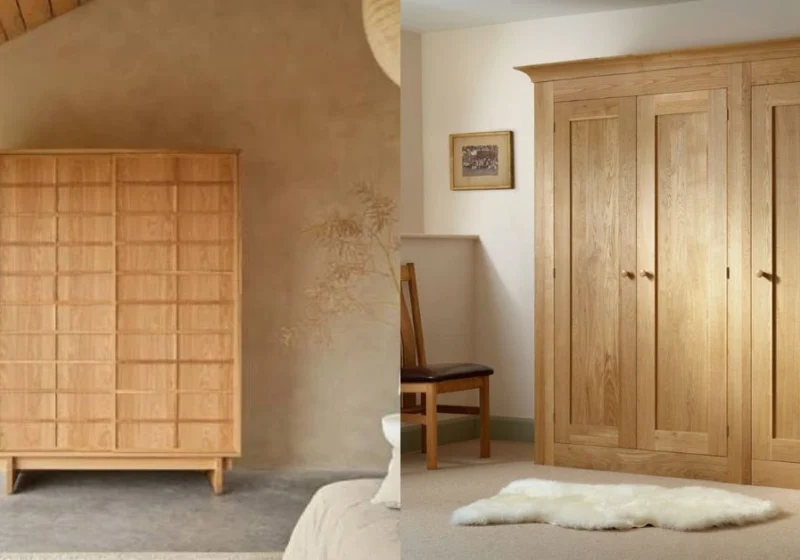
- Choose a wardrobe no deeper than 55-60cm unless it is a deliberate dressing zone.
- Use sliding doors only when the wardrobe front is the main route; hinged doors give better access if there is room to open them.
- Fit a shelf above the door for suitcases, but keep heavy items low and secure the shelf to suitable structure.
- Use wall-mounted bedside shelves or a 25-35cm-wide table instead of a deep pair of cabinets.
- Store off-season clothes in vacuum bags or lidded boxes under the bed, but do not block ventilation around a damp external wall.
Built-in wardrobes commonly cost £1,000-3,500 for a small bedroom in 2026, depending on doors and internals. Freestanding storage is often £200-800. Spend on the system only if it solves a measured problem; a tall, narrow chest and a good bed can be more flexible than a wall of cabinets.
Plan the walking route and door swings
Try to keep 60cm at the side used to get into bed and about 70cm at the foot if you want to open drawers or walk past comfortably. In a very tight room, 50cm may be workable on one side, but do not make the only route pass between a bed corner and a door that swings into it.
Hang a full-length mirror on the back of the door or use mirrored wardrobe panels if the door will not collide with the bed. A wall-mounted fold-down desk can turn a spare room into a work and guest room, but test the chair clearance before fixing it. Keep the main route to the window and radiator accessible for ventilation and maintenance.
Use colour, light and mirrors with purpose
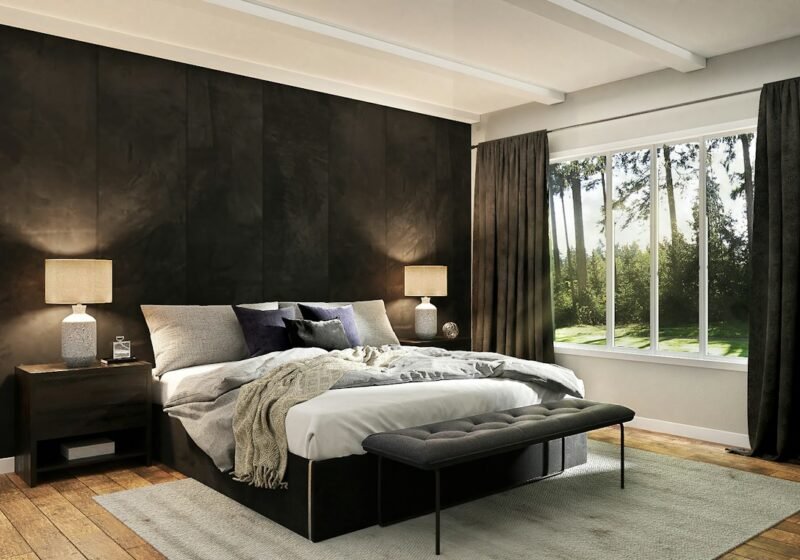
Light neutrals, chalky greens, warm whites and soft blue-grey can reflect daylight, but a small room does not have to be white. A single deep wall behind the headboard can make the bed feel anchored; the risk is using a sharp contrast that cuts the room into a small box. Paint the skirting and door in a similar tone if you want fewer visual lines.
Use a ceiling fitting for general light, a bedside lamp or wall light for reading, and a low-level light inside a wardrobe. Warm 2,700-3,000K bulbs work for relaxing; a 400-600 lumen reading lamp is usually enough beside the bed. Keep mirrors where they reflect a window or light, not directly at an unlit wall.
Short curtains that stop above the sill can make the window feel smaller. Floor-length curtains hung above and beyond the frame often make the wall look taller, provided they do not cover a radiator or block the wardrobe.
Pick compact furniture that earns its footprint
Use the largest piece – normally the bed – as the starting point. Add only furniture that solves a daily task. A 43cm-wide tallboy, a 30cm-deep wall shelf and a stool that doubles as a bedside seat are more useful than several small baskets that still need a home.
For a guest room, consider a small double with under-bed storage, a fold-down desk and a wall-mounted reading light. For a child’s room, keep a clear central play area and choose storage they can reach; tall furniture must be secured to the wall. For a main bedroom, prioritise a comfortable mattress, a clear route and curtains that control early light before buying decorative pieces.
Small bedroom makeover costs in 2026
| Makeover level | Typical spend | What it can include |
|---|---|---|
| Paint and edit | £100-350 | Paint, lamp, hooks, shelf and soft furnishings |
| Furniture refresh | £600-1,800 | Bed, compact storage, lighting and curtains |
| Fitted solution | £1,500-4,500 | Ottoman or bed, made-to-measure storage and decoration |
Keep 10% aside for awkward walls, new fixings and disposal. A small room is not automatically a cheap room: bespoke storage is priced by labour and detailing as much as by floor area.
Small bedroom makeover FAQs
Will a small double bed fit in a box room?
It depends on the room and frame. The mattress is 120 x 190cm, but the frame can be 130-145cm wide. In a 2.15m-wide room, measure the frame and aim to keep at least 60cm on the main access side.
How deep should a wardrobe be in a small bedroom?
About 55-60cm is the practical range for hanging clothes. A 35-45cm-deep cabinet can hold folded clothes and shoes, but it will not give a full-width hanging rail without crushing garments.
Are mirrored wardrobes a good idea?
They can reflect light and remove the need for a separate mirror, but only if the doors open safely and the reflections are useful. Use safety-backed mirror panels and secure the unit to the wall.
Where should a desk go in a compact bedroom?
Use a 80-100cm-wide, 50-60cm-deep desk in an alcove or beside the wardrobe, with side-on daylight to reduce screen glare. A wall-mounted or fold-down desk works only when the chair can be stored without blocking the route.
What is the best storage for a room under 6m2?
Prioritise an ottoman bed or high under-bed boxes, a tall narrow chest and one full-height wardrobe. Avoid low, wide pieces that consume the only walking width and add little vertical capacity.
Can dark paint make a small bedroom feel bigger?
It can make the room feel deeper and calmer, especially behind the bed, but it will not reflect as much light. Use a dark tone on one plane and keep lighting, ceiling and large storage visually quiet if the room has little daylight.
Final Thoughts
A successful small-bedroom makeover is a measurement exercise before it is a styling exercise. Choose the smallest bed that genuinely supports the sleeper, use height for storage, protect the main route and let light travel across the room. When every large item has a job and a measured footprint, the room feels more generous without pretending to be larger than it is.