Torus skirting board is a popular UK profile with a simple convex curve that creates a soft shadow at the top of the board. It suits both modern and period homes, but “torus” is not one exact size: suppliers vary the arc, thickness, height and finish, so compare samples before replacing a visible run.
Torus skirting board: what the profile looks like
A torus has one rounded sweep across the upper face, usually finishing in a small flat or bevel. It is quieter than an ornate ogee and more characterful than square edge board. The curve catches dust and light differently depending on its depth, which is why two products labelled Torus 1 can look different when they meet in a hallway.
Order a short sample or visit a merchant before committing. Compare the profile against the architrave, window boards and existing skirting from standing height, not just on a website photograph. Howdens’ torus skirting range illustrates the range of heights and materials sold under the same profile name.
For a second manufacturer comparison, Skirting King’s torus profile information shows why the curve and available finish should be checked rather than assumed from the name alone.
Choose material and height
MDF or pine?
Moisture-resistant MDF gives a stable, consistent board that is easy to paint and usually arrives finger-jointed or in long lengths. Seal all cut ends and do not treat “moisture-resistant” as waterproof. Pine is a good match for existing timber trim and can be repaired by sanding, but knots, grain and seasonal movement require more preparation.
Common torus boards are around 18mm thick and 95mm, 119mm or 144mm high, with taller options for larger rooms. The exact range depends on the maker. A 25mm-thick heritage board can project beyond a narrow architrave, so check the return at doorways before ordering.
Height and room proportion
For a typical 2.4m ceiling, 95mm or 119mm often feels balanced. A 144mm or 169mm board can look excellent in a high-ceilinged Victorian room but may dominate a low-ceilinged box room. Match the height to the existing door casing where possible. If you like the rounded profile but want a more contemporary finish, compare it with bullnose skirting board before deciding.
Match torus to the existing trim
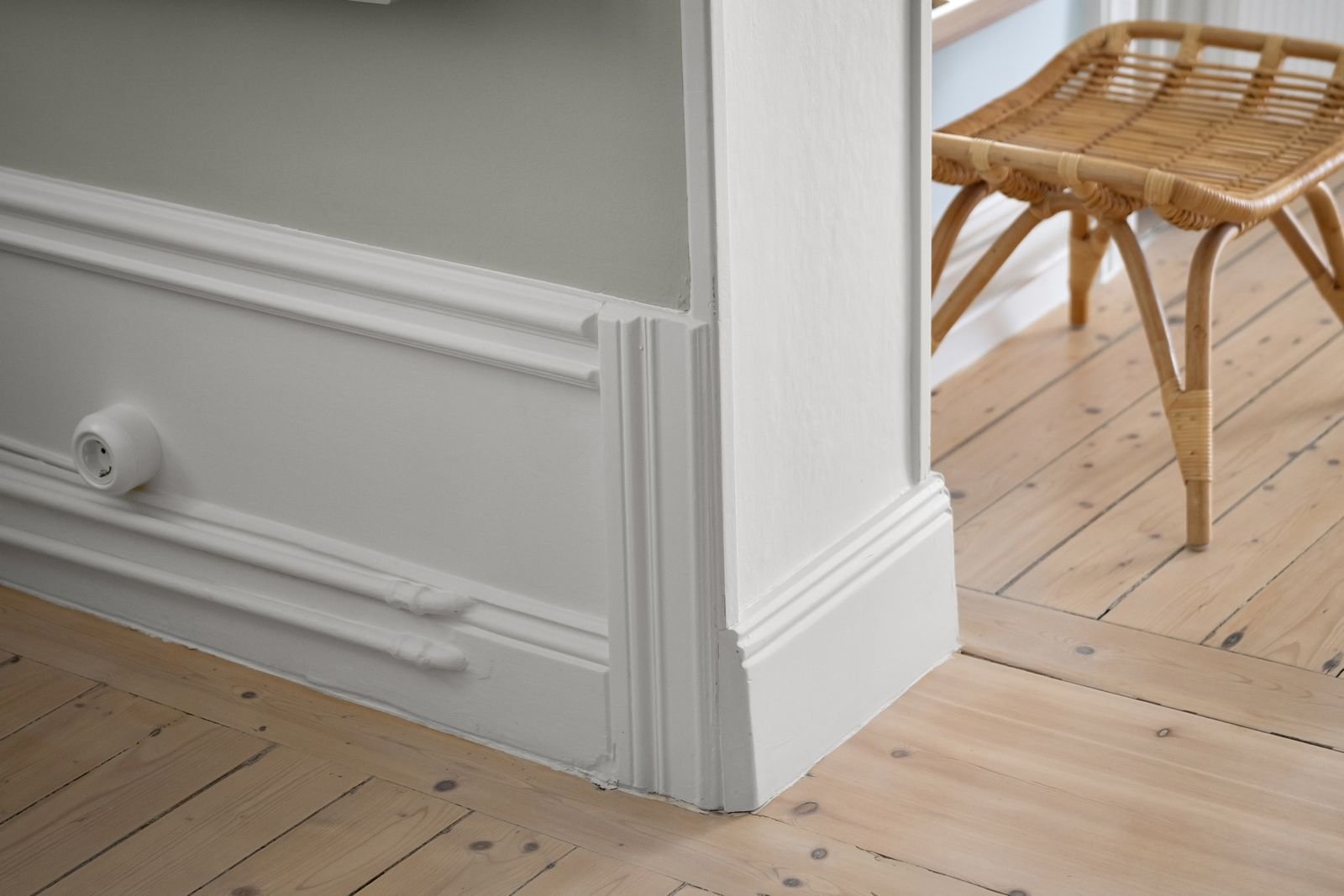
If you are replacing one wall, match the profile’s curve and thickness first, then its height. A close colour match cannot disguise a different shadow line. Check the architrave at the nearest door, the skirting behind radiators and any older board in adjoining rooms. When a perfect match is impossible, use a transition at a doorway rather than carrying a visibly different profile around the whole floor.
White torus is easy to source and can coordinate with painted doors. Natural or clear-finished pine needs a closer match to the existing timber tone. Our MDF primer guide covers the practical difference between primed and factory-finished surfaces.
Measure, cut and fit
Measure every wall along the floor, subtract openings and add around 10% for waste. Mark the face and direction of each length before cutting. Cope internal corners where your tools and profile allow; a coped joint is more tolerant of an imperfect corner than two square mitres. Use adhesive on sound, dry walls and add mechanical fixings where the wall or board needs them. Find pipes and cables first, especially around radiators and sockets.
Leave the floor’s necessary movement gap clear and caulk the top edge only after the board is fixed. Do not bridge damp or hide a leaking wall behind MDF. If the job includes a new floor, read our skirting board covers guide before covering an old board that may need removing.
Painting for a clean curve
Lightly sand primed board, fill nail holes, caulk the top joint and remove dust. Apply a suitable undercoat where the maker or paint system requires it, then use two thin coats of satinwood or eggshell. A small angled brush follows the torus curve more neatly than loading a large brush with paint. Paint the wall before the final trim coat if you want a sharper top line.
Frequently Asked Questions
Q1. Is torus skirting board old-fashioned?
No. Its single rounded curve is traditional but restrained, so it works in period and contemporary rooms. The height, thickness and paint finish control how formal it feels.
Q2. What is the usual height of torus skirting?
Common options include roughly 95mm, 119mm and 144mm, with taller boards available. Check the supplier’s exact dimensions and the height of nearby architraves.
Q3. Is MDF or pine better for torus skirting?
MDF is stable and consistent for painted work, while pine suits existing timber trim and can be sanded. Both need correct preparation and sealed cut ends.
Q4. Can I fit torus skirting over old skirting?
Sometimes, but the old board may affect projection, damp and the floor gap. Measure the resulting doorway and radiator clearances before choosing an overlay approach.
Final Thoughts
Torus skirting board is versatile because its curve is recognisable without being overpowering. Take a sample, match the existing trim where it matters, and treat measuring and end sealing as part of the design rather than last-minute fitting chores.

1 thought on “Torus Skirting Board: Profile, Sizes, Materials and Fitting Advice”