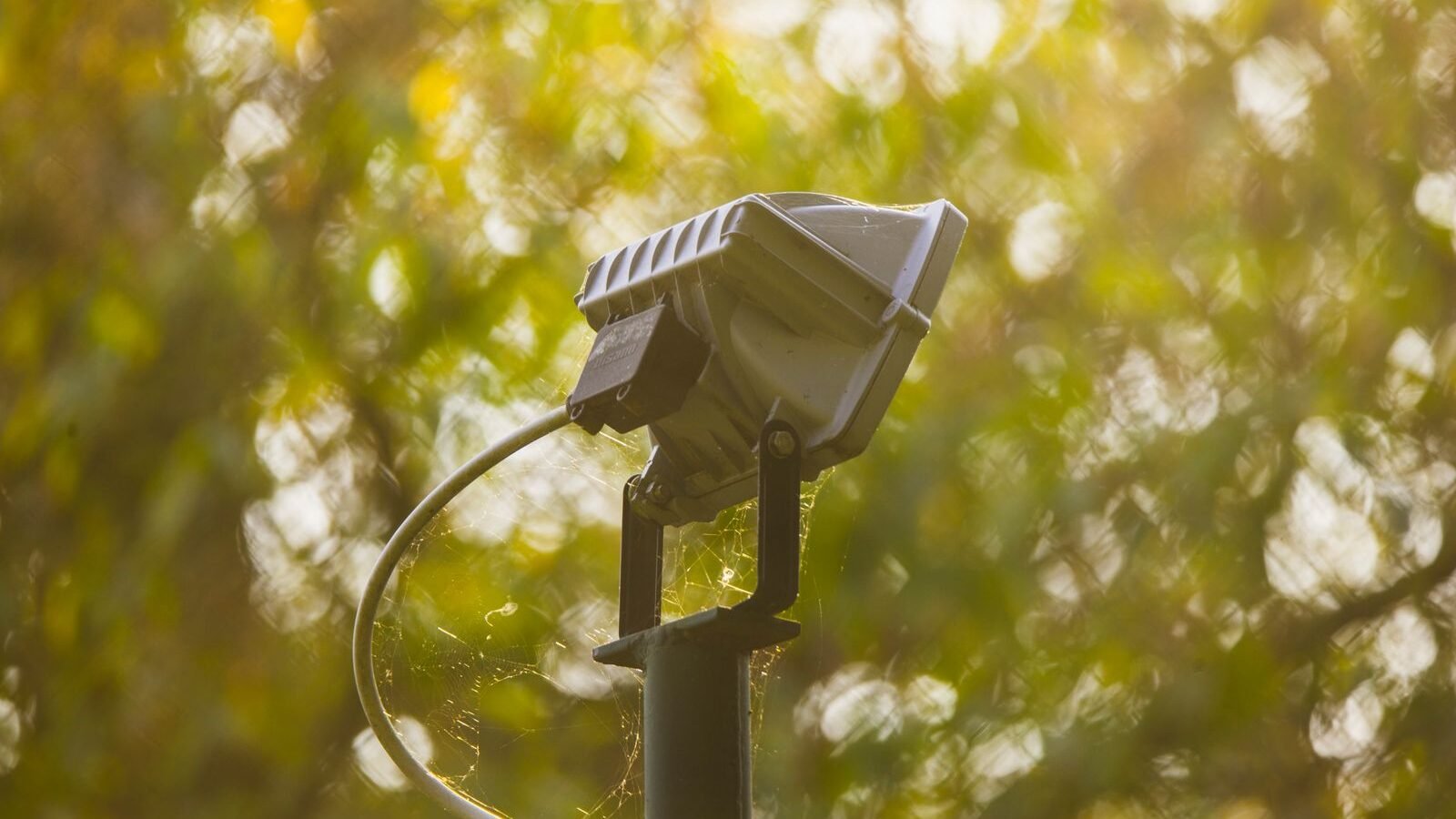
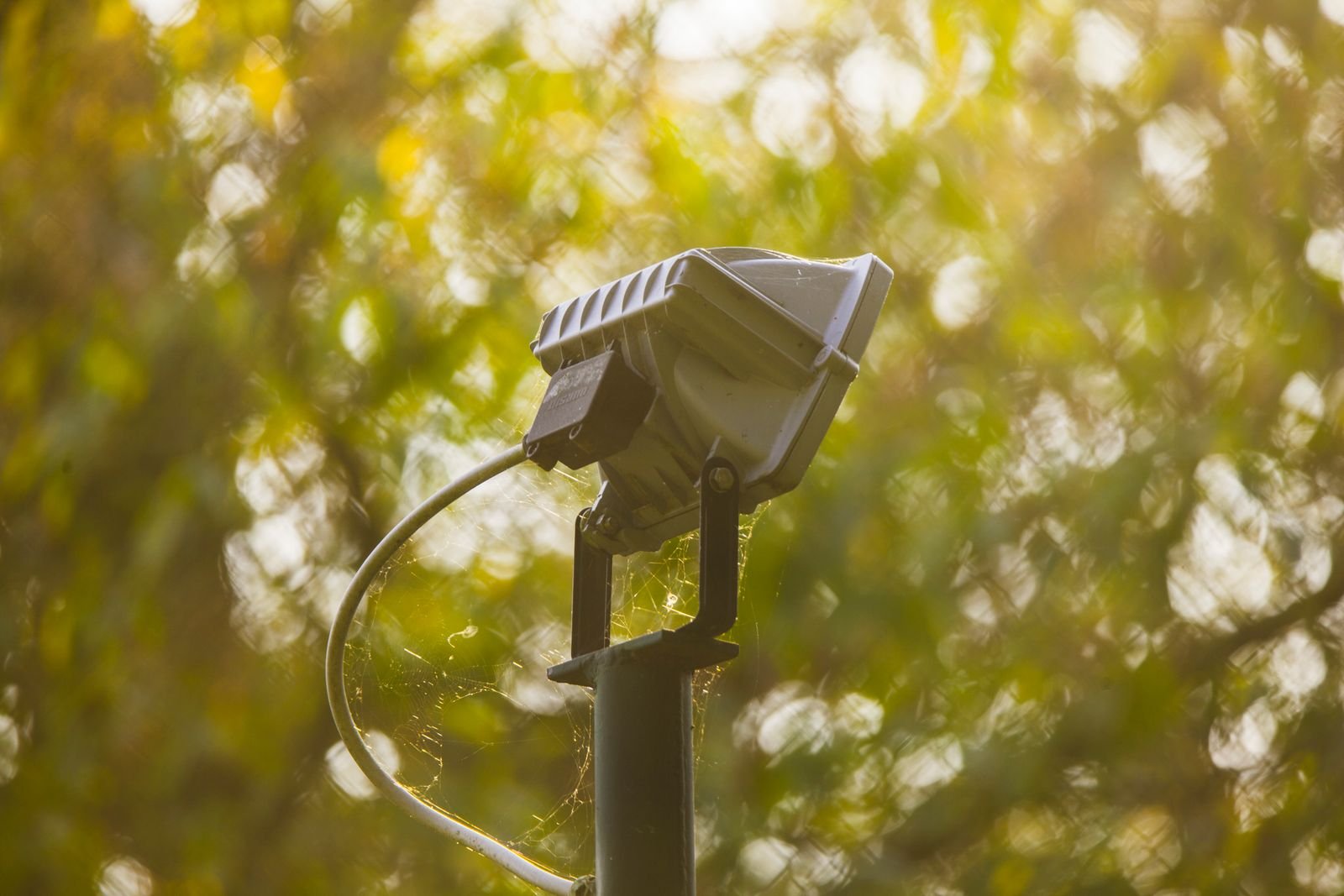
Garden spotlights are most effective when they light one deliberate feature, such as a tree, wall or planting group, rather than flooding the whole plot. Choose an adjustable fitting, a warm colour temperature and the correct IP rating, then place it so the beam is hidden from eye level and the cable can be serviced safely.
Garden spotlights: decide what the spotlight should do
Use an uplight at the base of a multi-stem tree, cross-light a textured wall from two sides, or pick out a sculptural pot with one small beam. A spotlight on a path should guide feet without shining into faces; for general movement, low-level bollards or wall lights may be calmer. Layering is the principle behind our garden lighting ideas: feature light, route light and task light each have a job.
Sketch the view from inside the house and from the seating area after dark. If the fitting is visible as a bright dot, move it behind planting or use a shield. Avoid pointing a powerful beam at a neighbour’s window or directly towards the house.
Beam angle, lumens and colour
Beam angle
A narrow beam creates a strong vertical accent on a trunk or architectural feature. A wider beam washes shrubs or a wall more gently. Adjustable heads are useful because a few degrees can change whether the light lands on the leaves or the neighbour’s fence. Check the maker’s beam angle where it is given; “spotlight” alone does not tell you how wide the pool will be.
Warmth and output
Warm white around 2700K to 3000K usually keeps brick, timber and foliage looking natural. Cool white can feel stark and exaggerate glare. Think in lumens: roughly 100 to 300 lumens is often enough for a single tree or border feature, while a broad security effect needs more and careful aiming. A current professional fitting such as Collingwood’s outdoor spotlight specification shows the useful information to compare, including adjustability, construction and IP protection.
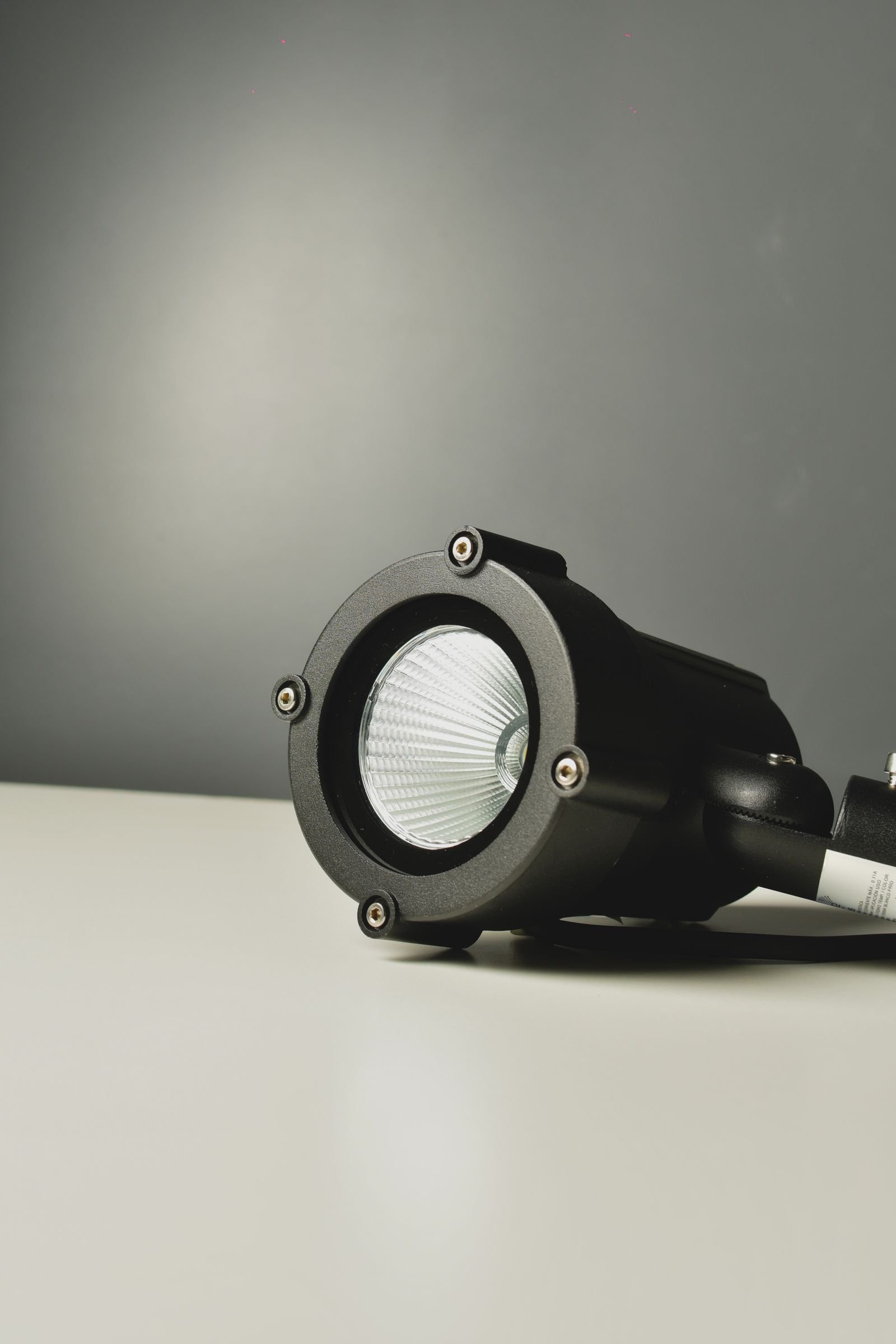
IP ratings and voltage
The second digit of an IP rating describes water protection; the first relates to solids. IP44 suits some sheltered splash locations, while IP65 offers stronger dust protection and resistance to water jets. IP68 is a specialist rating for equipment that may be submerged and is not needed for an ordinary border light. The whole installation, including joints and connectors, must be suitable for the location.
Low-voltage systems are often easier to route around a garden and can be safer to handle, but they still need the correct transformer, cable size, connectors and maximum load. Mains-voltage outdoor work should be designed and installed by a competent electrician. Electrical Safety First provides general safety guidance; use the product instructions for the system itself.
Place lights without glare
- Place the light 30cm to 1m from a plant depending on beam width and height.
- Angle the head away from eye level and shield the lens from the main viewing route.
- Keep the cable route clear of mower blades, spades and future planting.
- Use fewer fittings at lower output rather than creating a line of bright dots.
- Test at night before final burial or fixing; move each light while it is operating.
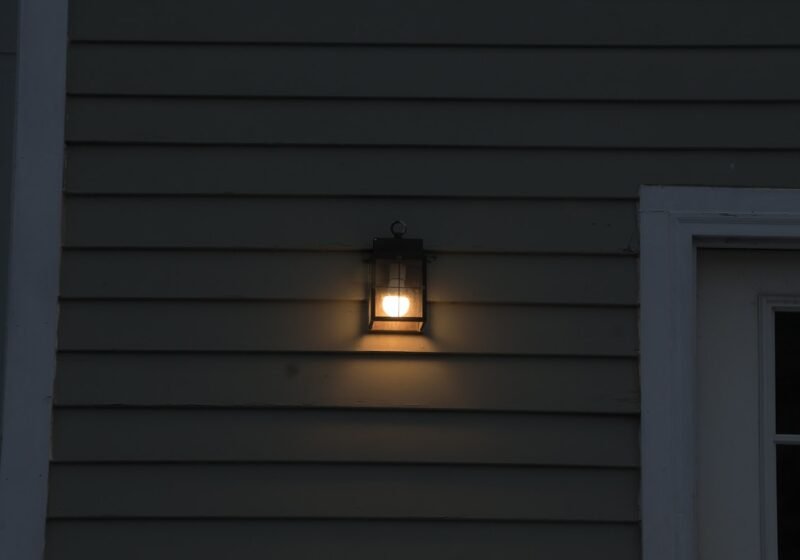
Do not bury a connector unless it is rated for burial and installed as specified. Leave a service loop where the head may need repositioning and label the transformer circuit. For a wall-mounted alternative, use the same principles of glare control, weather rating and sensible cable routing.
Install, test and maintain
Call utility-check services before digging, use the supplied stake rather than forcing a fitting into hard ground, and protect cable from sharp edges. Let new planting settle before fixing an uplight permanently. Clean lenses, check seals and remove leaves that alter the beam. LED fittings usually need little attention, but a flickering light can indicate water ingress, a loose connector or an overloaded driver rather than a failed lamp alone.
Budget and useful features
Basic stake spotlights can start around £15 to £40 each. Better low-voltage systems and die-cast aluminium fittings may cost £50 to £150 per light, before transformer and cable. Compare warranty, replaceable parts, glare control, colour consistency and whether bulbs are integrated. Smart colour-changing lights are fun, but a fixed warm white fitting is often easier to live with in a planted garden.
Frequently Asked Questions
Q1. How many garden spotlights do I need?
Start with one fitting for a small feature or two for a broad tree or wall. Test the beam at night before buying a row of lights; fewer, carefully aimed fittings usually look better.
Q2. What IP rating is best for garden spotlights?
IP44 may suit a sheltered position, while IP65 gives stronger outdoor protection. Choose the rating and installation method stated for the exact exposure and connector system.
Q3. Are low-voltage garden lights safer?
Low voltage can simplify a garden system, but transformer sizing, cable, connectors and burial still matter. Use a competent electrician for mains-voltage outdoor work.
Q4. What colour temperature is best for garden lighting?
Warm white around 2700K to 3000K generally suits foliage, brick and timber. Cooler light can be useful for a task or security fitting but is more prone to glare.
Final Thoughts
Garden spotlights should make one feature legible after dark, not turn the garden into a car park. Specify the beam and output, hide the glare, use a suitable outdoor system and test every position before making it permanent.