Solar wall lights are worthwhile when the panel gets enough daylight for the job you need. A fitting on the darkest side of a house may be convenient to mount but disappointing at night, while a separate-panel model can put the lamp beside the back door and the panel on a sunnier south- or west-facing wall.
Define the lighting job
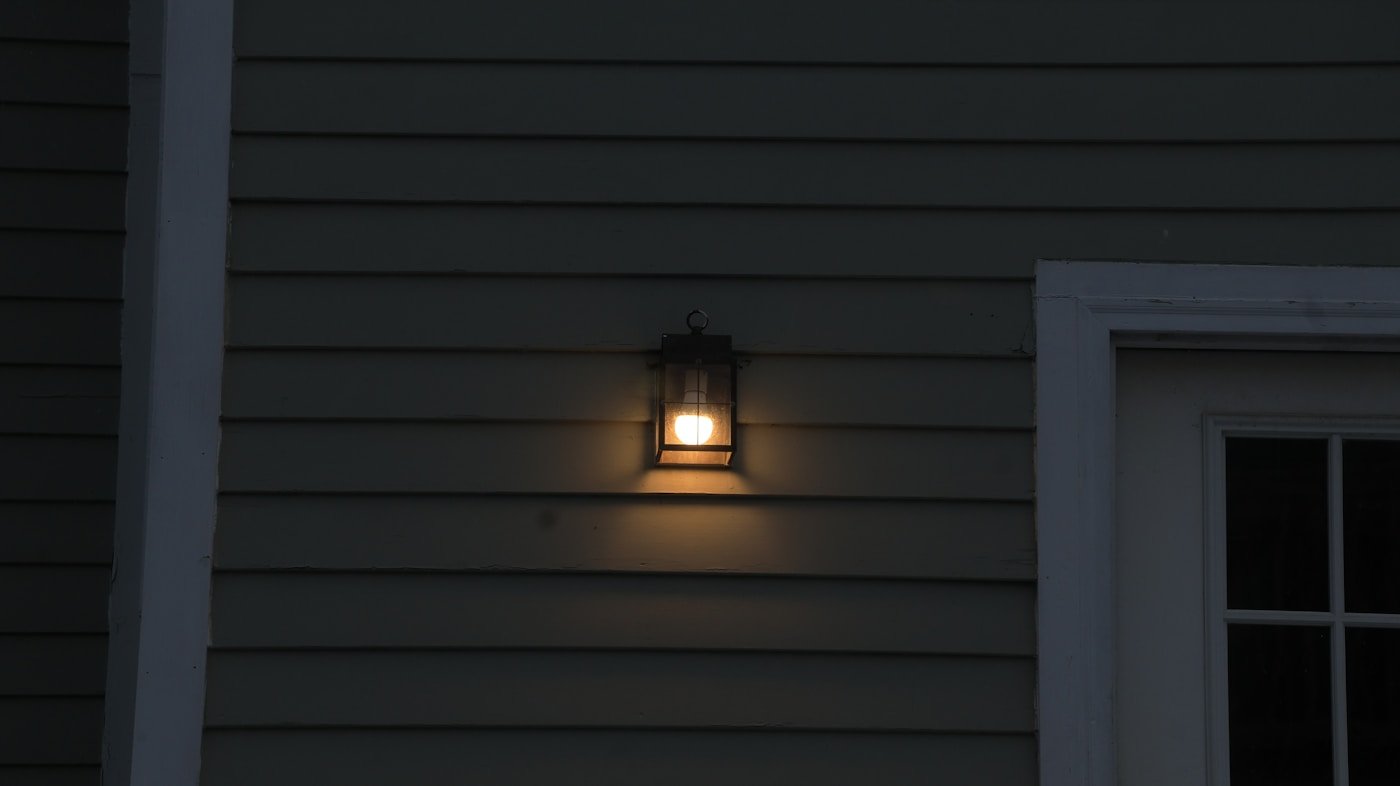
Use a low-output warm light to mark a path or make a seating area feel welcoming. Use a brighter neutral-white fitting with a PIR sensor for a bin store, side gate or driveway approach. A decorative 20 to 100 lumen lantern cannot replace a 600 to 1,000 lumen security light, and a very bright cool-white beam can glare into a neighbour’s window.
Check whether you want dusk-to-dawn, motion-only, dim-plus-boost or a timed mode. Toolstation’s Lutec Vyzor is a useful example of the category: up to 1,000 lumens, 4000K light, an 8m PIR range and a 120-degree detection angle. By contrast, a compact 220 to 300 lumen unit is better for a porch or short path than for lighting a whole driveway.
Read lumens and specifications
Compare lumens, beam spread and run time together. A 600 lumen Luceco Prysm from Wickes is a reasonable mid-range benchmark and often costs about £25 to £45; a 1,000 lumen model from Toolstation or PowerBee is more likely to sit around £50 to £90. Cheap decorative lamps under £20 may be perfectly adequate for a border but not for facial recognition or a dark gate.
For exposed brick or rendered walls, look for at least IP54; IP65 gives more confidence against rain and dust when the fitting is not under an eave. Check the battery type and capacity, not just the word rechargeable. A 3.7V lithium-ion pack around 2,000 to 3,600mAh is common. PIR range, sensor angle, colour temperature and the charging time on a cloudy day are more useful than a headline wattage.
Find a good panel position
Walk around the property at midday and note where trees, fences, roof overhangs and neighbouring walls shade the proposed panel. South-facing is often the easiest starting point in the UK, with west-facing positions also useful for evening charging. A north-facing wall can work in summer but usually gives a smaller winter energy budget.
Integrated panel-and-lamp units are quick to fit but restrict the choice of wall. Separate-panel systems need a cable route and two fixing locations, yet they solve the common problem of a bright lamp placed where the sun never reaches. Our outdoor-lighting ideas can help you plan several low-level sources instead of pointing one harsh beam at every corner.
Mount it on UK walls
Use the supplied plugs only when they match the substrate. A brick fixing is not the same as a hollow render or a timber fence, and drilling into a damp joint can loosen the fitting. Mount many PIR lights around 2 to 3m high, but check the sensor’s stated height and angle. Keep the panel free of gutter drip lines and do not bury it behind a climbing plant.
Solar units do not need mains wiring, but inspect for hidden cables and pipes before drilling. If you are replacing a mains light, altering fixed wiring or fitting a light to a leasehold property, use the appropriate qualified person and permission. The Electrical Safety First outdoor guidance explains why weather and cable protection matter even outside the house.
Make winter performance realistic
Short December days and low sun mean less stored energy, so a light that runs all night in June may switch to a dim mode or run for only a few hours in winter. Choose a motion-boost mode rather than constant full brightness if the fitting is for security. Keep expectations realistic on a shaded wall, and consider a USB-C backup charge when the model provides one.
Do not read a maximum lumen figure as an all-night output. Ask how long the claimed brightness lasts, how the sensor behaves and whether the battery is replaceable. A 500 to 850 lumen fitting with a dim standby mode can be more useful than a nominal 1,000 lumen lamp that exhausts its battery after one detection.
Care and troubleshooting
Wipe the panel and lens with a soft damp cloth every few weeks during pollen season, then check that a new plant or hanging basket has not shaded the cell. If the lamp is dim, clean first, confirm the switch is in the right mode and give the battery a full bright-day charge. Replace the battery only with the specified chemistry, size and polarity.
Inspect seals, screws and cable joints after a winter storm. Water inside the lens, a cracked housing or a loose wall bracket is a reason to stop using the fitting until it is repaired or replaced. See the site’s garden design ideas for ways to keep planting from blocking a useful beam.
Frequently Asked Questions
1. How many lumens do I need for a solar wall light?
Around 20 to 100 lumens can mark a path or provide decorative glow, 200 to 400 lumens suits a porch or small patio, and 600 to 1,000 lumens is more appropriate for a gate or driveway approach. Beam spread and motion mode matter as much as the maximum figure.
2. Is IP44 enough for a solar wall light?
IP44 can suit a sheltered porch, but an exposed wall benefits from IP54 or IP65. Check the manufacturer’s installation position and keep the fitting away from gutter run-off; the rating does not excuse a cracked seal or poorly protected cable.
3. Where should I put the solar panel in a UK garden?
Start with a position that receives unobstructed daylight, commonly south or west facing, and check it at different times of day. If the lamp’s wall is shaded, choose a separate-panel model so the panel can be mounted in stronger sun.
4. Why do solar wall lights become dim in winter?
Winter brings shorter days, lower sun and more cloud, so the battery stores less energy. Clean the panel, use a dim-plus-motion mode and choose a model with a replaceable battery or USB backup if dependable winter light is important.
Final Thoughts
Choose the job first, then compare lumens, PIR behaviour, battery capacity and IP rating. A modest light on a sunny wall will often outperform a brighter fitting trapped in shade, especially through a typical UK winter.