Drapery designs for bedroom are the foundation of a thoughtful, well-planned space. This comprehensive guide brings together everything our editors have learned about drapery designs for bedroom, from layout and lighting to materials, finishes and budget-friendly upgrades, so you can make confident decisions and avoid the costly mistakes we see repeated in homes every year. Whether you are starting a full refurbishment or simply refreshing a tired room, the drapery designs for bedroom covered here will help you get the most from your space, your budget and your time.
Drapery designs for bedroom: Why Bedroom Drapery Is the Most Personal Window Treatment
In most American homes, the bedroom is the most personal room, and the drapery is the most personal element of the decor. The drapery frames the window, controls the light, adds softness, and provides an opportunity to introduce color, pattern, and texture that reflects the homeowner’s personal taste.
Table of Contents
A well-chosen bedroom drapery transforms the room from a place to sleep into a sanctuary. A poorly chosen one, or no drapery at all, makes the room feel exposed, bright in the morning, and visually unfinished.
This guide brings together 23 drapery designs for the bedroom, from modern minimalist to traditional formal, from sheer to blackout, from off-the-rack to custom.
23 Drapery Designs for the Bedroom
1. Floor-Length Linen Drapes
The classic, timeless choice: floor-length linen drapes, in a soft neutral, hung from a ceiling-mounted rod. The linen drapes beautifully, softens the light, and works in any style of bedroom.
2. Blackout Drapes
Blackout drapes, with a separate blackout lining, are the most important bedroom window treatment. The drapes block the light that would otherwise wake the sleeper at dawn.
3. Velvet Drapes
Velvet drapes, in a rich color such as emerald, sapphire, burgundy, or charcoal, add warmth, weight, and a sense of luxury. The velvet also provides excellent light blocking and insulation.
4. Pinch-Pleat Drapes
Pinch-pleat drapes, with pleats sewn into the top, have a traditional, formal look. The pinch-pleats work well in formal and traditional bedrooms.
5. Grommet-Top Drapes
Grommet-top drapes, with metal rings at the top, hang in clean, even folds. The grommets work well in modern and contemporary bedrooms.
6. Tab-Top Drapes
Tab-top drapes, with fabric loops at the top, have a casual, country look. The tabs work well in farmhouse, cottage, and country-style bedrooms.
7. Rod-Pocket Drapes
Rod-pocket drapes, with a pocket at the top, have a soft, gathered look. The rod-pocket works well in casual and traditional bedrooms.
8. Wide Drapes
Wide drapes, with extra fabric for a generous gather, have a luxurious, modern look. The width should be 1.5 to 2 times the width of the window.
9. Long Drapes that Puddle on the Floor
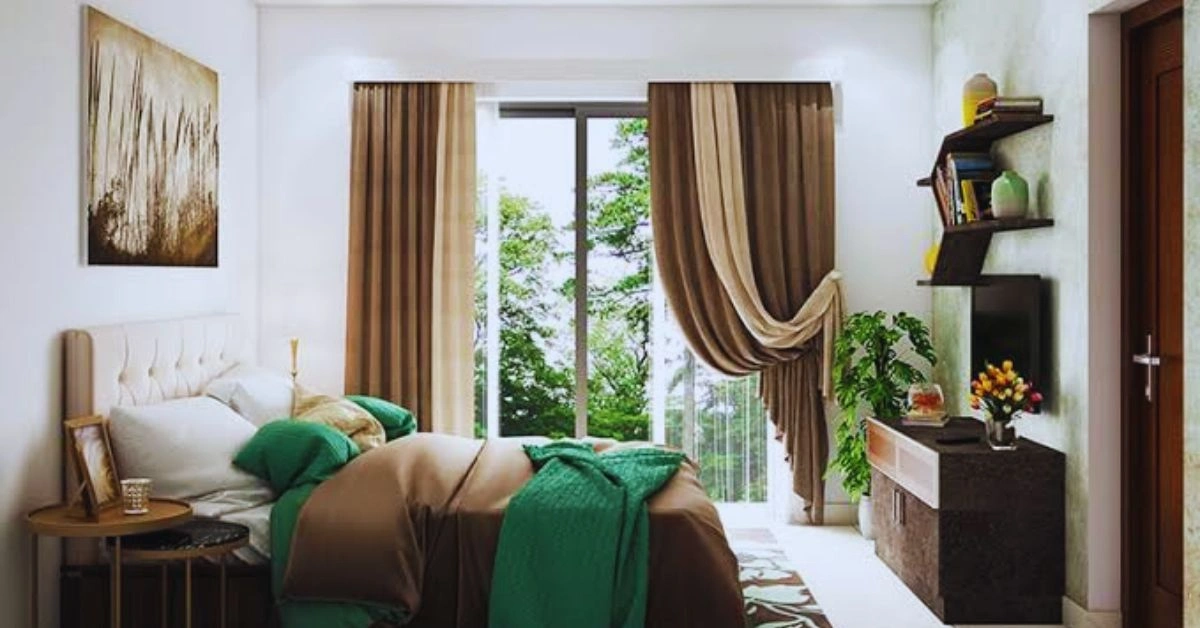
Long drapes, with extra fabric that puddles on the floor, have a luxurious, romantic look. The puddle adds visual interest and softness.
10. Layered Drapes
Layered drapes, with a sheer layer on the back rod and a heavier drape on the front, allow for versatile light control.
11. Sheer Drapes
Sheer drapes, hung alone in a bedroom that does not need full blackout, soften the light and add a sense of romance.
12. Patterned Drapes
Patterned drapes, in a stripe, a floral, a geometric, or a more subtle pattern, add visual interest. The pattern should be coordinated with the rest of the room.
13. Solid Color Drapes in a Bold Hue
Solid color drapes in a bold hue, such as navy, emerald, mustard, or terracotta, add a strong color statement.
14. White Drapes for a Fresh Look
White drapes, in a crisp cotton or linen, add a fresh, clean look. The white works in any style of home and brightens the room.
15. Neutral Drapes in a Textured Fabric
Neutral drapes in a textured fabric, such as a woven linen, a chunky weave, or a textured cotton, add interest without competing with the rest of the room.
16. Two-Tone Drapes
Two-tone drapes, with the front in one color and the back in another, add a designer-led touch. The lining color can be revealed when the drapes are drawn.
17. Striped Drapes
Striped drapes, in a classic ticking stripe or a bolder modern stripe, add visual interest. The stripes can be vertical or horizontal.
18. Floral Drapes
Floral drapes, in a botanical or chintz pattern, add a romantic, traditional feel. The florals work particularly well in cottage, country, and English-style bedrooms.
19. Geometric Drapes
Geometric drapes, in a modern pattern, add a contemporary feel. The patterns can be subtle or bold.
20. Drapes with Tiebacks
Drapes with tiebacks, in a coordinating fabric or a contrasting color, add a traditional, romantic touch. The tiebacks can be simple fabric ties or more elaborate tasseled cords.
21. Drapes Hung from the Ceiling
Hanging drapes from a ceiling-mounted rod, rather than a wall-mounted one, makes the window and the room feel larger.
22. Drapes with a Valance
A valance, hung above the drapes, adds a decorative touch and hides the curtain rod. The valance can be a simple pleated style or a more elaborate swag.
23. Drapes with Blackout Lining
Drapes with a separate blackout lining, attached to the back of the drape, provide excellent light control. The blackout lining is particularly important in bedrooms.
How to Choose the Right Bedroom Drapery
The right bedroom drapery depends on three things: the light, the style, and the level of privacy needed.
Consider the Light
If the bedroom faces east, choose blackout drapes to block the morning light. If the bedroom faces west, choose heavier drapes that can be closed in the afternoon.
Consider the Style
The drapery should match the style of the bedroom. In a modern bedroom, choose grommet-top or wide drapes. In a traditional bedroom, choose pinch-pleat or velvet drapes. In a casual bedroom, choose tab-top or rod-pocket drapes.
Consider the Privacy
If the bedroom is on a ground floor or faces another building, choose drapes that provide full privacy when closed.
Frequently Asked Questions
Q1. What is the best drapery for a bedroom?
Blackout drapes are the best choice for a bedroom, as they block the light that would otherwise wake the sleeper at dawn. The drapes can be lined with a separate blackout lining for the best performance.
Q2. How wide should bedroom drapes be?
The drapes should be 1.5 to 2 times the width of the window for a generous gather. For a more modern look, 2.5 to 3 times the width gives a fuller, more luxurious appearance.
Q3. How high should I hang bedroom drapes?
The curtain rod should be mounted as close to the ceiling as possible, ideally 1 to 2 inches below the ceiling line.
Q4. Should bedroom drapes touch the floor?
For a classic look, the drapes should just touch the floor. For a more modern look, the drapes can puddle slightly.
Conclusion
The right bedroom drapery can transform the way the room feels and the quality of your sleep. Take time to choose the right fabric, color, and hanging style for your room, and remember that the most successful drapery is the one that provides the right level of light control while adding softness, color, and a sense of completeness to the room.
Related Articles You May Find Useful
Continue exploring the topic with these hand-picked guides from our editorial team.
- green decorated bedrooms (UK)
- kids bedroom furniture (UK)
- green bedroom ideas (UK)
- decorating green bedroom (UK)
- green bedroom (UK)
Further Reading and Trusted Sources
For more inspiration and expert advice, see the latest from Houzz — one of the largest home design platforms in the world.
For more inspiration and expert advice, see the latest from Architectural Digest — authoritative interiors and design journalism. Put simply, the right drapery designs for bedroom can transform how a room looks, feels and functions — and that is exactly what we hope this guide helps you achieve.