Grey Living Room Ideas for Warm, Modern UK Homes
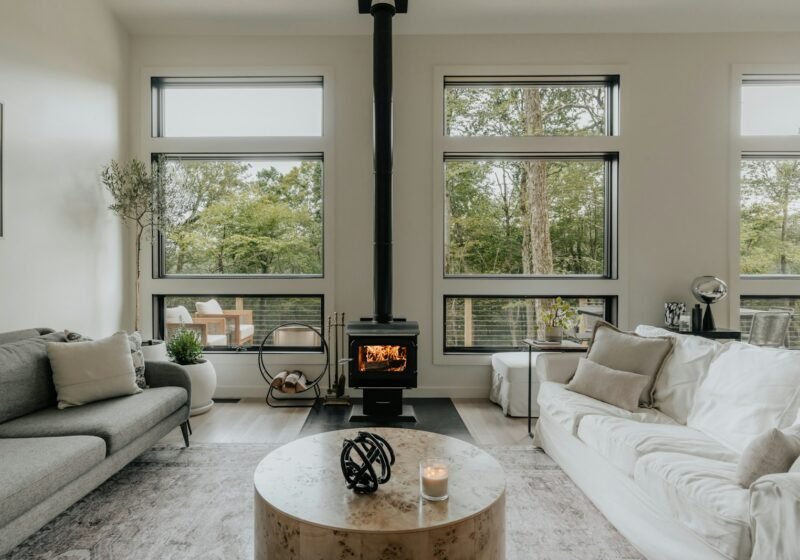
Grey is still one of the most adaptable colours for a sitting room, but the best grey living rooms are not built by choosing a paint card and adding a grey sofa. They work because the grey suits the room’s natural light, the flooring and the way the space is used.

This guide takes a practical UK approach. It will help you choose between warm and cool grey, work out whether a pale or deep shade will suit your aspect, and build a scheme with timber, metal, textiles and lighting so it feels layered rather than flat. It also covers room size, furniture clearances, sample testing and realistic ways to plan the budget without pretending that a single price applies to every home.
Table of contents
- Start with the light, not the paint name
- Warm grey or cool grey?
- A shade and pairing matrix
- 12 grey living room ideas that are easy to act on
- Plan the layout before you decorate
- Use lighting to stop grey feeling dull
- Paint, finish and sample guidance
- Budget and buying decisions
- Grey living room FAQ
- Final thoughts
Start with the light, not the paint name
The same grey can look warm in one room and blue or green in another. Before comparing popular shades, note three things: the direction the room faces, the size and position of its windows, and the colours that will remain in the room.
A north-facing lounge usually receives cooler, flatter daylight, so test a grey with a warm beige, taupe or slight green undertone. South- or west-facing rooms can take a balanced or cooler grey, although it may look warmer at sunset. East-facing rooms are brighter and cooler in the morning; test them at the time you use them most. In low light, a very blue or dark grey can feel chilly.
Do not assess the wall in isolation. A honey-coloured timber floor, red-toned brick fireplace, cream carpet or blue sofa will all push the grey in a different direction. If you are deciding between several whole-room colours, use the living-room colour ideas guide as a broader comparison, then return here for the grey-specific choices.
Warm grey or cool grey?
Choose warm grey when the room needs softness
Warm greys contain enough beige, brown or muted green to sit comfortably with natural materials. They are useful in north-facing rooms, period properties with timber or brick, and homes where the sofa is oatmeal, tan, rust, olive or cream. They also make a grey scheme feel less like a monochrome showroom.
Warm grey does not mean yellow. The safest route is to compare the colour with a clean white sheet of paper and with the room’s fixed finishes. A shade that looks neutral on a small card may reveal a noticeable beige or mushroom cast when painted across a large wall.
Choose cool grey for crisp contrast
Cool greys have blue, violet or crisp neutral undertones. They can look smart with white-painted woodwork, black metal, glass, pale ash timber and blue upholstery. They suit a bright, contemporary room particularly well, but need balancing if the floor and furniture are already cool.
Cool grey is not automatically wrong or “dated”. The risk is combining icy walls, blue-grey upholstery, silver accessories and stark white lighting. If you love a cool grey, introduce warmth through a wool rug, timber, aged brass, leather, boucle or low-level lamps.
If you are unsure, use a balanced mid-grey
A soft, balanced mid-grey is the most forgiving starting point for a busy family lounge or an open-plan room that connects to a kitchen. It gives artwork and upholstery enough contrast without making every adjoining colour decision difficult. Test it beside the skirting, flooring and largest upholstered item rather than choosing it from a styled photograph.
A shade and pairing matrix
| Room or existing finish | Grey direction to test first | Pair it with | Watch for |
|---|---|---|---|
| North-facing, low daylight | Warm neutral, taupe or gentle green-grey | Oak, cream, rust, olive | A blue undertone making the room feel colder |
| South-facing, strong daylight | Balanced grey or softened cool grey | White, ink blue, pale timber, black | Warm greys becoming too yellow at sunset |
| Pale ash or white-oak floor | Mid-grey with a little warmth | Clay, tobacco, navy, off-white | Too many pale cool surfaces looking washed out |
| Dark timber or exposed brick | Warm mid-grey or charcoal accent | Linen, aged brass, tan leather | A dark wall swallowing detail in a small room |
| Blue or teal sofa | Neutral grey with restrained warmth | Cream, natural wood, muted coral | Matching every accessory to the sofa |
| Cream or oatmeal sofa | Cool or balanced grey | Black, blue, moss, brushed metal | The room becoming beige-on-beige without contrast |
Use this as a shortlist, not a substitute for sampling. The final result depends on the exact paint, sheen, bulbs and surrounding finishes.
12 grey living room ideas that are easy to act on
1. Use two greys to give the room structure
Paint the main walls a calm mid-grey and use a deeper version on the chimney breast, alcoves or a short internal wall. Keep the ceiling and most woodwork lighter so the room retains lift. This is more flexible than painting every surface charcoal and gives a focal point without a separate feature-wall colour.
2. Make the sofa the warmest grey in the room
If the walls are pale grey, choose a deeper marl, graphite or greige sofa rather than an identical flat grey. Vary texture with wool, linen-look fabric or boucle, then add one or two cushions in a clearly different related tone.
3. Bring in natural wood early
A timber coffee table, oak frame, cane-front cabinet or walnut shelf stops grey feeling overly polished. Honeyed oak warms a cool scheme, while pale ash keeps a warm grey contemporary. Repeat wood in two or three places rather than using one token accessory.
4. Use aged brass instead of a room full of chrome
Aged brass, antique brass and bronze give grey a little glow. Use one or two on a lamp, picture frame, curtain pole or cabinet pull. If the room already has chrome or stainless steel, mix metals deliberately and repeat each finish at least twice.
For a more finish-led scheme, see the gold wall decor guide, but keep the living room’s scale and existing hardware in mind rather than copying a display arrangement.
5. Pair grey with olive or soft green
Olive, sage and eucalyptus work particularly well with warm grey and timber. Use green in a velvet cushion, painted joinery, a rug border or foliage rather than covering every wall. This pairing feels grounded and is less stark than grey with bright white.
6. Add a controlled hit of coral, ochre or yellow
Grey is a useful background for a warmer accent. A rust cushion, ochre lampshade or muted coral artwork can make a pale scheme feel more intentional. Keep the accent concentrated: one larger item and two smaller echoes often look more sophisticated than a dozen unrelated yellow objects.
7. Use panelling for rhythm, not as a default
Simple box or vertical panelling can add depth to a plain grey wall, especially in a high-ceilinged period room. Measure first and mock up the spacing with masking tape, leaving room around sockets, radiators, doors and fireplace trims.
Because panelling and feature walls can overlap with other wall-decorating content, keep this article focused on how the grey interacts with the room. For a wider treatment of blank walls, use the wall decoration ideas guide.
8. Let artwork break up a grey wall
A large artwork usually has more impact than scattered tiny frames. As a starting point, hang its centre around 145–155cm from the floor, adjusting for the sofa and sightline. Above furniture, leave roughly 15–25cm between the furniture and frame.
Black frames sharpen a pale grey; oak softens a cool grey; painted frames can connect the wall to an accent colour. Do not assume every frame needs to match.
9. Choose a rug that links, rather than matches, the grey
In a seating group, aim for at least the front legs of the sofa and chairs to sit on the rug. In a larger room, a rug around 20–30cm beyond the seating footprint can make the arrangement feel anchored, but measure door swings and walking routes before buying. A warm neutral, faded pattern or muted olive rug adds depth without creating another dominant colour.
10. Treat curtains as part of the colour plan
Grey curtains need not match grey walls. Linen-look oatmeal softens a cool scheme; smoky blue or olive gives warm grey more colour. Check that the pole, track and fabric clear radiators, handles and doors. For window-type and lining decisions, see the living-room curtains guide.
11. Use closed storage to keep the grey calm
Grey looks easily cluttered when every shelf is filled with small objects. A media unit or low cupboard can hide cables, games and paperwork while leaving space for a few books or ceramics. Measure equipment, allow ventilation around electronics and check doors will not collide with the sofa.
The living-room storage and units guide is the better place to compare open, closed, modular and made-to-measure storage in detail.
12. Layer warm and cool light
Do not rely on one central pendant. Combine general light with a floor lamp beside a chair, a table lamp on a console and a low lamp near the media unit. Warm bulbs make grey gentler in the evening; position a brighter reading lamp for the task, not at a reflective screen.
Plan the layout before you decorate
A beautiful grey scheme cannot fix a sofa that blocks the only route through the room. Draw the room to scale on squared paper or mark the key furniture footprints on the floor with masking tape.
As practical starting points:
- Keep a main walking route close to 90cm where the room allows; a secondary route may be tighter, but should not force people to brush past sharp corners.
- Allow about 40–50cm between a sofa and coffee table for comfortable reach without making the centre of the room feel cramped.
- Check that drawers, cupboard doors and recliner mechanisms can open fully before finalising the furniture position.
- Leave the radiator, air vent and window handles accessible. Do not push a large sofa directly against a heat source unless the manufacturer and installer allow it.
- In a narrow lounge, consider a compact sofa facing the television with one occasional chair rather than forcing a full matching suite into the room.
In a small room, use one strong grey wall treatment with lighter upholstery or curtains. In a large open-plan room, repeat grey in two zones—perhaps sofa and rug—so the sitting area feels connected without making the whole floor plan grey.
Use lighting to stop grey feeling dull
Grey needs variation in light and texture more than it needs more decoration. Start by identifying what happens after dark: does the room have a reading chair, a television, a desk, a dining edge or a dark corner?
Place lamps according to those tasks. A shaded table lamp gives a softer pool than a bare bulb, a floor lamp defines a reading corner and a wall light can emphasise a chimney breast. If mixing LED lamps and existing switches, check dimmer compatibility rather than assuming every LED will dim cleanly.
Use mirrors carefully: opposite a window they may bounce daylight, but they can also reflect a television, bare bulb or busy doorway.
Paint, finish and sample guidance
Paint a large sample board rather than judging a 10cm square. Two coats on a board at least 50cm by 50cm will give a more useful impression, and moving it around the room reveals how the colour behaves beside the fireplace, sofa, floor and window. Leave the board in place from morning to evening for several days.
Sample the actual finish where possible: matt can soften a colour, while higher-sheen trim may make the same grey look stronger. Use a durable finish in a busy family room and follow the maker’s instructions. The Farrow & Ball grey living room inspiration and Dulux grey living room ideas pages help compare named shades and finishes; neither replaces a sample in your light.
If the walls are currently strong, allow for preparation, primer and possibly extra coats. Test beside the skirting, ceiling and adjoining white to see whether those “neutrals” now look blue, yellow or pink.
Budget and buying decisions
Plan the budget in layers rather than treating “a grey living room” as one purchase: a light refresh may be paint, lamps and textiles; a medium update may add a rug, curtains, artwork and storage; a full rework may include flooring, electrics, plaster repairs and new seating.
These are scopes, not fixed UK prices. Paint, labour, delivery, furniture and electrical rates vary by region, room condition, specification and date, so this article deliberately does not give a misleading universal cost figure. Before committing, obtain current written quotes and ask whether preparation, removal, delivery, fitting, waste and VAT are included. For furniture, measure the room, stairwell, lift and doorway—not just the space where the item will sit.
A useful order of priority is:
- Fix the layout and any safety, damp, ventilation or electrical issues.
- Choose the wall sample and establish the floor, sofa and curtain relationship.
- Buy the largest functional pieces: sofa, rug, storage and window covering.
- Add lighting and artwork.
- Finish with cushions, throws and small accessories once the room is being used.
That order prevents the common mistake of buying grey accessories before deciding whether the room needs warmer wood, better light or a different seating arrangement.
Grey living room FAQ
Is cool grey dated in 2026?
Not automatically. Cool grey can look current when it is balanced by warm timber, tactile fabrics, considered lighting and a clear accent colour. The dated effect usually comes from a whole room of flat blue-grey surfaces, matching furniture and cool white light. Test the shade in your room instead of rejecting or choosing it solely because of a trend.
What is the best grey for a north-facing living room?
Start by testing warm neutral, taupe or gentle green-grey samples. They can counter the cooler daylight, but the right choice still depends on the floor, sofa and window size. A mid-tone often gives more comfort than an extremely pale grey, which can look dull in weak light.
What colours go with a grey sofa?
Cream, oak, olive, rust, ochre, navy and muted pink can all work, depending on the sofa’s undertone. Repeat one accent in two or three places and vary texture. Avoid buying every cushion and accessory in exactly the same grey as the sofa.
Should the walls match a grey sofa?
They can, but exact matching often makes the room look flat. A wall one or two steps lighter or darker, or a related warm/cool grey, gives the sofa definition. Use sample boards beside the sofa fabric before painting the whole room.
How do I make a grey living room feel warmer without repainting?
Add warm lamps, a wool or textured rug, timber, leather, terracotta, rust, olive and cream. Replace cold bulbs and introduce a larger piece with natural texture rather than relying on many small ornaments. Curtains can also soften a room more effectively than extra cushions.
Final thoughts
The most successful grey living room is not the one with the greatest number of grey objects. It is the one where the grey has been chosen for the room’s light, given contrast by the floor and furniture, and made comfortable through texture and layered lighting.
Start with a measured layout and large samples. Decide whether your room needs warmth, crisp contrast or a balanced middle ground. Then spend on the elements that change how the room functions—seating, light, storage, flooring and window treatments—before adding decorative details. Grey can be calm, colourful, traditional or contemporary; the result depends less on the label on the paint tin than on the decisions around it.