
A garden sofa creates a proper outdoor sitting room, but it has to cope with damp, dirt and changing temperatures as well as everyday use. The best choice balances comfort with the amount of shelter and storage available. A beautiful sofa left exposed without a realistic care plan will quickly become hard work.
Begin with the position
Measure the complete footprint and the delivery route before comparing finishes. Include drains, steps, outdoor taps and the route to the lawn. Check the seat height and depth for the people who will use it, and decide whether the sofa is mainly for conversation, reading, meals, children or occasional guests.
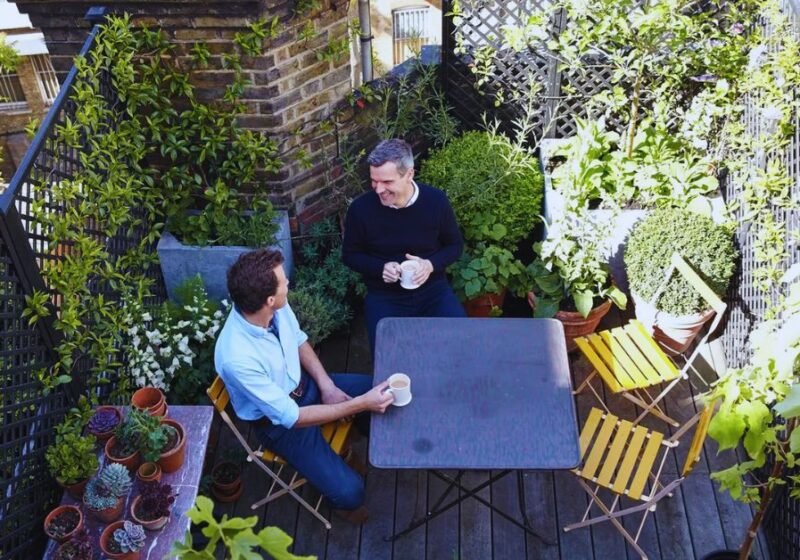
Watch the position in wind and rain as well as sun. Rain can blow into a sheltered area if air cannot circulate, so keep the sofa away from dripping gutters and dense foliage. A parasol or sail can add shade, but it must not obstruct the main garden route.
Measure the patio or deck and leave room to walk around the sofa and move a table. A wall, pergola or mature planting can provide shelter and make the seating feel more private. Check whether the spot receives strong afternoon sun, because dark fabrics and cushions can heat up and fade more quickly.
Plan the Footprint Before Comparing Materials
Use the supplier’s assembled dimensions rather than judging a sofa by its seat count. Mark the full footprint on the patio or decking with tape, including the arms, back, corner return and coffee table.
A main route of around 600mm is a useful planning target where space allows, but doors, gates, steps and access routes should take priority. Check whether cushions, covers and storage boxes will reduce the usable route when they are in place.
| Layout | What to record | Practical check |
|---|---|---|
| Two-seat sofa | Overall width, depth and height | Check that the sofa leaves a clear route to the door or garden. |
| Corner sofa | Long side, return side, depth and table footprint | Mark the full L-shape before ordering and check the open side of the arrangement. |
| Modular sofa | Dimensions of every module and the assembled configuration | Check whether the modules can be rearranged, moved through the house and stored separately. |
| Balcony or narrow patio | Sofa depth, railing position and door clearance | Confirm that the furniture does not obstruct the door, drain or escape route. |
Compare the Build, Not Just the Look
| Part | What to compare | Questions to ask |
|---|---|---|
| Frame | Aluminium, steel, synthetic rattan frame or timber | How heavy is it, how is it finished and what happens if the finish is scratched? |
| Cushion foam | Standard foam, wrapped foam or quick-dry/open-cell foam | Is the foam intended for outdoor use and how quickly can it drain after rain? |
| Fabric | UV-resistant, shower-resistant, removable or washable fabric | Is the cover removable, replaceable and suitable for the amount of sun the garden receives? |
| Fixings | Clips, connectors, feet and adjustable parts | Will the arrangement stay stable in wind and remain level on the patio? |
| Table | Coffee table, dining-height table or no table | Does the table leave enough space for knees, routes and opening doors? |
A frame described as weather-resistant is not the same as a complete sofa that can be left outside without care. Check the frame, cushions, fabric, fixings and cover separately.
Weather, Storage and Care
Before buying, decide where the cushions will go during prolonged rain, winter or periods when the sofa is not being used. A storage box needs its own footprint and should remain ventilated rather than becoming a sealed damp container.
Use a breathable cover where the manufacturer recommends one. Avoid trapping wet cushions under a cover, and check that the cover is secured without rubbing against corners or powder-coated finishes. Inspect the frame, feet, connectors and fabric at the start and end of the season.
Budget, Warranty and Delivery Checks
Use relative budget bands until current supplier examples have been checked and date-stamped.
| Planning band | What may change | What to verify |
|---|---|---|
| Lower-cost | Simpler frames, thinner cushions or fewer modules | Frame finish, cushion construction, returns and delivery access. |
| Mid-range | Better upholstery, stronger frames or more configuration options | Replacement cushions, warranty coverage and weather limitations. |
| Premium | Made-to-measure layouts, premium frames, quick-dry foam or longer guarantees | What the warranty covers, what is excluded and whether servicing is available. |
Prices and warranty terms change regularly. Add current UK examples only after checking the supplier page, delivery conditions, warranty wording and date of access.
Compare outdoor sofa materials
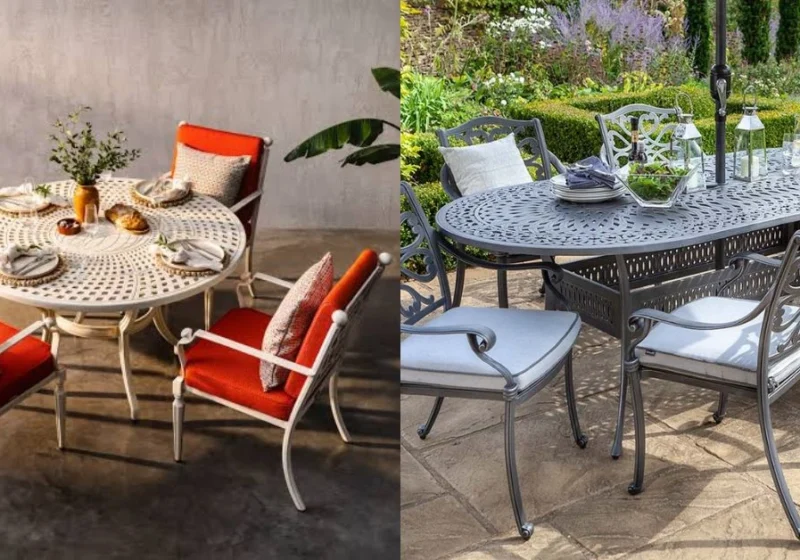
Inspect the joints, feet and underside drainage rather than relying on a product photograph. Ask whether the frame can remain outside in winter, which replacement parts are available and whether a cover fits while still allowing ventilation. A loose sheet that traps water can cause more problems.
Powder-coated aluminium is light and generally easy to move. Steel can feel substantial but needs its finish kept intact to help prevent corrosion. Timber brings warmth and may need regular cleaning or treatment depending on the species and finish. Synthetic woven materials can be comfortable and visually relaxed, but inspect the frame and weave quality rather than relying on the word rattan alone.
Always check the manufacturer’s care instructions. Outdoor furniture is not maintenance-free simply because it is sold for a garden.
Pay attention to cushions
- Confirm whether the cushions shown are included or are only styling in the photograph.
- Use removable covers where washing and drying need to be straightforward.
- Keep cushions in a dry, ventilated place during prolonged rain and let them dry fully before storage.
- Choose quick-drying, removable covers where possible.
- Check whether the foam is designed for outdoor use.
- Measure the storage box before assuming it will hold every cushion.
- Bring cushions indoors during prolonged wet weather or when the garden is not being used.
Garden sofa or a full arrangement?
A low coffee table suits lounging, while a higher table may be better when food and drinks are central to the routine. A side table at the arm can keep essentials within reach without blocking knees. Outdoor lighting can extend the evening, but cables and fittings must be suitable for outdoor use. Think about how the sofa will be used after a shower: leave a clear route for carrying cushions indoors and avoid boxing the seating in with the table.
A straight sofa is flexible and often easier to fit. A corner sofa makes a defined lounging zone but needs more floor space and can be awkward to move. A sofa with separate chairs may be more adaptable if the garden layout changes.
Choose the smallest arrangement that allows people to sit comfortably. Good access, shade and a practical storage routine matter more than filling the patio with furniture.
Related Articles You May Find Useful
Continue exploring the topic with these hand-picked guides from our editorial team.
Further Reading and Trusted Sources
For more inspiration and expert advice, see the latest from Real Homes — expert UK home renovation advice.
For more inspiration and expert advice, see the latest from Ideal Home — British decorating and interiors inspiration.