
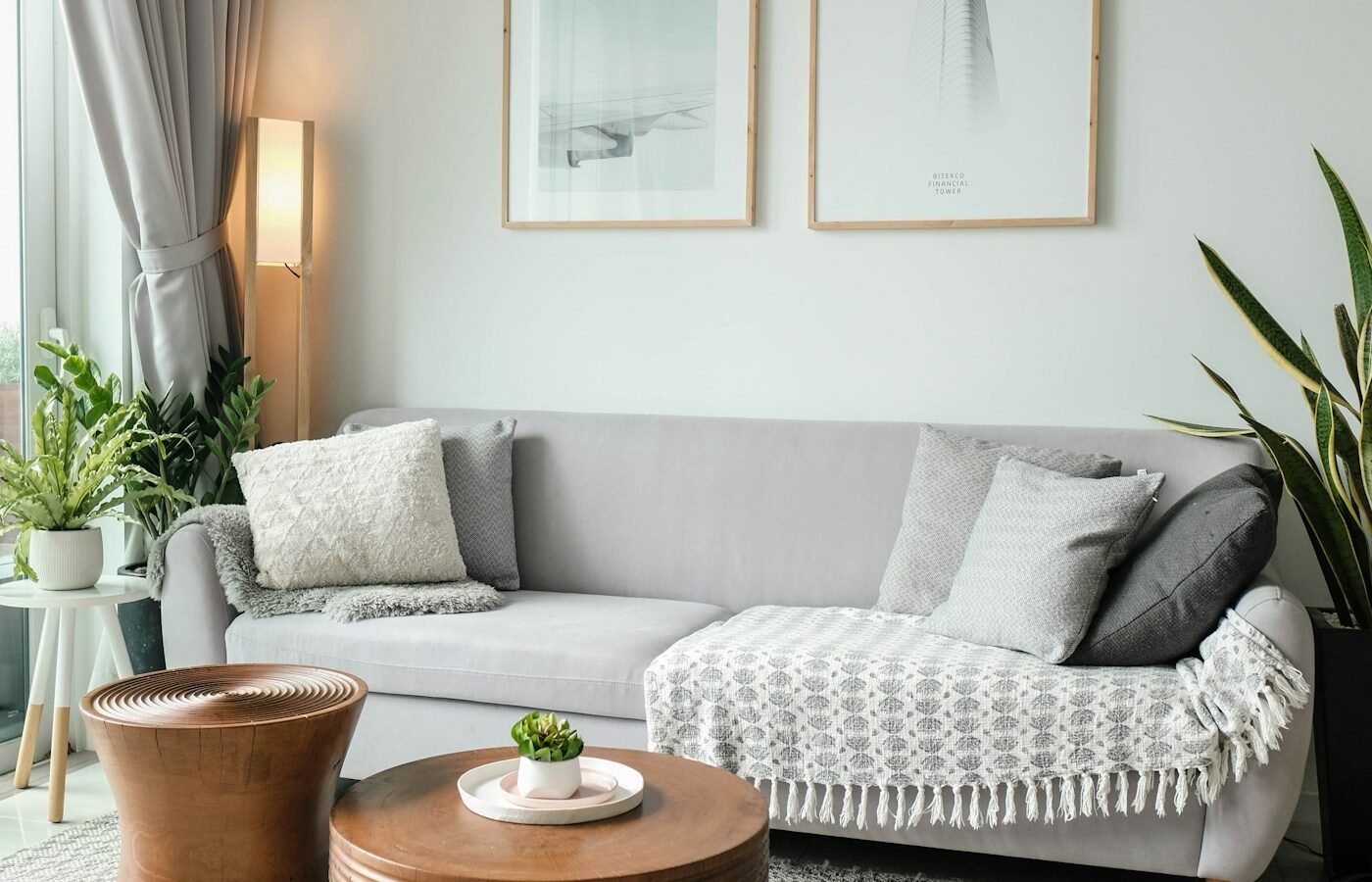
A large round rug can make a square room feel softer and can centre a round dining table beautifully. The key is to size the diameter from the furniture: a 120cm table usually needs about a 240cm rug if chairs must remain on the rug when pulled back, while a living-room conversation area may need a different proportion.
Choose the room before the rug
A circle needs room to be seen. In a narrow lounge, a 200cm diameter can collide with the sofa, skirting board and doorway while leaving awkward crescents of floor. In a more generous open-plan room, the same size can define a reading or seating zone without making the space feel boxed in.
Use string and masking tape to draw the proposed circle on the floor. Walk around it with a laundry basket, pull out a dining chair and open the nearest door. That ten-minute test is more informative than judging a product photograph. If the layout needs more guidance, our living-room furniture arrangement guide helps you measure the zone rather than the whole room.
Round rug sizes that make sense
| Diameter | Useful for | Check before buying |
|---|---|---|
| 120 to 150cm | Reading chair, small coffee table or compact bedroom corner | Keep it clear of the main door swing. |
| 180cm | Two chairs, a coffee table or a small seating nook | Make sure the outer curve does not cut through the walking route. |
| 200 to 240cm | Medium living area or round dining table up to about 120cm | Allow roughly 60cm beyond the tabletop for pulled-out chairs. |
| 260 to 300cm | Large dining setting or generous lounge | Measure radiator access, doors and the delivery route. |
Retailers commonly stock 120, 150, 180, 200 and 240cm circles, but a 240cm rug is not automatically right for every six-seat table. The table, chairs and circulation space must be measured together. IKEA’s UK rug-size advice makes the same useful point for beds and sofas: the soft landing area matters more than symmetry with the room’s walls.
Place one in a living room
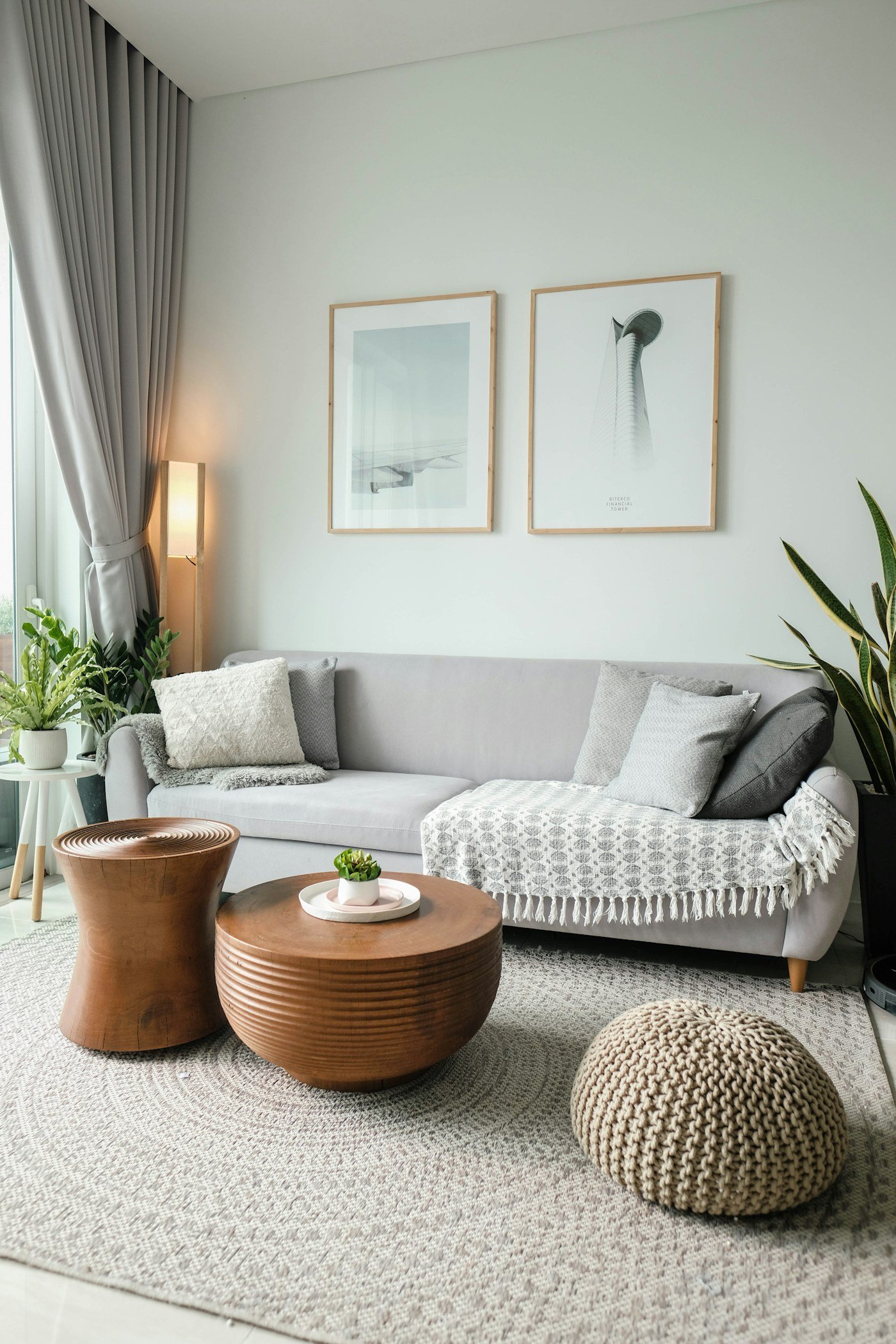
For a round rug under a round coffee table, keep the table roughly central and let the outer edge reach the front legs of the nearest seating where possible. A 180cm circle can define a compact two-seat arrangement; a 200 or 240cm circle gives a three-seat sofa and armchair a more convincing shared zone. Do not leave the sofa completely detached while the rug sits like a small island in front of it.
A circle can also soften a room full of straight cabinetry, but avoid centring it on empty floor if the furniture cluster is offset. Centre the rug on the people and table, not on the chimney breast. Link the colours to one plain cushion or artwork rather than adding another round motif in every accessory.
Pair it with a dining table
For dining, add at least 60cm to every side of the tabletop, and more if the chairs are broad or the route is busy. A 100cm round table therefore works more comfortably on a 220cm or 240cm rug than on a 160cm one. The chairs should stay on the rug as they move in and out; otherwise the legs catch the edge and push the rug out of shape.
Flatweave wool, cotton or a low-pile washable synthetic is easier under dining chairs than a shaggy high pile. Leave enough clearance below patio-style French doors or a nearby sideboard. For more dining measurements, use the site guide to choosing a dining-table rug rather than assuming a circular shape solves every spacing issue.
Use it in a bedroom or corner
A round rug looks deliberate under a circular bedside table, in a nursery reading corner or beneath the lower third of a bed. In a double bedroom, a 200cm circle can sit below the foot and one side of the bed if the room is generous, but two 60 x 180cm runners may give more useful coverage in a narrow UK terrace bedroom. Keep the curved edge away from the wardrobe door and make sure it is visible enough to look intentional.
For a quiet corner, start with a 120 or 150cm diameter and place the chair, lamp and side table inside the circle. That gives the shape a job and avoids buying a 240cm rug that dominates the only clear floor area.
Materials and flat edges
Budget polypropylene or polyester circles often cost £45 to £150 depending on diameter. A handwoven wool version from John Lewis, West Elm or an independent rug shop can run from roughly £250 to £800, but it will usually have a richer texture and better resilience. Jute looks relaxed in a conservatory or light-filled lounge, though its coarse surface is less forgiving of spilled drinks and can shed while new.
Unroll the rug in a warm room and give a curled edge time to relax. Weighing the corners with clean books for a day can help, but do not crease a stiff backing. Use a correctly cut anti-slip underlay so the circle stays round and the edge does not become a trip point. Vacuum gently around the perimeter and lift the rug occasionally to remove grit.
Frequently Asked Questions
1. What diameter rug suits a 120cm round dining table?
Allow at least 60cm beyond the tabletop on every side, so a 240cm diameter is a comfortable target for pulled-out chairs. A smaller 200cm rug may work in a very compact setting, but check the chair legs and route before ordering.
2. Should a round rug go under the whole sofa?
It does not have to. In a smaller lounge, place the front legs of the sofa and any armchairs on the circle so the seating reads as one group. A 180 to 240cm diameter often works better than a small rug stranded only under the coffee table.
3. Are large round rugs difficult to vacuum?
They are no harder to vacuum than rectangular rugs if the pile is practical and the edge lies flat. Work across the circle in sections, use the correct suction for wool or shag, and lift it periodically so grit does not stay underneath.
4. Can a round rug make a small room look bigger?
It can soften hard corners and create a clear zone, but only when the diameter leaves useful walking space. Trace the proposed circle first; a 120 or 150cm rug may be more successful than forcing a 240cm one into a narrow room.
Final Thoughts
The best large round rug is big enough to unite the furniture but not so large that its curve blocks doors or disappears beneath every cabinet. Trace the diameter, add real chair clearance and choose a pile that suits the room’s daily traffic before falling for the pattern.

1 thought on “Large Round Rug: How to Place One in a UK Home”