Quick answer
Build an oak bedroom around scale, storage and a related finish rather than buying a complete matching set by default. Measure the bed, wardrobe doors and walking routes first, then choose solid oak or veneer pieces that solve the room’s actual storage needs.
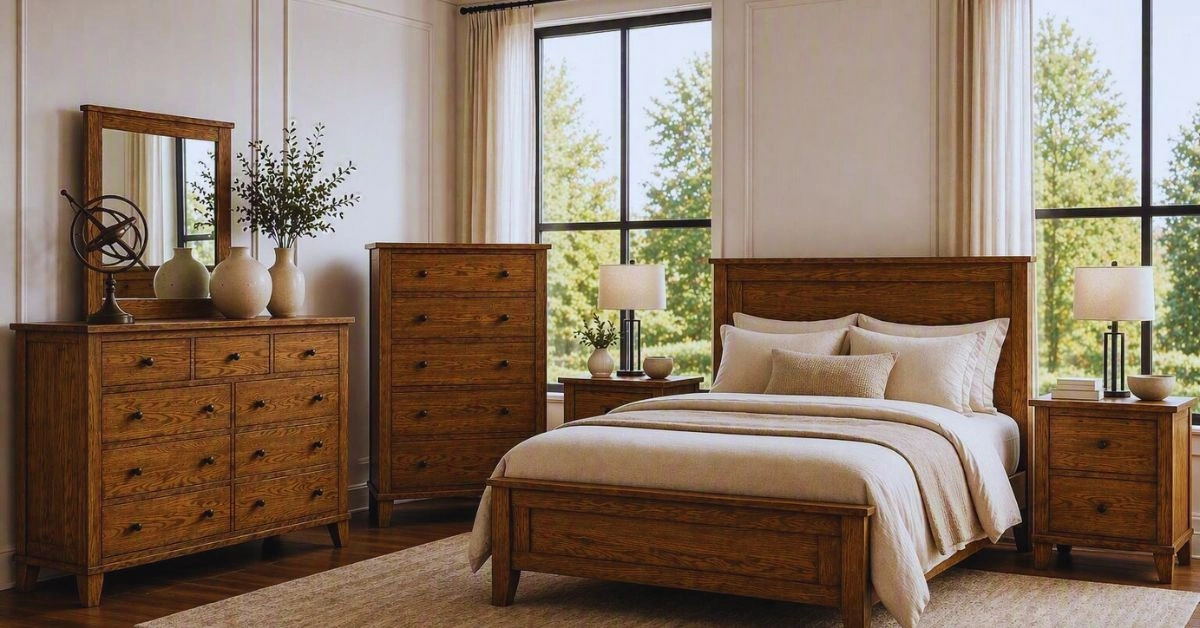
Oak bedroom furniture works because it brings warmth to a room that can otherwise become a collection of soft fabrics and pale surfaces. The risk is buying several large pieces from different ranges and discovering that their tones, handles and proportions compete. A considered room can mix oak, paint and upholstery, but it needs a clear visual anchor.
Start with the routine: where clothes are hung, where folded items live, where a book and glass of water sit, and how the bed is reached at night. The furniture should support that routine before it matches a catalogue photograph.
Choose the bedroom pieces in the right order
The bed is the largest item, but the wardrobe often controls the room’s clearances. Settle the wall for hanging storage and the door opening before choosing bedside tables. If the room is tight, a slimmer bedside surface or wall-mounted light can preserve more useful circulation than squeezing in a second chest.
| Piece | Planning question |
|---|---|
| Bed | Can both sides be reached, and does the headboard leave space for sockets or lamps? |
| Wardrobe | Do doors, drawers and hangers work without blocking the bed or radiator? |
| Bedside table | Is the top close enough to mattress height for daily use without crowding the bed? |
| Chest of drawers | Can drawers open fully while leaving a comfortable standing position? |
Use the practical measurements in the wardrobe depth guide before ordering a tall oak cabinet. For the smaller pieces, this bedside table guide covers height, storage and the clearance beside the bed.
Solid oak, oak veneer and mixed construction
Solid oak is appealing for its weight, grain and ability to take careful repairs. It can also move with humidity, particularly across wide panels. Oak veneer places a real timber surface over a stable core and can be a sensible choice for broad doors, drawer fronts and cabinet sides. A mixed construction is not a sign of poor quality when it is described honestly and assembled well.
Inspect the places that are easy to ignore: the back, drawer boxes, underside, door edges and the way the top meets the sides. A well-made piece should sit square, drawers should run without scraping and hardware should be replaceable. Timber character is welcome; loose joints and exposed unfinished edges are not. For general furniture construction and testing terminology, the Furniture Industry Research Association is a useful independent reference, while the maker remains the authority for a specific piece.
Make several oak pieces look intentional
Exact matching is less important than controlling undertone and visual weight. A honey-toned oak bed can work with a slightly darker wardrobe if the walls and textiles create a bridge. If every piece is dark and chunky, keep the rest of the room quiet and use lighter bedding or an open bedside table to make space for the eye.
- Choose one dominant oak tone for the largest pieces.
- Repeat the same handle metal or leg detail at least twice.
- Use painted, upholstered or woven elements to break up the timber.
- Keep the floor and furniture from merging into one uninterrupted brown band.
A more modular approach can work particularly well in a small room. The modern wardrobe guide explains how internal fit-out and door choice affect the overall feel without requiring a full matching suite.
Finish, handles and the feel of the room
Clear oil leaves a tactile, natural surface and can be maintained locally when the instructions allow it. Lacquer gives a more even seal and may suit a bedroom where easy wiping matters. Wax can look soft and traditional but needs more care around moisture. Ask for the exact finish because “natural oak” can mean several different products.
Handles are small but powerful. Long simple pulls make a tall wardrobe feel more vertical; small knobs can make a chest feel lighter and more traditional. Use the same finish on a few pieces, but do not force every lamp, mirror and picture frame to match it.
Care for oak in a bedroom
Bedrooms are gentler environments than kitchens, but condensation, plant pots and hot radiators still damage finishes. Leave a little space behind large pieces on external walls, keep wet items off the top and wipe spills rather than letting them sit around an edge. Lift furniture for moving and use suitable glides on the floor.
If an older chest has lost its colour, clean and identify the existing finish before sanding or re-oiling. The steps in the oak furniture restoration guide are designed to avoid removing more material than necessary.
When to buy a set and when to mix pieces
A coordinated set makes delivery and finish matching simple, which can be useful when the room needs furnishing quickly. Buying separately gives you better control over proportions and lets you spend on the pieces that receive the most use. In either case, order samples, record dimensions and check whether future additions will still be available.
Prioritise the wardrobe and bed if storage and sleep are the main problems. Add bedside tables, a chest or a dressing table only after the walking routes have been marked out on the floor. A bedroom feels more luxurious when it is easy to move through, not when every wall is occupied.
Good oak bedroom furniture should make the room easier to use and easier to settle in. Let the grain provide warmth, then keep the layout and lighting calm enough for the furniture to age gracefully.
Frequently Asked Questions
1. Is oak good for bedroom furniture?
Yes, when the construction and finish suit the room. Oak gives a durable, repairable surface and a warm grain, while veneer and engineered panels can make wide pieces more stable and easier to handle.
2. Should all oak bedroom furniture match?
It does not need to match exactly. Keep the main tone and finish related, repeat one detail such as handles or legs, and allow one softer painted or upholstered element to stop the room feeling like a showroom set.
3. What oak bedroom furniture do I need first?
Start with the pieces that solve a real problem: a bed that fits the room, storage for hanging and folded clothes, and a bedside surface with the right height. Add a chest or dressing table only when circulation remains comfortable.
4. How do I protect oak bedroom furniture?
Dust regularly, wipe spills promptly and keep furniture away from direct heat and persistent damp. Use compatible products for oiled, waxed or lacquered surfaces and lift pieces rather than dragging them.
5. Can oak bedroom furniture make a small room feel dark?
A deep finish can, especially with poor lighting and tall furniture on every wall. Use lighter bedding and walls, keep some wall visible, and choose one oak anchor with more open or pale pieces around it.