
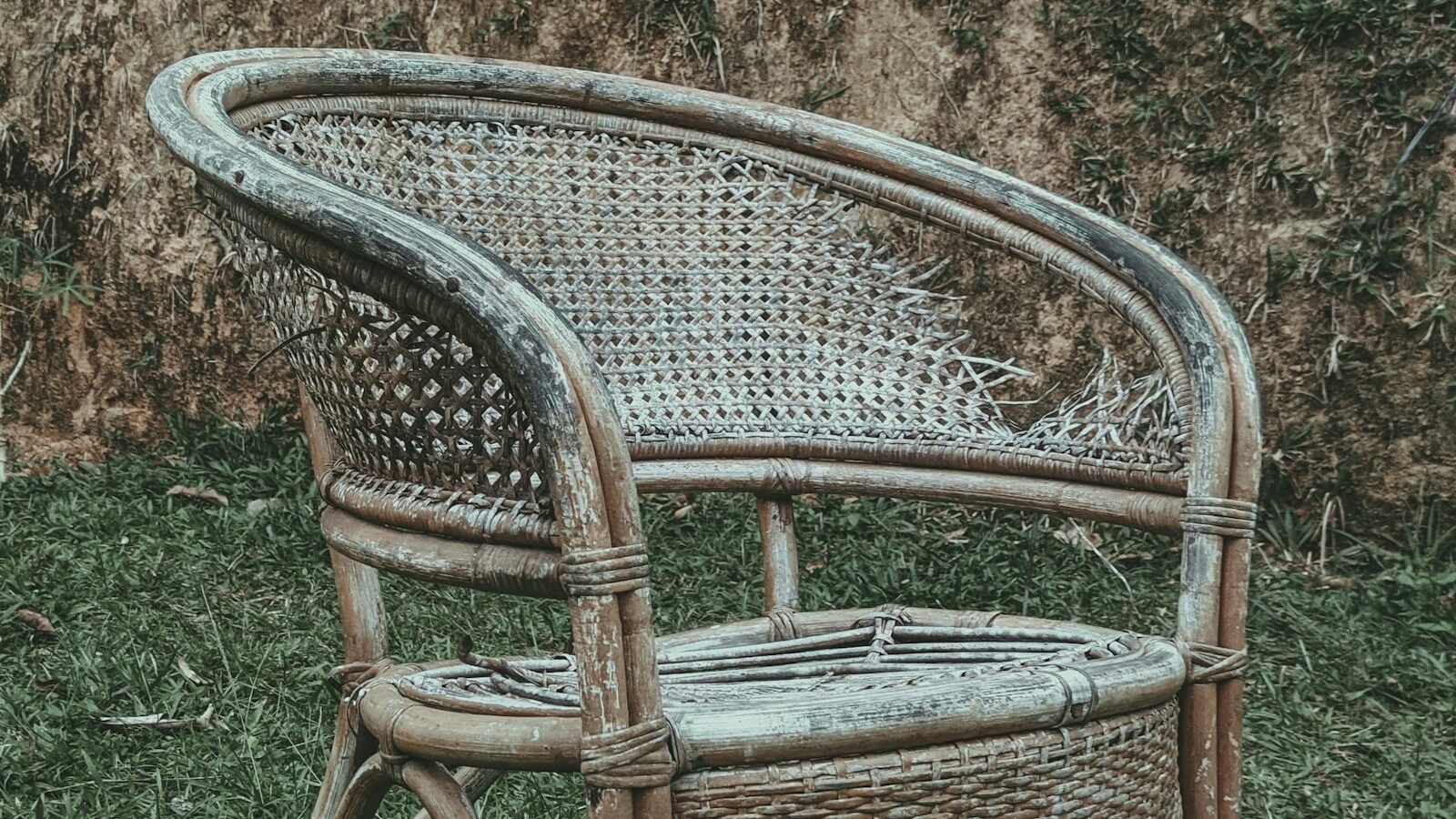
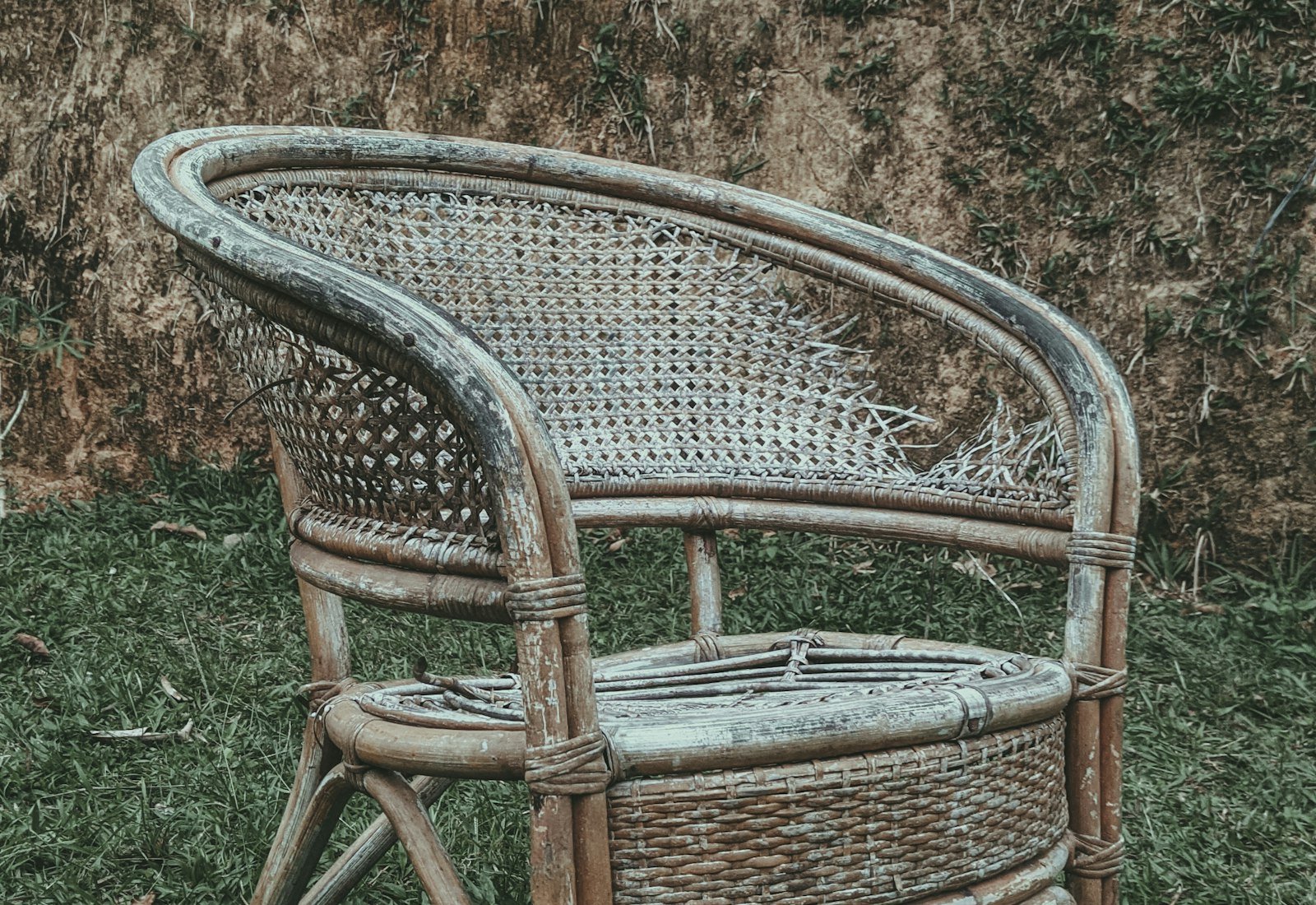
“Rattan garden chairs” in a UK shop usually means a chair made from one of three things: natural rattan (rare, expensive, not for outdoors), synthetic rattan woven over an aluminium frame (the standard “garden rattan” set), or an “all-weather rattan” weave over a steel or powder-coated frame. Each behaves very differently in British weather. This guide is built around the questions worth asking before you spend £300–£2,000 on a set that will either last or fail within two winters.
Table of contents
- Natural rattan vs synthetic rattan: the honest truth
- What the frame is made of matters more than the weave
- How the weave is made: hand-woven vs machine-woven
- Cushions: the part that fails first
- Sizing for a UK garden or patio
- UK brands worth shortlisting
- Care that actually helps in UK weather
- Where to buy, where to avoid
- Real 2026 prices
- Rattan garden chair FAQs
- Final thoughts
Natural rattan vs synthetic rattan: the honest truth
Natural rattan is a climbing palm from Southeast Asia, harvested and woven into furniture. It is beautiful, light, and completely unsuitable for UK outdoor use. A natural rattan chair left outside through a UK autumn will start to grow black mildew within four weeks and be unsalvageable by Christmas.
Synthetic rattan (usually PE rattan or PVC rattan) is woven plastic made to look like natural rattan. Two types matter:
- PE rattan (polyethylene). The default for quality UK garden furniture. Recyclable, UV-stabilised, doesn’t crack in cold weather, doesn’t go brittle in the sun. A well-made PE rattan weave on an aluminium frame will last 7–12 years in UK weather with minimal care.
- PVC rattan (polyvinyl chloride). Cheaper, heavier, often has a more glossy finish. More likely to crack in prolonged sub-zero weather and fade in strong sun. Avoid for any chair that will live outside year-round.
Any “rattan garden chair” you see in a UK shop with a price tag under £200 per chair is almost certainly PVC over a steel frame. It will look fine in May and need replacing in October.
What the frame is made of matters more than the weave
Under every synthetic rattan chair is a frame, and the frame determines how long the chair lasts.
- Powder-coated aluminium. Light, won’t rust, no maintenance. The right choice for the UK. Most premium UK sets (Bramblecrest, KETTLER, Maze, Norfolk Leisure) use 1.2–1.6 mm thick aluminium tubing.
- Galvanised steel. Heavier, stronger, will rust if the galvanising is scratched through. Better for commercial settings than residential. Some mid-range brands (Hartman, La Redoute) use it.
- Untreated or painted steel. Avoid. The first winter will see rust at the welds; the second will see structural failure.
- Cast aluminium. Heavier, more expensive, the right choice for a heavy traditional set that needs to stay put in a windy garden. Norfolk Leisure’s “Vintage” range uses cast aluminium.
Quick test in the shop: lift the chair with one hand. If it feels lighter than a 4-year-old, the frame is aluminium. If it feels heavier than a kettle, the frame is steel. Either can be good, but you want to know which it is.
How the weave is made: hand-woven vs machine-woven
Three weave patterns you’ll see in the UK market, and what they tell you about quality.
- Half-round (or “pearl”) weave. Flat rattan strips with a rounded top. The most common UK garden pattern. Easier to clean than full-round. Often machine-woven on a steel or aluminium frame in mid-range sets.
- Full-round weave. Round rattan strands woven by hand over an aluminium frame. The premium look. More time-consuming to make, more expensive. Found on Bramblecrest, Norfolk Leisure’s higher-end lines, and most sets over £1,500.
- Flat weave. Thin flat rattan strips, machine-woven. The cheapest. Less comfortable, less durable, but lighter and easier to dry. Common on budget sets sold through supermarkets and online marketplaces.
How to check: run your hand along the underside of the seat. On a hand-woven set, you’ll see the ends of the strands wrapped and tucked into the frame. On a machine-woven set, the strands are heat-fused and the ends are cut clean. Hand-woven is generally better; machine-woven is generally fine for sub-£500 sets.
Cushions: the part that fails first
On most UK rattan sets, the cushions fail before the frame. The frame will be in good shape 10 years later; the cushions will be threadbare and mildewed within 4. The honest cushion spec to look for:
- Cover fabric. Olefin (polypropylene) is the best. 100% solution-dyed, doesn’t fade, doesn’t absorb water. Polyester is the mid-range option — water-resistant but eventually fades. Avoid acrylic “outdoor” fabric unless you commit to taking the cushions in every night; it looks beautiful in the shop and mildews in three UK winters.
- Filling. Quick-dry foam is the only honest answer for UK outdoor use. Standard polyurethane foam absorbs water and will not dry out before mildew sets in. Quick-dry foam is open-celled and drains within minutes.
- Zips. Cushion covers should be zipped and removable. If they aren’t, you cannot wash them, and they will be replaced within three years.
- Storage. Even the best UK cushions should be brought in over winter, or at least covered with a breathable furniture cover. They will outlast the frame by years if you do.
Three good UK questions to ask the retailer before you buy: “Are the cushion covers removable and machine-washable?” “What is the cover fabric, and what is the fill?” “Do you sell replacement cushion covers separately?” If the answer to any of those is no, walk away.
Sizing for a UK garden or patio
UK gardens are smaller than the photos suggest. Three honest sizing rules.
- Armchair footprint. A typical rattan armchair is 80–95 cm wide × 80–90 cm deep. Plan for at least 90 cm of circulation around each chair.
- Dining chair footprint. A rattan dining chair is 50–60 cm wide × 55–65 cm deep. Comfortable around a table of 6 in a 3 m × 3 m patio.
- Modular corner set. The most popular UK purchase, usually a 5-piece set that fits a 2.4 m × 2.4 m corner of a patio. Look at the assembled dimensions, not the assembled-in-your-imagination dimensions.
A small UK balcony (3 m × 1.5 m) is too small for a full corner set. Two rattan armchairs and a 60 cm round bistro table is the right answer. Most UK sets don’t sell this combination, so it’s worth mixing a corner set’s individual chairs with a separate small table.
UK brands worth shortlisting
UK rattan garden chairs fall into three price tiers. The shortlist.
- Premium (£600+ per chair). Bramblecrest (Hereford, sets over £1,500), Norfolk Leisure (“Vintage” and “Suntime” lines, £700–£1,200 per chair), Hartman (the Sunsure range), KETTLER (“Palma” and “Sintra” lines).
- Mid-range (£200–£600 per chair). Maze Rattan (direct from maze-rattan.com, often half the price of the brands above), La Redoute (the “Mobilier de Jardin” line), John Lewis & Partners own-brand sets, Argos own-brand sets with the right specs.
- Budget (under £200 per chair). IKEA ÄPPLARÖ (mixed real-rattan and synthetic, not the same look), The Range own-brand sets, Wayfair marketplace (read the spec carefully — many are steel-framed PVC sets).
Skip: any “rattan” set sold only through Amazon, eBay or Facebook Marketplace with no UK-based brand or warranty. The really cheap ones are PVC over steel and the frames rust within two years.
Care that actually helps in UK weather
Five things that genuinely extend the life of a UK rattan set.
- Cover in winter. A breathable garden furniture cover (£25–£60 for a corner set) keeps the worst of the rain and leaf debris off. Breathable is critical — non-breathable covers trap moisture and cause the very mildew you’re trying to prevent.
- Bring cushions in. The single biggest life-extender. Even “outdoor” cushions fail faster in UK weather than the chairs do. Store them in a shed, garage, or under-stairs cupboard over winter.
- Don’t pressure-wash. The high-pressure jet damages the weave. A hose, a soft brush and a drop of washing-up liquid is the right way to clean.
- Treat any rust spots immediately. On a steel-framed set, the first sign of rust is the welds or the feet. Sand back, treat with a rust converter (Hammerite or similar), and touch up with exterior metal paint.
- Rotate the set. A rattan chair that lives in the same spot for a year will fade unevenly. Move it a few inches every couple of months to even out the UV exposure.
Where to buy, where to avoid
Best UK places to buy in 2026:
- Direct from the brand. Bramblecrest, KETTLER, Maze Rattan, Norfolk Leisure all sell direct with 5–10 year warranties. Best price, best service.
- John Lewis & Partners. The 2-year guarantee and free returns make it the safest place to buy a set you’re not sure about.
- Dobbies, Notcutts, Perrywood. The UK garden centres, all with physical showrooms. Worth visiting in person if you want to feel the weave before you spend.
- La Redoute. Strong range of mid-range French-made rattan, particularly for smaller patios and balconies.
Avoid: any marketplace listing without a UK-based seller, any set with no published weight or material spec, and any set under £150 per chair sold as “all-weather rattan”.
Real 2026 prices
Installed prices, single chair, including VAT, in 2026:
- IKEA ÄPPLARÖ armchair, mixed weave: £110–£180.
- Mid-range rattan armchair, PE weave, aluminium frame, 5–7 year warranty: £220–£360.
- Premium rattan armchair, full-round weave, 10-year warranty: £400–£700.
- Corner set (5 pieces) mid-range: £900–£1,800.
- Corner set (5 pieces) premium: £2,200–£4,200.
Final thoughts
The cheapest rattan sets are the most expensive in the long run. A £180-per-chair PVC-and-steel set replaced twice in ten years costs £1,080 per chair. A £320 PE-and-aluminium set that lasts 12 years costs £320 per chair and stays in the garden. The maths is unforgiving. Buy the second one.
Frequently Asked Questions
Q1. Are rattan garden chairs weatherproof?
PE rattan over an aluminium frame is genuinely weatherproof for UK conditions. PVC rattan over a steel frame is weather-resistant at best. Natural rattan is not weatherproof and should not be used outdoors.
Q2. How long do rattan garden chairs last in the UK?
A mid-range PE rattan chair with an aluminium frame, with the cushions stored over winter, will last 7–12 years. A premium full-round weave will last 12–18 years. A budget PVC-and-steel set will last 2–4 years before the frame rusts or the weave cracks.
Q3. Can I leave rattan chairs outside all year?
Yes for the frames. No for the cushions. Bring the cushions in; cover or shelter the frames if you can.
Q4. What’s the difference between rattan and wicker?
“Rattan” refers to the material (a palm). “Wicker” refers to the weaving technique. A wicker chair can be made from rattan, willow, bamboo, or any other flexible material. In UK garden furniture, “wicker” almost always means synthetic rattan, woven in the wicker style.
Q5. Is all-weather rattan really all-weather?
“All-weather” is a marketing term with no legal definition. PE rattan on aluminium is genuinely all-weather. PVC rattan on steel is not, however much the box claims it is.
For More Information Visit Oak & Nook.
2 thoughts on “Rattan Garden Chairs: How to Compare Frames, Weave and Cushions”