
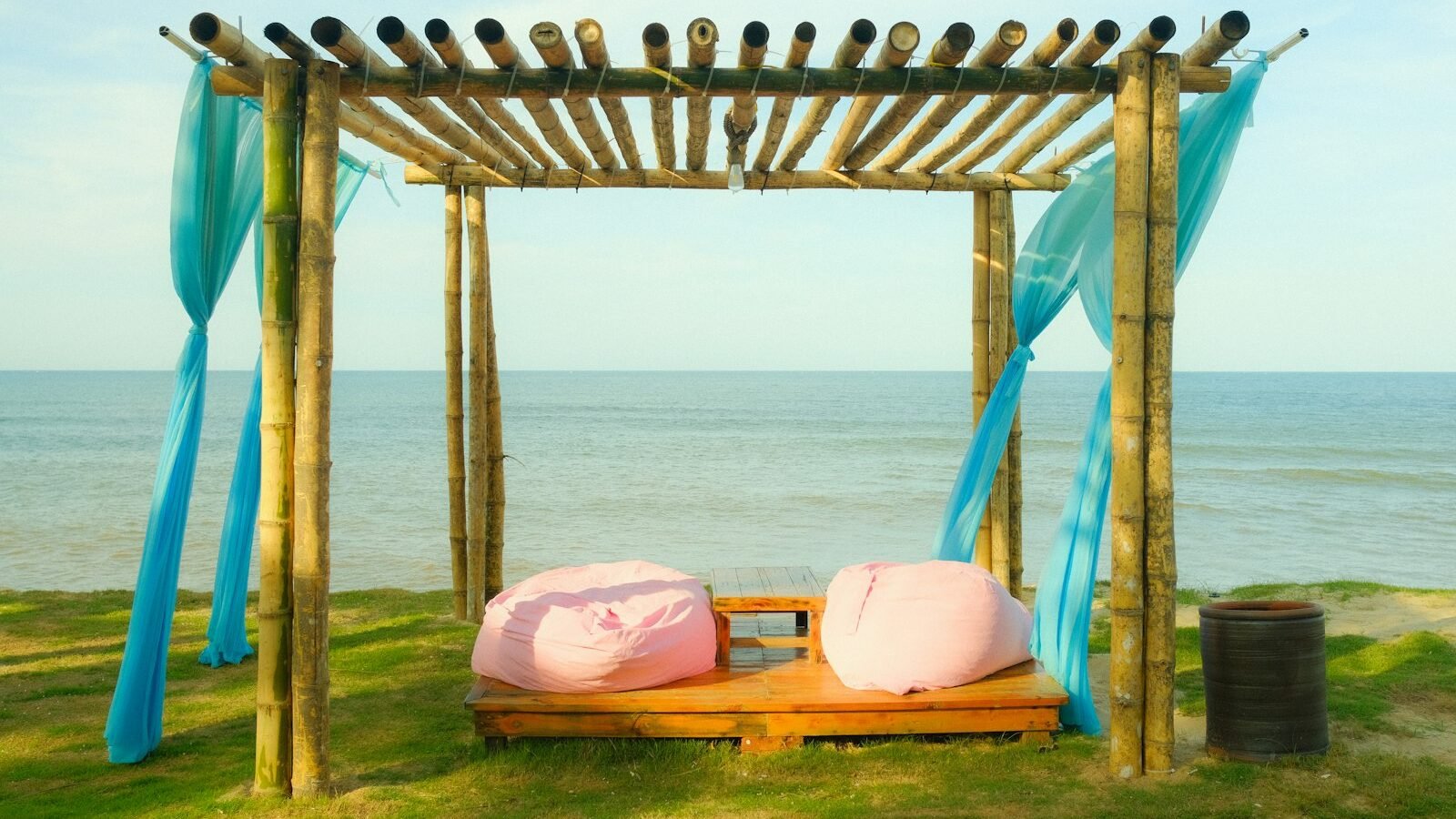
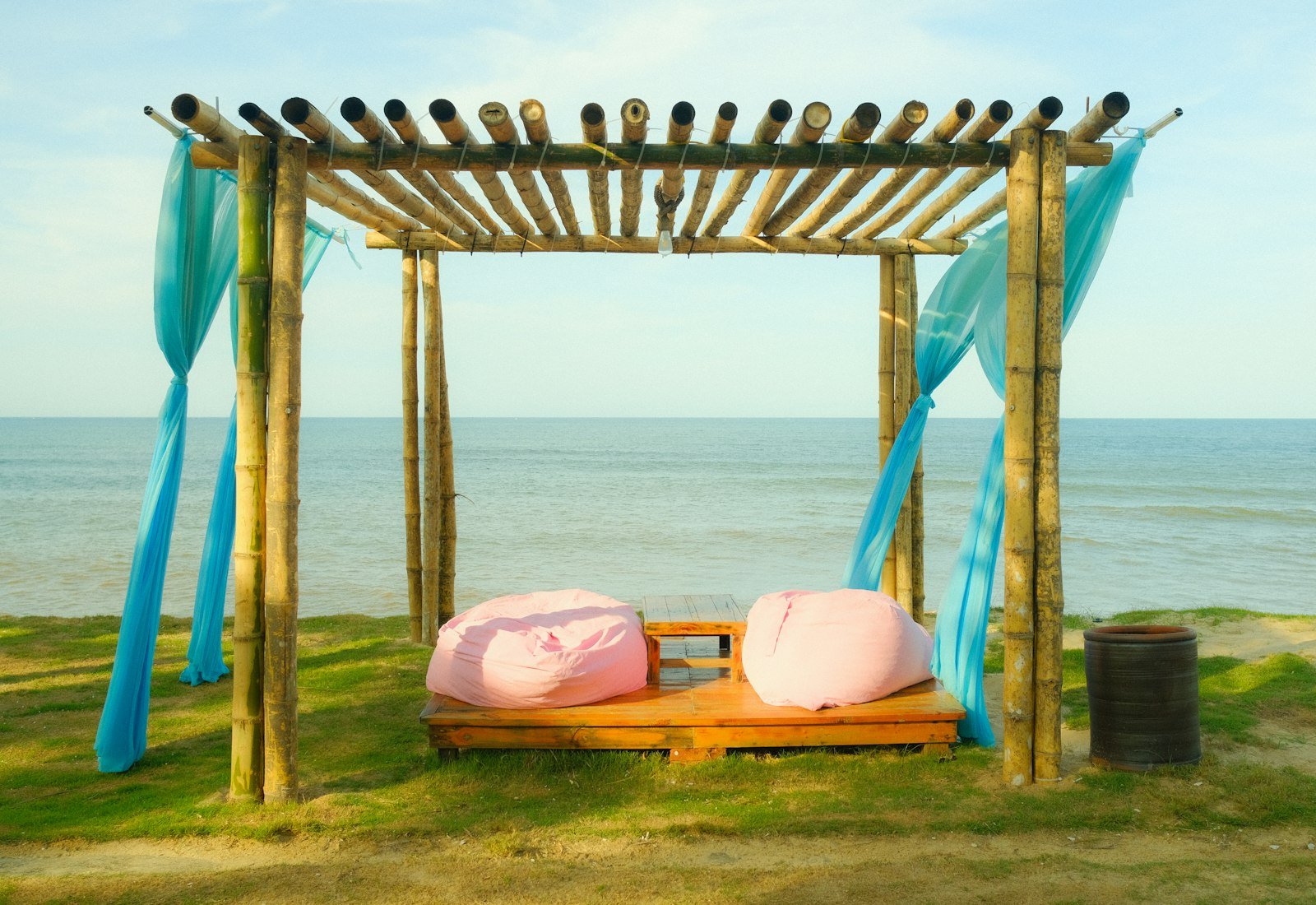
An outdoor bean bag is one of the cheapest, fastest ways to make a UK garden or patio actually used in summer. But the difference between a £40 bean bag from a supermarket and a £180 outdoor bean bag from a UK specialist is, in this category more than most, enormous. This guide is built around the things that determine whether yours is still in the garden in two summers’ time or in the bin.
Table of contents
- What actually makes a bean bag “outdoor”
- Outer fabric: olefin, polyester, acrylic, vinyl
- The inner liner, and why the cover should zip off
- Fill: EPS beads, shredded foam, recycled foam
- Sizes and shapes that work in a UK garden
- Drainage, the bottom grommet, and how to stop mildew
- Where to use it (and where not to)
- UK care that actually helps
- Brands and prices in 2026
- Outdoor bean bag FAQs
- Final thoughts
What actually makes a bean bag “outdoor”
An indoor bean bag and an outdoor bean bag look similar and feel similar when new. After one British winter the difference is obvious. The outdoor version is designed around three jobs the indoor version doesn’t have to do:
- Shed water. A summer shower will pass through an outdoor fabric and out through a drainage grommet at the bottom. An indoor bean bag holds water like a bucket.
- Resist UV. Solution-dyed fabric (usually olefin or solution-dyed acrylic) holds its colour through two UK summers. Anything else fades within twelve months.
- Breathe. An outdoor bean bag uses an inner liner with a breathable fabric, so the fill dries out after rain. An indoor bean bag with a sealed inner liner is a greenhouse for mildew.
The right way to compare: ignore the cover colour, ignore the marketing claims, and look at the cover fabric weight (in denier or g/m²), the inner liner, and the bottom drainage. Those three determine the lifespan.
Outer fabric: olefin, polyester, acrylic, vinyl
Four fabrics dominate the UK outdoor bean bag market, with very different life expectancies.
- Olefin (polypropylene). The 2020s default. Solution-dyed, so the colour goes all the way through the fibre. Water-resistant (not waterproof), quick-drying, UV-stable for 5+ years. Used by most premium UK outdoor bean bag brands. 250–400 g/m² weight is the right spec for a long-life UK bean bag.
- Solution-dyed acrylic (Sunbrella, Outdura). The premium choice. The same fabric used on high-end outdoor cushions. Soft to the touch, water-repellent, very UV-stable. More expensive than olefin and slightly less hard-wearing under heavy use, but the best feel.
- Polyester (PU- or PVC-coated). The mid-range option. Cheaper than olefin, water-resistant if coated, but tends to fade within two UK summers. The right call if the bean bag will be moved under cover in winter.
- Vinyl or marine-grade vinyl. Cheap, fully waterproof, but hot to sit on in direct sun and prone to cracking in sub-zero temperatures. Common on budget bean bags. Skip for UK garden use.
If the spec doesn’t list the cover fabric in detail, assume the worst. Reputable UK outdoor bean bag brands (Sack-it, Extreme Lounging, Sitbon, Bean Bag Bazaar) all list the fabric on the product page.
The inner liner, and why the cover should zip off
A well-made outdoor bean bag has two parts: an outer cover (the colourful one) and an inner liner (a separate, sewn-in bag that holds the fill). The cover zips on and off; the inner liner has its own zip for topping up the fill.
Why this matters:
- The outer cover can be removed and washed. (An outdoor bean bag that cannot be washed is a mould farm within two summers.)
- The fill is contained in the inner liner, not the outer cover. If a child pulls the zip and the fill goes everywhere, it’s the inner liner that empties, not the entire bean bag.
- The fill can be topped up. EPS beads compress by about 15–20% per year; a £15 bag of replacement beads at 18 months keeps the bean bag like new.
Skip any outdoor bean bag without a separate inner liner. They are a false saving. Within 18 months the cover will be stained or torn, the fill will be sagging, and the whole thing will need replacing.
Fill: EPS beads, shredded foam, recycled foam
Three fills in the UK market.
- EPS (expanded polystyrene) beads. The standard. Light, mouldable, cheap to top up. The right answer for most UK buyers. The fire-retardant rating is the thing to check — UK fire regulations (Furniture and Furnishings (Fire Safety) Regulations 1988, as amended) require domestic bean bags to use flame-retardant-treated EPS. Any reputable UK supplier complies.
- Shredded foam. Heavier, denser, gives a more “chair-like” sit. Common in the US market; rare in the UK. Better for a covered patio where the weight is welcome, not for a portable bean bag that needs to be moved around.
- Recycled EPS (often called “eco-fill”). Same performance as virgin EPS, but made from post-consumer or post-industrial recycled foam. Available from several UK sellers (Sack-it, Bean Bag Bazaar). Slightly more expensive, better for the conscience.
What to avoid: any bean bag filled with off-cuts of “memory foam”. Memory foam absorbs water, never dries, and grows mildew within one British autumn.
Sizes and shapes that work in a UK garden
UK outdoor bean bags come in five shapes; the right one depends on the user.
- Single chair (90–110 cm wide, 70–80 cm tall). The most popular UK size. Holds one adult, doubles as a footstool for a friend on a regular chair. Sack-it “Original” or Extreme Lounging “B-Bag” are the UK benchmarks.
- Double chair (130–150 cm wide). Holds one adult and a small child, or two adults in a spoon. The right answer for a couple on a small patio.
- King-size (170–190 cm wide). Two adults side-by-side, or one adult lying flat. Almost too big for a UK patio. Best for a large lawn or a covered outdoor room.
- Pouf / footstool (50–60 cm). Companion piece, not a seat on its own. Worth adding if you already have a chair.
- Sun lounger / outdoor bed (180–200 cm long). The flat version. Useful for a roof terrace or a sun-trap patio. Generally not great in UK weather because of the larger surface area for rain.
A small UK garden (under 6 m × 4 m) usually accommodates two single chairs and a small bistro table comfortably. A medium patio (4 m × 4 m) takes a double chair or two singles. Anything bigger than that and you are into the territory of a proper outdoor lounge set.
Drainage, the bottom grommet, and how to stop mildew
Three details that determine whether your bean bag survives a UK summer.
- Bottom drainage grommet. A small (10–15 mm) plastic or brass eyelet at the lowest point of the bean bag. Allows rainwater to drain out instead of pooling in the bottom. A £40 supermarket bean bag doesn’t have one; a £180 outdoor bean bag does.
- Double-zip on the outer cover. Most outdoor bean bags have a zip with a velcro or popper cover over it, to stop the zip being undone by the wind. Look for this when comparing products.
- Elevated position. Putting a bean bag straight onto wet grass is asking for mould. Either bring it onto a patio, a deck, or stand it on a small outdoor rug. Outdoor bean bags on a wooden deck can trap moisture underneath; flipping them once a week lets the deck dry.
The most common cause of an outdoor bean bag smelling within 12 months is not the fabric or the fill; it’s sitting in a damp spot with no airflow underneath. Get the bean bag off the ground and you’ll get two extra years out of it.
Where to use it (and where not to)
An outdoor bean bag is at its best in a few specific UK settings.
- The patio, in partial shade. The ideal use. Some morning sun, shade from noon onwards. A spot under a parasol or a pergola is perfect.
- A covered balcony. A UK balcony 1.5 m × 3 m or bigger will take a single chair. The cover protects from direct rain and the building protects from wind.
- A conservatory or garden room. Yes, technically indoors, but a fabric-and-bead bean bag handles the temperature swings of an unheated conservatory much better than a leather armchair.
- By the pool (heated). A heated pool area (the kind at a UK holiday let, or a domestic indoor pool) is fine. Cold water + chlorine splash = wash the cover more often.
Where to avoid: an open lawn in winter (the fill will absorb groundwater), a north-facing wall that never sees sun (permanent damp), anywhere under a tree that drops sap or honeydew (the cover will mark within weeks), and any spot within 3 m of a bonfire or fire pit (the EPS fill is flammable).
UK care that actually helps
Five minutes a month is all an outdoor bean bag needs to last five years.
- Brush off leaves and bird mess. A soft brush and a bucket of warm soapy water. Don’t use a pressure washer.
- Flip it. Once a week, turn the bean bag over so the underside dries. This alone adds a year to its life.
- Wash the cover. Three or four times a year, unzip the outer cover and machine-wash at 30 °C on a gentle cycle. Hang to dry, not in a tumble dryer.
- Top up the fill. A £12–£20 bag of replacement EPS beads at 18 months restores the original shape. The original fill doesn’t degrade; it just compresses.
- Store in winter (or don’t). The cover is fine outside all winter under a breathable furniture cover. The fill is fine. The base of the bean bag, where it sits on the ground, is the only part that needs the cover.
Brands and prices in 2026
UK outdoor bean bag market, 2026, in three tiers.
- Premium (£180–£400 per single chair). Sack-it (Danish brand, big in the UK), Extreme Lounging (made in the UK, 5-year guarantee), Sitbon (Estonian brand stocked at Heal’s and John Lewis).
- Mid-range (£80–£180 per single chair). Bean Bag Bazaar (UK, wide range, good recycled-fill option), Big Bertha Original (UK, focus on outdoor and giant sizes), Ambient Lounge (Australian, well-stocked in the UK).
- Budget (£30–£80 per single chair). IKEA (the “GÅRÖ” outdoor bean bag is a fair effort at the price), Argos own-brand, The Range own-brand. Honest at the price, but expect to replace within 2–3 years.
Skip: anything sold only through Amazon, eBay or Facebook Marketplace without a UK-based brand name, fabric spec, or warranty. Most of these are PVC over generic EPS, with a 6–12 month life in UK weather.
Frequently Asked Questions
Q1. Can a UK outdoor bean bag be left out in the rain?
Yes, if it has a drainage grommet at the bottom and the cover is olefin or solution-dyed acrylic. The cover will bead the water; the grommet will let it drain. Cover with a breathable furniture cover if rain is forecast for more than 24 hours.
Q2. How long does an outdoor bean bag last in the UK?
A premium outdoor bean bag (Sack-it, Extreme Lounging) with a top-up of fill at 18 months lasts 6–10 years. A mid-range bean bag (Bean Bag Bazaar, Big Bertha) lasts 4–6 years. A budget supermarket bean bag lasts 1–3 years before the cover stains or the fill sags.
Q3. Are outdoor bean bags waterproof?
Water-resistant, not waterproof. A well-made outdoor bean bag with olefin fabric and a drainage grommet will handle a typical UK summer shower. A torrential downpour followed by a week of damp will eventually soak through, which is why a cover is a good idea.
Q4. Can outdoor bean bags go in the washing machine?
The cover can, on a 30 °C gentle cycle. The inner liner and the fill should not.
Q5. Is EPS bead fill safe for the environment?
Virgin EPS is not particularly green, but it can be recycled. Several UK sellers now offer recycled-fill bean bags (Sack-it “ECO”, Bean Bag Bazaar recycled range) that perform identically to virgin EPS with a fraction of the environmental cost.
Final thoughts
An outdoor bean bag is one of the rare UK garden purchases that genuinely pays for itself. The price difference between a £60 supermarket one and a £180 one is £120 — less than two trips to a National Trust garden for a family. Spend the extra, get an olefin cover and a proper inner liner, and you’ll use it every summer weekend for the next decade.
For More Information Visit Oak & Nook.
1 thought on “Outdoor Bean Bag UK: How to Pick One That Survives the Weather”