
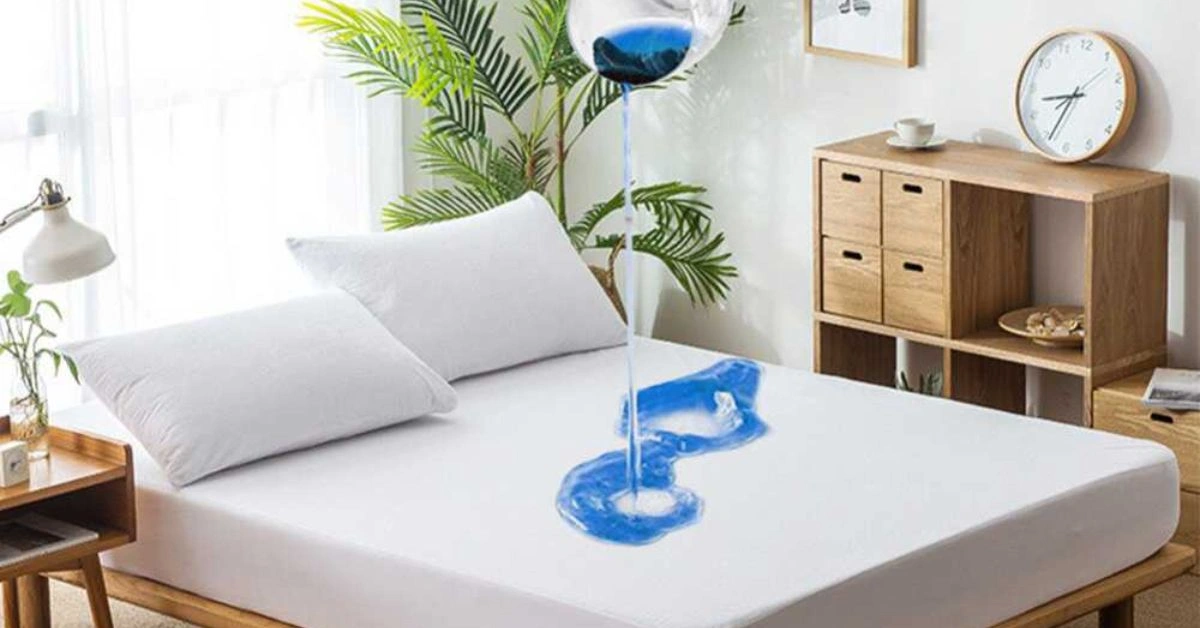
A waterproof mattress protector is one of those quiet bedroom upgrades that earns its place when a drink spills, a child has an accident or a pet jumps on the bed with wet paws. It should protect the mattress without making the bed feel hot, noisy or oddly stiff. The best choice depends less on the word waterproof on the packet and more on the barrier, fabric, fit and care instructions behind it.
For most UK homes, a fitted protector with a waterproof but breathable membrane, a soft top surface and a generous skirt is the sensible starting point. This guide explains what to look for, how waterproof and water-resistant protectors differ, and how to choose one that works with your mattress rather than changing the way it sleeps.
Short answer: Choose a fully waterproof, machine-washable protector if you need reliable defence against liquid spills. Look for a quiet TPU membrane, a comfortable cotton or polyester terry surface, and a pocket depth that is at least as deep as your mattress plus any topper.
What does a waterproof mattress protector do?
A mattress protector sits between the sheet and the mattress. Its job is to reduce the amount of sweat, skin flakes, dust, spills and other everyday debris that reaches the mattress, while making the bed easier to clean. A waterproof version adds a liquid-resistant membrane, usually bonded to the underside of the fabric, so moisture is less likely to soak through.
It is not the same as a mattress encasement. A protector normally covers the sleeping surface and sides with elastic or a fitted skirt. An encasement surrounds all six sides and closes with a zip. Encasements can be useful where full enclosure is specifically required, but they may be warmer, harder to fit and more time-consuming to remove for washing.
| Type | What it protects against | Best for | What to check |
|---|---|---|---|
| Waterproof fitted protector | Spills, sweat and most everyday wet accidents on the covered area. | Family bedrooms, guest beds, pets and general peace of mind. | Membrane quality, seam construction and pocket depth. |
| Water-resistant protector | Light moisture and surface marks, but not necessarily a larger spill. | Occasional use where softness and low bulk matter most. | Whether the manufacturer actually states a waterproof barrier. |
| Full mattress encasement | All-around coverage when every mattress surface needs enclosing. | Specific hygiene or pest-control situations, subject to professional advice. | Zip quality, breathability and whether it fits the full mattress depth. |
Waterproof or water-resistant: what is the difference?
The terms are used inconsistently in product listings. Waterproof should mean that the product includes a continuous barrier intended to stop liquid passing through under normal use. Water-resistant usually means that the surface repels some moisture or that the fabric slows absorption. It may be enough for a small splash, but it is not the same level of protection.
Look for clear wording such as waterproof membrane, polyurethane or TPU backing, sealed or bonded seams, and a statement about the product being suitable for spills or wet accidents. Be cautious when a listing only says showerproof, spill-resistant or liquid-repellent without explaining the underside. A soft top fabric can feel dry while moisture has already reached the mattress beneath.
Which materials are best?
Most protectors combine a top fabric with an underside membrane. Each material changes the balance between comfort, price, durability and noise. No single fibre is automatically best, so read the construction details rather than choosing from the material name alone.
- TPU or polyurethane membrane: A thin flexible film that creates the liquid barrier. TPU is often marketed as quieter and more flexible than older plastic-style backing, but the finished sound depends on the whole construction and how tightly the protector fits.
- Cotton terry: A looped cotton surface feels familiar under a sheet and can absorb a small amount of liquid before it reaches the membrane. It may shrink if washed too hot or dried incorrectly, so follow the label.
For everyday use, a soft top layer over a thin TPU or polyurethane membrane is usually a good compromise. If you sleep hot, avoid assuming that a natural fibre top makes the whole protector breathable: the membrane and quilting determine how much heat and moisture can move away from the body.
Breathability, Noise and Comfort
A waterproof barrier is designed to slow liquid, so it can also change how heat and moisture move through the bed. The effect depends on the membrane, the top fabric, your sheets, the mattress and the room. A protector should not feel clammy when you lie on it, and it should not crinkle every time you turn over.
Noise is often caused by a stiff film, a loose fit or friction between layers. Reviews can help, but they are not a substitute for checking the return policy. Before sleeping on a new protector, fit it over the mattress, topper and sheet as intended and move around on the bed. A little sound may disappear after the first wash; a loud plastic rustle is unlikely to improve enough to be comfortable.
- Choose the thinnest barrier that meets your actual protection needs rather than adding several bulky layers.
- Prefer a fitted design that stays flat, with elastic running around the edge or a secure skirt rather than loose corner straps.
- Check whether the washing instructions allow a low-temperature wash and a normal tumble-dry setting if that matters in your home.
- If you use an electric blanket, heated mattress pad or adjustable bed, check compatibility with both the protector and the heated product before fitting it.
Get the fit and size right
Start with the mattress size: single, small double, double, king or super king. Then measure the mattress depth from the base to the highest sleeping surface. If you use a mattress topper, measure the combined depth of the mattress and topper, including any quilting that will be covered by the protector.
A protector labelled for a double bed may still be too shallow for a deep hybrid mattress. Look for the manufacturer’s maximum pocket depth, not just a general size label. Allow a little extra room so the skirt can tuck under without stretching the membrane tight, but avoid a loose protector that bunches beneath the sheet.
| Check | Why it matters |
|---|---|
| Mattress width and length | A protector that is too small can pull at the corners and leave the sleeping surface exposed. |
| Full mattress depth | The fitted skirt needs to reach below the edge without riding up overnight. |
| Topper thickness | A topper changes the pocket depth and can move the waterproof panel away from the mattress. |
| Mattress type | Foam, pocket-sprung and hybrid mattresses may have different care and heat requirements. |
If you are buying a new bed or mattress at the same time, our Guide to choosing the perfect bed is a useful companion. The protector should be selected after you know the final mattress depth, not from the bed frame size alone.
Washing and care
A waterproof mattress protector is only useful if you can wash it often enough for the way the bed is used. Check the care label before buying. Some protectors can be machine-washed at 40 degrees, while others allow 60 degrees for more intensive cleaning. The higher temperature is not automatically better if it damages the membrane, elastic or waterproof coating.
- Remove the protector promptly after a spill and follow the label rather than leaving moisture trapped against the mattress.
- Wash it with similar lightweight bedding and avoid overloading the drum, which can stop the waterproof panel rinsing properly.
- Use the recommended detergent and avoid bleach, fabric softener or harsh stain removers if the manufacturer warns they can weaken the membrane.
- Dry it completely before putting it back on the bed. Damp bedding can create an unpleasant smell and can transfer moisture back to the mattress.
- Inspect the backing, seams and elastic after washing. Replace the protector if the membrane cracks, peels, becomes porous or no longer lies flat.
Do not iron a protector unless the care label explicitly allows it. Direct heat can distort a membrane even when the fabric surface looks fine. If you use a tumble dryer, use the stated setting and take the protector out before it becomes excessively hot.
Choose for the way the bed is used
For children and bedwetting
For a child’s bed, easy removal is usually more valuable than a heavy encasement. Choose a quiet fitted protector with a waterproof panel that covers the sleeping area and enough skirt to stay secure when the child moves around. Keep a spare protector available so the bed can be remade while the first one is washing.
A protector helps with clean-up, but it is not a treatment for bedwetting. If bedwetting is persistent or causing concern, use the NICE bedwetting guidance and speak with an appropriate healthcare professional.
For hot sleepers
Prioritise a thin, flexible membrane, a breathable-feeling top fabric and a close fit. Avoid stacking a waterproof protector, thick mattress pad and heavy electric blanket without checking compatibility. The bedroom environment matters too: our cosy bedroom ideas can help you create warmth through layers and lighting without relying on a bulky bed covering.
Allergies and hygiene: keep the claim realistic
A protector can reduce the amount of dust, skin flakes and liquid that reaches the mattress, but it should not be presented as a guaranteed allergy solution. Dust-mite and allergen control depends on the whole bedroom, including regular laundering, humidity, ventilation and cleaning. NICE evidence on indoor air quality discusses the limitations of treating barrier bedding as a stand-alone answer, so avoid buying one on the promise of curing symptoms.
Common buying mistakes
- Choosing by bed size only: A double protector with the wrong pocket depth may pull up at the corners or expose the mattress.
- Assuming every waterproof label is equal: Check for a continuous membrane, seam construction and care instructions.
- Ignoring the sheet: A protector can be quiet on its own but noisy when paired with a loose or synthetic sheet. Test the full bedding combination.
- Overheating the bed: Several dense layers can make a mattress sleep warmer and may conflict with a heated blanket.
- Waiting until the protector fails: Replace it when the backing cracks, the elastic loses its grip or moisture begins to pass through.
Is a waterproof mattress protector worth it?
For most households, yes. A mattress is difficult and expensive to clean compared with a removable protector, and a well-fitting model is a relatively small purchase. The value is greatest when the bed is used by children, guests, pets or anyone who is likely to spill drinks or need frequent bedding changes.
The right protector is not necessarily the thickest or most heavily marketed. Choose the barrier you need, a surface you can sleep on comfortably, a fit that matches the final mattress depth and a wash routine you can maintain. For bedroom styling after the practical details are sorted, our grey bedding ideas and small guest bedroom ideas offer useful inspiration.
Conclusion
A waterproof mattress protector should quietly do its job: stop everyday liquid reaching the mattress, wash without drama and stay comfortable beneath the sheet. Look for a genuine waterproof membrane, a soft top surface, reliable seams and a pocket depth that matches the mattress and topper. Then choose care instructions and noise levels that suit the person sleeping on the bed.
A protector will not solve every hygiene or allergy problem, but it can make spills and regular cleaning much easier. Buy for the real risks in your home, keep a spare if the bed is used heavily and replace the protector when its barrier or fit starts to fail.
Frequently Asked Questions
Q1. What is the best material for a waterproof mattress protector?
A soft cotton terry or microfibre top over a thin TPU or polyurethane membrane is a practical all-round choice. The complete construction, fit and care instructions matter more than the fibre name alone.
Q2. Does a waterproof mattress protector make you hot?
It can, depending on the membrane, top fabric, mattress and other bedding layers. Choose a thin flexible barrier, avoid unnecessary padding and look for a close, smooth fit rather than relying on the word breathable in a product listing.
Q3. Is waterproof the same as water-resistant?
No. Waterproof normally indicates a continuous barrier designed to stop liquid passing through under normal use. Water-resistant usually means that the surface repels or slows some moisture and may not protect against a larger spill.
Q4. Should a mattress protector be bigger than the mattress?
It should match the mattress width and length while allowing enough pocket depth to cover the mattress and any topper. A little extra skirt room is useful, but an oversized protector can bunch and move beneath the sheet.
Q5. Can I wash a waterproof mattress protector at 60 degrees?
Only if its care label permits it. Washing temperature, detergent, bleach, fabric softener and tumble-drying instructions vary, and excessive heat or harsh chemicals can weaken the waterproof membrane or elastic.
Q6. Does a mattress protector help with allergies?
It can reduce what reaches the mattress, but it is not a guaranteed allergy treatment. Mattress protection works best alongside regular laundering, cleaning, humidity control and professional advice where symptoms are persistent.


1 thought on “Waterproof Mattress Protector: How to Choose the Right One”