Wall Furnishing Ideas for Every Room: A Practical UK Guide
A bare wall can make a room feel unfinished, but filling it with random pictures is not always the answer. The most successful wall furnishing ideas balance scale, storage, light, movement and the way a room is actually used.
This UK-focused guide looks beyond a list of wall art. It will help you choose what belongs on a living-room wall, bedroom wall, hallway or kitchen wall while avoiding overloaded galleries, blocked doors and unsafe fixings.
The measurements below are starting points, not rigid rules. Your ceiling height, furniture and sightlines have the final say.
Table of contents
- Start with the wall problem, not the product
- A quick comparison of wall furnishing routes
- Wall furnishing ideas by room and situation
- 1. A considered gallery wall
- 2. One oversized artwork
- 3. Mirrors that add light and depth
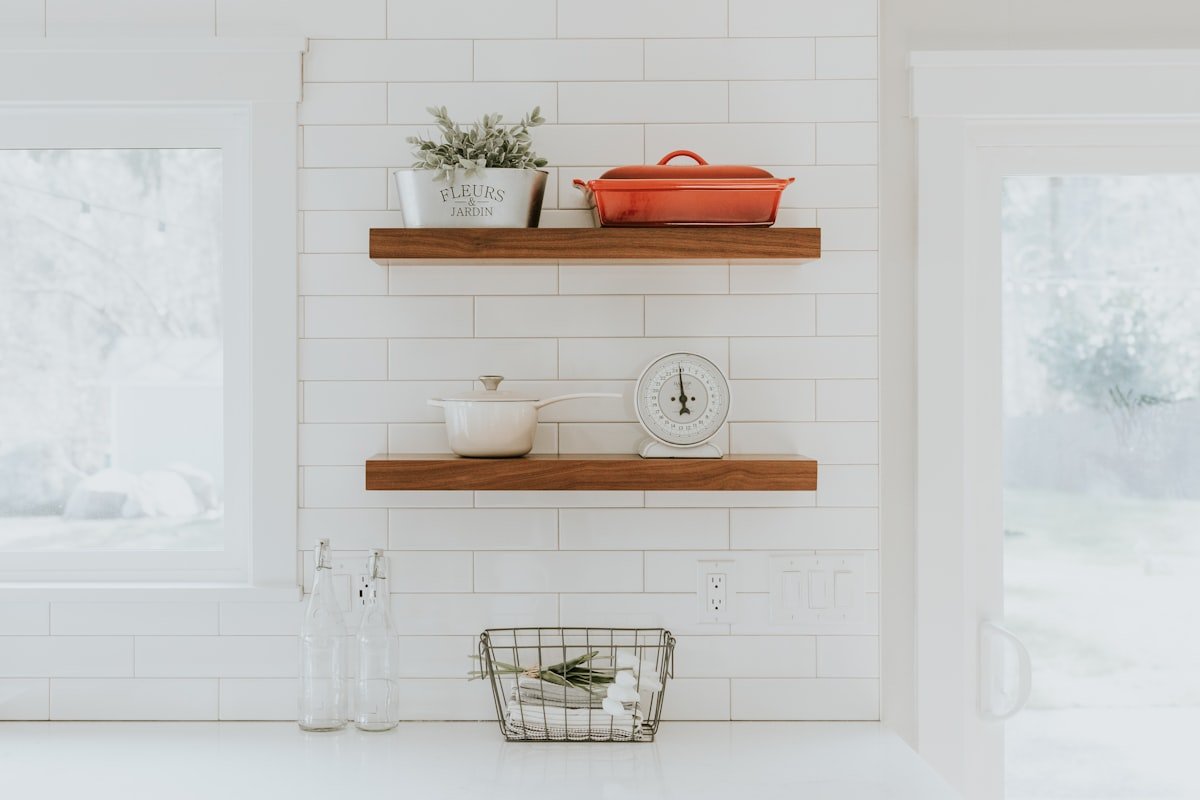
- 4. Shelves for display and useful storage
- 5. Panelling, wallpaper and paint as furnishing
- 6. The difficult television wall
- 7. Hallway walls that earn their keep
- 8. Bedroom walls with softness and purpose
- 9. Kitchen and dining-room walls
- How to plan the scale and spacing
- Fixings, safety and renter-friendly options
- A realistic way to set your wall-furnishing budget
- Frequently asked questions
- Final thoughts
Start with the wall problem, not the product
Before choosing a frame, shelf or mirror, identify what the wall needs to do. Most projects fall into one of five briefs:
- Fill a broad blank wall without making it feel busy.
- Anchor furniture such as a sofa, bed, console or dining table.
- Correct a difficult proportion, including a tall stair wall or narrow hallway.
- Add function, such as storage, lighting, books or a place to drop keys.
- Soften an acoustically hard room with textiles, upholstery or layered artwork.
Then measure the wall and the furniture in front of it. Photograph the space in daylight and evening; lamps, curtains and shadows can change the balance.
Use painter’s tape to mark the outside edge of a proposed arrangement. This reveals practical conflicts before you buy: a picture may sit behind a door, a shelf may project into a walkway, or a wall light may land over a picture rail.
A quick comparison of wall furnishing routes
| Wall need | Strong starting option | Useful starting dimensions | Project difficulty | Main caution |
|---|---|---|---|---|
| Large, empty wall | Oversized art or a grouped arrangement | Cover roughly two-thirds of the furniture width | Low to medium | A small cluster can look stranded |
| Wall above a sofa | Art, mirror or shallow picture ledge | Centre the arrangement about 15–25cm above the sofa back | Low | Do not place objects where heads will brush them |
| Above a bed | Wide artwork, textile or headboard feature | Keep the lower edge about 20–30cm above the headboard | Low to medium | Secure anything heavy, especially over a child’s bed |
| Narrow hallway | Picture rail, slim ledge or repeated frames | Choose shallow projections and test door swings | Low to medium | Protect corners and keep the route clear |
| TV wall | Low storage, art balance or built-in joinery | Plan for cables, ventilation and screen sightline first | Medium to high | Do not seal heat-producing equipment into a tight unit |
| Renter’s wall | Lightweight art, removable hooks or leaning pieces | Work with small, reversible groupings | Low | Check the tenancy agreement and fixing limits |
These are not universal dimensions. They are a way to start planning before you commit to a particular product or finish.
Wall furnishing ideas by room and situation
1. A considered gallery wall
A gallery wall is more convincing when it has a clear boundary and a reason for the mix. Combine photographs, prints, small paintings, a textile or a shallow object rather than using twenty versions of the same frame.
Lay the arrangement on the floor first. Start with the largest piece, build outwards, and keep the gaps deliberately consistent. A gap of around 5–8cm is a useful starting point for medium frames, but a small arrangement may need tighter spacing. Trace each frame on paper and tape the paper to the wall before drilling.
For a calm UK period-home look, repeat one frame finish and vary the subject matter. In a modern flat, a strict grid can feel architectural. If the wall is patterned, reduce the artwork colours rather than adding another competing motif.
2. One oversized artwork
One large piece is often easier to live with than a scattered collection. It gives a dining area, sofa wall or landing a visual centre without adding shelves and objects to dust.
Choose the artwork in relation to the furniture beneath it. A small frame above a long sofa will look accidental; a very wide frame can overwhelm a narrow console. As a starting point, let the artwork or grouping occupy a substantial portion of the furniture width, leaving enough breathing space at either side.
If the right original painting is outside your budget, consider a textile, a large photographic print, a map, a vintage poster or a pair of related works. The important decision is proportion, not whether the wall carries a traditionally labelled “art” piece.
3. Mirrors that add light and depth
A mirror can make a dark hall or compact sitting room feel more open, but it works best when it reflects something pleasant: a window, a lamp, a plant or a view into the room. Avoid positioning it so the first thing it reflects is a blank wall or an untidy storage area.
A wide mirror above a console creates a useful arrival point. A tall mirror can emphasise ceiling height in a hallway or bedroom. For a softer composition, place a round mirror over square furniture; for a formal effect, repeat straight lines in the console, mirror and joinery.
Check the weight, hanging hardware and wall construction before fixing a large mirror. In a busy hall, a securely mounted mirror is preferable to a casually leaned one, especially where children or pets may knock it.
For more ways to use metallic finishes without making the room feel themed, see Oak & Nook’s gold wall decor guide.
4. Shelves for display and useful storage
Shelving turns a wall into a working surface. Use it for books, framed art, baskets, small lamps, ceramics or the everyday items that otherwise gather on a table.
A shallow picture ledge is a forgiving choice because the contents can be changed without making new holes. As a starting point, allow around 18–25cm of depth for books and small objects; measure your largest item rather than relying on a standard size. Keep heavier objects low and avoid loading a shelf beyond the manufacturer’s stated limit.
In a living room, long shelves can balance a television or fireplace. In a bedroom, one narrow ledge can hold prints without stealing bedside space. In a kitchen, open shelving is useful only if the items justify the dust and grease exposure.
Mix vertical and horizontal shapes. A stack of books, a low bowl and one taller object will usually look more intentional than a row of similarly sized ornaments. Leave some empty shelf space so the wall can breathe.
5. Panelling, wallpaper and paint as furnishing
A wall does not need an object attached to it to feel furnished. Colour blocking, wallpaper, half-height panelling, tongue-and-groove boards or a painted arch can provide the backdrop that makes the rest of the room feel resolved.
Use the wall’s architecture to guide the treatment. Half-height panelling can give a hallway a durable lower zone; vertical lines can make a low room feel taller; bold wallpaper can define the wall behind a bed without a large headboard.
Before applying anything, inspect the surface for damp, loose plaster, cracks and unevenness. Wallpaper and panelling do not remove those problems; they may make repairs harder later. In a rented home, a fabric hanging, removable picture ledge or carefully composed leaning arrangement may deliver a similar sense of scale with less commitment.
If you are deciding between colour and surface texture, Oak & Nook’s living-room colour ideas can help you think through aspect, undertone and surrounding furniture before you buy paint.
6. The difficult television wall
The television wall needs more planning than a standard picture wall. Start with the screen, viewing position and cables, then decide how decorative the wall should be. A low media unit, two balanced shelves or a simple painted backdrop can make the screen feel integrated without disguising it as something it is not.
Do not put a delicate gallery directly behind a screen if it will compete with changing images. Use texture, quiet paint or closed storage to control visual noise. Plan access to sockets, routers and games equipment, and allow ventilation around heat-producing devices. Use a suitably qualified professional for chased cables or new lighting.
For a UK-localised visual reference, IKEA GB’s living-room wall décor guide groups picture walls, shelves, mirrors and TV walls.
For storage, equipment and cable decisions, link to Oak & Nook’s living-room units guide.
7. Hallway walls that earn their keep
Hallways are often narrow, poorly lit and high-traffic, so the best wall furnishing is slim, robust and easy to clean. A line of related prints, a picture rail, a narrow ledge or a single oversized mirror can provide interest without turning the route into an obstacle course.
Measure the hallway at its narrowest point, including skirting boards, radiators and door furniture. Choose the shallowest shelf or console that solves the problem, and tape its projected depth to the wall before ordering. In a busy family entrance, combine one attractive element with practical hooks, a key tray or a small noticeboard rather than trying to make every inch decorative.
Use contrast carefully. Pale walls and a mirror can help a dark entrance, while a deeper colour can make a long corridor feel more deliberate. For room-by-room planning, see the hallway decorating ideas.
8. Bedroom walls with softness and purpose
Above a bed, a textile, upholstered headboard, wallpapered panel or calm artwork can create a restful focal point. Keep the composition wider than a single bedside table but related to the bed’s width, so it feels anchored rather than floating.
A picture ledge is useful in a guest room because prints can be changed easily. In a child’s room, avoid unsecured heavy mirrors, glass and climbable shelves. Choose fixings and furniture that match the wall construction, and keep small objects out of reach where necessary.
The wall opposite the bed can carry a mirror, a slim dressing area or artwork, but check what will be reflected from the pillow. A beautiful arrangement is not restful if it faces a bright lamp or a busy storage zone.
9. Kitchen and dining-room walls
In kitchens, choose surfaces and objects that can tolerate the room’s heat, steam and grease. Framed prints work best away from the hob and sink; wipeable paint, a tiled splashback or a small collection of useful boards may be more practical near food-preparation areas.
A dining wall can carry a plate display, a clock, a large artwork, open shelves or a narrow sideboard with a mirror above it. Repeat a finish already present in the room—wood, black metal, brass or a colour from the upholstery—so the wall feels connected to the table rather than treated as a separate display.
For plates and other wall-mounted objects, use appropriate fixings and check each item’s weight. Never assume an adhesive pad is suitable simply because the object is small; surface condition, humidity and the product’s stated rating all matter.
How to plan the scale and spacing
Use these checks before you buy:
- Find the visual centre. For standalone art, a centre point around 145–155cm from the floor is a useful starting range. Lower it if the room is mainly viewed from a seated position.
- Relate art to furniture. Above a sofa, begin with the lower edge around 15–25cm above the back. Above a headboard, begin around 20–30cm above the top, then adjust for the frame and ceiling.
- Keep a family of gaps. Select one main gap for a gallery wall rather than measuring every space differently.
- Draw the full footprint. Include frame thickness, shelf brackets, lamps, plants and anything that projects forward.
- Check the side view. A shelf may be shallow from the front but still collide with a door, curtain or passing shoulder.
- Build in empty space. The wall is part of the composition. More objects do not automatically make a room feel finished.
A helpful test is to live with the taped outline for a day. Walk past it, sit opposite it and view it with the room lights on. If it feels too high or too small in tape, it will feel the same after drilling.
Fixings, safety and renter-friendly options
The same wall furnishing can be safe on one surface and unsuitable on another. Identify whether you are fixing into masonry, solid timber, a stud, plasterboard or a fragile plaster surface. Use a fixing designed for that material and follow the manufacturer’s installation and weight guidance.
For heavy mirrors, cabinets, shelves and panelling, locate a structural fixing point where possible rather than relying on one small hook. Keep drilling clear of concealed cables and pipes; if unsure, stop and seek competent advice. Use a qualified electrician for new or altered electrical work.
Renters can still create scale. Lean a large framed print on a secure console, use a freestanding picture ladder, group lightweight art with approved removable fixings, or use a textile hanging that can be taken down. Check the product instructions, paint condition and tenancy terms first; “removable” does not mean risk-free on every surface.
A realistic way to set your wall-furnishing budget
Divide the project into surface treatment, focal piece, supporting pieces and installation. A painted wall with one existing frame is a low-complexity refresh; a gallery adds frames and fixings; shelving adds brackets and fitting time. Panelling, bespoke joinery, hard-wired lights or a built-in media wall are higher-complexity projects before decorative items are chosen.
Set a priority order:
- Make the wall safe and repair the surface.
- Buy the one item that solves the main problem.
- Add lighting or storage only if it improves how the room works.
- Fill gaps slowly, using pieces that relate to the furniture and palette.
UK prices and availability change quickly, so do not treat an undated online price as a dependable project cost. Compare frame, delivery, fixing and fitting, and ask for a written scope for joinery, panelling or electrical work.
Frequently asked questions
What is the easiest wall furnishing idea to get right?
A single appropriately scaled artwork or mirror is usually the simplest starting point. Measure the furniture beneath it, tape the footprint and choose a secure fixing suited to the wall. Add supporting pieces later if needed.
How high should wall art be hung?
A centre point around 145–155cm from the floor is a useful general starting range, but furniture changes the answer. Above a sofa, try the lower edge around 15–25cm above the back; above a headboard, try around 20–30cm above it. Sit in the room and adjust for your sightline.
Are shelves or pictures better for a narrow hallway?
Pictures, a picture rail or a slim ledge are usually easier in a narrow route because they need less projection. Shelves can work when they are shallow, securely fixed and placed away from door swings. Tape the depth on the wall before choosing.
How can I furnish a wall without drilling?
Use a secure leaning arrangement, a freestanding ladder shelf, lightweight art with approved removable fixings or a textile hanging. Confirm the wall and product instructions first, and do not use a no-drill method for an item whose weight or fall risk makes it unsuitable.
Final thoughts
The best wall furnishing ideas are not simply attractive objects arranged at eye level. They are decisions that make a room easier to use and more coherent: a mirror placed to catch light, shelves sized for the books you own, a gallery scaled to the sofa, or a hallway treatment that survives daily traffic.
Start with the wall problem, measure in context and test the outline before buying. Then choose one strong focal move, check the fixing and add detail gradually. That approach gives you a home that feels furnished rather than filled—and it leaves room for the walls to evolve with you.