UK homes are smaller than they have ever been. The average new-build home in 2025 is 76m², down from 95m² in the 1990s, and the average UK household owns £4,000 to £6,000 worth of stuff that lives somewhere in the home. The result is that most UK homes are about 30 per cent over-stuffed: every cupboard is full, every drawer is jammed, and every surface has a pile of things on it. DIY home organisation is the response. A weekend of thoughtful storage work, using off-the-shelf parts from IKEA, B&Q or Wickes, can add the equivalent of a new room of storage to a typical UK home for under £500. This guide is a UK-specific walkthrough of the highest-impact storage projects for every room, with the right products, the right installation tips, and the small mistakes that catch out most first-time organisers.
Table of contents
- Why UK homes need different solutions
- Hallway and understairs storage
- Kitchen storage hacks
- Living room storage
- Bedroom storage
- Bathroom storage
- Home office storage
- Garage and shed storage
- Tools and materials
- Common mistakes
- Home organisation FAQs
- Final thoughts
Why UK homes need different solutions
UK homes are different from US, Australian, and continental European homes in three important ways. They are smaller, they have more awkward storage spaces (understairs, alcoves, loft conversions), and they have stricter building regulations that affect what you can and cannot build without permission. The gov.uk building regulations set out what counts as “permitted development” for storage and what requires a formal application.
The other important UK-specific factor is heating and ventilation. UK homes are heated differently from US homes (typically with a gas combi boiler and radiators rather than forced air), and this affects where you can put wardrobes, bookshelves, and storage units. A wardrobe against an external wall in an uninsulated UK home will get damp, and the contents will be affected. The Energy Saving Trust has more on insulation and condensation.
Hallway and understairs storage
The hallway is the most under-used storage space in a typical UK home. Most UK hallways are narrow, with limited floor space, but the walls are usually 2.4m to 2.7m tall, and the space under the stairs is often completely empty. A few high-impact projects.
Understairs pull-out storage
The single highest-impact storage project in a UK home. The space under the stairs is typically 3m² to 5m² of floor area, with a sloping ceiling that limits the use of freestanding furniture. The right answer is a custom-built pull-out storage system: a series of deep drawers or baskets on a heavy-duty runner system, fitted into the understairs space. The drawers pull out for access, and the system uses the awkward space that is otherwise wasted.
For a DIY build, the right materials are 18mm MDF for the drawer boxes, 450mm to 600mm full-extension drawer runners from Screwfix or Häfele, and a simple frame from 45mm x 45mm timber. Cost: £200 to £500 in materials for a typical UK understairs space. Time: a weekend.
Wall-mounted hallway storage
For a narrow UK hallway, the right answer is a shallow wall-mounted storage unit, 25cm to 30cm deep. The IKEA STÄLL range, the Dunelm Halifax wall shelf, and the Next wall-mounted coat rack are the most useful UK options. Cost: £50 to £200.
Kitchen storage hacks
The kitchen is the room where organisation pays back the most. A well-organised UK kitchen cuts meal prep time by 30 to 40 per cent, saves 10 to 15 minutes a day, and reduces food waste. The highest-impact projects.
Pull-out pantry
A pull-out pantry fits into a 15cm to 20cm gap between a fridge and a wall, or between two cabinets, and adds 5 to 8 shelves of storage in a space that is otherwise wasted. The IKEA RATIONELL pull-out pantry, the Screwfix tower pull-out, and the Wickes chrome wire pull-out are the most useful UK options. Cost: £60 to £200.
Under-sink organiser
The space under the kitchen sink is the most awkward storage space in any UK kitchen. The pipework gets in the way, and most people just shove a few bottles of cleaning spray in there. The right answer is a two-tier under-sink organiser from IKEA RATIONELL or Lakeland, which fits around the pipework and adds 2x the usable storage. Cost: £30 to £80.
Appliance garage
An appliance garage is a built-in cabinet with a roll-up door, a tambour door, or a pocket door, designed to hide small appliances (kettle, toaster, coffee machine) on the kitchen counter. The right answer for a UK kitchen is the IKEA Metod tall cabinet with a tambour door, or a custom build from 18mm MDF with a roller door from Blum. For more on layouts, see our guide to appliance garage kitchen ideas.
Drawer dividers
Adjustable bamboo or plastic drawer dividers turn a junk drawer into an organised drawer. The IKEA VARIERA, the Joseph Joseph DrawerStore, and the Lakeland adjustable drawer organisers are the most useful UK options. £10 to £40 per drawer.
For more kitchen storage ideas, see our guide to smart kitchen storage ideas and our guide to walk-in pantry ideas.
Living room storage
The living room in a typical UK home is the room where most stuff accumulates. Toys, books, blankets, remote controls, candles, magazines. A few projects that make a real difference.
Built-in alcove storage
Most UK living rooms have alcoves on either side of the chimney breast. These are typically 60cm to 80cm wide and 30cm to 40cm deep, and they are the most useful storage space in the room. The right answer is a custom-built alcove unit from 18mm MDF: a base cabinet, a top cabinet, and a bookcase in the middle. Cost: £300 to £800 in materials. Time: a weekend.
For a more affordable option, the IKEA BESTÅ range, the Dunelm Middleton range, and the Next Lynton range can be combined to fill an alcove for £200 to £500.
Storage ottoman or footstool
A storage ottoman is a soft footstool with a lift-up lid, providing hidden storage for blankets, magazines, and toys. The IKEA STRANDMON, the Dunelm Henry footstool, and the Next storage footstool are the most popular UK options. £100 to £300.
Bedroom storage
Most UK bedrooms are too small for the standard 200cm x 60cm wardrobe. The right answer is a fitted wardrobe or a combination of modular storage. A few projects.
Fitted wardrobe
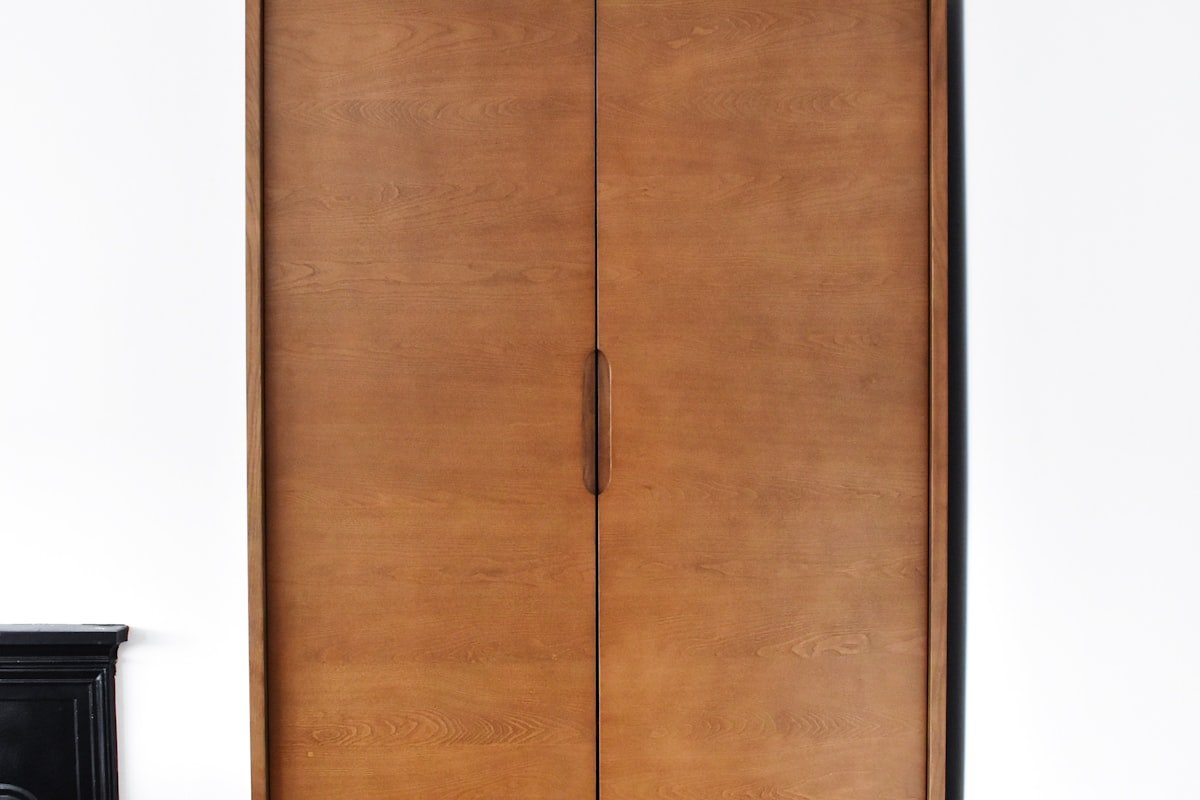
A fitted wardrobe uses the full height of the room (typically 2.4m to 2.7m) and the full width of the wall, providing 2x to 3x the storage of a freestanding wardrobe. The right answer for a UK bedroom is a custom-fitted wardrobe from a company like Shelter or Wren, costing £1,500 to £4,000 fitted, or a DIY build from 18mm MDF for £300 to £600 in materials.
Underbed storage
The space under a UK bed is 25cm to 30cm tall and 1.4m x 2m wide. That is 1m² of floor area that is usually wasted. The right answer is a set of low storage boxes or a set of underbed drawers on castors. The IKEA SKUBB, the Lakeland underbed storage, and the Dunelm rolling underbed drawers are the most popular UK options. £15 to £60 per box.
Over-door storage
An over-door organiser adds 5 to 8 pockets of storage to the back of a door, using space that is otherwise wasted. The right answer for a UK bedroom is the IKEA TJENA or the Lakeland over-door organiser. £15 to £40.
For more bedroom storage ideas, see our guide to multifunctional furniture for small UK homes.
Bathroom storage
UK bathrooms are typically 2m² to 4m², which is the second smallest in Europe (after Italy). Storage is at a premium. The right answer is a mix of wall-mounted and over-door storage.
Wall-mounted vanity unit
A wall-mounted vanity unit with a basin on top and storage drawers or a cupboard underneath is the single most useful bathroom storage project. The right answer is a 60cm to 80cm wall-mounted unit from IKEA GODMORGON, B&Q Cooke & Lewis, or Victorian Plumbing. £200 to £600.
Over-toilet storage
The space above the toilet is typically 60cm to 80cm tall and 40cm to 60cm wide, and is one of the most under-used storage spaces in any UK bathroom. The right answer is a wall-mounted shelf or a slim cabinet, fitted 90cm to 110cm above the floor. From IKEA, Dunelm, or Soak. £30 to £120.
Home office storage
Since 2020, the number of UK homeworkers has roughly doubled, and most UK home offices are set up in a spare bedroom, a corner of the living room, or a converted garage. Storage is often an afterthought. A few high-impact projects.
Floating shelves
Above-desk floating shelves are the most useful home office storage project. They use the wall space above the desk for books, files, and reference material, leaving the desk clear for working. The right answer is a set of 60cm to 90cm floating shelves from IKEA LACK, B&Q Cookes & Lewis, or a custom build. For installation tips, see our guide to how to install floating shelves.
Cable management
UK home offices typically have 5 to 10 cables at the desk: laptop charger, monitor, phone charger, printer, lamp, etc. The right answer is a cable management tray that fits under the desk, holding the power strip and excess cable. The IKEA SIGNUM, the Amazon Basics under-desk cable tray, and the Screwfix cable tidy are the most popular UK options. £10 to £40.
For more on home office organisation, see our guide to home office furniture and our guide to modular furniture.
Garage and shed storage
UK garages and sheds are typically 6m² to 12m², and most are used as dumping grounds for gardening equipment, tools, bikes, and DIY materials. A few projects that turn the garage or shed into useful storage.
Wall-mounted bike storage
A wall-mounted bike hook or rack gets a bike off the floor and onto the wall, freeing up 1m² of floor space per bike. The right answer is a B&Q bike hook, a Screwfix bike rack, or a Halfords wall-mounted bike storage. £15 to £60 per bike.
Shelving
Heavy-duty shelving is the most useful garage storage. The right answer is a set of B&Q Cooke & Lewis heavy-duty shelves or a custom build from 38mm x 63mm timber and 18mm OSB3. Each shelf holds 100kg to 200kg. £30 to £80 per shelf.
Tool wall
A pegboard tool wall turns a cluttered shed into a workshop. The right answer is a 1.2m x 1.2m Wickes or Toolstation pegboard, a set of pegboard hooks, and a clear coat of varnish. £30 to £60.
Tools and materials
For a weekend of home organisation in a UK home, you will need the following.
- Drill and impact driver. For fixing shelves, brackets, and runners. A cordless combi drill from Screwfix or Toolstation.
- Mitre saw or hand saw. For cutting MDF, timber, and shelf boards.
- Spirit level. A 600mm or 1200mm spirit level.
- Stud detector. For finding studs in plasterboard walls.
- Cable detector. For checking for hidden cables before drilling.
- Wall fixings. A set of wall plugs, screws, and specialist plasterboard fixings from Fischer or Rawlplug.
- Storage products. Drawer dividers, storage boxes, baskets, and labels from IKEA, Lakeland, or Dunelm.
Common mistakes
- Buying before measuring. Always measure the space, the doorways, and the stairs before buying flat-pack storage. A wardrobe that does not fit through the bedroom door is a frustrating waste of money.
- Not using the vertical space. Most UK homes have 2.4m to 2.7m ceilings. The top 50cm to 80cm of a wardrobe, cupboard, or alcove is rarely used. Add a shelf or a hook to use it.
- Over-organising. Too many dividers, too many boxes, too many labels. The point of organisation is to find things quickly, not to spend an hour organising the organisation. Three or four zones per drawer is enough.
- Ignoring lighting. A dark cupboard is a half-used cupboard. Add a battery-operated LED strip or a small puck light inside cupboards and wardrobes. £5 to £20 from IKEA TRÅDFRI or Philips Hue.
- Forgetting to declutter first. Organisation is not decluttering. If you have too much stuff, the new storage will be just as full as the old storage in 6 months. Declutter first, then organise.
Frequently Asked Questions
1. What is the best storage for a small UK home?
For a small UK home, the three highest-impact storage projects are understairs pull-out storage (3m² to 5m² of new storage), built-in alcove storage in the living room (1m² to 2m² per alcove), and fitted wardrobes in the bedroom (2x to 3x the storage of a freestanding wardrobe). All three use space that is otherwise wasted. For more on storage in small UK homes, see our guide to multifunctional furniture for small UK homes.
2. How much does home organisation cost in the UK?
A weekend of home organisation in a typical UK home costs £200 to £800 in materials, depending on the scope. Most of the cost is in the storage products themselves (drawer dividers, baskets, shelves) rather than the tools. A fitted wardrobe costs £1,500 to £4,000 fitted, or £300 to £600 for a DIY build from MDF. The resale uplift, according to Which? consumer research, is consistent: a well-organised home sells 10 to 15 per cent faster than a comparable cluttered home.
3. How do I declutter before organising?
The most popular UK method is the four-box method: label four boxes “Keep”, “Donate”, “Sell”, and “Bin”, and move every item into one of the four boxes. For larger projects, the Marie Kondo method (only keep things that “spark joy”) or the Becoming Minimalist 30-day minimalism challenge are both widely used in the UK. Charity shops like BHF, Oxfam, and Habitat for Humanity accept most household items in good condition.
4. What is the best way to store clothes in a small UK bedroom?
The best approach is a combination of a fitted wardrobe (or a modular wardrobe from IKEA PAX) for hanging clothes, a chest of drawers for folded clothes, and underbed storage for seasonal clothes. Use the full height of the room: a 2.4m tall wardrobe has 30 per cent more hanging space than a 2m tall one. The Marie Kondo folding method (folding clothes into small rectangles that stand upright) saves 50 per cent more drawer space than the traditional stack-and-fold method.
5. How do I organise a small UK kitchen?
The five highest-impact projects for a small UK kitchen are: a pull-out pantry (15cm to 20cm gap), an under-sink organiser (2x the storage), drawer dividers (clear drawers), an appliance garage (hide small appliances), and shelf risers inside cupboards (2x the usable shelf space). For layouts, see our guide to smart kitchen storage ideas and our guide to walk-in pantry ideas.
6. Is it worth getting a professional organiser?
For most UK homes, no. A weekend of decluttering, IKEA drawer dividers, and a few wall-mounted shelves does 80 per cent of the work. For larger projects (a whole-house declutter, a move, or a bereavement), a professional organiser from the Association of Professional Declutterers and Organisers (APDO) costs £40 to £80 per hour and is well worth the investment. APDO members are insured and have signed up to a code of conduct.
Final thoughts on DIY home organisation
DIY home organisation is one of the highest-value projects in a UK home. A weekend of decluttering and thoughtful storage work can add the equivalent of a new room of storage for under £500, and the difference is felt every single day. The three rules that matter most are: use the vertical space (most UK homes waste the top 50cm to 80cm of every cupboard and wardrobe), use the awkward space (understairs, alcoves, over-toilet), and declutter before you organise (organisation is not a substitute for having too much stuff). Apply those three rules, and the home will feel bigger, lighter, and more functional within a weekend.
For more on the wider project, see our guides to multifunctional furniture for small UK homes, modular furniture, and smart kitchen storage.