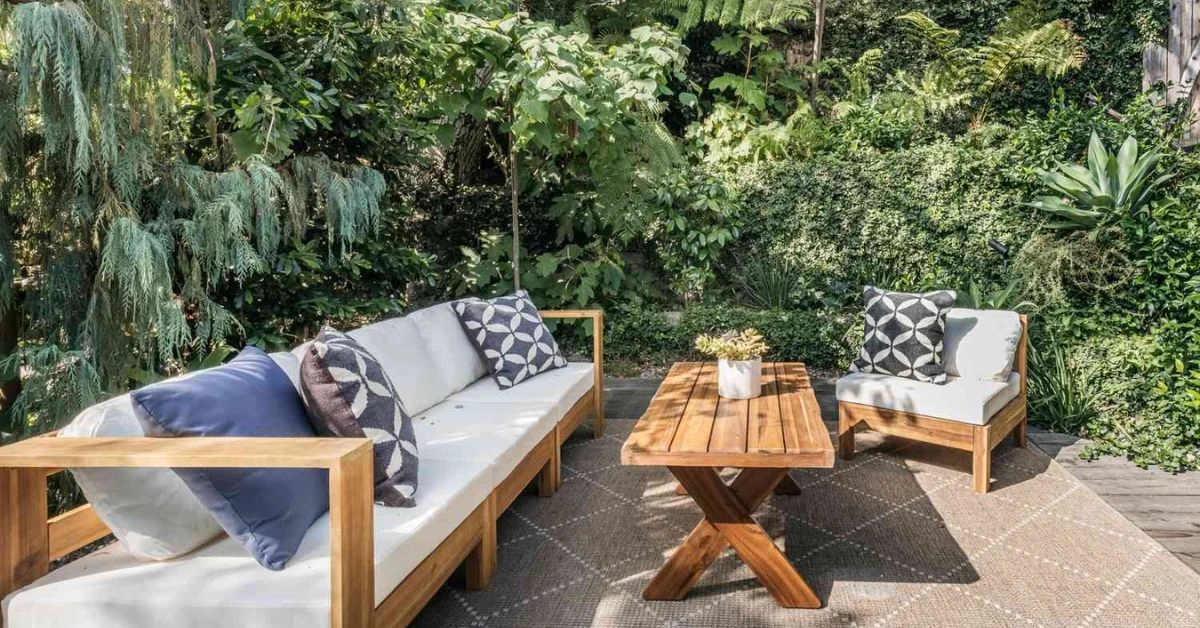
Corner garden furniture can turn an overlooked edge of a patio into a defined outdoor room, but an L-shaped lounge is not automatically a space-saving choice. Its long run, short return, table and access clearance must work together. Measure the actual corner, decide which direction the seating should face and plan cushion storage before committing to a fixed arrangement.
The best corner set gives people a comfortable place to talk or stretch out while preserving a route through the garden. It should not block French doors, steps, a drain cover or the path to the shed. If the furniture is intended for meals, the table height and chair access matter as much as the sofa dimensions.
Measure the corner in three dimensions
Record both wall lengths, the distance from doors and the position of steps, raised beds and downpipes. Include skirting, brick irregularities and the small gap needed for cleaning. Draw the sofa as a rectangle for each run, then add the arms, corner module and table. Mark the space needed to stand up from the inside seat. A paper plan is useful, but full-size tape on the paving reveals whether the return creates a pinch point.
Check the orientation carefully
Some corner sofas are left- or right-handed and cannot be reversed. Others use separate modules that can switch sides, but the connectors and cushions still need to be moved correctly. Stand at the front of the intended seating and confirm which side the short return will occupy. A small drawing with the house, garden gate and main view labelled can prevent an expensive orientation mistake.

Fixed, modular or dining-height?
A fixed corner sofa creates a tidy, permanent composition and can feel substantial against a wall or pergola. It is less convenient if the patio changes use or winter storage is limited. Modular seating can be separated into chairs or a straight sofa, which is helpful when you host, clean the paving or need to protect pieces from strong weather. Check how heavy each module is and whether the fasteners stop sections drifting apart.
Low lounge furniture suits drinks, reading and relaxed evenings, but it is not ideal for every meal. Dining-height corner sets make eating easier and can combine sofa comfort with a proper table. Measure the distance between seat and tabletop, check where knees go and allow the table to be pulled out if someone needs to leave the corner.
Choose a table that leaves breathing space
- A low rectangular table keeps the centre open and suits a deep lounge.
- A lift-top or nesting table can provide flexibility without adding a second large footprint.
- A dining table needs enough clearance for plates, chairs and the route around the outside of the L.
- Glass, timber, metal and composite tops each have different cleaning and heat considerations.
Make the corner comfortable in UK weather
Use the position to manage sun, wind and rain. A wall can shelter the seating, but it may also reflect heat or leave the back damp after rain. Keep the frame clear of dripping gutters and allow air behind it. A pergola or parasol can provide shade, while planting can soften a boundary without creating a trap for leaves and moisture. Check the direction of evening sun before placing the main seat.
Cushions should have removable covers and a clear home indoors or in ventilated storage. Bring them in during long wet spells and dry them fully before putting them away. Follow the manufacturer’s advice for powder-coated metal, timber or synthetic weave. A breathable cover can help, but a tightly wrapped damp set can be worse than an uncovered one that dries quickly.
Finish the outdoor room without overfilling it
Use one or two linking details rather than adding accessories to every surface. A weather-suitable rug can define the seating if water still drains beneath it. Repeating a planter colour, outdoor light or cushion tone can connect the furniture to the house. Keep plant pots outside the main route and leave access to drains, taps and maintenance points. For a wider materials checklist, see our guide to choosing garden furniture.
A successful L-shaped lounge uses the corner without making the garden feel closed in. Choose the orientation from the circulation plan, compare the table and seat heights, and be honest about how much storage and care the arrangement needs. The most comfortable set is the one that leaves room to move, dry and adapt.