

A pergola is the most useful single structure in a UK garden. It creates an outdoor room, supports climbing plants, provides shade, and turns a flat patio into a real living space. Done well, a pergola will be in use from April to October. Done badly, it becomes a costly bird perch. This guide is a UK-specific walkthrough of the styles, materials, costs and planning rules that make a pergola work.
Table of contents
- What a pergola is
- The main types
- How to size one for your garden
- Materials: wood, metal, vinyl
- Foundations and how to fix it
- Roofing: open, slatted, louvred, canvas
- Climbing plants for UK pergolas
- Lighting a pergola
- UK planning permission
- DIY vs professional installation
- UK cost guide
- Common mistakes
- Pergola FAQs
- Final thoughts
What a pergola is
A pergola is an outdoor structure with vertical posts and an open roof of cross-beams or rafters. It is not a building (no walls, no real roof), but it provides shade, structure, and a place to grow climbing plants. It is different from a veranda (which is attached to a house), a gazebo (which is freestanding with a solid roof), and an arbour (which is smaller and enclosed on two or three sides).
For a UK garden, a pergola is the right answer when you want to define an outdoor room without enclosing it. It works as a dining area, a lounge area, a hot tub cover, or a transition between the house and the garden.
The main types
Four types of pergola work in UK gardens.
Lean-to pergola
Attached to the house on one side, with posts on the other three sides. The right answer for a patio outside a kitchen or a living room. The shared roof beam with the house is a structural detail that needs a qualified builder or a CIAT architect to specify.
Freestanding pergola
Four or six posts, freestanding in the garden. The right answer for a feature in the middle of a lawn, a hot tub cover, or a transition between two areas. The most flexible option for a UK garden.
Walkway pergola
A long, narrow pergola that runs along a path, defining a route from one part of the garden to another. The right answer for a long, thin UK garden or a path from the back door to a garden room.
Corner pergola
An L-shaped pergola that fits in a corner of the garden, attached to the house on one or two sides. The right answer for a small UK garden where a freestanding pergola would dominate.
How to size one for your garden
The right size depends on the use.
- For a dining area: At least 3m x 3m, ideally 3.5m x 4m. A 6-seat dining table is around 1.8m x 0.9m, with 90cm of clearance on every side.
- For a lounge area: At least 3m x 3m, ideally 4m x 4m. A corner sofa is around 2.2m x 2.2m, with 80cm of clearance on every side.
- For a hot tub cover: At least 2.5m x 2.5m, with 60cm of clearance around the tub for access.
- For a walkway: 1.5m to 2m wide, as long as the path.
For a UK garden, the right answer is a 3m x 3m or 3.5m x 4m pergola. Anything smaller feels cramped; anything larger dominates a typical UK garden.
Materials: wood, metal, vinyl
Three materials are used for UK pergolas. The right one depends on the budget, the look, and the maintenance.
Wood (the traditional choice)
Oak, cedar, larch, or pressure-treated softwood. The right answer for a period home or a country garden. Wood is warm, beautiful, and ages well, but it needs re-coating every 2 to 3 years. The most common UK choice is Tuin‘s pressure-treated pine or FSC-certified cedar. £1,500 to £5,000 supply only for a 3m x 3m.
Metal (the modern choice)
Aluminium or powder-coated steel. The right answer for a modern home or a contemporary garden. Metal is slim, durable, and almost maintenance-free, but it is more expensive than wood and can look industrial in a period setting. From LuxWisk or a local metalwork fabricator. £3,000 to £8,000 for a 3m x 3m.
Vinyl / uPVC (the low maintenance choice)
White or cream vinyl, often with a wood-grain effect. The right answer for a low maintenance garden, especially a coastal or rental property. Vinyl is cheap, easy to clean, and never needs painting, but it looks cheaper than wood or metal. From Fischer or a local garden centre. £1,000 to £3,000 for a 3m x 3m.
Foundations and how to fix it
A pergola needs solid foundations. The four main options.
- Concrete pads. The right answer for a freestanding pergola on a lawn. Dig a 60cm x 60cm x 60cm hole for each post, fill with concrete, set the post in. The most stable option. £50 to £100 per post in materials.
- Bolt-down brackets. The right answer for a pergola on an existing patio. Bolt the brackets to the paving with chemical anchors, set the post in the bracket. Faster and easier than concrete pads, but less stable. £20 to £40 per bracket.
- Screw piles. The right answer for a pergola on soft ground or a sloping site. A 1.5m to 3m steel screw is turned into the ground, with a bracket on top. £100 to £200 per pile, fitted.
- Ground anchors. The cheapest option, but only suitable for small, lightweight pergolas. A 60cm metal spike is driven into the ground, with the post set into the spike. £10 to £20 per anchor.
For a UK pergola, concrete pads or bolt-down brackets are the right answer. Screw piles are worth the cost for a sloping or soft site.
Roofing: open, slatted, louvred, canvas
The roof of a pergola is the difference between a real outdoor room and a garden feature. Four options.
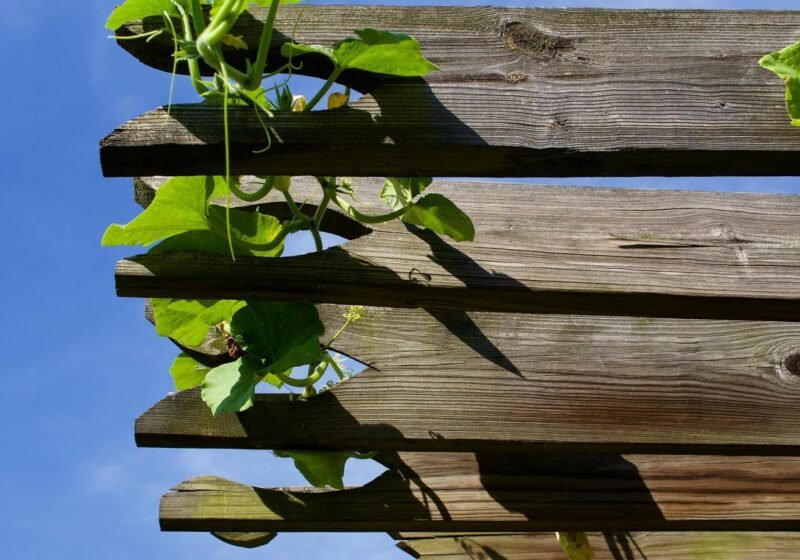
- Open roof. The traditional pergola. The roof is a grid of cross-beams, with no covering. The right answer for a climbing-plant pergola (wisteria, grape, clematis) where the plants are the roof.
- Slatted roof. Closer-spaced slats, usually 5cm to 10cm apart. The right answer for partial shade and a more contemporary look.
- Louvred roof. An adjustable louvred roof, usually motorised. The right answer for a year-round pergola where the roof opens and closes. From LuxWisk or Renson. £5,000 to £15,000 for a 3m x 3m.
- Canvas or sail roof. A fabric shade, retractable or fixed. The right answer for a budget pergola where shade is more important than rain protection. £200 to £2,000 for a 3m x 3m.
For most UK gardens, a slatted wood roof is the right answer. It provides partial shade, lets the rain through (so the plants below get watered), and looks better than a canvas.
Climbing plants for UK pergolas
The right climbing plant turns a pergola into a living structure. The most useful UK plants.
- Wisteria sinensis. The classic UK pergola plant. Beautiful flowers in May, attractive foliage all summer. Needs strong support and careful pruning. From Crocus or RHS Plants.
- Clematis montana. Fast-growing, flowers in May and June, easy to look after. The right answer for a quick-cover pergola.
- Vitis vinifera (grape vine). Beautiful foliage, edible fruit in autumn. Needs strong support and careful pruning. The right answer for a south-facing pergola.
- Trachelospermum jasminoides (star jasmine). Evergreen, fragrant, slow-growing. The right answer for a year-round cover.
- Jasminum officinale (common jasmine). Fragrant, deciduous, fast-growing. The right answer for a summer scent.
- Lonicera periclymenum (honeysuckle). Fragrant, deciduous, wildlife-friendly. The right answer for a wildlife garden.
For a quick cover, plant a clematis and a jasmine on the same pergola, one for the early summer and one for the late summer. For a year-round cover, plant an evergreen climber like star jasmine. For a country garden, plant a wisteria or a grape vine.
Lighting a pergola
The right lighting turns a pergola into a year-round space. The most useful options.
- Festoon lights. The classic pergola light. A string of warm white LED bulbs, hung in a U-shape across the beams. From Lights4fun or Lighting Direct. £50 to £200.
- Uplights on the posts. Small LED uplights at the base of each post, lighting the cross-beams and the climbers above. From Lighting Direct or Astro Lighting. £30 to £80 per light.
- Lanterns. A single statement lantern in the centre of the pergola. From Pooky or Original BTC. £150 to £600.
- Strip lights on the beams. A continuous LED strip on the inside edge of the cross-beams, washing the seating area below. From Philips Hue or LED Hut. £100 to £400.
All outdoor lighting should be IP65-rated or higher. The Electrical Safety First publishes a free guide to outdoor electrical safety.
UK planning permission
In most cases, a UK pergola does not need planning permission. The rules are.
- The pergola must be no more than 2.5m tall (or 2m if within 2m of a boundary)
- The pergola must cover no more than 50 per cent of the garden
- The pergola must not be in front of the principal elevation of the house
- The pergola must not be used as a separate dwelling (no sleeping, no cooking, no plumbing)
For a listed building or a conservation area, the rules are tighter. Check with your local authority before building. The Planning Portal publishes a free guide to permitted development rights.
DIY vs professional installation
A simple wood pergola is a realistic DIY project for a competent homeowner. The work is well within the scope of someone with basic carpentry skills and a weekend to spare.
For a 3m x 3m wood pergola.
- DIY: £1,500 to £2,500 in materials, 2 to 3 weekends of work
- Professional installation (supply and fit): £3,000 to £6,000, fitted in 1 to 2 days
For a metal or louvred pergola, professional installation is strongly recommended. The components are heavier, the tolerances are tighter, and the warranty often depends on professional fitting.
UK cost guide
Typical UK pergola costs in 2025 prices, for a 3m x 3m structure.
- DIY wood pergola, supply only: £1,500 to £2,500
- Wood pergola, supply and fit: £3,000 to £6,000
- Vinyl pergola, supply and fit: £2,500 to £4,000
- Aluminium pergola, supply and fit: £5,000 to £10,000
- Motorised louvred aluminium pergola, supply and fit: £8,000 to £15,000
- Climbing plants (2 to 4 mature specimens): £100 to £500
- Lighting (festoon, uplights, lantern): £200 to £600
Common mistakes
- Too small. A 2m x 2m pergola feels cramped. A 3m x 3m is the minimum useful size.
- Too low. A 2m-tall pergola is too low to walk under. Aim for 2.4m to 2.7m at the lowest point.
- Cheap wood. Untreated softwood will rot within 5 years. Use pressure-treated softwood, cedar, larch, or oak.
- No foundations. A pergola without proper foundations will lean and sag within a year. Use concrete pads or bolt-down brackets.
- No climbing plants. A pergola without climbers is a bare structure. Plant at least one climber on each post.
- Wrong climbers. A wisteria or grape vine is too heavy for a small DIY pergola. Choose lighter climbers like clematis or jasmine.
Related reading. Decking ideas UK · Garden privacy ideas UK · Outdoor kitchen ideas UK · Low maintenance garden ideas UK.
Frequently Asked Questions
1. Do I need planning permission for a pergola in the UK?
In most cases, no. A pergola that is under 2.5m tall (or 2m within 2m of a boundary), covers less than 50 per cent of the garden, and is not in front of the principal elevation of the house is usually permitted development. For a listed building or a conservation area, check with your local authority.
2. What is the best material for a UK pergola?
For a traditional UK garden, oak, cedar, or pressure-treated softwood. For a modern garden, aluminium. For a low maintenance garden, vinyl. The most important thing is that the material is rated for outdoor use, with a 10-year guarantee against rot and corrosion.
3. How much does a pergola cost in the UK?
For a 3m x 3m wood pergola, supply and fit, £3,000 to £6,000. For a vinyl pergola, £2,500 to £4,000. For an aluminium pergola, £5,000 to £10,000. For a motorised louvred aluminium pergola, £8,000 to £15,000. Add £200 to £600 for lighting and £100 to £500 for climbing plants.
4. What is the best climbing plant for a UK pergola?
For a traditional UK pergola, wisteria or grape vine. For a quick cover, clematis montana. For a year-round cover, star jasmine. For a scented pergola, common jasmine or honeysuckle. The RHS publishes a list of AGM-rated climbers for the UK.
5. Can I build a pergola myself?
Yes, for a simple wood pergola. A 3m x 3m wood pergola is a realistic DIY project for a competent homeowner, taking 2 to 3 weekends. The key skills are setting the posts in concrete, cutting the cross-beams to length, and fixing the rafters. For a metal or louvred pergola, professional installation is strongly recommended.
6. What is the difference between a pergola and a gazebo?
A pergola has an open roof (cross-beams and rafters, no covering). A gazebo has a solid roof, usually hexagonal or octagonal, often with a fabric or metal covering. A pergola is open to the sky and the elements; a gazebo is sheltered. For a UK garden, a pergola is more useful in summer, a gazebo in winter.
Final thoughts on pergolas
A pergola is the most useful single structure in a UK garden. Choose the right material, the right size, the right climbers, and the right lighting, and the pergola will be in use from April to October. Avoid cheap wood, small sizes, and DIY louvred kits, which all too often fail in the second winter.
For more on the wider project, see our guides to low maintenance garden ideas UK and decking ideas UK.
9 thoughts on “Pergola Ideas UK: A Practical Guide to Garden Pergolas”